 ← All animals
 shark or ray · Hypanus americanus
Southern stingray
Gallery
1 photo Real photograph Why we love them
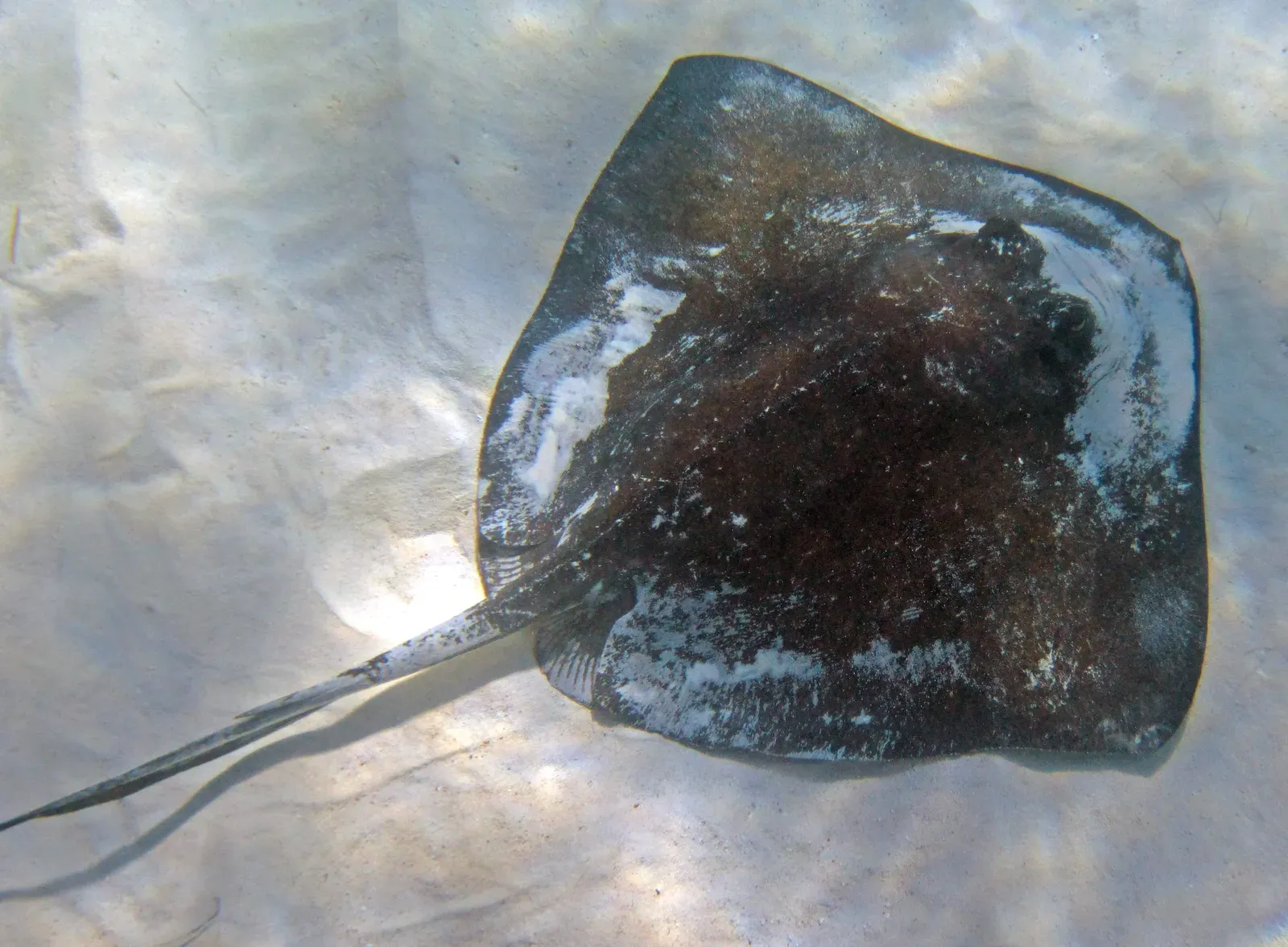
The southern stingray is a wide, flat fish shaped like a diamond, and it is a cousin of the sharks. It glides over the sandy seabed of warm, shallow seas by rippling the edges of its body like a pair of gentle wings. Its top side is a soft brown or grey that matches the sand below, while its belly is creamy white. Females grow quite a bit bigger than the males.
This ray lives in the western Atlantic Ocean, from the coast of North America down past the Caribbean all the way to Brazil. It likes calm, shallow bays with meadows of sea grass, where it can find plenty to eat. Much of the day it lies still on the bottom, sometimes flicking sand over its back until only its eyes peek out. Resting this way helps it stay hidden and safe.
A stingray's eyes sit on top of its head, but its mouth is tucked underneath. Because it cannot see its own food, it feels and sniffs along the seabed for hidden clams, worms, shrimp, and crabs. Special sensors on its face can even detect the tiny wiggles of animals buried in the sand. When it finds a meal, it crunches the shells with flat, strong teeth.
You may have heard that stingrays have a spine on their tail. It is true, but a southern stingray is a calm, gentle animal that would never chase anyone. It only uses the spine to protect itself if something big steps right on top of it by surprise. If you ever wade in shallow water where they live, you can shuffle your feet, and the ray will simply feel you coming and glide quietly away.
Mother stingrays give birth to little pups that already look like tiny copies of their parents. In some places, such as the Cayman Islands, southern stingrays have grown so used to friendly visitors that they swim right up to be fed by hand. Their conservation status is Near Threatened, which means people are keeping a careful eye on them and working to protect the sandy shallows they call home.
My home
Seagrass bed, sandy seabed, shallow bay, coral reef
Where I live
North America, South America, Atlantic Ocean
What I eat
Clams, worms, shrimp, crabs, small fish
How long I am
0.6–2 m
How heavy I am
97 kg
Southern stingrays have a flat, diamond-shaped body and can grow very wide — females reach about 1.5 metres across, and the widest wild ones measured around 2 metres.
A stingray's eyes sit on top of its head while its mouth is tucked underneath, so it can rest half-buried in the sand and still watch the water above.
The stingray's tail has a spine it only uses to stay safe if something steps right on top of it; the rest of the time it glides quietly away from people.
Every southern stingray can feel happy, scared and loved — just like you.
Looking after my friends
How many are there?
Shallow nursery areas can hold up to about 245 southern stingrays per square kilometre.
This is a high local nursery density, not a typical density or global total.
Estimate source: Southern stingray
How are they doing?
Close to threatenedThis species is not threatened right now, but it is close enough that scientists keep a careful watch.
You can help by learning their names, keeping wild places clean, and telling someone why this animal matters.
Where this came from
- Southern stingray — Wikipedia
- Dasyatis americana — Southern Stingray — Animal Diversity Web (University of Michigan Museum of Zoology)
- Hypanus americanus (Southern Stingray) — Red List Assessment — IUCN Red List of Threatened Species