 ← All animals
 shark or ray · Carcharodon carcharias
Great white shark
Gallery
2 photos Real photograph 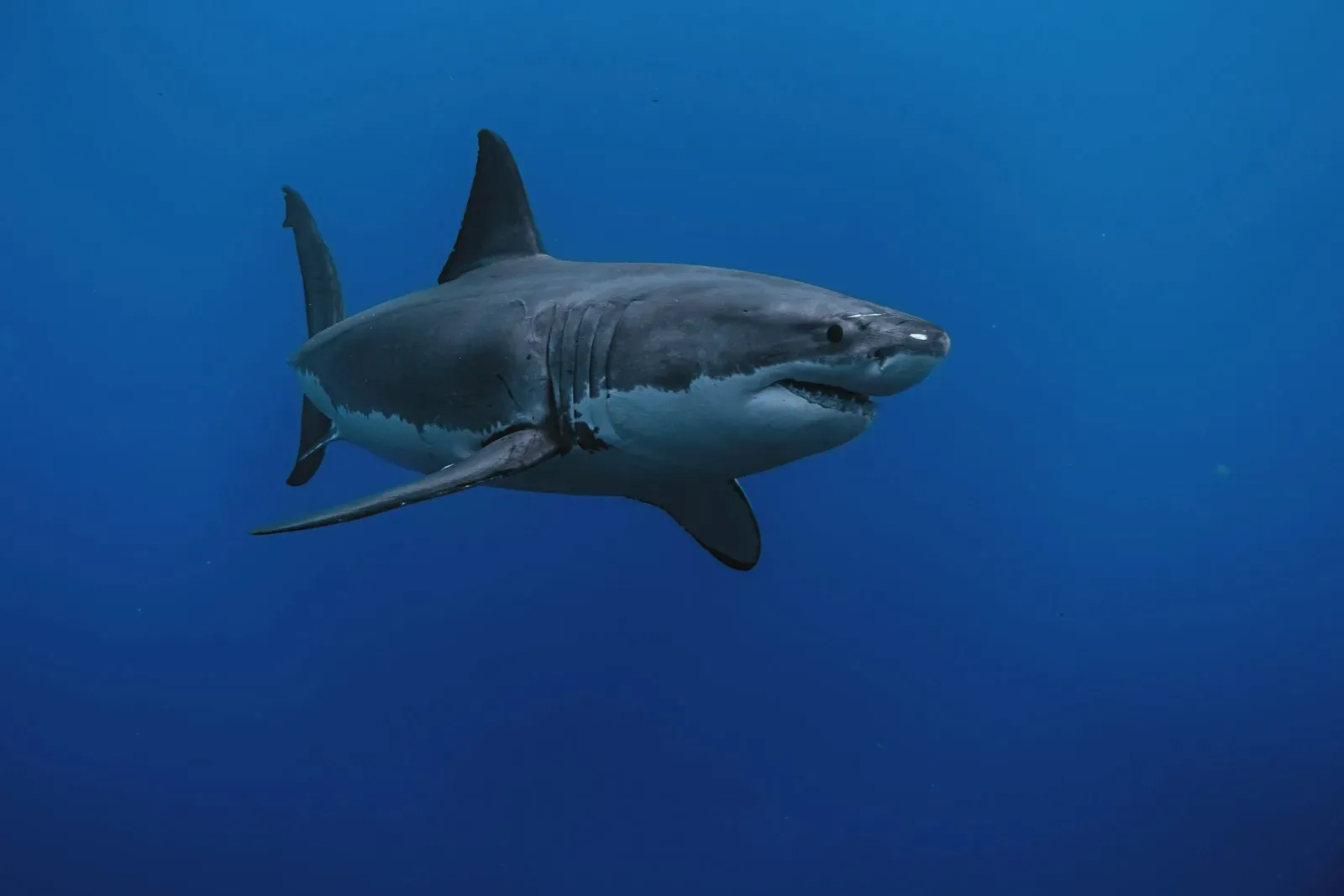 Real photograph
 Why we love them
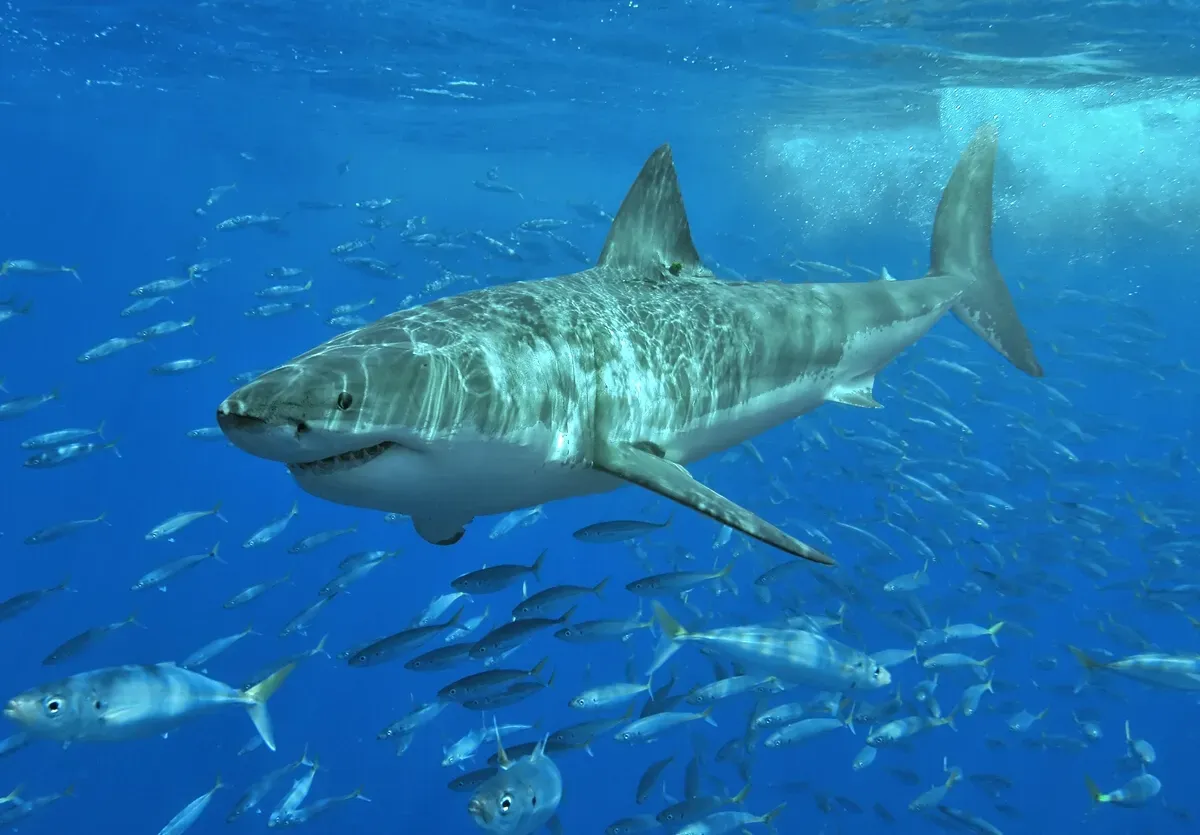
The great white shark is one of the largest hunting fish in the sea. A grown-up can be as long as a small bus, and the females are even bigger than the males. Its back is grey so it is hard to see from above, and its belly is white so it is hard to see from below.
Great whites are strong, fast swimmers. Deep inside its body, a great white keeps its muscles warmer than the water around it. Warm muscles work better, so the shark can put on a burst of speed to catch fast fish and, when it is older, seals and sea lions.
This shark has amazing senses. It can smell food from far away, and special tiny holes on its snout can feel the faint electric buzz that every living animal makes. That means a great white can find its next meal even in cloudy water.
A great white's mouth holds rows and rows of pointed teeth. When one wears out or falls, a new tooth simply moves up to take its place, so the shark never runs out. Over a long life it may grow and lose thousands of teeth.
Great whites are not monsters. They are an important part of a healthy ocean, keeping other animal groups in balance. Sadly there are fewer of them than there used to be, mostly because so many are caught in fishing nets. Scientists count them and protect them so these remarkable sharks can keep swimming in our seas.
My home
Ocean, coastal waters, open sea
Where I live
Pacific Ocean, Atlantic Ocean, Indian Ocean, Southern Ocean
What I eat
Fish, rays, seals, sea lions
How long I am
4–6 m
How heavy I am
500–2000 kg
How long I live
30–70 years
A great white can keep its body warmer than the sea around it, which helps it swim fast in cool water.
It can sense the tiny electric buzz that other animals make, even when they are hidden.
New teeth are always waiting behind the front ones, ready to move forward when a tooth falls out.
Every great white shark can feel happy, scared and loved — just like you.
Looking after my friends
How many are there?
CSIRO estimated about 5,460 great white sharks of all ages in the eastern Australasian population.
The best estimate is 5,460, but the genetic model's possible range is wide: 2,909–12,802 sharks.
Estimate source: Putting a number on white shark populations
How are they doing?
VulnerableThis species has a high risk of extinction in the wild unless the pressures on it improve.
You can help by learning their names, keeping wild places clean, and telling someone why this animal matters.
Where this came from
- Carcharodon carcharias (Great White Shark) — Red List Assessment — IUCN Red List of Threatened Species
- White Shark (Carcharodon carcharias) — Species Profile — Florida Museum of Natural History, University of Florida
- White Shark — Animal Guide — Monterey Bay Aquarium
- Putting a number on white shark populations — CSIRO