 ← All animals
 shark or ray · Ginglymostoma cirratum
Nurse shark
Gallery
4 photos Real photograph 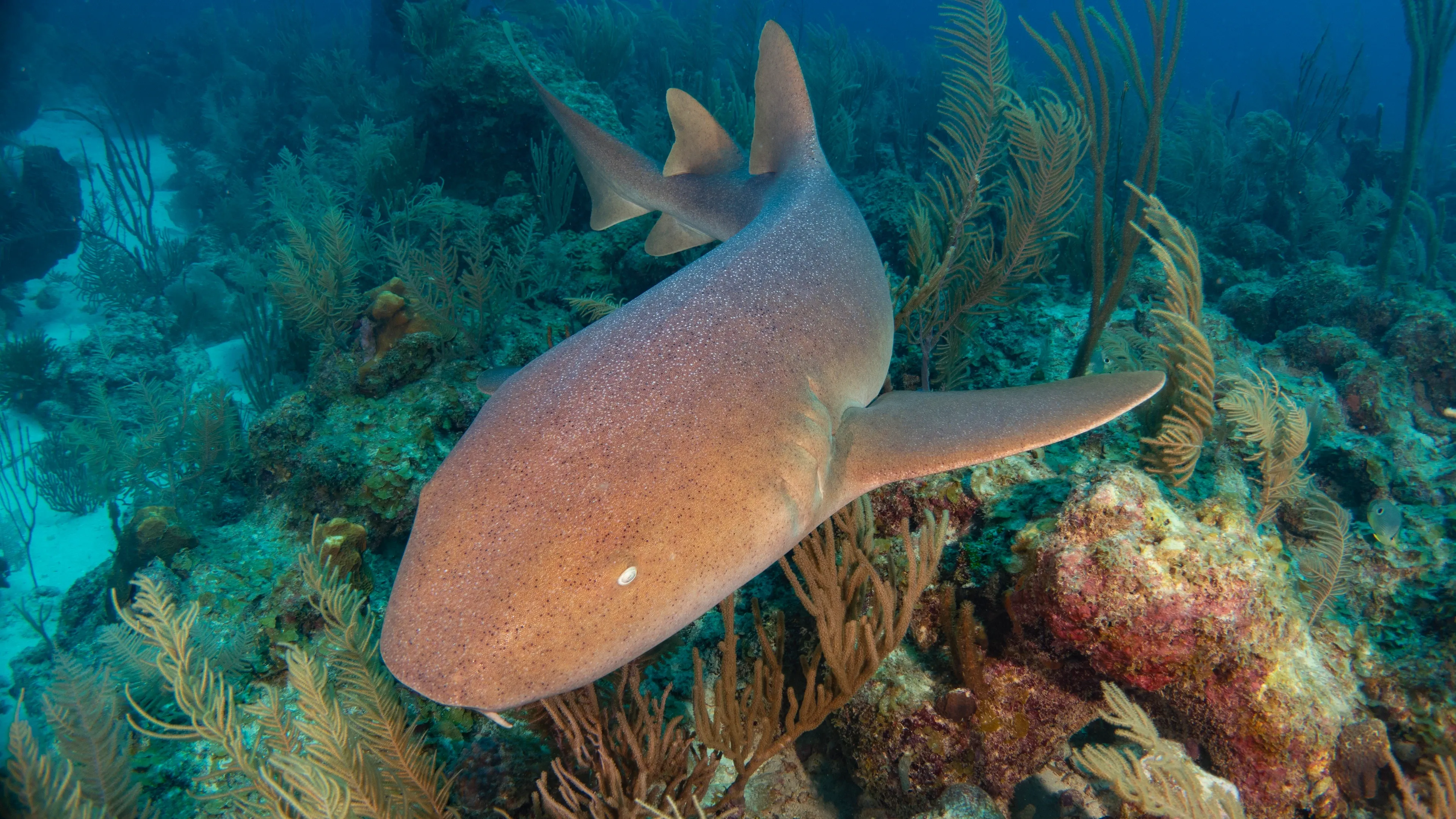 Real photograph
 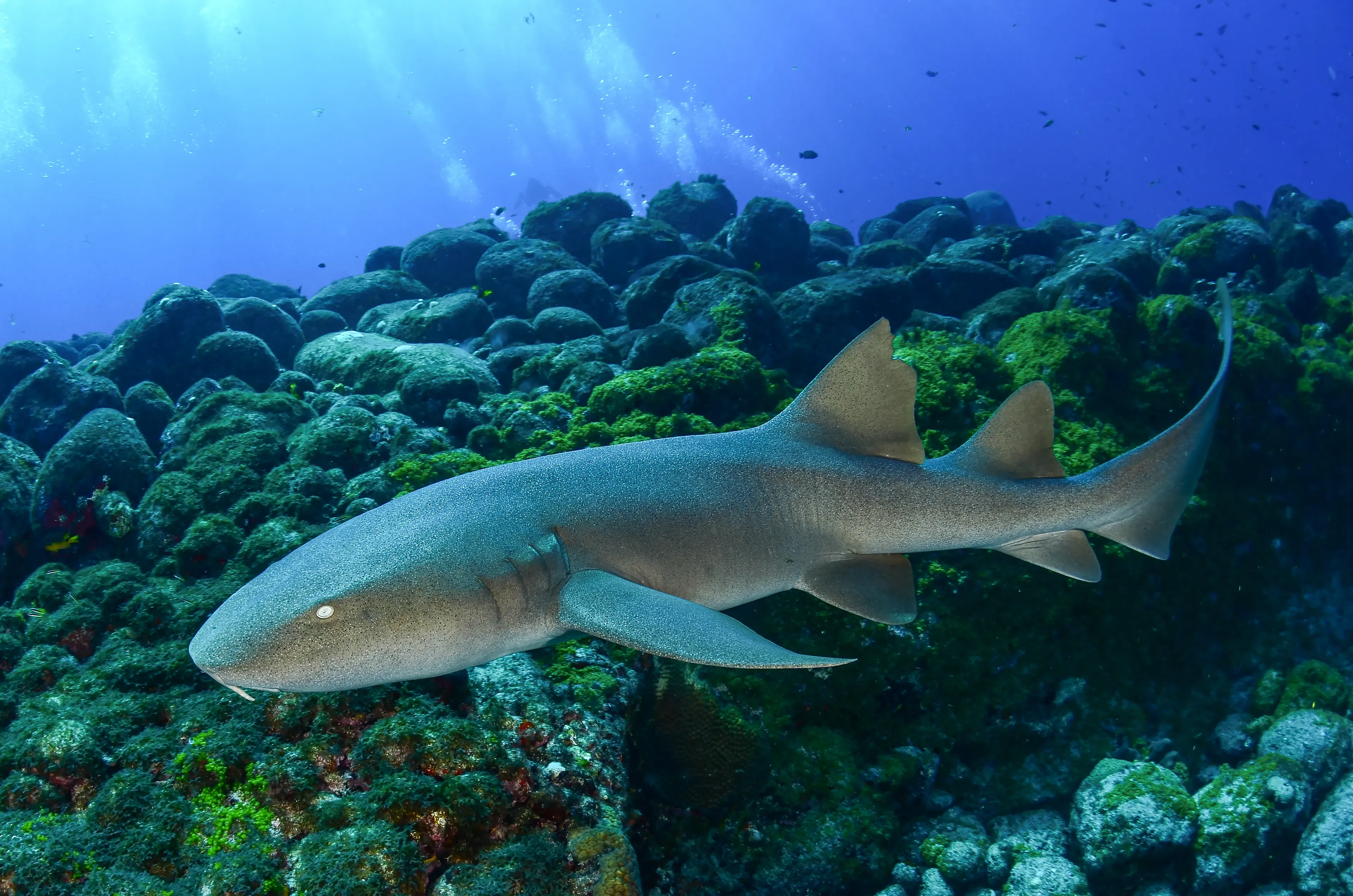 Real photograph
 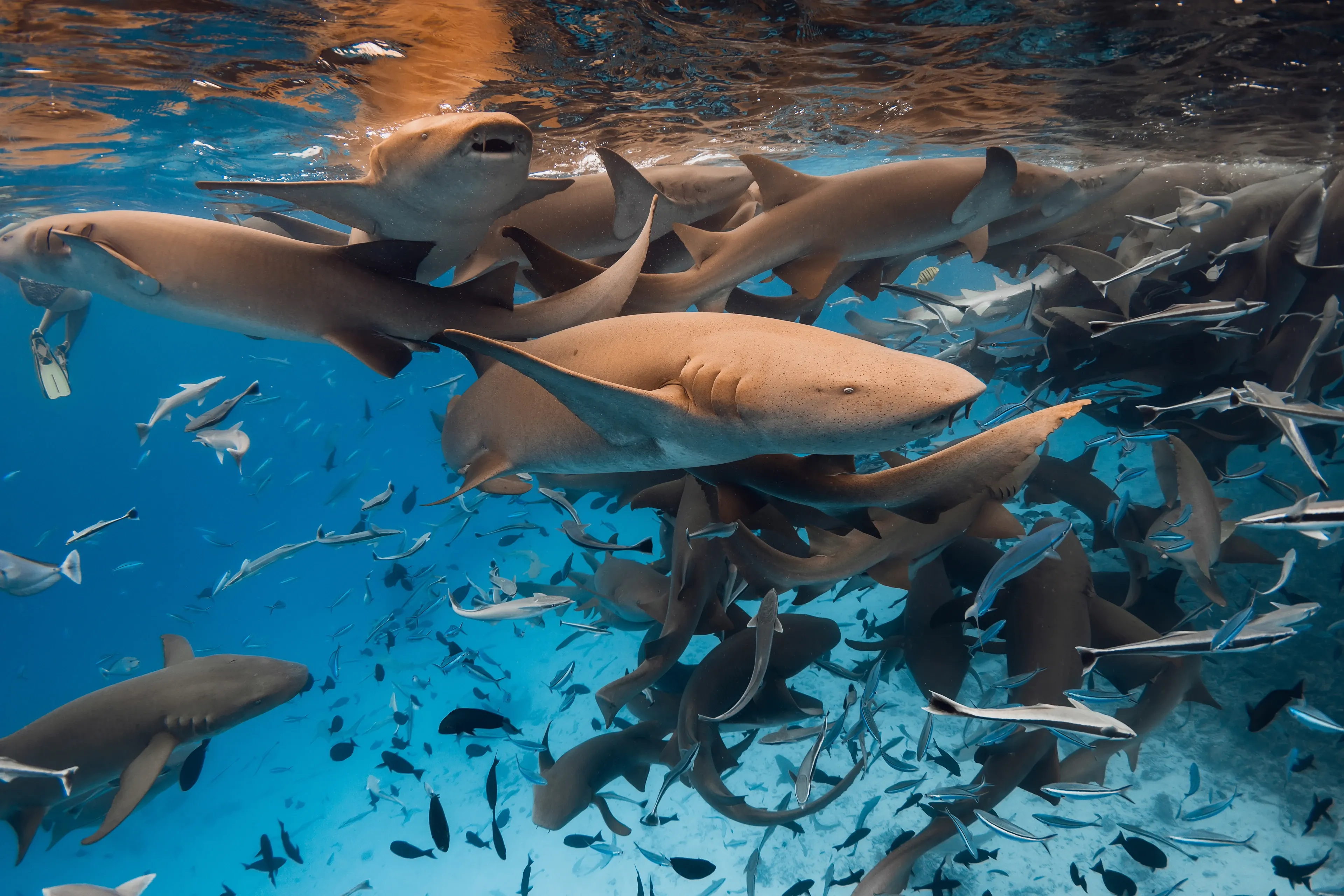 Real photograph
 Why we love them
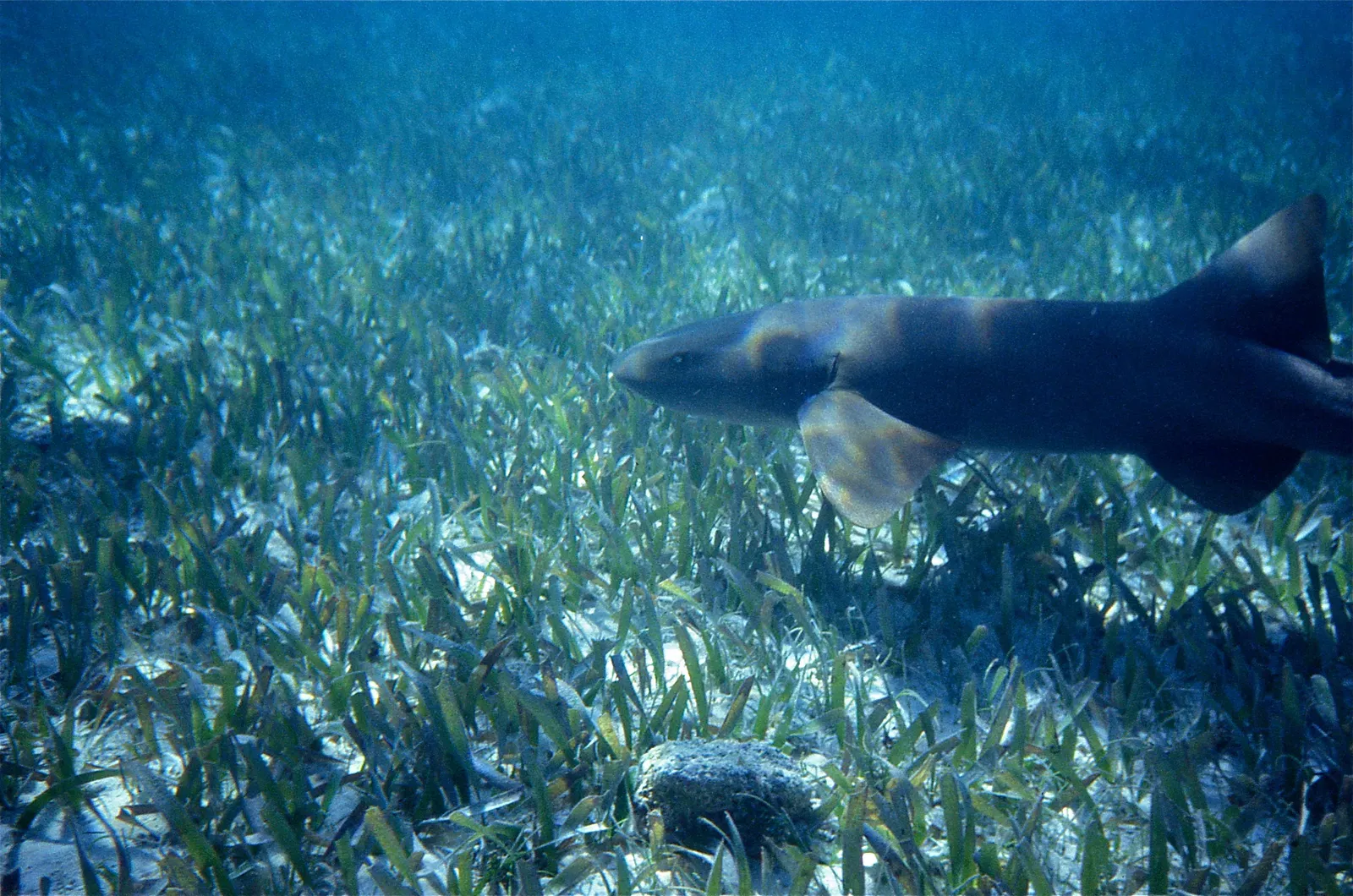
The nurse shark is one of the calmest, most peaceful sharks in the sea. It is a slow-moving shark that loves to rest. During the day it settles on the sandy seabed, tucked under ledges and inside rocky crevices, and it often lies snuggled together in cosy groups with other nurse sharks. Left in peace, it is a gentle, easygoing neighbour that simply wants to relax and be left alone.
When night falls, the nurse shark wakes up to look for food along the bottom of the sea. Instead of chasing, it presses its small mouth to the sand and slurps. Its suck is so strong that it is one of the most powerful of any animal that lives in water — perfect for pulling little crabs, snails, and fish out of their hiding spots.
Nurse sharks eat all sorts of small sea creatures, including little fish, crustaceans like crabs and shrimp, molluscs such as snails, and even spiny sea urchins. Their broad, flat heads have two whisker-like feelers called barbels near the mouth that help them taste and find hidden food buried in the sand.
Baby nurse sharks come into the world already able to look after themselves. When they are born they are only about 30 centimetres long, and they wear a pretty spotty pattern all over their bodies. As each young shark grows bigger, those spots slowly fade away until it turns a smooth, plain brown like a grown-up.
Nurse sharks live in warm, shallow coastal waters — around coral reefs, seagrass meadows, and mangroves in the Atlantic Ocean and the eastern Pacific. Sadly, too much fishing means there are fewer of them than there used to be, and they are now listed as Vulnerable. By protecting their gentle reef homes and fishing carefully, people can help these slow, sleepy sharks rest safely for years to come.
My home
Coral reef, seagrass, mangrove, rocky reef
Where I live
Pacific Ocean, Atlantic Ocean
What I eat
Small fish, stingrays, crustaceans, molluscs, sea urchins
How long I am
3.08 m
The nurse shark is a slow, calm shark that spends the daytime resting quietly on the seabed, often lying together in cosy groups with other nurse sharks.
It feeds at night by sucking prey up from the sea floor, and its powerful suck is one of the strongest of any animal that lives in water.
Baby nurse sharks are born with a spotty pattern that slowly fades as they grow, and they are only about 30 centimetres long when they are born.
Every nurse shark can feel happy, scared and loved — just like you.
Looking after my friends
How many are there?
A female nurse shark typically gives birth to about 21–29 pups.
This is one litter, not a count of nurse sharks in the wild.
Estimate source: Nurse shark
How are they doing?
VulnerableThis species has a high risk of extinction in the wild unless the pressures on it improve.
You can help by learning their names, keeping wild places clean, and telling someone why this animal matters.
Where this came from
- Ginglymostoma cirratum (Nurse Shark) — Red List Assessment — IUCN Red List of Threatened Species
- Ginglymostoma cirratum — Animal Diversity Web — Animal Diversity Web (University of Michigan Museum of Zoology)
- Nurse shark — Wikipedia