 ← All animals
 shark or ray · Mobula birostris
Giant Manta Ray
Gallery
5 photos Real photograph 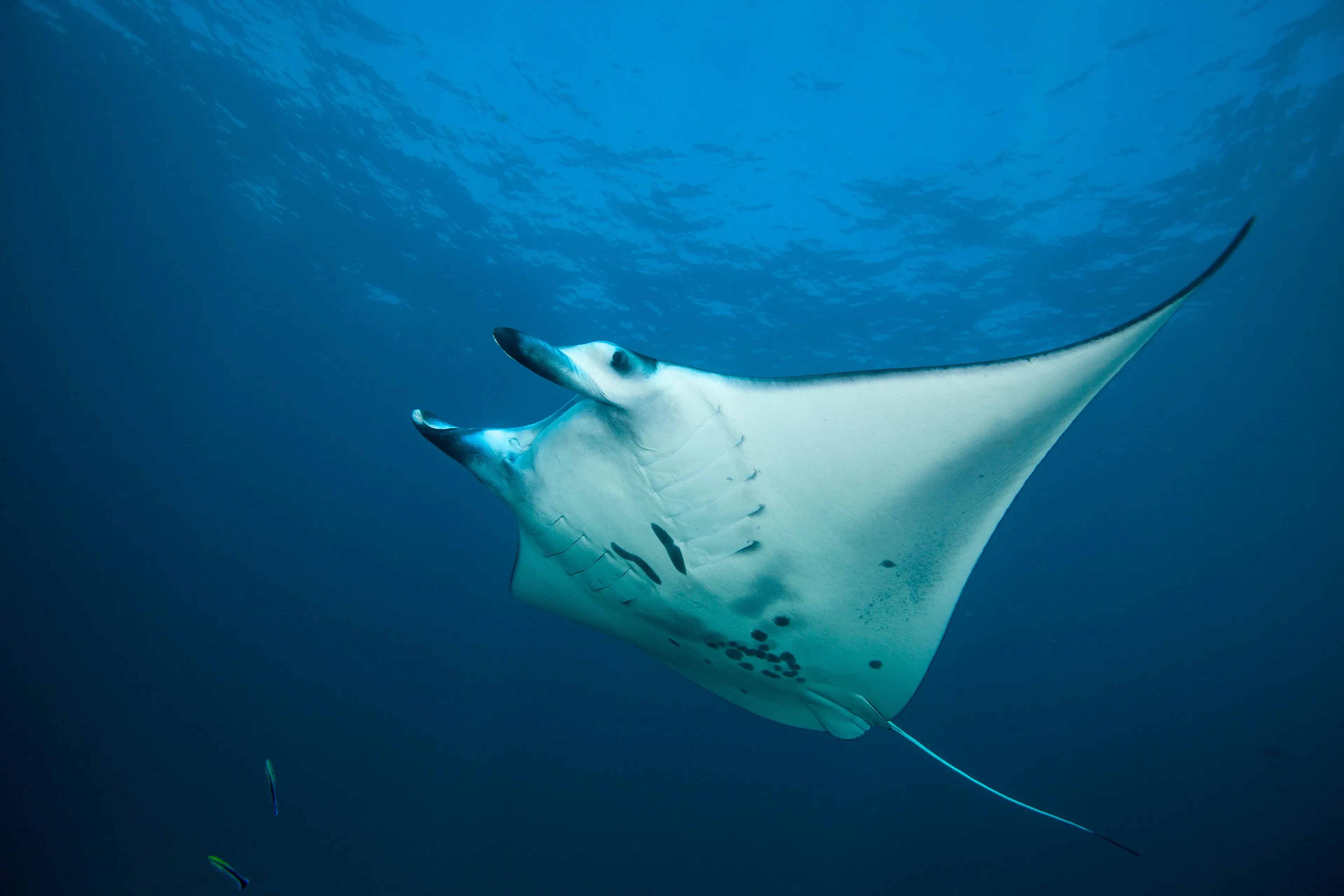 Real photograph
  Real photograph
  Real photograph
  Real photograph
 Why we love them
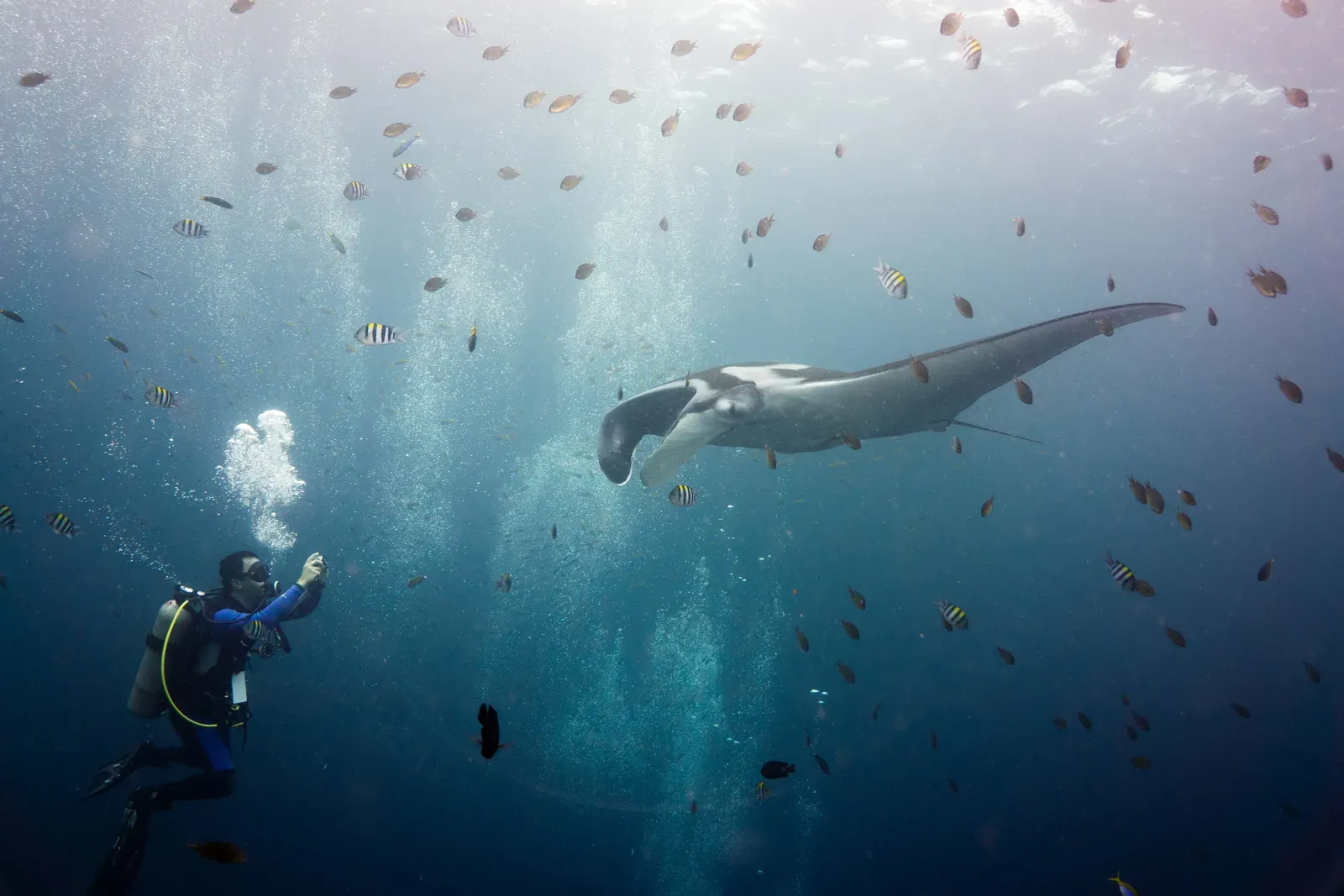
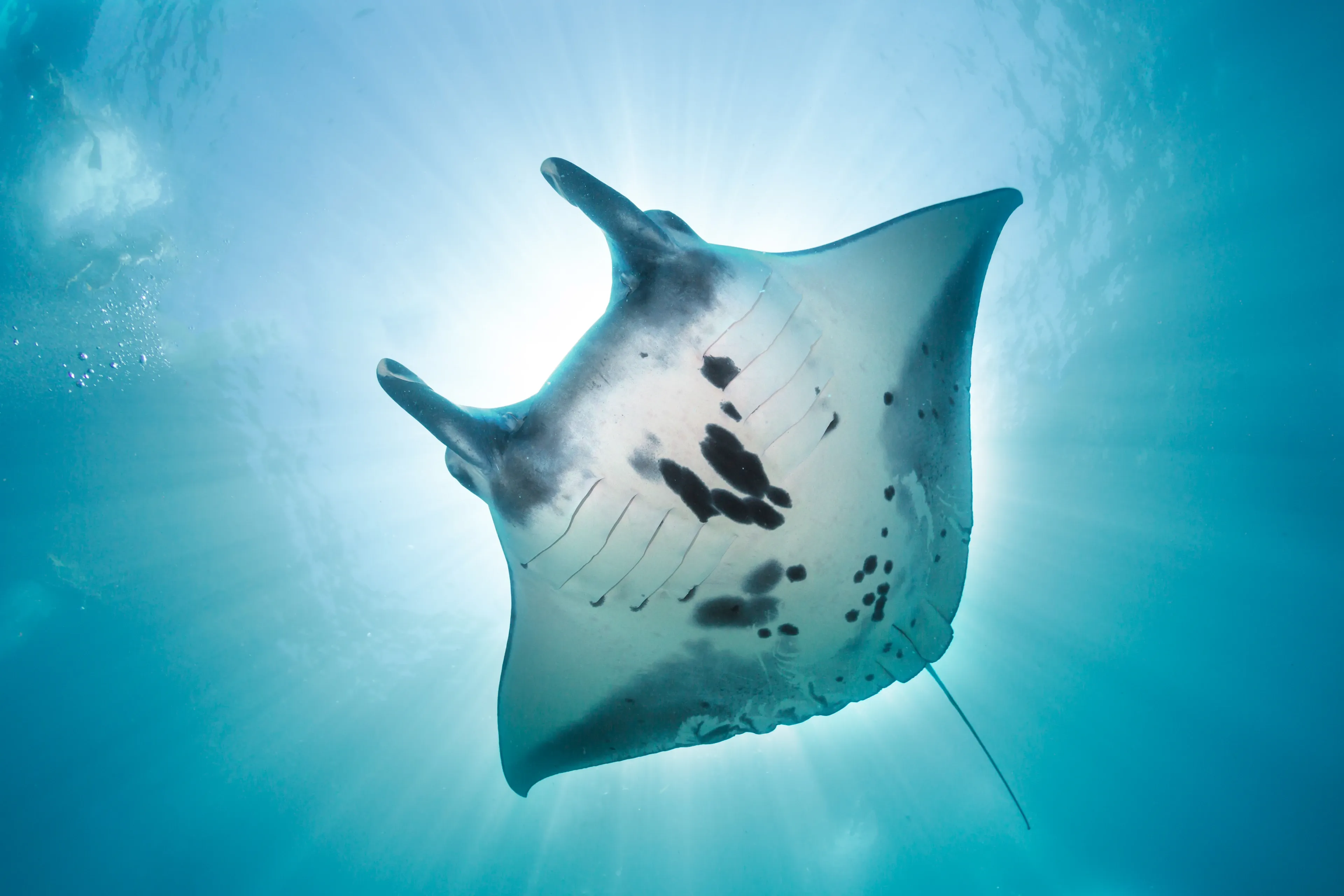
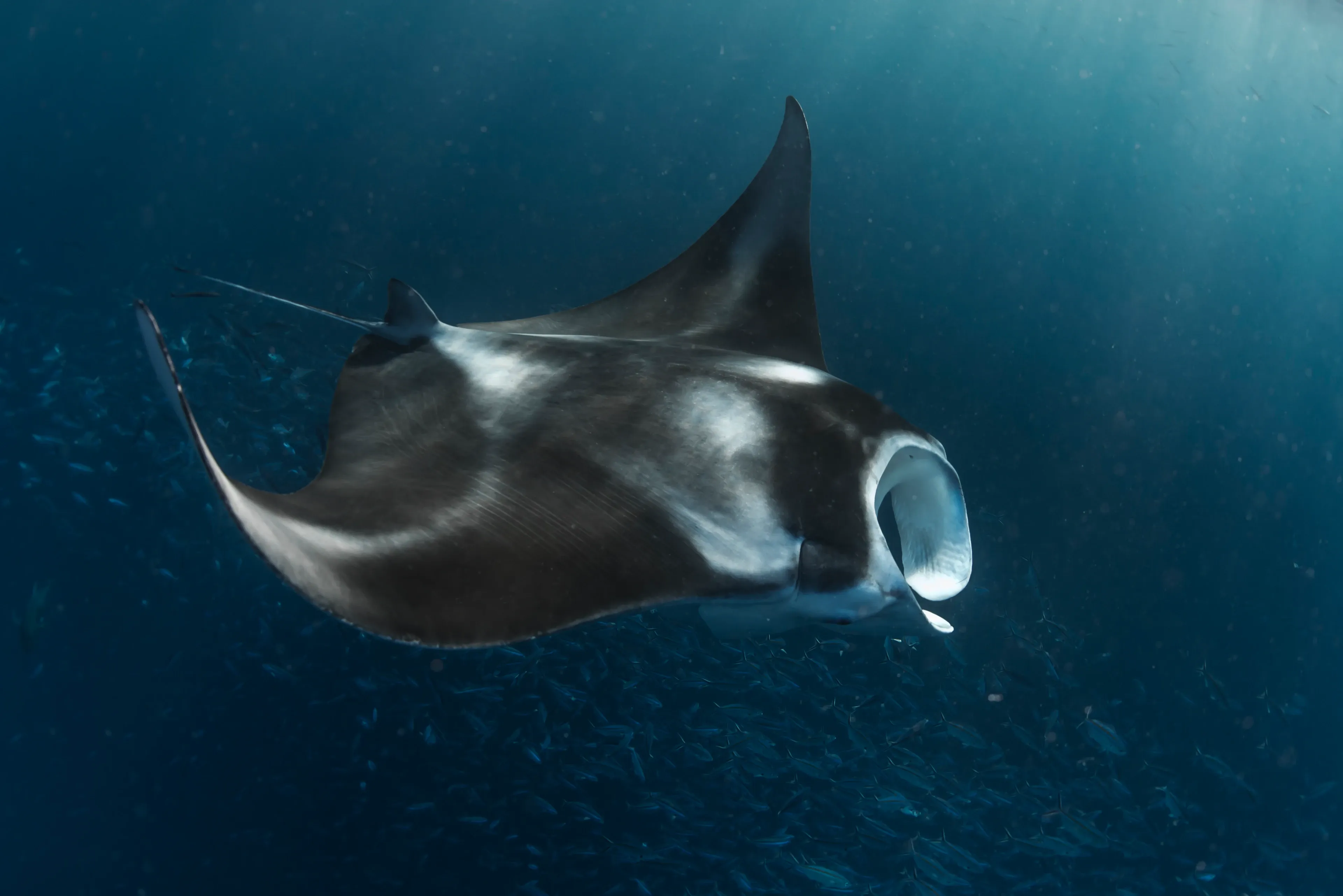
The giant manta ray is a huge, gentle fish that glides through the open ocean like a slow-flapping bird. Its body is shaped like a wide diamond, and its two big "wings" can spread as far apart as a small bus is long. Even though it is so large, it is calm and friendly and does not have a stinging tail like some of its cousins.
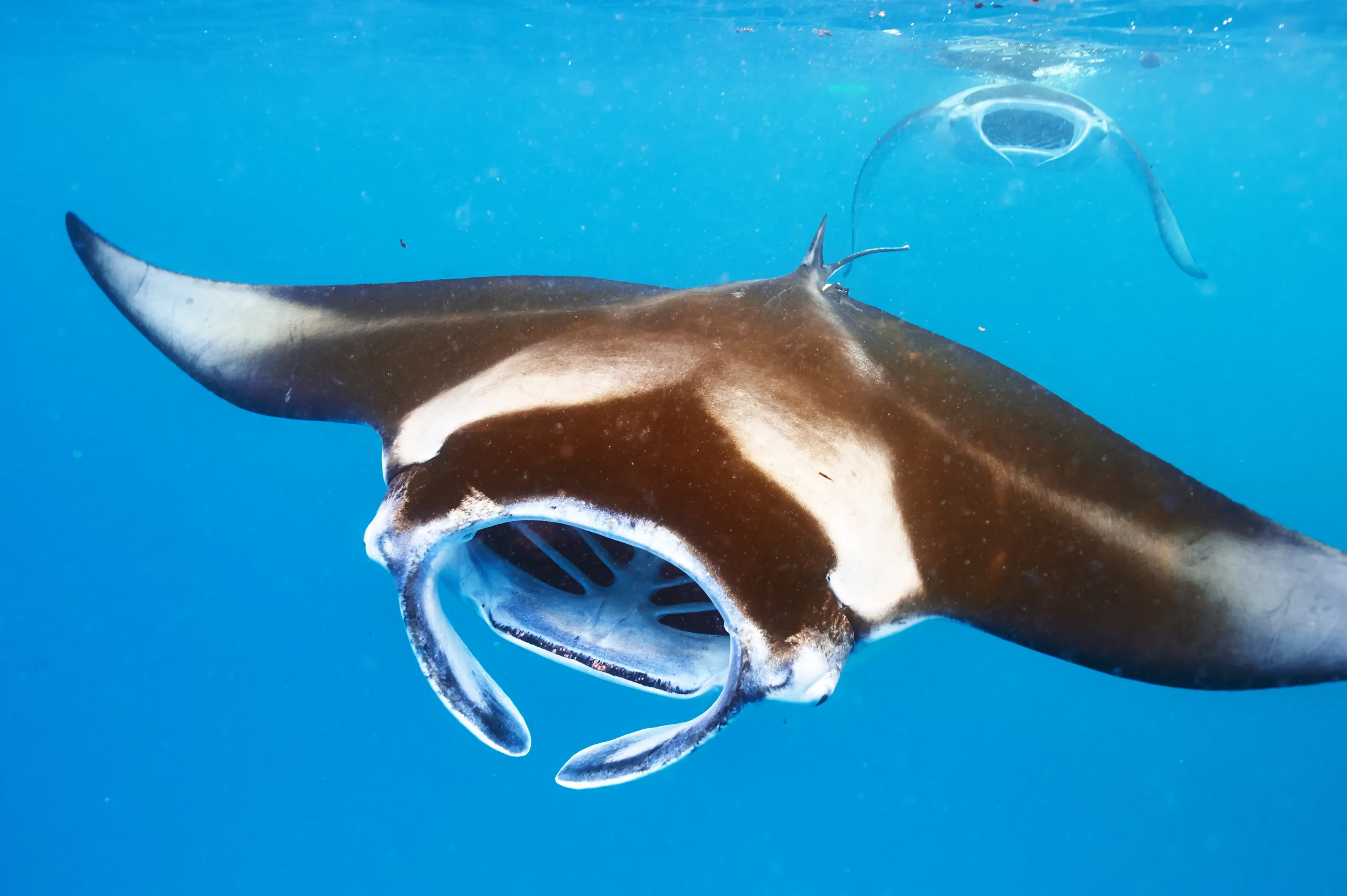
Manta rays are called gentle giants because they eat some of the tiniest food in the sea. As a manta swims along with its huge mouth open, it sieves out clouds of plankton, which are teeny shrimp and other little sea creatures. It herds the plankton into a thick swirl and then swoops through the middle with its mouth wide open.
One of the most amazing things a manta ray does is visit a cleaning station. This is a special place, often near a coral reef, where small fish are happy to help. The manta hovers gently while the little fish swim up and nibble away bits of dirt and pests, keeping its skin clean and healthy. It is a bit like the manta popping in for a wash and a check-up.
Manta rays are very clever. For a fish, they have a surprisingly big brain, and scientists think they are among the smartest fish in the ocean. They are curious animals that sometimes swim right up to divers to take a closer look, and they seem to remember places they have visited before.
There are fewer giant manta rays than there used to be, and they need our help. Because they grow slowly and usually have just one pup at a time, their numbers drop quickly if too many are caught. Many countries now protect manta rays, and divers and scientists work together to watch over the reefs and open seas where these gentle giants love to glide.
My home
Open ocean, coral reef, coastal waters
Where I live
Pacific Ocean, Atlantic Ocean, Indian Ocean
What I eat
Plankton, tiny shrimp, krill, copepods, fish eggs
How long I am
4–7 m
How heavy I am
2000 kg
How long I live
50 years
The giant manta ray is the largest ray in the world, and from wingtip to wingtip it can stretch about seven metres, which is wider than a car is long.
Manta rays visit special spots called cleaning stations, where little fish swim up and nibble away tiny bits of dirt to keep the manta clean and healthy.
For a fish, the manta ray has an unusually big brain, and it is thought to be one of the cleverest fish in the sea.
Every giant manta ray can feel happy, scared and loved — just like you.
Looking after my friends
How many are there?
Giant manta rays may travel alone or gather in groups of up to about 50.
This is group size, not a regional or global population estimate.
Estimate source: Giant oceanic manta ray
How are they doing?
EndangeredThis species has a very high risk of extinction in the wild, so protecting it matters greatly.
You can help by learning their names, keeping wild places clean, and telling someone why this animal matters.
Where this came from
- Mobula birostris (Giant Manta Ray) — Red List Assessment — IUCN Red List of Threatened Species
- Mobula birostris (giant manta ray) — Animal Diversity Web, University of Michigan Museum of Zoology
- Giant oceanic manta ray — Wikipedia