 ← All animals
 insect · Magicicada septendecim
Periodical cicada
Gallery
4 photos Real photograph 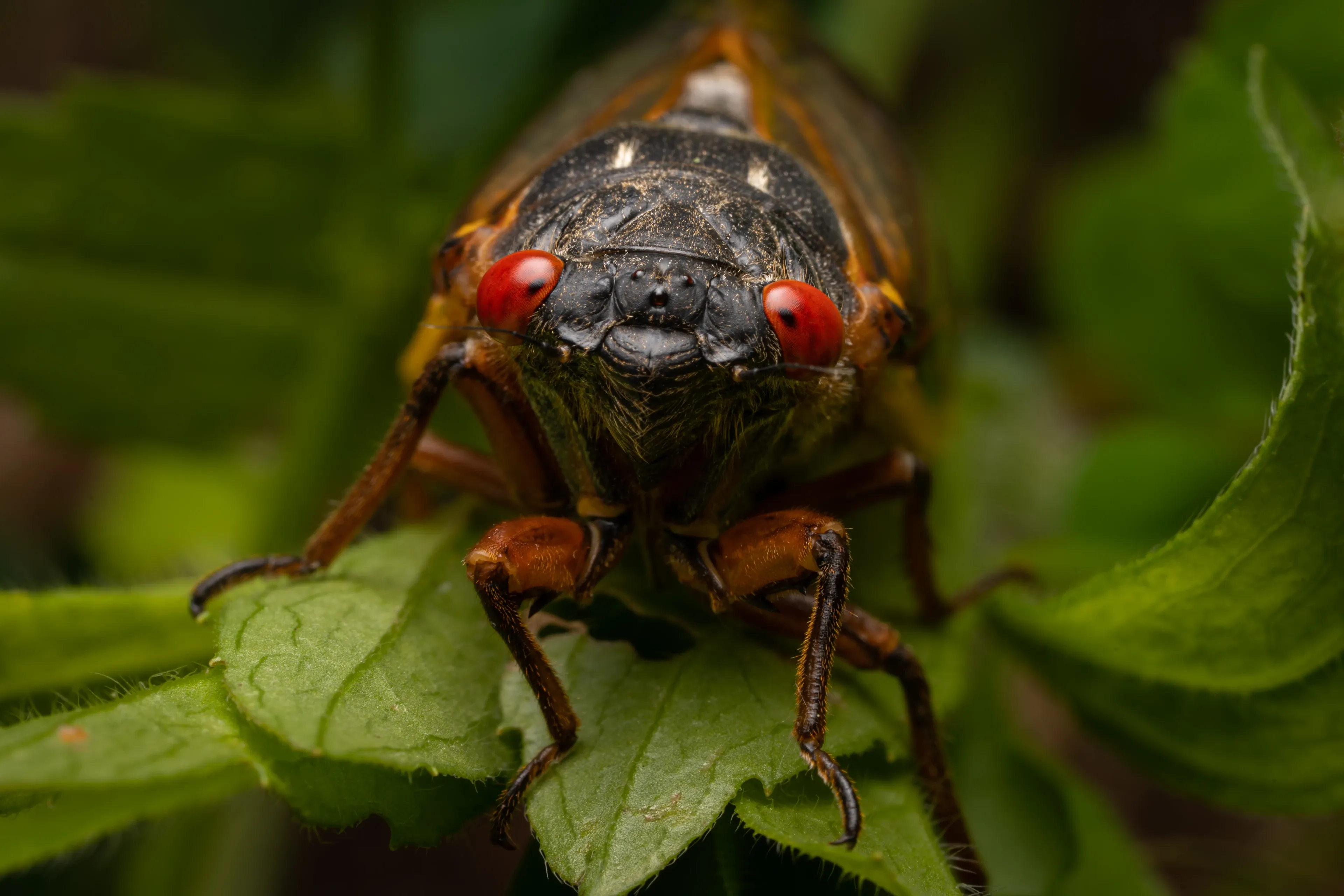 Real photograph
  Real photograph
  Real photograph
 Why we love them
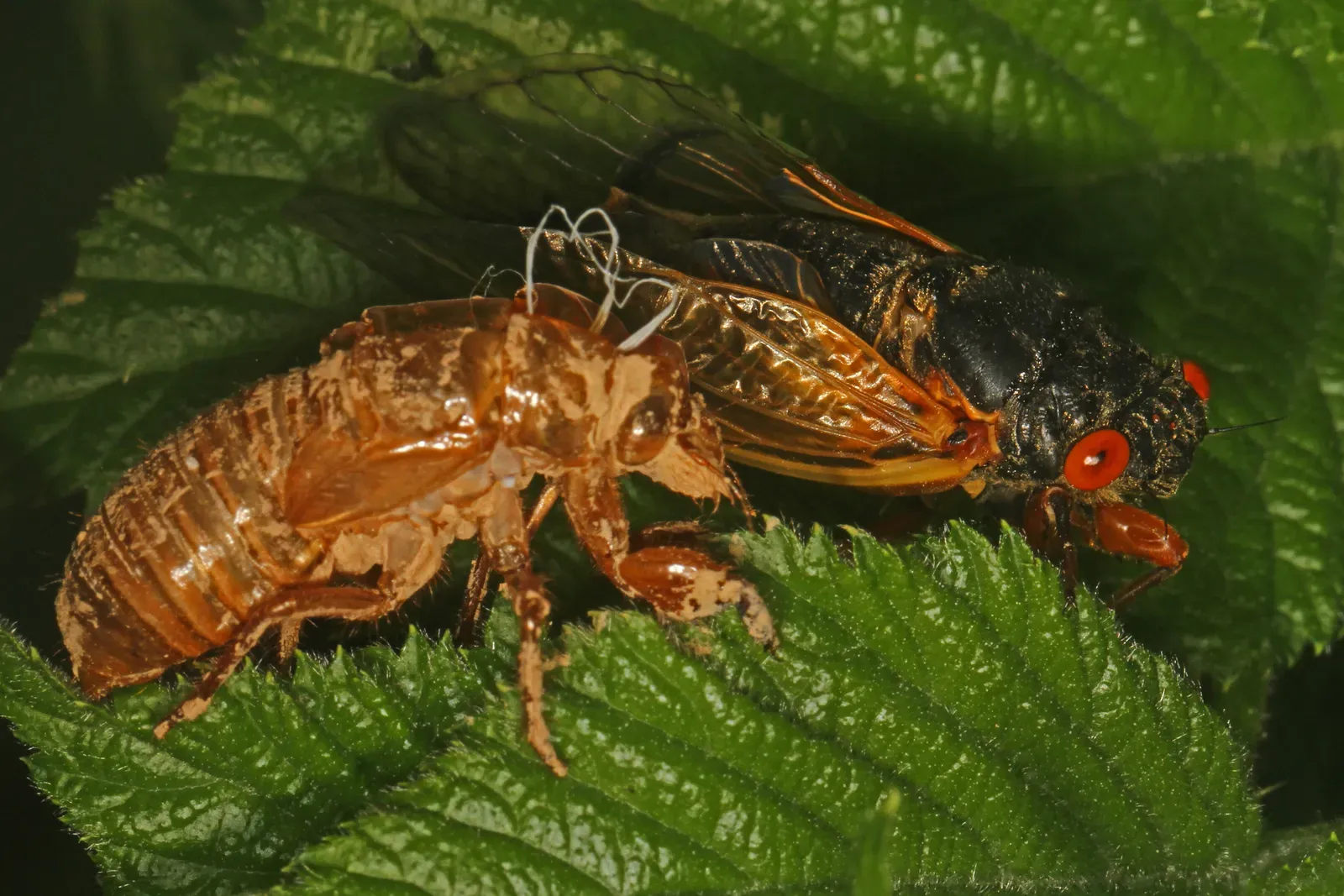
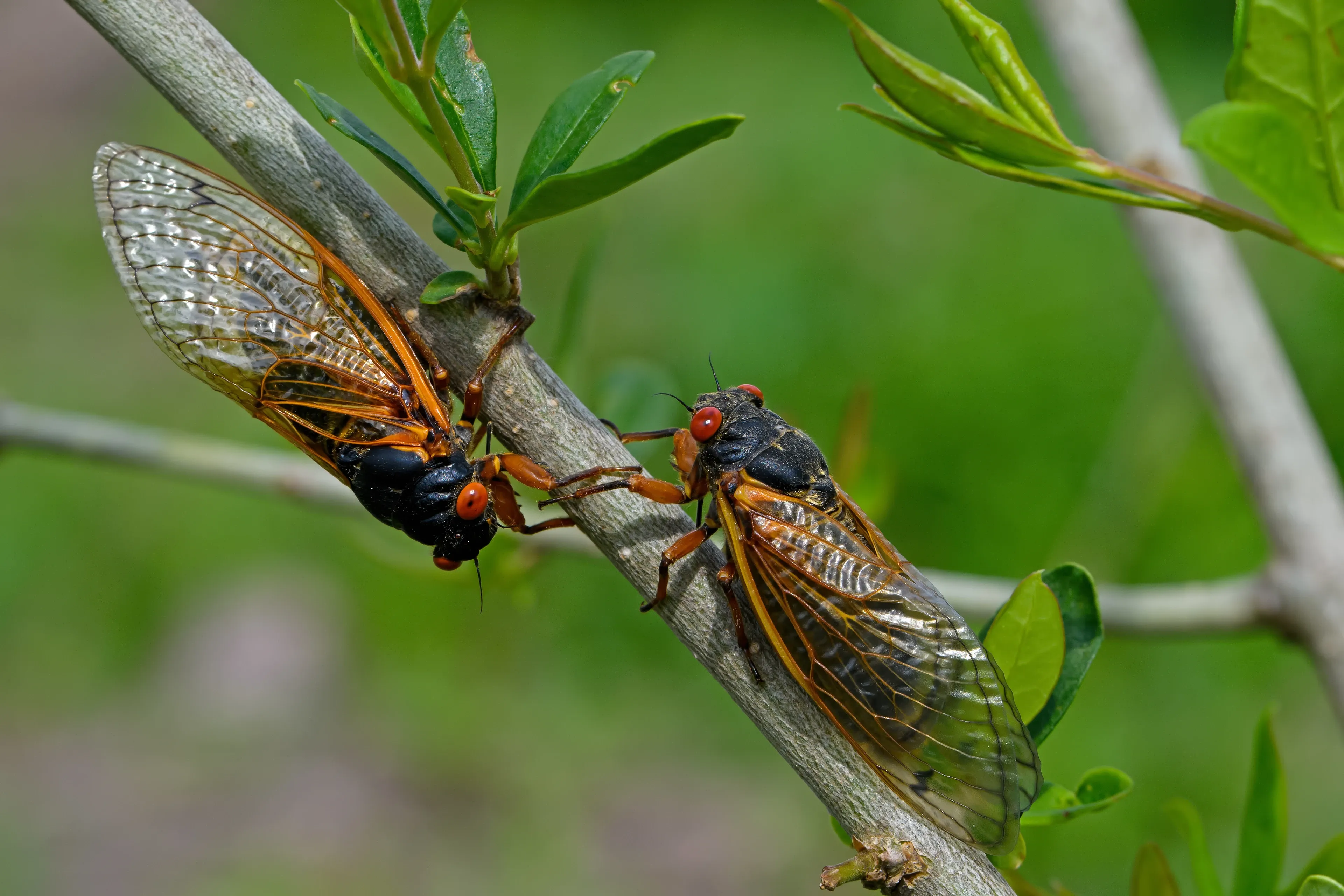
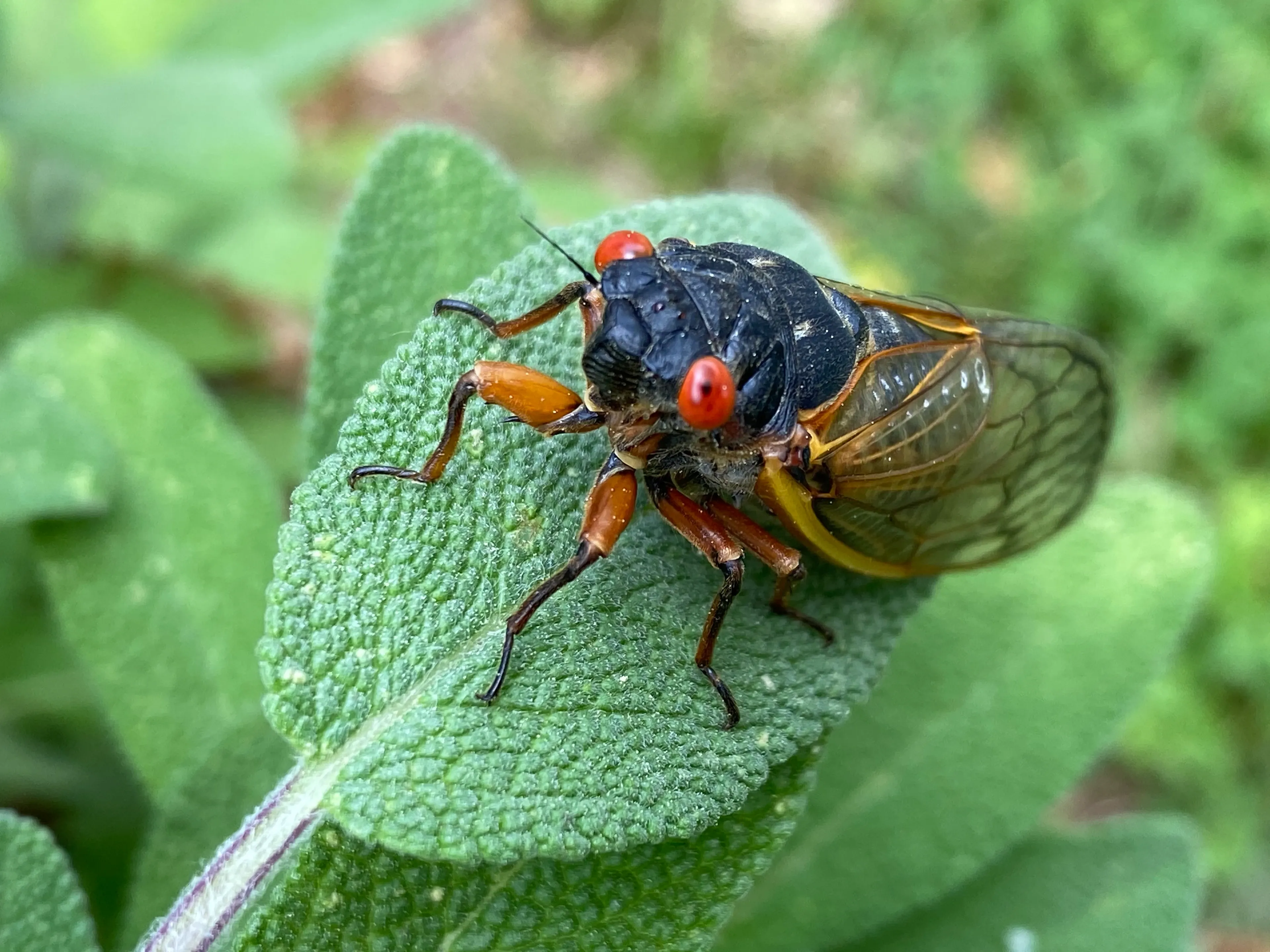
The periodical cicada is a shiny black insect with bright reddish-orange eyes and clear wings edged with orange veins. It is about as long as your thumb. These cicadas live in the leafy forests and gardens of the eastern United States, where tall trees give them everything they need. They are famous for one truly amazing trick that almost no other creature can do.
Most of a periodical cicada's life is a long, patient wait. After hatching, the tiny young, called nymphs, drop to the ground and burrow deep down among the tree roots. There they stay in the cool, dark soil for 17 whole years, quietly sipping sap from the roots and slowly growing bigger. Imagine waiting all that time before you ever see the sky!
Then, in the spring of the 17th year, something wonderful happens. The nymphs dig little tunnels and climb up into the warm evening air, often thousands together on the same night. Each one clings to a tree trunk and wriggles out of its old skin one last time, unfolding brand-new wings. Now, at last, it is a grown-up cicada.
Within a few days the males begin to sing. They have special drum-like parts on their bodies called tymbals, and together they make a great humming chorus that rings through the summer trees. The song calls the females closer so the cicadas can find one another. After the females lay their eggs in tiny slits in twigs, a new generation begins the long 17-year journey all over again.
Periodical cicadas need old woodlands full of leafy trees, so they can lose their homes when forests are cleared for building. Scientists on the IUCN Red List have listed this species as Near Threatened, which is a gentle reminder to look after the woods. Where the trees are safe, the cicadas keep filling the summers with their cheerful, once-in-many-years song.
My home
Deciduous forest, woodland, suburban gardens
Where I live
North America
What I eat
Tree root sap, xylem fluid
How long I am
0.038 m
How long I live
17 years
This cicada spends about 17 years underground as a young nymph before it ever climbs up into the sunshine, one of the longest lives of any insect.
When the grown-ups finally come out, the males sing together in huge choruses to call for a mate, and their song sounds a little like someone saying "Pharaoh".
A whole family group, called a brood, can climb out of the ground on the very same night, so a great many cicadas appear all at once.
Every periodical cicada can feel happy, scared and loved — just like you.
Looking after my friends
How many are there?
A big periodical-cicada emergence can produce up to about 1.5 million cicadas per acre.
This is a peak local emergence density, not the total size of a brood or species.
Estimate source: Brood XIII
How are they doing?
Close to threatenedThis species is not threatened right now, but it is close enough that scientists keep a careful watch.
You can help by learning their names, keeping wild places clean, and telling someone why this animal matters.
Where this came from
- Magicicada septendecim — Red List category — IUCN Red List of Threatened Species
- Magicicada septendecim (Linnaeus' 17-year cicada) — Animal Diversity Web, University of Michigan Museum of Zoology
- Magicicada septendecim — Wikipedia
- Brood XIII — Wikipedia