 ← All animals
 insect · Attacus atlas
Atlas moth
Gallery
2 photos Real photograph 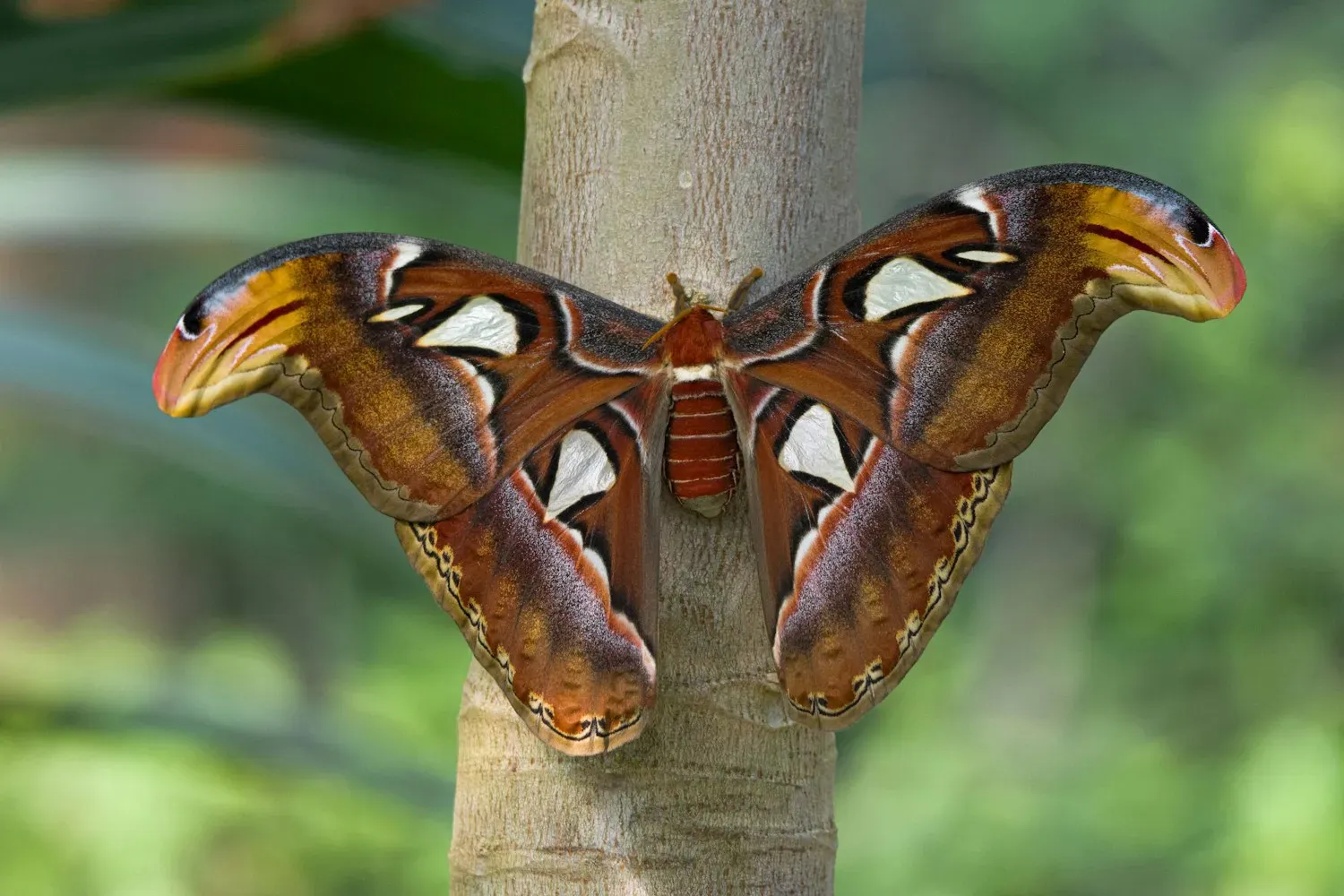 Real photograph
 Why we love them
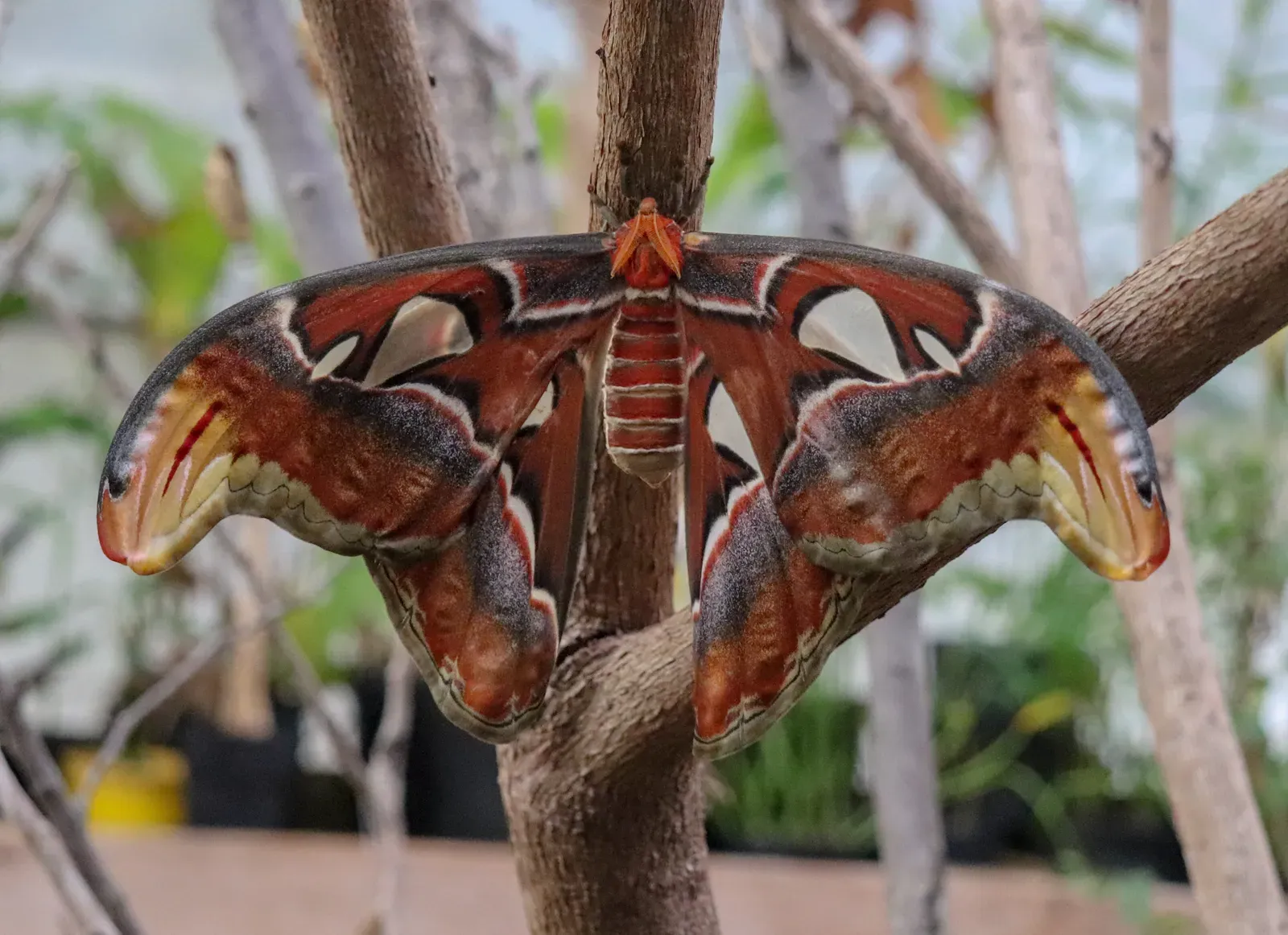
The atlas moth is one of the biggest moths in the world. From wingtip to wingtip its wings can stretch about as wide as a dinner plate. They are patterned in warm browns, orange, and pink, with a clear little window on each wing. The tips of the wings even look a bit like a snake's head, which can surprise a hungry animal.
Before it becomes a moth, the atlas moth is a plump, hungry caterpillar. It munches on leaves and grows bigger and bigger. When it is ready, it spins a case of silk around itself and rests inside while it changes into a moth.
Here is a surprising thing: a grown-up atlas moth never eats. Its mouth is not made for feeding, so it lives on all the food it saved up as a caterpillar. Because of this, the adult moth only lives for a few days, and its main job is to find a partner.
Atlas moths rest quietly during the day and fly at night, though they are gentle, wobbly fliers. A female sends out a special scent, and a male can smell it from a long way off using his big, feathery antennae, which help him find her in the dark.
These moths live in the warm forests of southern and south-eastern Asia, in places like India, Indonesia, and parts of China. In some parts of India, people gather the strong brown silk from their cocoons. Because they have not been studied across their whole range, scientists have not yet given them a conservation rating.
My home
Tropical forest, forest
Where I live
Asia
What I eat
Leaves
How long I am
0.21–0.25 m
The atlas moth is one of the biggest moths in the world, with wings as wide as a dinner plate.
Grown-up atlas moths do not eat at all — they live on food they saved up as caterpillars.
The patterns on the tips of its wings look a little like a snake's head.
Every atlas moth can feel happy, scared and loved — just like you.
Looking after my friends
How many are there?
A female Atlas moth lays about 134–169 eggs during her short adult life.
This is one female's egg output, not a population estimate.
Estimate source: Attacus atlas
How are they doing?
No global assessmentThis animal does not have a global extinction-risk assessment recorded in this system.
You can help by learning their names, keeping wild places clean, and telling someone why this animal matters.
Where this came from
- Attacus atlas — Animal Diversity Web, University of Michigan Museum of Zoology
- Attacus atlas — Wikipedia