Today's animal friend · 3 September 2026
The Seventeen-Year Songbird That Isn’t a Bird
In eastern North American woods and tree-filled neighbourhoods, a black-and-orange-eyed insect spends most of its life below our feet. When it finally climbs into daylight, the trees become its concert hall.
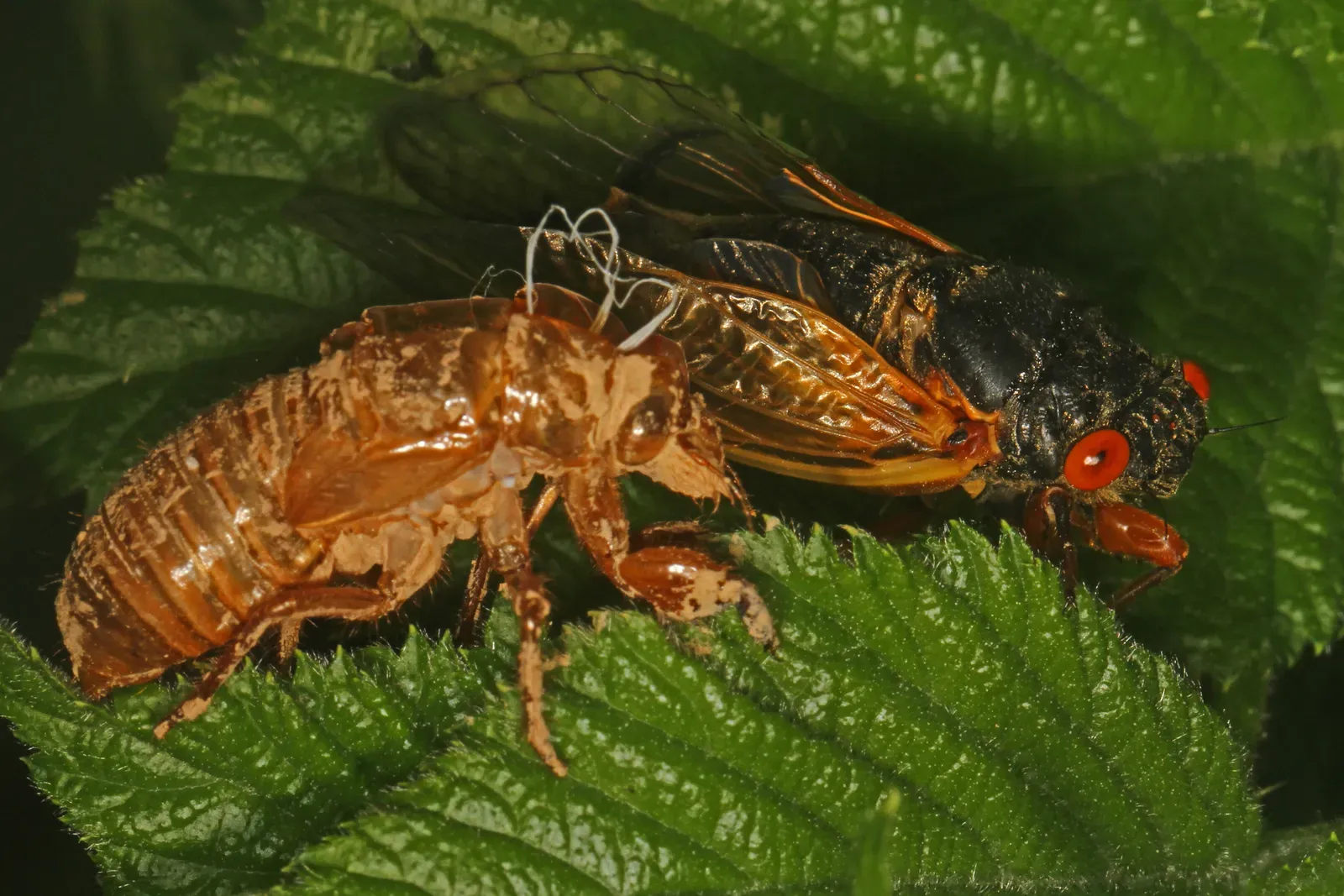
In eastern North American woods and tree-filled neighbourhoods, a black-and-orange-eyed insect spends most of its life below our feet. When it finally climbs into daylight, the trees become its concert hall.
A whisper under the lawn
Imagine tying your shoelaces beneath a leafy tree, unaware that a small neighbour has been waiting below you since before you started school. Not for a weekend. Not for one long winter. For about 17 years.
That patient neighbour is the periodical cicada, Magicicada septendecim. It is also called the Pharaoh cicada or Linnaeus’s 17-year cicada. For most of its extraordinary life, it is a young cicada, called a nymph, living underground among tree roots. Then, when its time comes, it heads upward into the sunshine.
This is not an animal that rushes. A periodical cicada is more like a tiny, determined time traveller with a very slow calendar. Its long hidden life is among the longest known for an insect. When we see one in daylight, we are meeting someone who has been quietly growing beneath a forest or garden for years and years.
Evidence: IUCN Red List of Threatened Species: Magicicada septendecim — Red List category; Animal Diversity Web, University of Michigan Museum of Zoology: Magicicada septendecim (Linnaeus’ 17-year cicada); Wikipedia: Magicicada septendecim
What does a long wait look like?
Underground, the nymph burrows through soil around deciduous-tree roots. It feeds on the watery fluid, called xylem fluid, from those roots. A tree-filled place is not just a nice backdrop for this cicada. It is its pantry, shelter, and connection to the world above.
The nymph may be about one to three metres below ground. That is deeper than a tall grown-up is high—an impressive place for an insect to make its home. In the cool darkness, it grows slowly while the tree roots keep doing their quiet work.
Periodical cicadas live in temperate deciduous forests and woodlands in the eastern United States, east of the Great Plains. They can also live in suburban places when suitable trees are there. A garden with mature trees may seem ordinary to us, but to a hidden cicada nymph it can be a whole underground neighbourhood.
So, are cicadas garden monsters? Not at all. This species is an herbivore, and its young feed on tree-root sap rather than hunting other animals. It is one small part of a busy woodland web, carrying energy from below-ground roots into the above-ground world when it emerges.
Evidence: Animal Diversity Web, University of Michigan Museum of Zoology: Magicicada septendecim (Linnaeus’ 17-year cicada); Wikipedia: Magicicada septendecim
Up, up, up—one huge night out
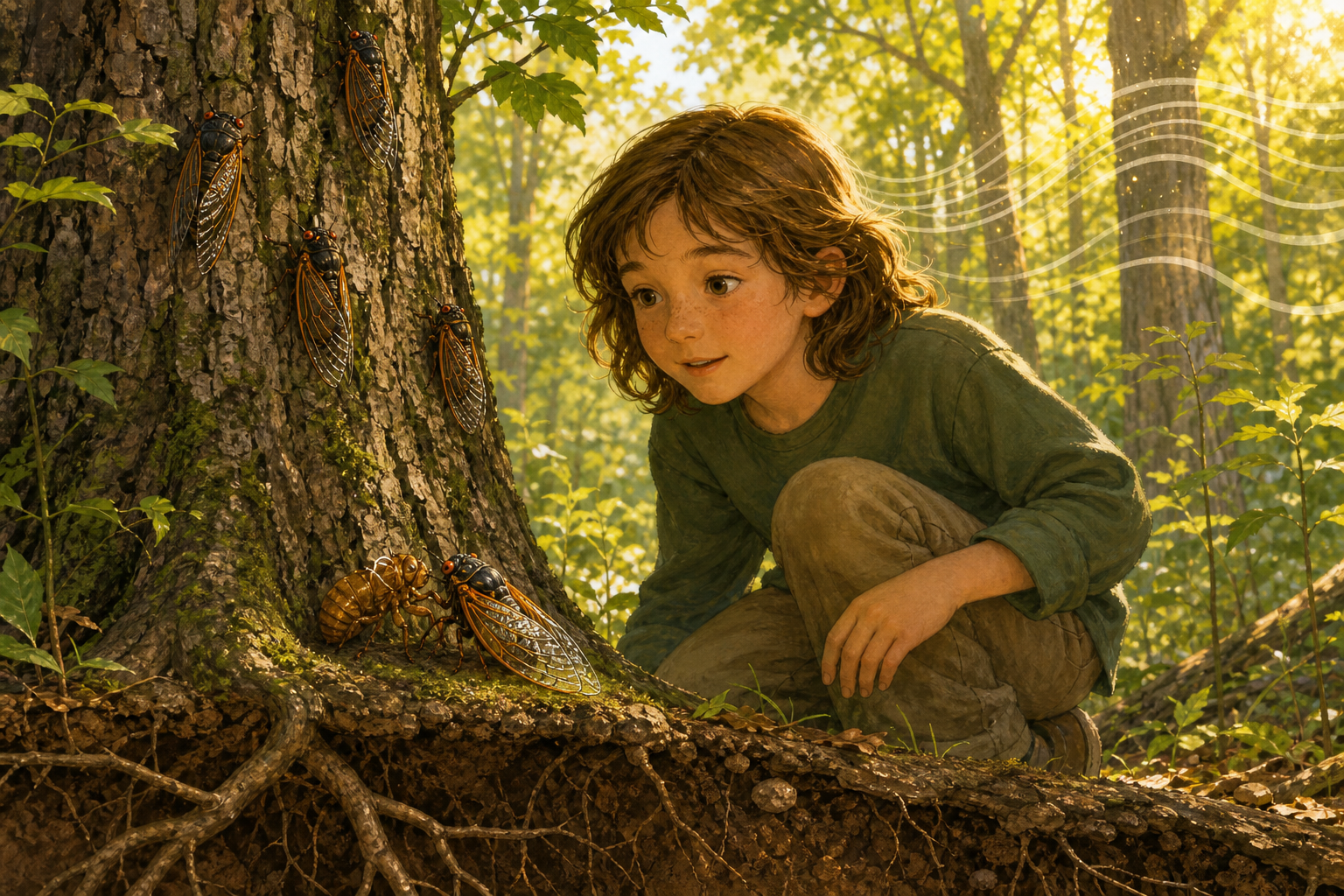
After roughly 17 years, nymphs emerge in May. Sometimes many from the same family group, called a brood, come out on the very same night. Picture a secret door opening under the forest floor—not for one guest, but for a crowd in tiny black coats.
Each nymph climbs a tree trunk or another upright surface and goes through its final molt. It wriggles out of its old outer skin and becomes an adult with wings. The empty skin left behind can look like a small, crinkly costume that somebody forgot on the bark.
Adult Magicicada septendecim are the largest species in their genus, reaching about 3.8 centimetres long—around the length of a thumb. They have black bodies, reddish-orange eyes and legs, and clear wings marked with orange veins. Those bright eyes make them look as if they have borrowed a pair of very fancy goggles.
They are active by day, when their colours, wings, and remarkable sound can be noticed in the trees. If you are lucky enough to see one, the kindest adventure is a looking adventure: watch where it climbs, notice its wings, then give it space to continue its short above-ground chapter.
Evidence: Animal Diversity Web, University of Michigan Museum of Zoology: Magicicada septendecim (Linnaeus’ 17-year cicada); Wikipedia: Magicicada septendecim
Why does the forest suddenly sound like “Pharaoh”?
Once the adults have emerged, male cicadas begin their big musical mission: calling for mates. Only the males sing. They use special rigid body membranes called tymbals, which work a little like built-in noisemakers. No tiny guitars required.
One male call is striking. A chorus of males can make the trees hum and buzz as though the woodland has turned into a very enthusiastic stadium. The call has been described as sounding like “weeeee-whoa” or even the word “Pharaoh,” which helps explain one of this cicada’s unusual common names.
The cicadas are not social nest-builders like ants or bees. Still, their giant chorus and shared emergence make them feel wonderfully dramatic. They gather at the same moment because finding one another is important when your adult time above ground is brief.
After mating, females use an egg-laying structure called an ovipositor to place eggs in small slits in twigs. The next generation begins, and eventually young nymphs return to the soil and tree roots. The long countdown starts again. A cicada’s life is a loop of patience, climbing, singing, and beginning anew.
Evidence: Animal Diversity Web, University of Michigan Museum of Zoology: Magicicada septendecim (Linnaeus’ 17-year cicada); Wikipedia: Magicicada septendecim
A woodland friend worth saving
It is easy to care about animals with fluffy tails or enormous eyes. But the periodical cicada asks us to care in a different way: by listening. Its chorus reminds us that the ground beneath a mature forest is full of lives we rarely notice.
Magicicada septendecim is listed as Near Threatened on the IUCN Red List, assessed in 2021. One concern is the loss of mature deciduous forest habitat. When old, leafy woodland disappears, the trees and roots that young cicadas depend on disappear from that place too.
There is hopeful news in knowing what helps. Protecting and restoring mature forests and woodlands supports the tree-root homes cicada nymphs need. Tree-filled spaces in the eastern United States, including suitable suburban areas, can matter as well.
You do not need to become a forest ranger tomorrow—unless that sounds brilliant, of course. You can start by noticing trees, valuing local green spaces, and sharing the fact that a noisy cicada may have spent 17 years preparing for one bright season. That is a story worth passing on.
Evidence: IUCN Red List of Threatened Species: Magicicada septendecim — Red List category; Animal Diversity Web, University of Michigan Museum of Zoology: Magicicada septendecim (Linnaeus’ 17-year cicada); Wikipedia: Magicicada septendecim
A kind choice that reaches beyond the picnic blanket
Caring about cicadas can make us wonder about all the creatures connected to trees, soil, water, and food. One gentle way to practise that care is to enjoy more plant-based foods: perhaps beans in a burrito, peas in pasta, crunchy nuts or seeds, fruit, vegetables, and whole grains. The World Health Organization describes these foods as parts of a varied healthy diet.
Choosing plant-forward meals can be a kindness with a wide reach. The IPCC says shifts toward sustainable, healthy, more plant-based diets can help reduce food-system emissions and pressure on land and biodiversity. That matters for habitats, including forests where hidden cicadas wait beneath the roots.
This is not a contest, and nobody needs a perfect lunchbox. You might ask a parent, carer, or another trusted adult to help you try a plant-based meal your family enjoys. Every curious, compassionate choice says something lovely: wild animals are our neighbours, not ingredients in a problem to ignore.
Evidence: World Health Organization: Healthy diet; Intergovernmental Panel on Climate Change: Climate Change 2022: Mitigation of Climate Change — Chapter 7
Small kindness, big woodland welcome
The periodical cicada’s story begins with a tree root and ends in a chorus. It is a cheerful reminder that our everyday choices connect to habitats far beyond our own tables.
A varied diet with foods such as vegetables, fruit, pulses, whole grains, nuts, and seeds can be part of healthy eating, and sustainable shifts toward more plant-based diets can reduce pressure on land and biodiversity. With help from trusted adults, choosing more plant-based favourites is one warm way to show care for animals and the living places they need.
You do not have to be perfect to be kind. Notice a tree, protect a patch of green, try a plant-powered snack, and listen when the woods get loud. Somewhere below, a future cicada may be waiting patiently for its turn to sing.
Evidence: World Health Organization: Healthy diet; Intergovernmental Panel on Climate Change: Climate Change 2022: Mitigation of Climate Change — Chapter 7
Questions people ask
Is every cicada a 17-year cicada?
No. This feature is about Magicicada septendecim, a 17-year periodical cicada. It should not be mixed up with 13-year Magicicada species or with other cicadas that have different life cycles.
Evidence: Animal Diversity Web, University of Michigan Museum of Zoology: Magicicada septendecim (Linnaeus’ 17-year cicada); Wikipedia: Magicicada septendecim
Why do so many appear together?
Cicadas from a brood can emerge together, sometimes on the same night. This creates a busy chance for adults to find mates, with males calling in large choruses.
Evidence: Animal Diversity Web, University of Michigan Museum of Zoology: Magicicada septendecim (Linnaeus’ 17-year cicada); Wikipedia: Magicicada septendecim
What should I do if I find one?
Have a close look without picking it up if possible, and let it climb or rest where it is. These adults have waited a very long time for their above-ground season.
Evidence: Animal Diversity Web, University of Michigan Museum of Zoology: Magicicada septendecim (Linnaeus’ 17-year cicada); Wikipedia: Magicicada septendecim
Why are mature trees important?
Young cicadas live underground and feed on fluid from deciduous tree roots. Loss of mature deciduous forest is a concern for this Near Threatened species.
Evidence: IUCN Red List of Threatened Species: Magicicada septendecim — Red List category; Animal Diversity Web, University of Michigan Museum of Zoology: Magicicada septendecim (Linnaeus’ 17-year cicada)
Read the evidence
Sources behind this story
- Magicicada septendecim — Red List category — IUCN Red List of Threatened Species
- Magicicada septendecim (Linnaeus' 17-year cicada) — Animal Diversity Web, University of Michigan Museum of Zoology
- Magicicada septendecim — Wikipedia
- Healthy diet — World Health Organization
- Climate Change 2022: Mitigation of Climate Change — Chapter 7 — Intergovernmental Panel on Climate Change
Health information is general education, not personal medical advice. Young readers should make food choices with a trusted adult and qualified health professional.