 ← All animals
 insect · Aedes aegypti
Yellow fever mosquito
Gallery
1 photo Real photograph Why we love them
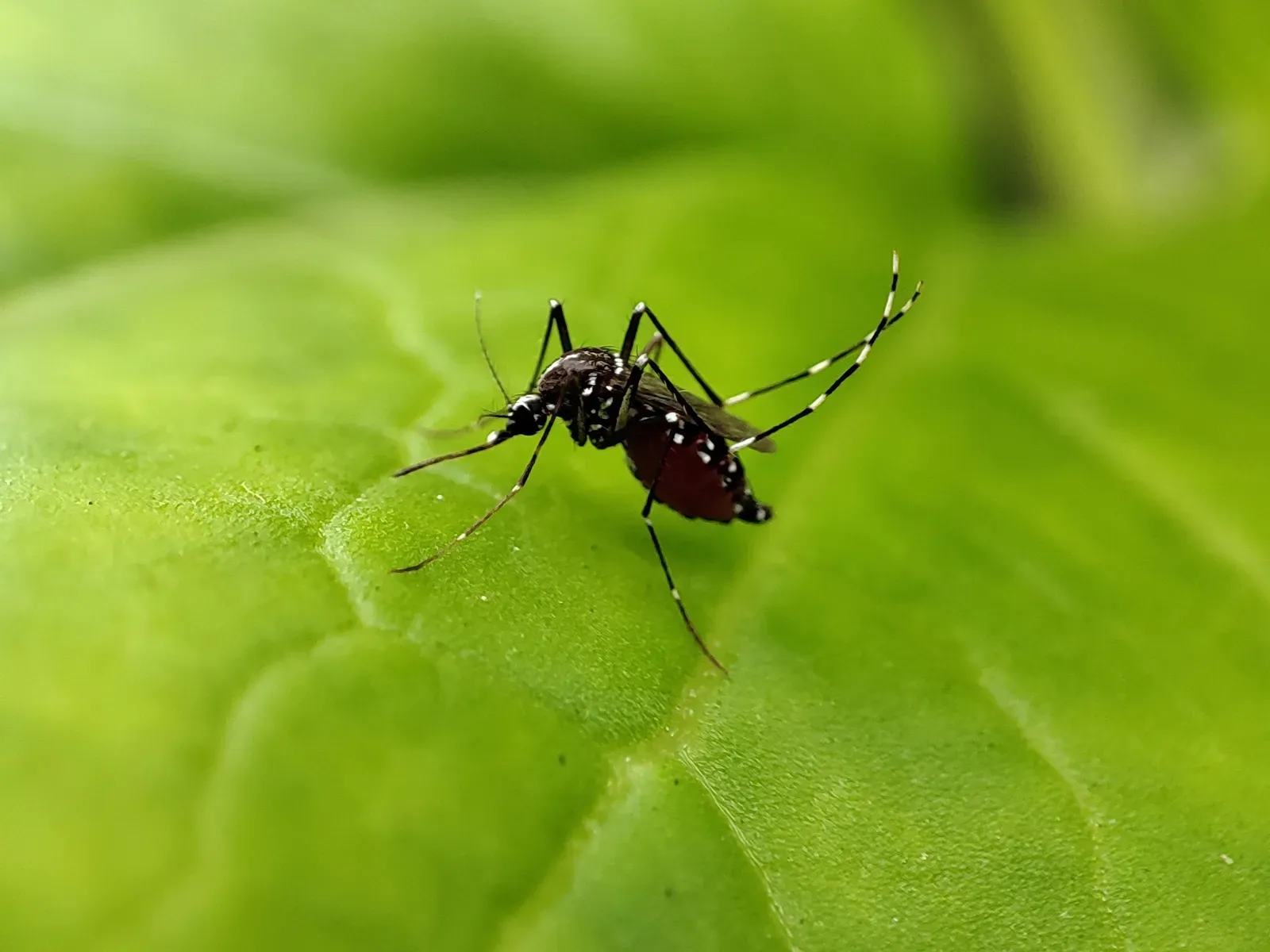
The yellow fever mosquito is a tiny insect, only about four to seven millimetres long — smaller than a grain of rice. It is dark in colour, but if you look closely you can find pretty white markings on its legs and a curved pattern on its back shaped like a little harp. Scientists call that harp shape a lyre, and it helps them tell this mosquito apart from its cousins.
Like all mosquitoes, this one has a busy little life. The males spend their days sipping sweet nectar from flowers and juice from fruit. The females enjoy nectar too, but they also drink a small amount of blood. They need it to help their eggs grow strong, and afterwards they fly off to find the perfect place to lay them.
That perfect place is always near water. A female lays her eggs right beside small pools of still water, sometimes in a puddle, a pond, or even a bucket left out in the rain. When the eggs hatch, the wriggly young live in the water first, swimming and growing until they are ready to become flying adults.
This mosquito began life long ago in Africa, but today it lives in many warm and tropical parts of the world. It likes to stay close to people, in gardens and towns where there are shady spots and little puddles of water to use as a nursery.
Some mosquitoes can pass on illnesses through their bite, so scientists study this species carefully to learn how to keep people healthy. One of the simplest things anyone can do is tip out standing water, which gives the mosquitoes fewer puddles to use — a small, helpful step that keeps homes and gardens tidy. </content> </invoke>
My home
Towns, gardens, still water, water containers
Where I live
Africa
What I eat
Flower nectar, fruit juices, a little blood (females only)
How long I am
0.004–0.007 m
You can spot this little mosquito by the white markings on its legs and a curved pattern shaped like a small harp, called a lyre, on its back.
Only female mosquitoes drink a tiny bit of blood, which they need to make their eggs, while both males and females sip flower nectar and fruit juices.
This mosquito needs water to grow up, so females lay their eggs right beside little pools of still water where the young live before they become adults.
Every yellow fever mosquito can feel happy, scared and loved — just like you.
Looking after my friends
How many are there?
One female yellow fever mosquito usually produces about 100–200 eggs after a full blood meal.
This is egg production by one female, not a population count; survival depends strongly on local conditions.
Estimate source: Yellow Fever Mosquito Aedes aegypti
How are they doing?
No global assessmentThis animal does not have a global extinction-risk assessment recorded in this system.
You can help by learning their names, keeping wild places clean, and telling someone why this animal matters.
Where this came from
- Aedes aegypti — IUCN Red List status check — IUCN Red List of Threatened Species
- Aedes aegypti — Classification — Animal Diversity Web, University of Michigan Museum of Zoology
- Aedes aegypti — Wikipedia
- Yellow Fever Mosquito Aedes aegypti — University of Florida IFAS Extension