 ← All animals
 insect · Danaus plexippus
Monarch butterfly
Gallery
2 photos Real photograph 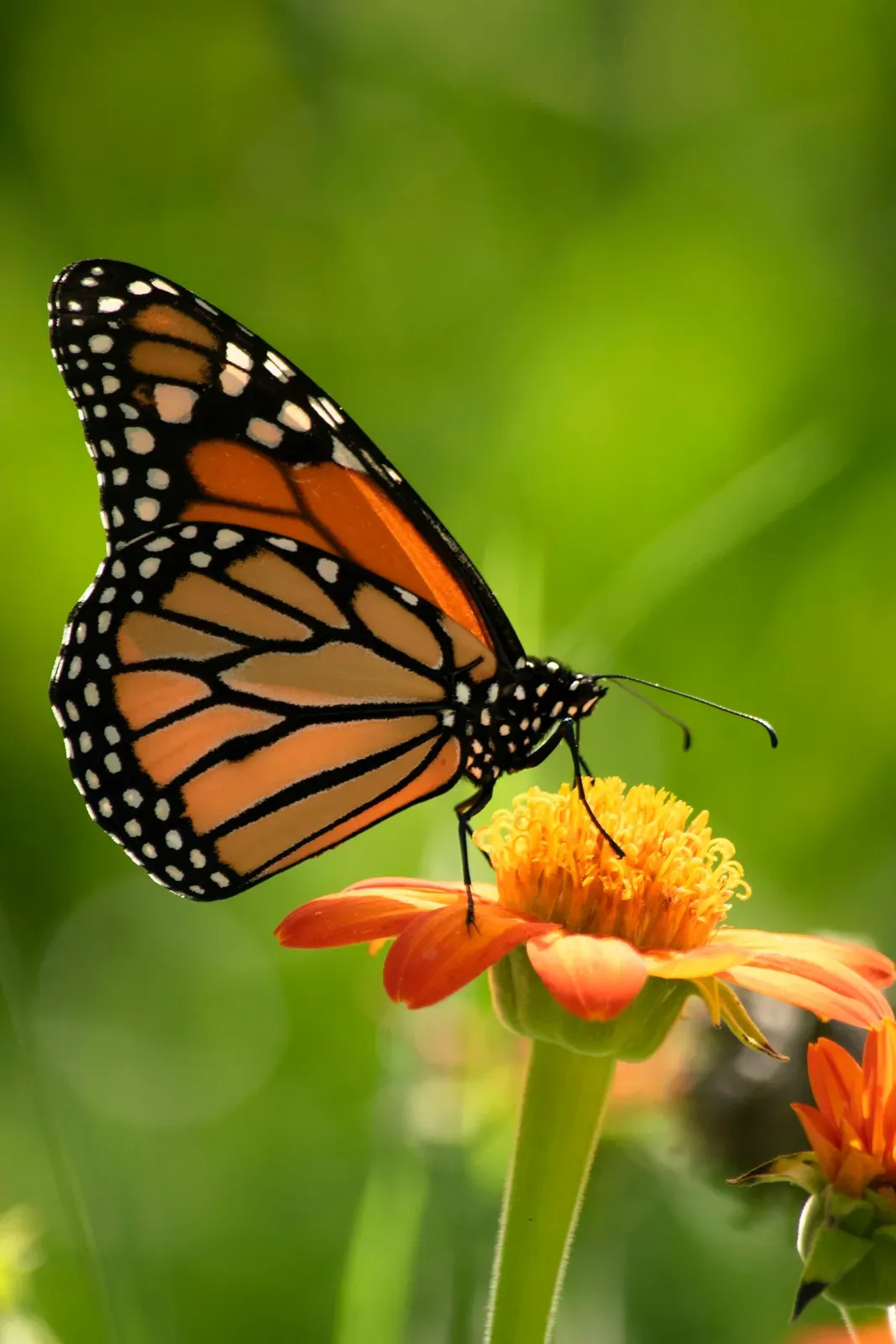 Real photograph
 Why we love them
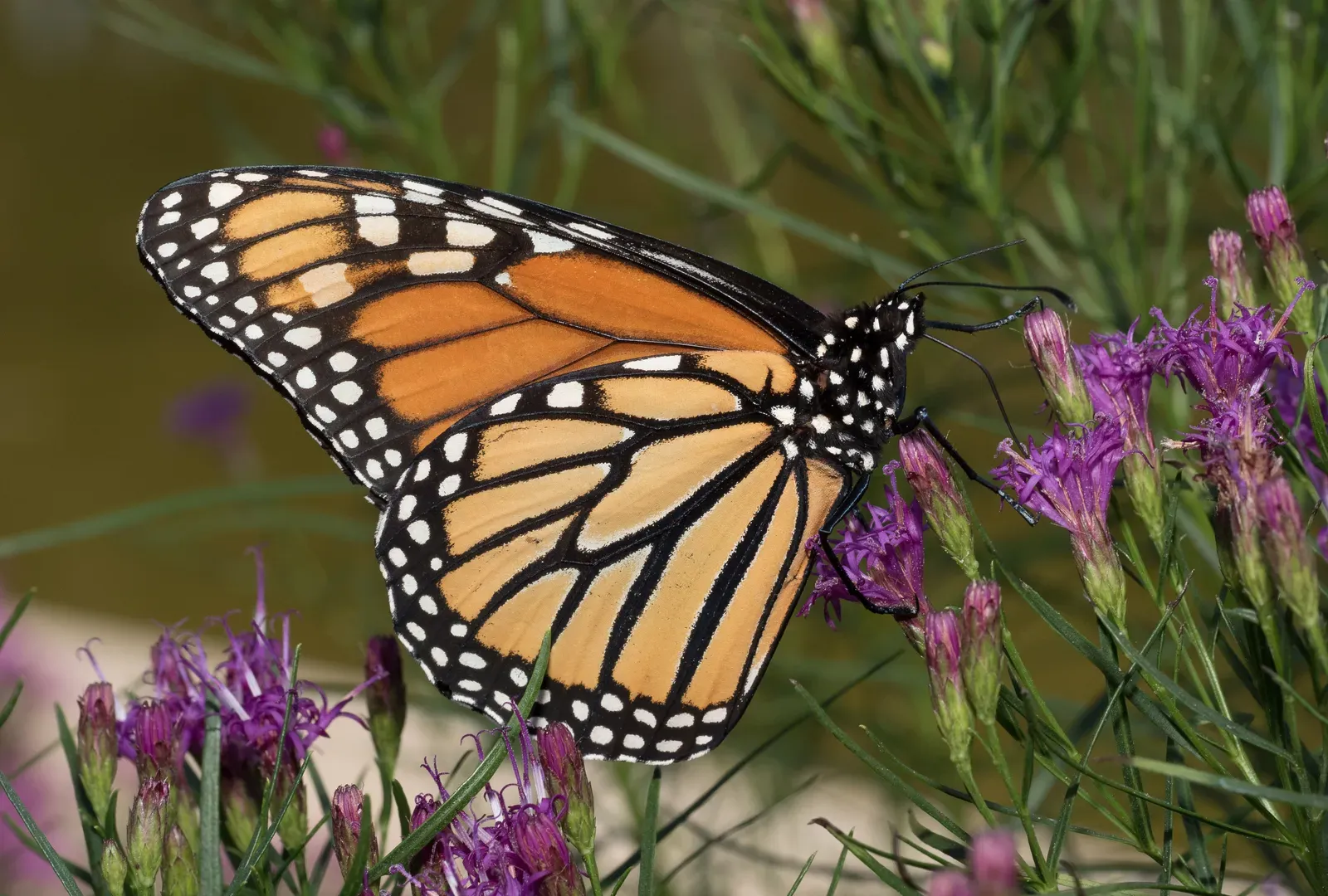
The monarch is one of the best-known butterflies in the world. It has bright orange wings crossed with black lines and edged with little white dots. From wing tip to wing tip a monarch is about as wide as your hand, roughly nine to ten centimetres across.
A monarch begins life as a tiny egg on a plant called milkweed. Out hatches a stripy caterpillar of yellow, black, and white. The caterpillar munches milkweed leaves and grows fast. Milkweed tastes bad and keeps the caterpillar safe, and that yucky taste stays with the butterfly, too, so birds learn to leave it alone.
When the caterpillar is big enough, it makes a smooth green case around itself called a chrysalis. Inside, something wonderful happens. After about two weeks the case opens and a brand-new butterfly climbs out, spreads its wings, and flies away.
Grown monarchs sip sweet nectar from flowers. Most only live for a few weeks. But one special group each year is different: when the weather turns cold, these monarchs set off on a huge journey, flying great distances to warmer places to rest for the winter, then heading back when spring returns.
Monarchs need our help. The kind that makes this long journey is now listed as vulnerable, which means its numbers have been falling. They have fewer milkweed plants to lay eggs on, and changing weather makes the trip harder. We can help by planting milkweed and flowers so monarchs have food and a safe place to grow.
My home
Meadow, grassland, garden, woodland
Where I live
North America
What I eat
Milkweed leaves, flower nectar
How long I am
0.089–0.102 m
How long I live
0.05–0.75 years
A monarch caterpillar eats only milkweed leaves, and that special food makes the grown-up butterfly taste nasty to hungry birds.
Every autumn, monarchs in North America fly amazingly far, and some travel thousands of kilometres to spend winter where it is warm.
A monarch caterpillar changes inside a little green case called a chrysalis, then comes out as a winged butterfly.
Every monarch butterfly can feel happy, scared and loved — just like you.
Looking after my friends
How many are there?
The western monarch count crashed from as many as 10 million butterflies in the 1980s to just 1,914 in 2021.
These are western overwintering-population figures, not the much larger eastern population or a current global count.
Estimate source: Migratory monarch butterfly now Endangered — IUCN Red List (press release)
How are they doing?
VulnerableThis species has a high risk of extinction in the wild unless the pressures on it improve.
You can help by learning their names, keeping wild places clean, and telling someone why this animal matters.
Where this came from
- Migratory monarch butterfly now Endangered — IUCN Red List (press release) — International Union for Conservation of Nature (IUCN)
- The Monarch Butterfly in North America — US Forest Service (US Department of Agriculture)
- Monarch Butterfly — Wildlife Guide — National Wildlife Federation
- Monarch butterfly — Wikipedia