 ← All animals
 insect · Locusta migratoria
Migratory locust
Gallery
1 photo Real photograph Why we love them
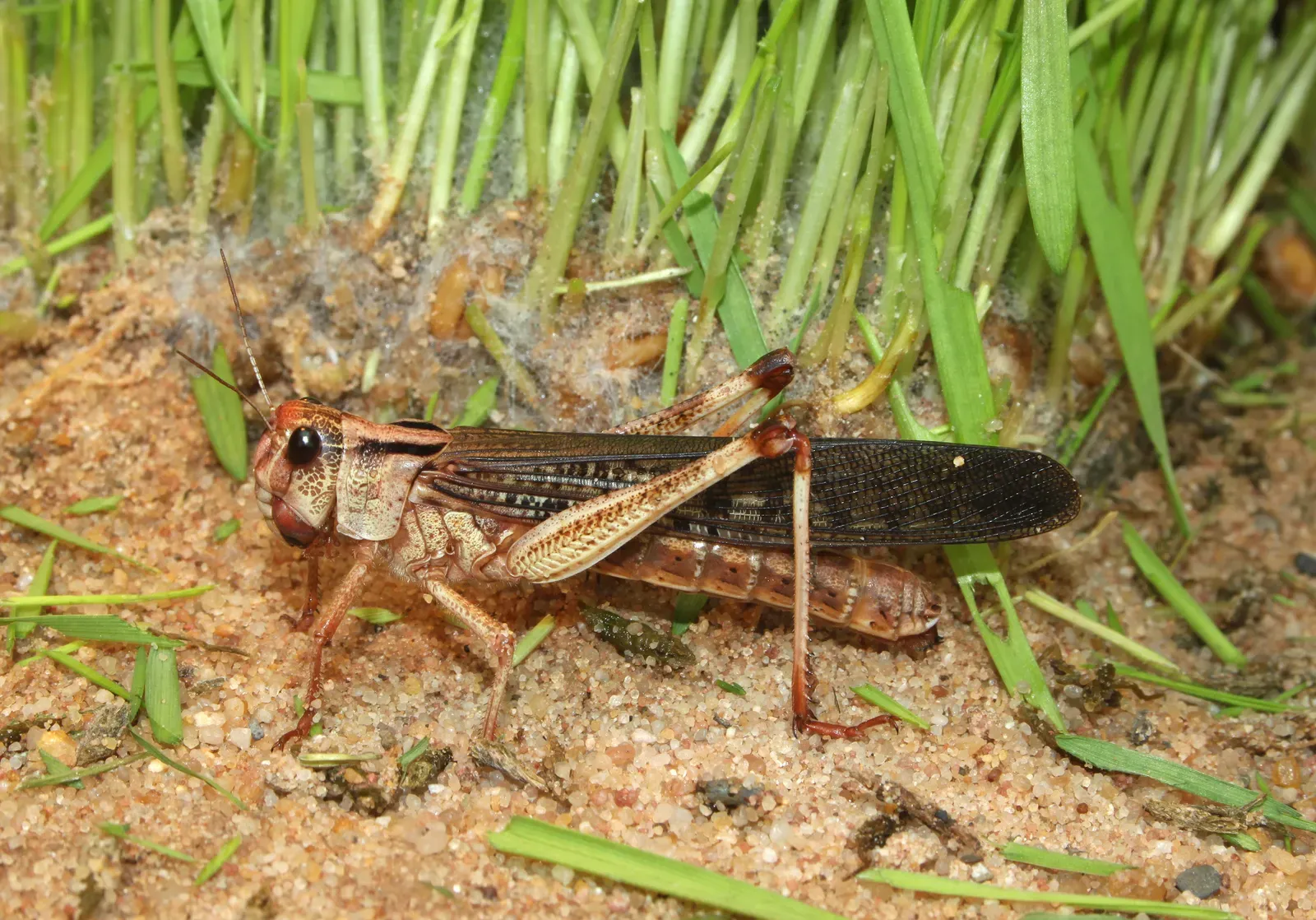
The migratory locust is a kind of grasshopper with long, strong wings and even stronger back legs for leaping. Its name gives away its special talent: this insect is one of nature's great travellers. Migratory locusts are found across a huge part of the world, from Africa and Europe to Asia and Australia.
What makes the migratory locust truly amazing is that it can change its whole look and lifestyle. Most of the time it lives quietly on its own. In this "solitary" form it is a calm green or brown, blending in with the grasses and leaves it likes to nibble. You might walk right past one without ever noticing it.
But when many locusts find themselves together in one place, something wonderful happens. Over time they change into a brighter "gregarious" form, dressed in warm yellows and browns, and they begin to travel as one enormous group. Scientists still find it fascinating how a shy green insect can turn into a bold, colourful traveller simply because it has company.
Grown-up gregarious locusts are about 4 to 6 centimetres long, and their colours grow deeper and richer as they get older. On their wings, huge groups of them can fly great distances together, crossing plains and hills in search of fresh green plants to eat. It is one of the biggest gatherings any insect can make.
Because they eat leaves and grasses, big groups of locusts sometimes visit the fields where farmers grow food. Farmers keep a careful eye out and have clever ways to share the land. Around the world the migratory locust is listed as Least Concern, so these remarkable travellers are still doing well in the wild.
My home
Grassland, savanna, farmland
Where I live
Africa, Asia, Europe, Oceania
What I eat
Grasses, leaves, crops
How long I am
0.04–0.06 m
Migratory locusts are amazing long-distance flyers, able to travel great distances across the land on their wings.
They come in two styles - a quiet green or brown "solitary" form, and a colourful "gregarious" form that appears when lots of them gather together.
Grown-up gregarious locusts are about 4 to 6 centimetres long, and their colours deepen to warm yellow and brown as they get older.
Every migratory locust can feel happy, scared and loved — just like you.
Looking after my friends
How many are there?
A dense locust swarm can pack up to about 80 million migratory locusts into one square kilometre.
This is a peak swarm density, not a worldwide population estimate.
Estimate source: Migratory locust
How are they doing?
Lower extinction riskThis species has a lower global extinction risk right now. Local populations can still grow or shrink.
You can help by learning their names, keeping wild places clean, and telling someone why this animal matters.
Where this came from
- Locusta migratoria (Migratory Locust) — Red List Assessment — IUCN Red List of Threatened Species
- Locusta migratoria — Animal Diversity Web, University of Michigan Museum of Zoology
- Migratory locust — Wikipedia