 ← All animals
 insect · Dynastes hercules
Hercules beetle
Gallery
4 photos Real photograph 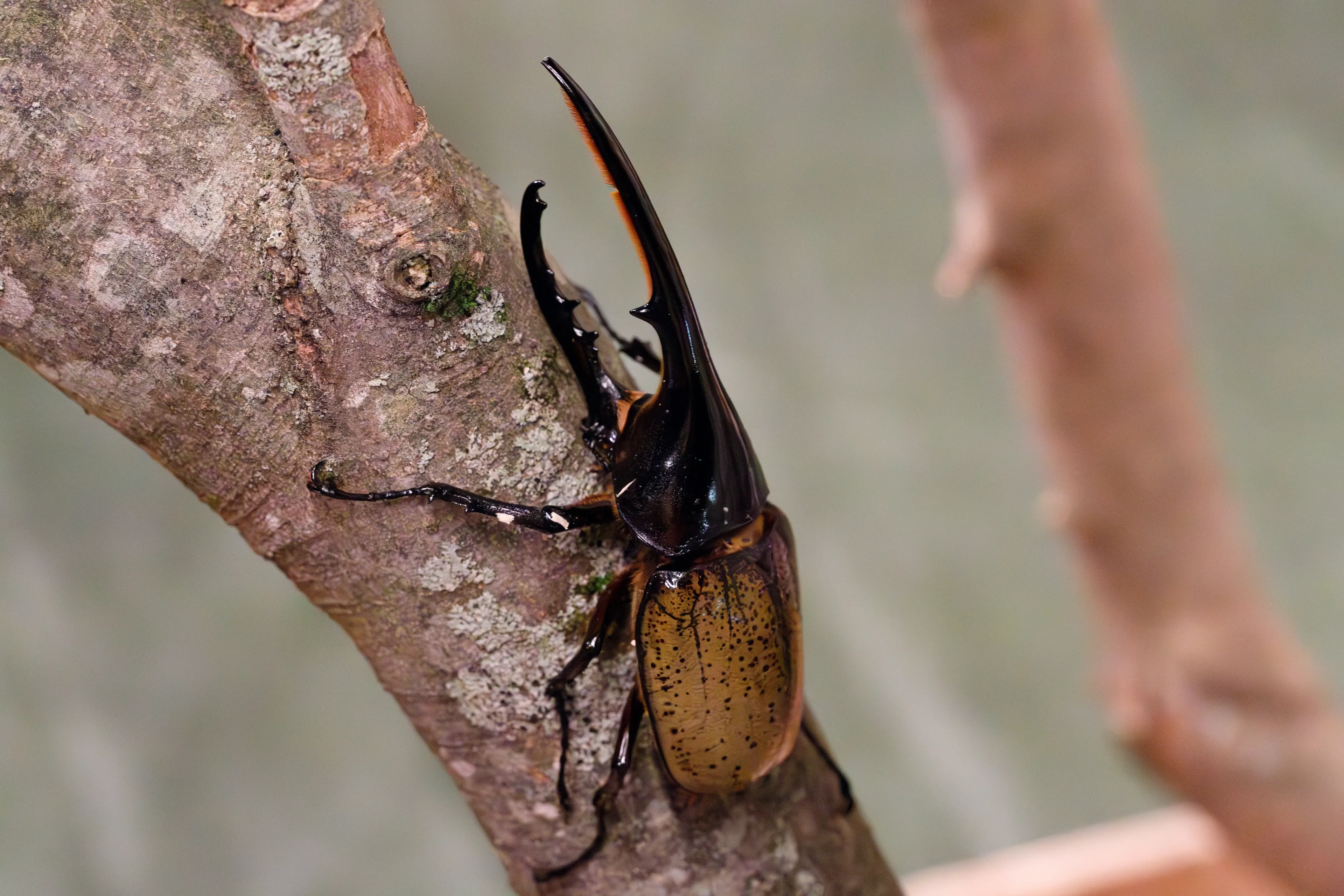 Real photograph
 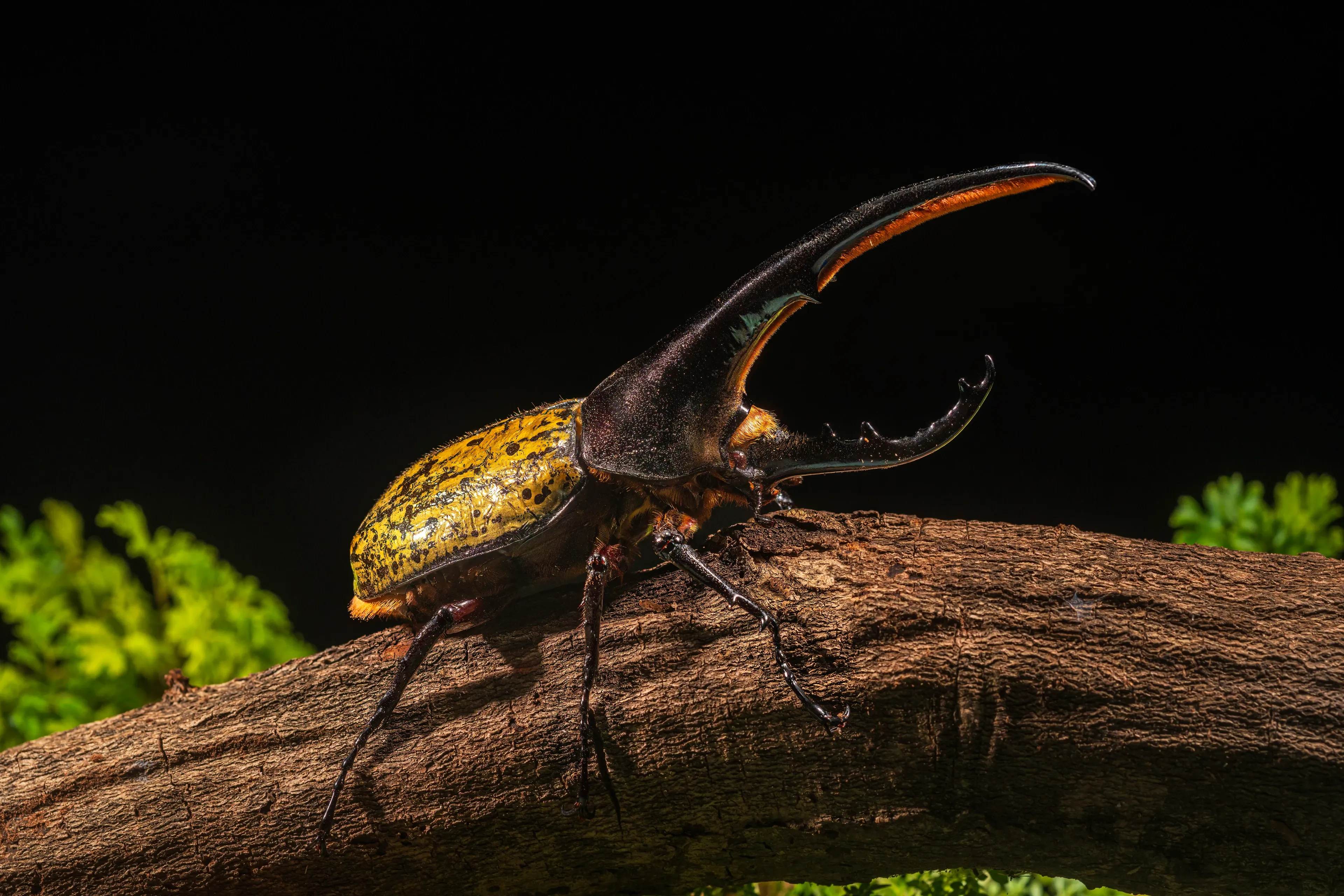 Real photograph
 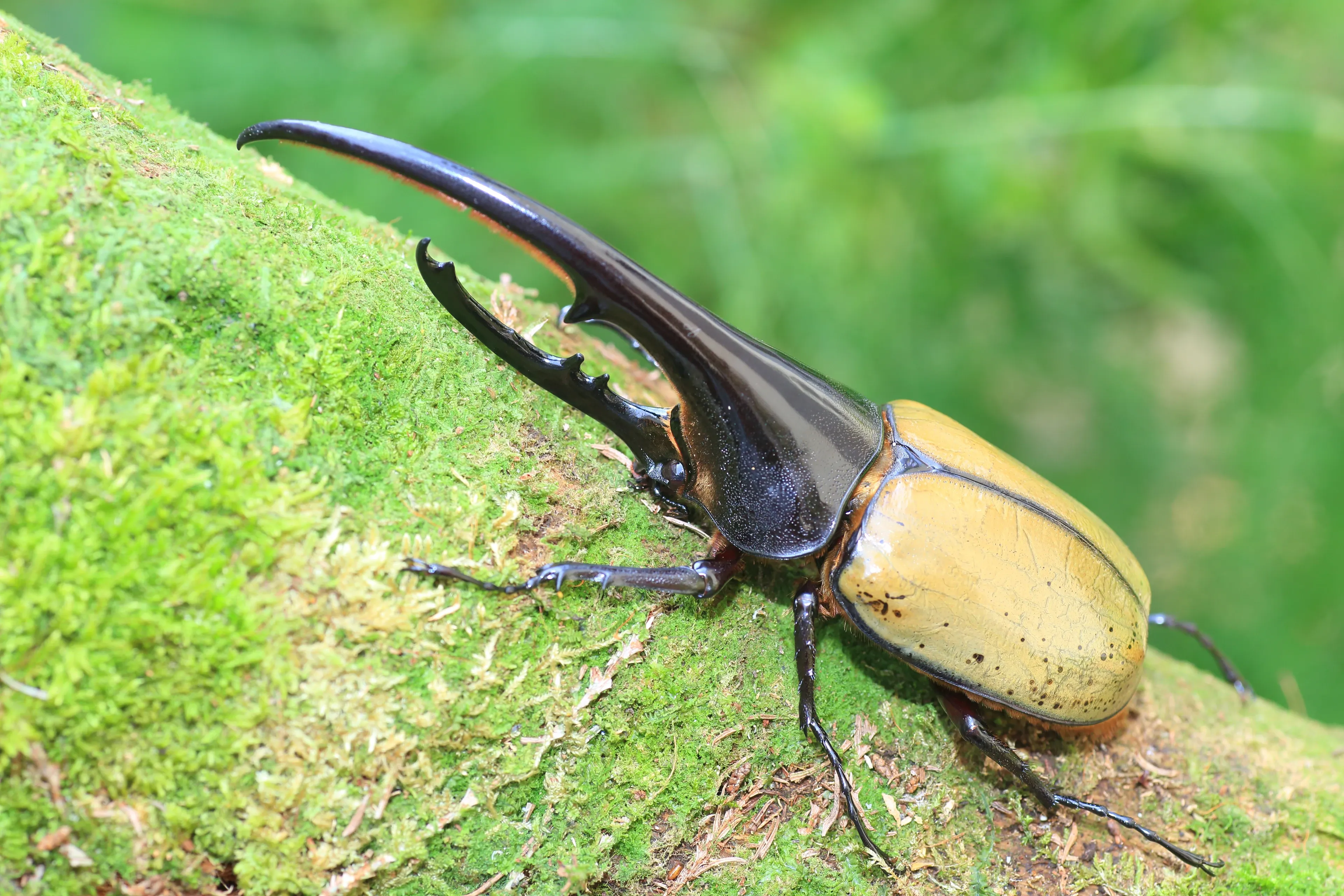 Real photograph
 Why we love them
The Hercules beetle is a gentle giant of the insect world, and it is one of the biggest and strongest beetles anywhere. It lives in the warm, green rainforests of Central and South America, wandering across the leafy forest floor. Its shiny body is large enough to fill the palm of your hand, which makes it a real heavyweight among bugs.
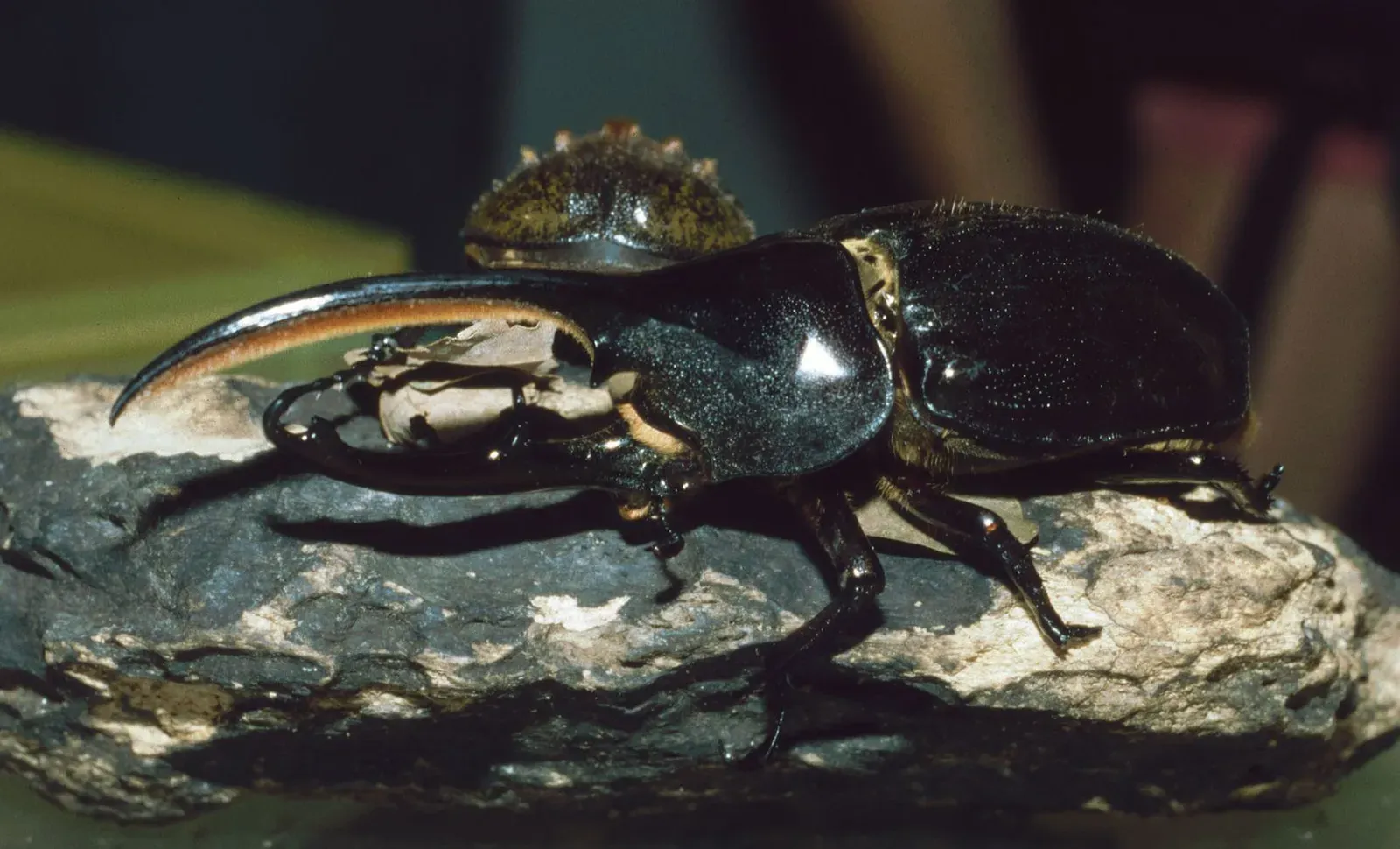
The most amazing thing about a male Hercules beetle is his pair of long horns — one curving up from his head and a much bigger one from his back. Together they look a bit like a giant claw. But do not worry: these horns are harmless. Males use them to gently wrestle each other, trying to lift a rival off a branch to win the best spot. Female beetles have no horns at all.
Here is a clever trick. The beetle's hard wing cases can seem to change colour. When the air is dry, they look a soft yellow or olive-green, but when the air turns damp, they darken almost to black. Scientists think this colour-changing shell may help the beetle hide among the shifting light and shadows of the busy rainforest.
Before it becomes a beetle, a Hercules spends a long time as a plump, curled-up grub. The grub lives inside soft, rotting logs and slowly munches the old wood, growing bigger and bigger until it is heavier than a mouse. Then it changes into an adult. Grown-up beetles are gentle plant-eaters that sip and nibble sweet, fallen fruit like ripe bananas and mangoes on the forest floor.
No one has given the Hercules beetle an official conservation grade yet, which is common for insects, so its status is "not evaluated." The best way to help giants like this is to look after the rainforests where they live, keeping the tall trees, fallen logs, and ripe fruit that the beetles and their grubs need.
My home
Tropical forest, rainforest
Where I live
North America, South America
What I eat
Rotting fruit, decaying wood
How long I am
0.05–0.17 m
The Hercules beetle is one of the largest and strongest insects in the world, and big males can measure up to about 17 centimetres long, from the tip of the horn to the tail.
Only the males grow the long horns, and they are completely harmless — a male uses them to gently wrestle other males and try to lift a rival off a branch.
The beetle's wing cases can change colour with the weather, looking yellowish or olive-green when the air is dry and turning darker when it is damp.
Every hercules beetle can feel happy, scared and loved — just like you.
Looking after my friends
How many are there?
A female Hercules beetle may lay up to about 100 eggs.
This is one female's egg output, not a population estimate.
Estimate source: Hercules beetle
How are they doing?
No global assessmentThis animal does not have a global extinction-risk assessment recorded in this system.
You can help by learning their names, keeping wild places clean, and telling someone why this animal matters.
Where this came from
- Dynastes hercules (Hercules Beetle) — Red List conservation status — IUCN Red List of Threatened Species
- Dynastes hercules (Hercules beetle) — Animal Diversity Web, University of Michigan Museum of Zoology
- Hercules beetle — Wikipedia