 ← All animals
 crustacean · Homarus gammarus
European lobster
Gallery
4 photos Real photograph 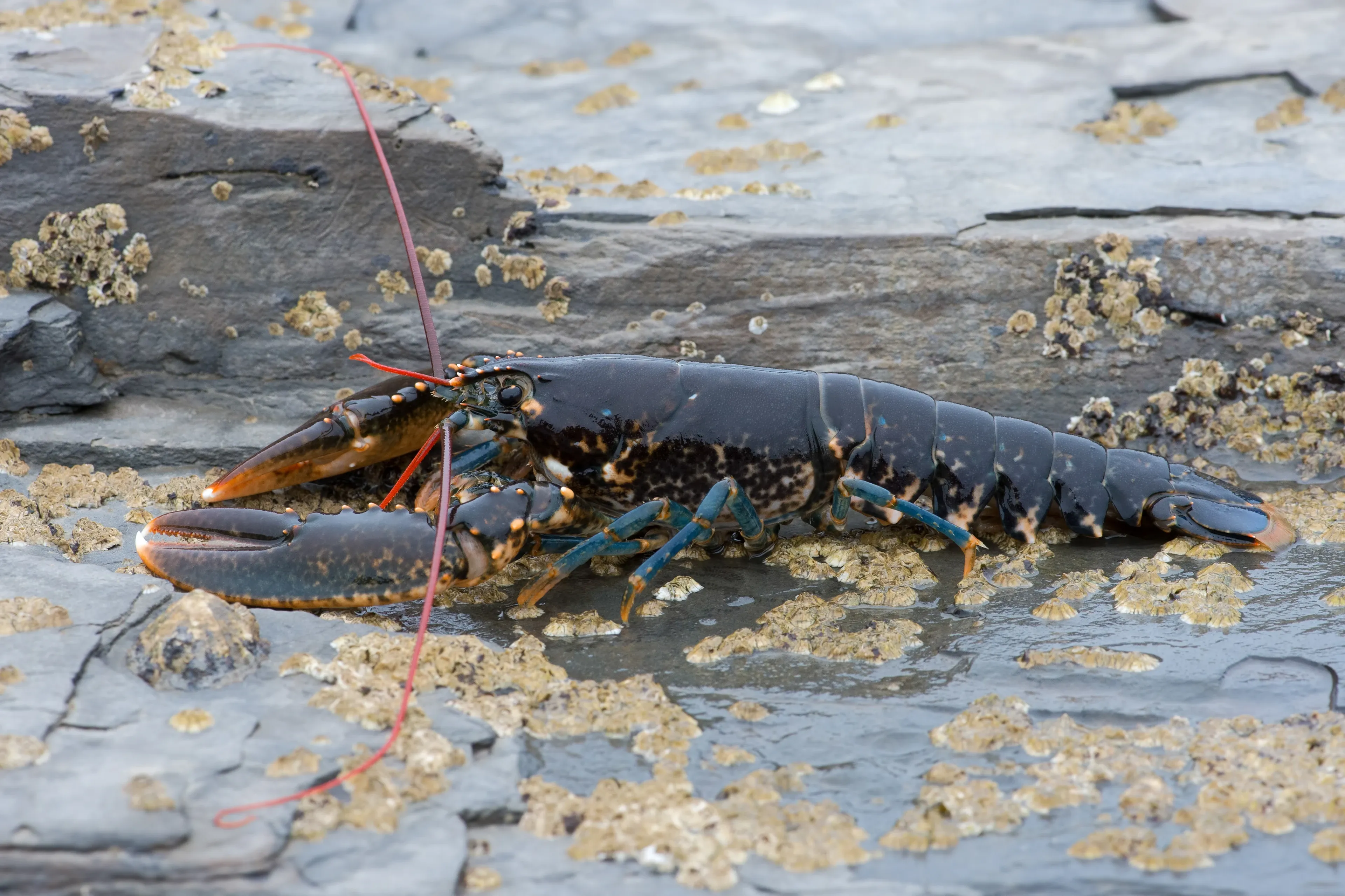 Real photograph
  Real photograph
  Real photograph
 Why we love them
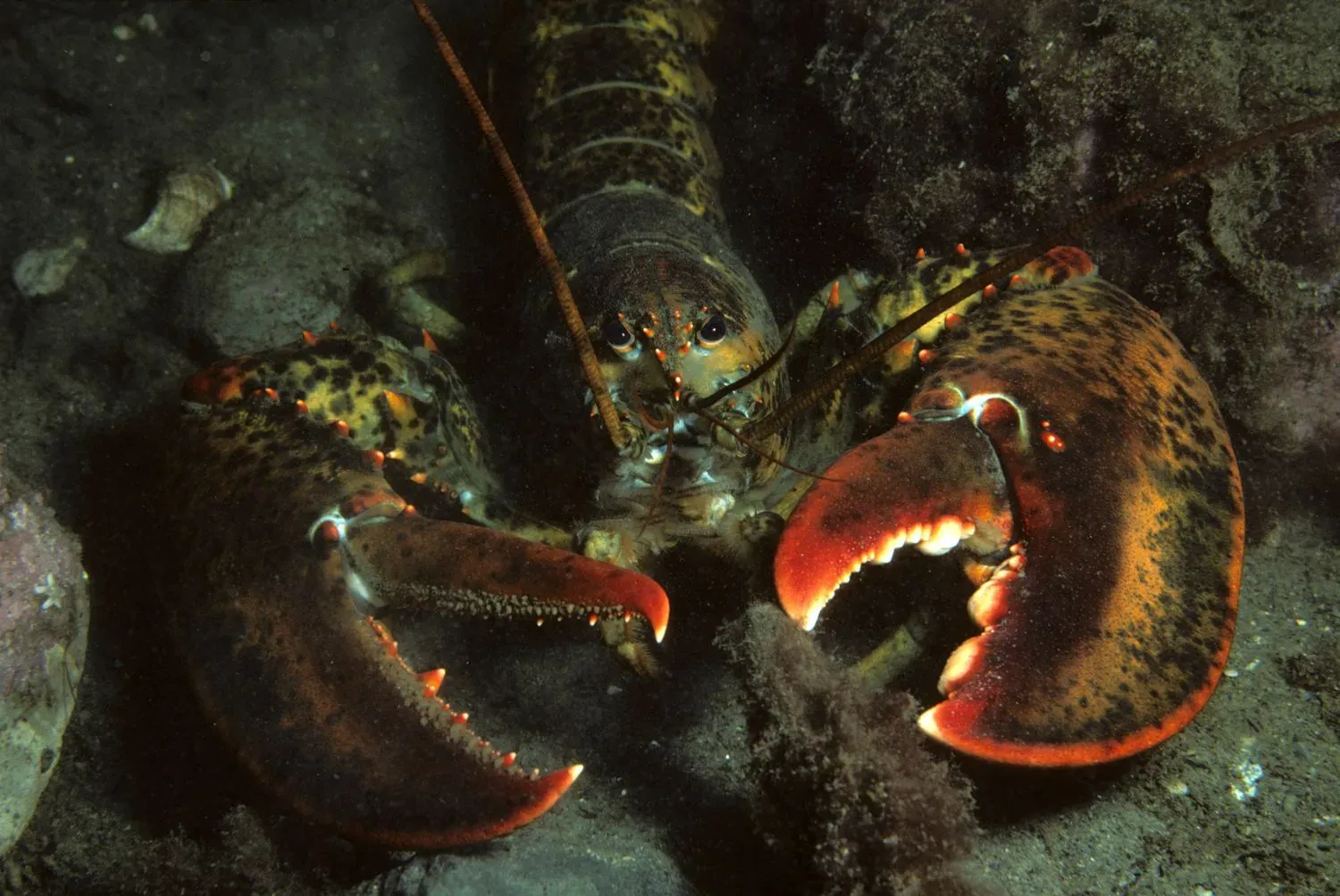
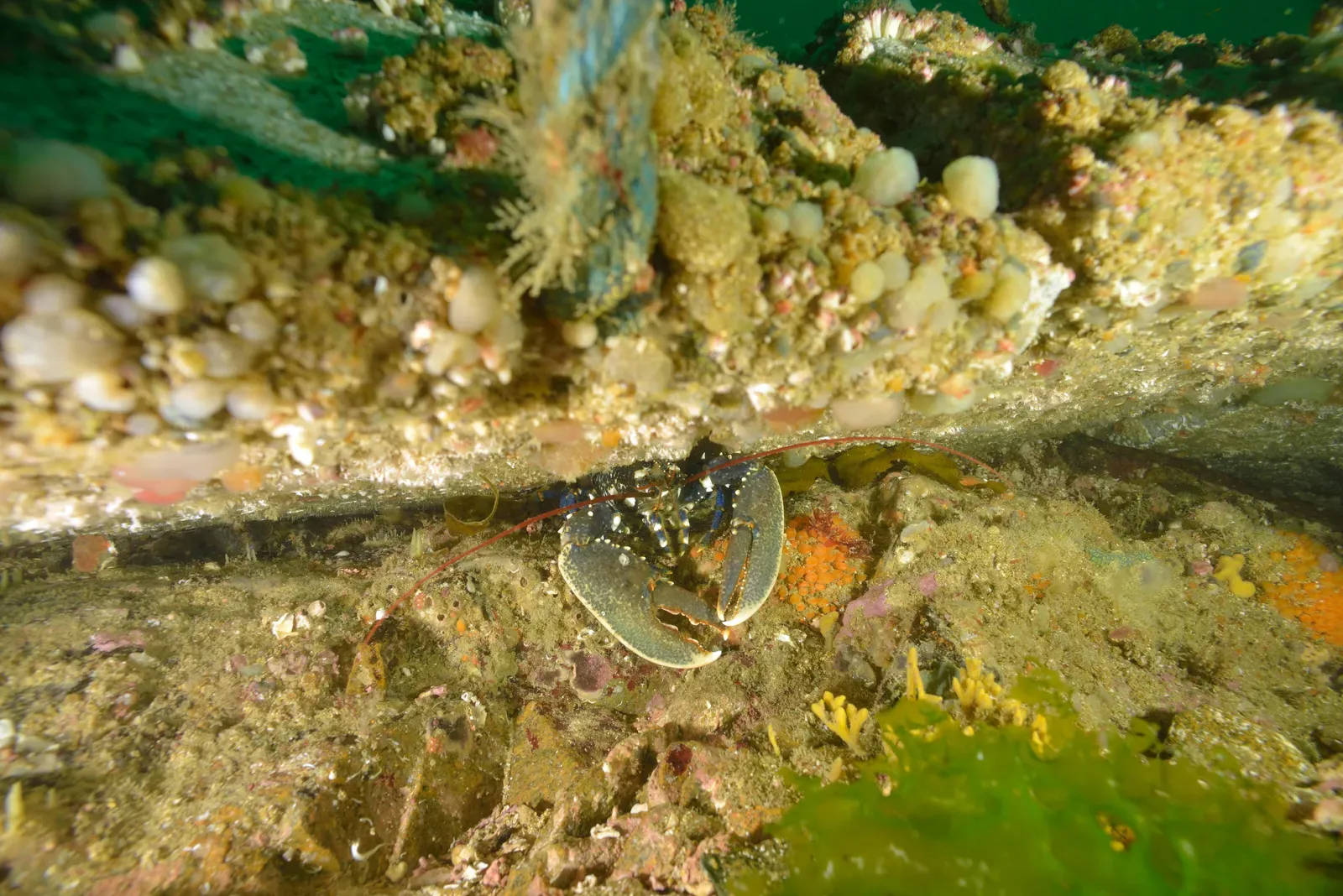
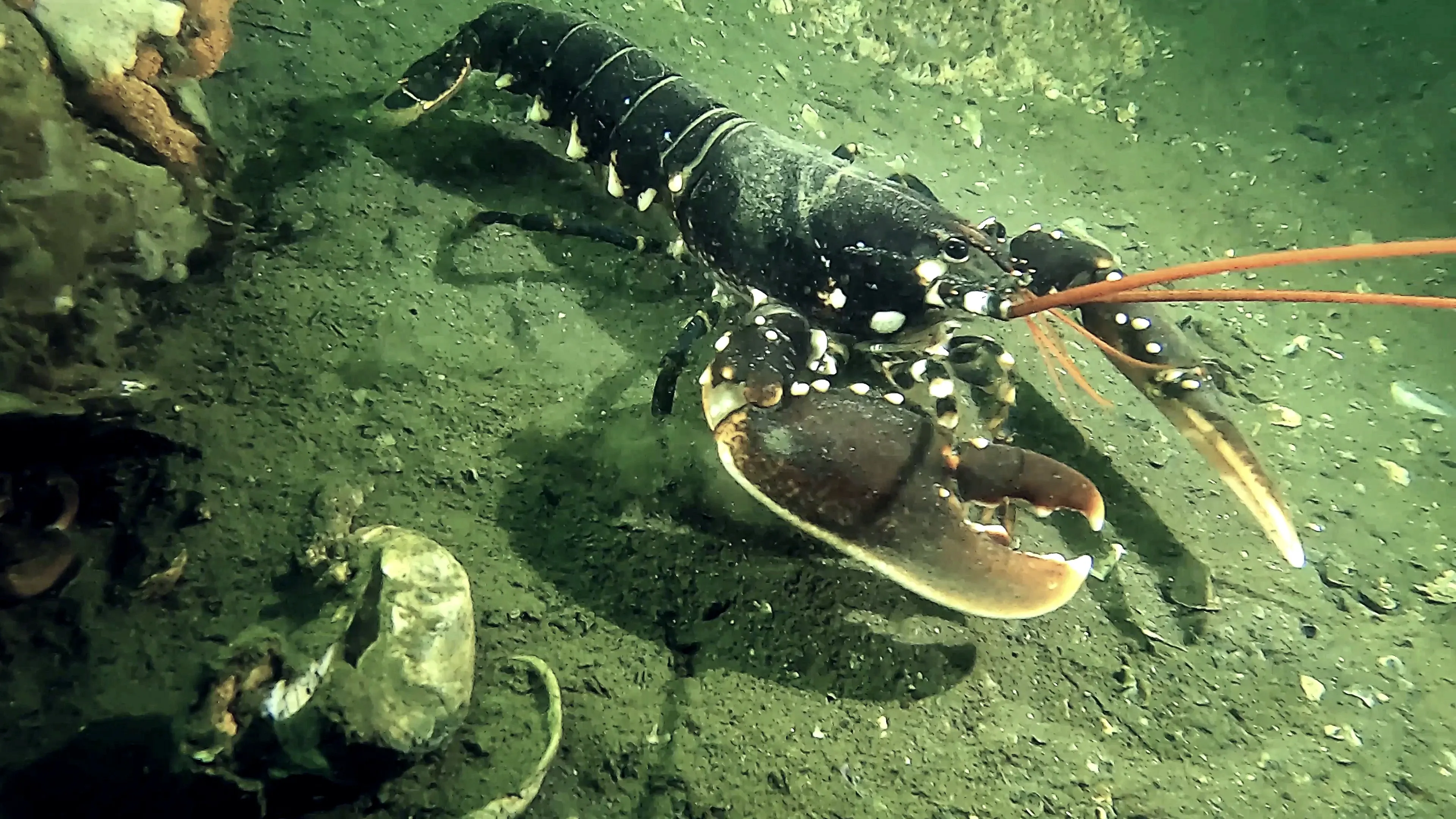
The European lobster is a large, armoured sea creature with a long body, a wide fan-shaped tail, and a pair of big front claws. Here is a surprise: while it is alive, it is a beautiful deep blue, with two long red feelers waving from its head. It only turns the famous "lobster red" after it has been cooked.
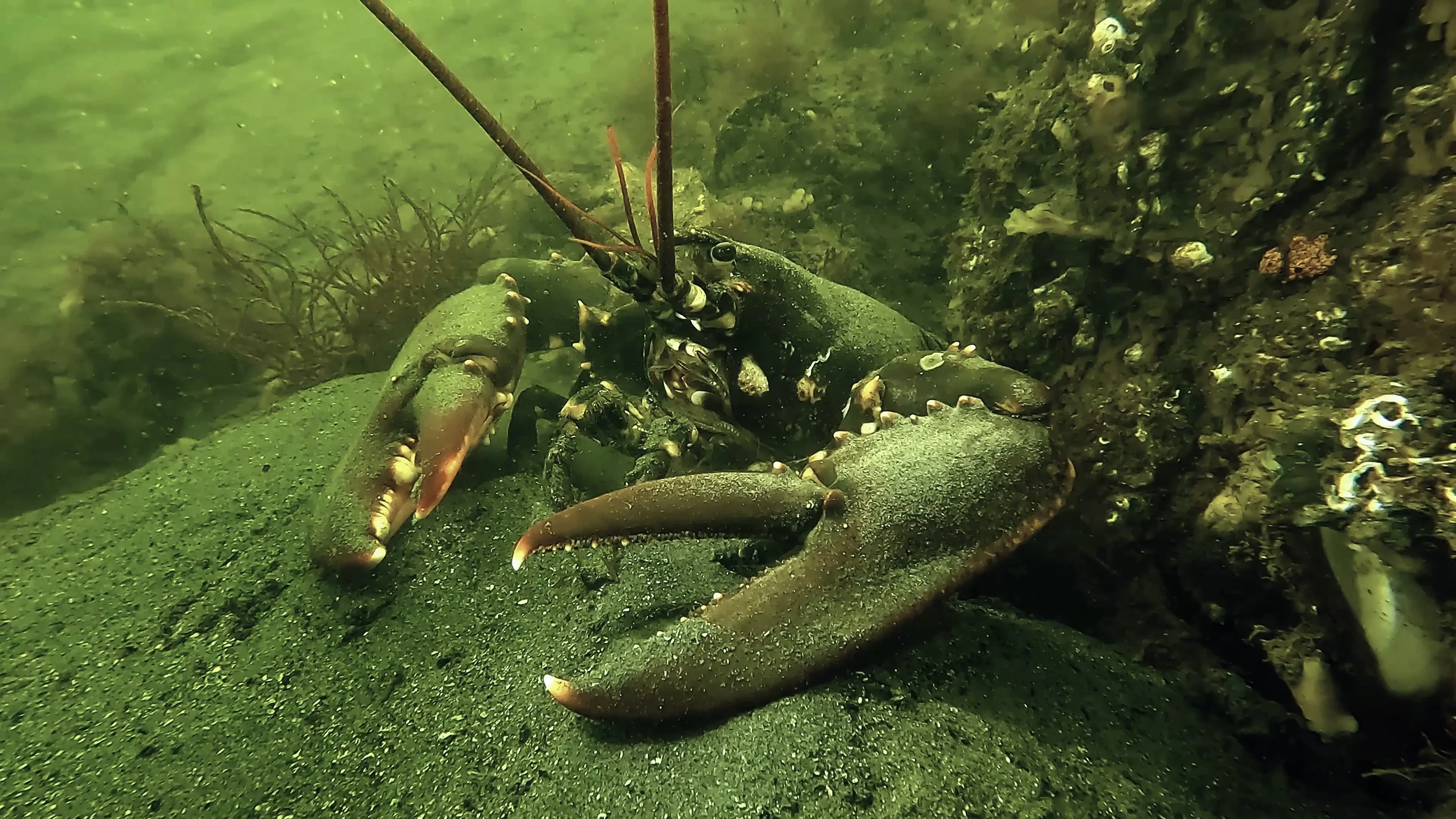
Lobsters are crustaceans, which makes them cousins of crabs and shrimp. Their two front claws are not the same. One is a stocky crusher claw, strong enough to crack open shells, and the other is a slimmer cutter claw for tearing food into pieces. Having one of each is like carrying a nutcracker in one hand and a pair of scissors in the other.
European lobsters live along rocky coasts, mostly around Britain and the rest of Europe. They tuck themselves into crevices and little burrows among the rocks during the day and come out at night to search the seabed for food. They are scavengers and hunters, eating shellfish, sea urchins, crabs, worms, and bits of anything they can find.
Lobsters wear their skeleton on the outside, like a suit of armour. Because the armour cannot stretch, a growing lobster has to wriggle out of its old shell and grow a new, bigger one, a bit like changing into a larger coat. This is called moulting, and a lobster can even grow back a claw or a leg it has lost.
A mother lobster is a careful parent. She carries thousands of tiny eggs tucked safely under her tail for up to a year, and fishers call her a "berried" lobster because the eggs look like little berries. European lobsters are listed as Least Concern, which means they are still common, though in some places people must be careful not to catch too many.
My home
Rocky seabed, coastal waters
Where I live
Europe, Atlantic Ocean
What I eat
Shellfish, sea urchins, crabs, worms, dead animals
How long I am
0.23–0.6 m
How heavy I am
0.7–6 kg
How long I live
15 years
A living European lobster is deep blue, not red; it only turns bright red after it has been cooked.
Its two front claws are different shapes, with a chunky crusher claw for cracking shells and a slimmer cutter claw for tearing food.
A mother lobster carries thousands of tiny eggs tucked under her tail for up to a year to keep them safe until they hatch.
Every european lobster can feel happy, scared and loved — just like you.
Looking after my friends
How many are there?
Fishers caught about 4,386 tonnes of European lobster across Europe and North Africa in 2008.
This is commercial catch weight from an older year, not the total living population.
Estimate source: Homarus gammarus
How are they doing?
Lower extinction riskThis species has a lower global extinction risk right now. Local populations can still grow or shrink.
You can help by learning their names, keeping wild places clean, and telling someone why this animal matters.
Where this came from
- Homarus gammarus (European lobster) — Wikipedia
- Lobster (Homarus gammarus) — The Wildlife Trusts
- Homarus gammarus — Wikipedia, citing FAO Fisheries Global Information System
- Homarus gammarus (European Lobster) — Red List Assessment — IUCN Red List of Threatened Species