 ← All animals
 crustacean · Euphausia superba
Antarctic krill
Gallery
3 photos Real photograph 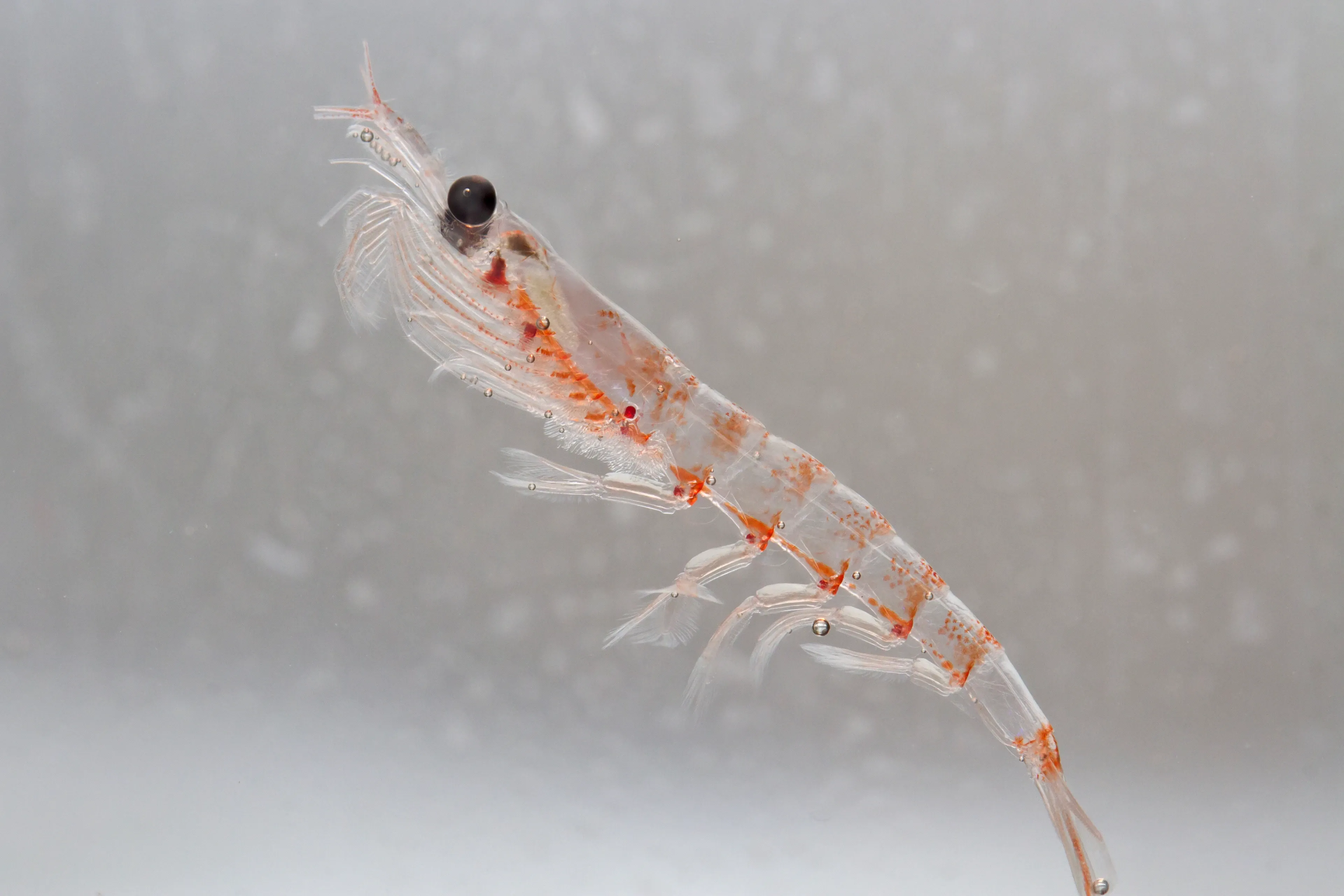 Real photograph
  Real photograph
 Why we love them
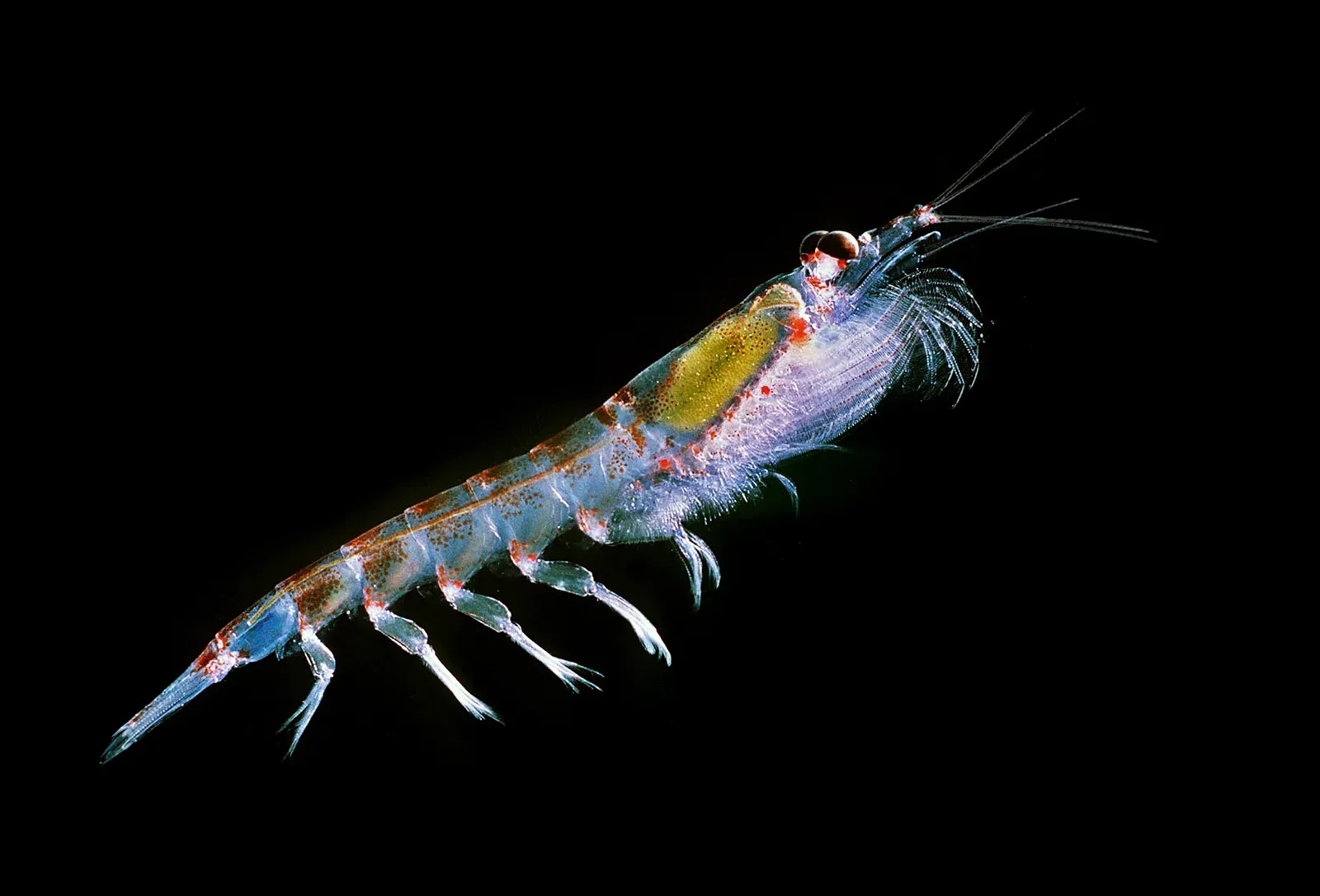
Antarctic krill are tiny shrimp-like animals that live in the cold Southern Ocean all around Antarctica. Each one is only about six centimetres long — roughly the size of your little finger — but together they are one of the most important animals on the whole planet.
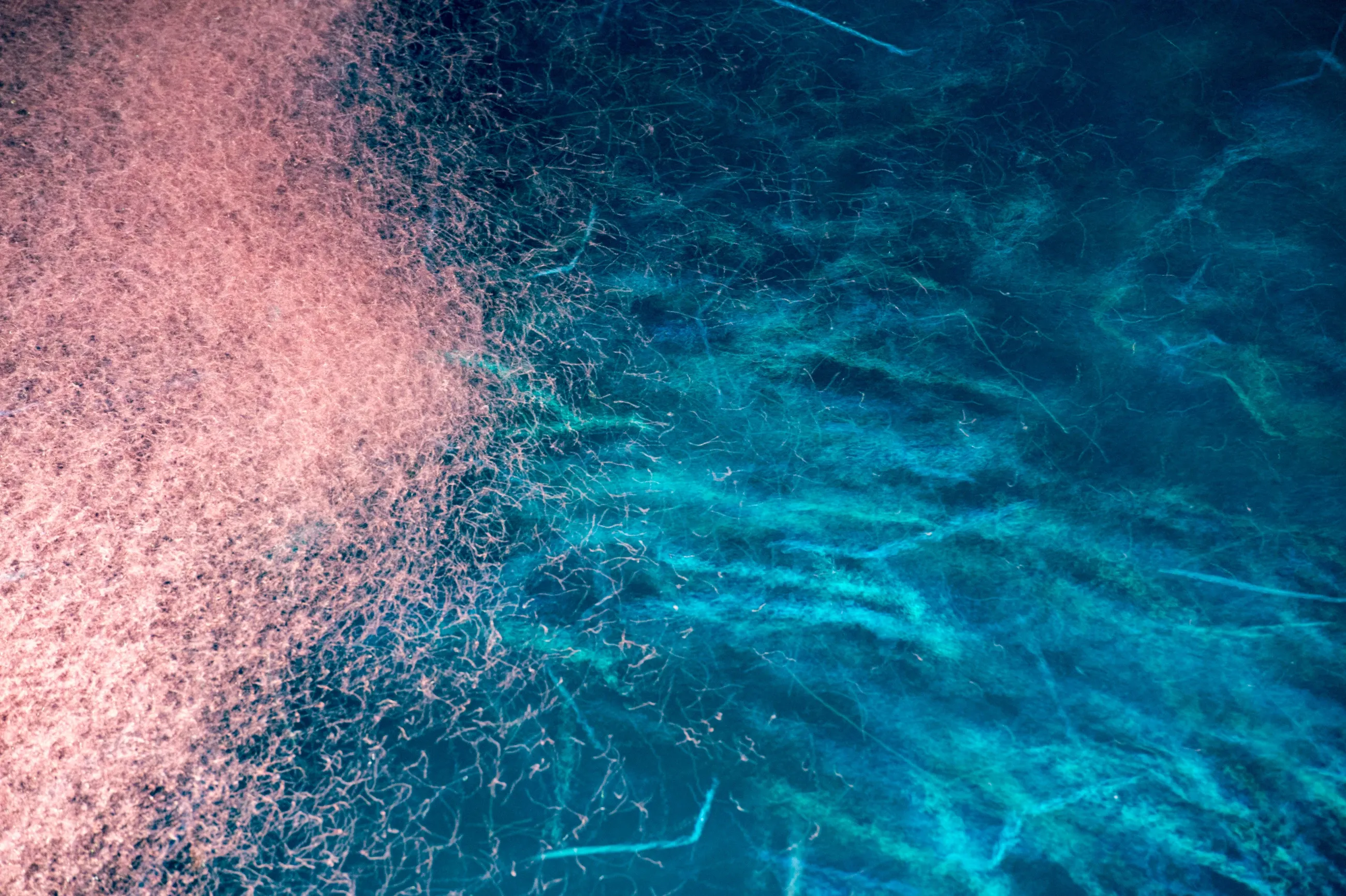
Krill almost never swim alone. They gather in enormous groups called swarms, so crowded that thousands of krill can pack into a single bucket of seawater. From above, a big swarm can turn the sea a pinkish colour. Swimming in a crowd helps keep each krill a little safer from hungry mouths.
For their food, krill sweep up drifting specks of plant-like life called phytoplankton that grow near the sunlit surface and under the sea ice. In this way krill turn sunshine, caught by those tiny plants, into food that much bigger animals can eat.
And so many bigger animals do eat them. Whales, seals, penguins, fish and seabirds all feast on krill. Great baleen whales gulp huge mouthfuls and strain the water out through a comb-like sieve, keeping only the krill. Scientists call krill a "keystone" animal because so much of Antarctic life leans on them.
Because there are so many billions of them, Antarctic krill are listed as Least Concern, meaning they are not in danger right now. Even so, they need cold seas and sea ice to thrive, so keeping the ocean healthy and cool matters for krill — and for every animal that depends on them.
My home
Ocean, polar sea, open ocean
Where I live
Antarctica, Southern Ocean
What I eat
Phytoplankton, algae
How long I am
0.06 m
How heavy I am
0.002 kg
How long I live
6 years
Antarctic krill are small shrimp-like animals, only about as long as your little finger.
They gather in giant swarms so thick the water turns pink, with thousands of krill in a single bucket of seawater.
Whales, penguins, seals and seabirds all depend on krill for food, so krill hold up the whole Antarctic food web.
Every antarctic krill can feel happy, scared and loved — just like you.
Looking after my friends
How many are there?
Scientists estimate that Antarctic krill together weigh about 500 million tonnes.
Scientists use biomass because counting individual krill is impractical; the source does not identify the estimate's snapshot year.
Estimate source: Antarctic krill (Euphausia superba)
How are they doing?
Lower extinction riskThis species has a lower global extinction risk right now. Local populations can still grow or shrink.
You can help by learning their names, keeping wild places clean, and telling someone why this animal matters.
Where this came from
- Antarctic krill (Euphausia superba) — Wikipedia
- Antarctic wildlife — British Antarctic Survey
- Antarctic krill — Australian Antarctic Program
- Krill fisheries and sustainability — Commission for the Conservation of Antarctic Marine Living Resources (CCAMLR)
- Euphausia superba Dana, 1850 — World Register of Marine Species (WoRMS)