 ← All animals
 crustacean · Carcinus maenas
Common shore crab
Gallery
5 photos Real photograph 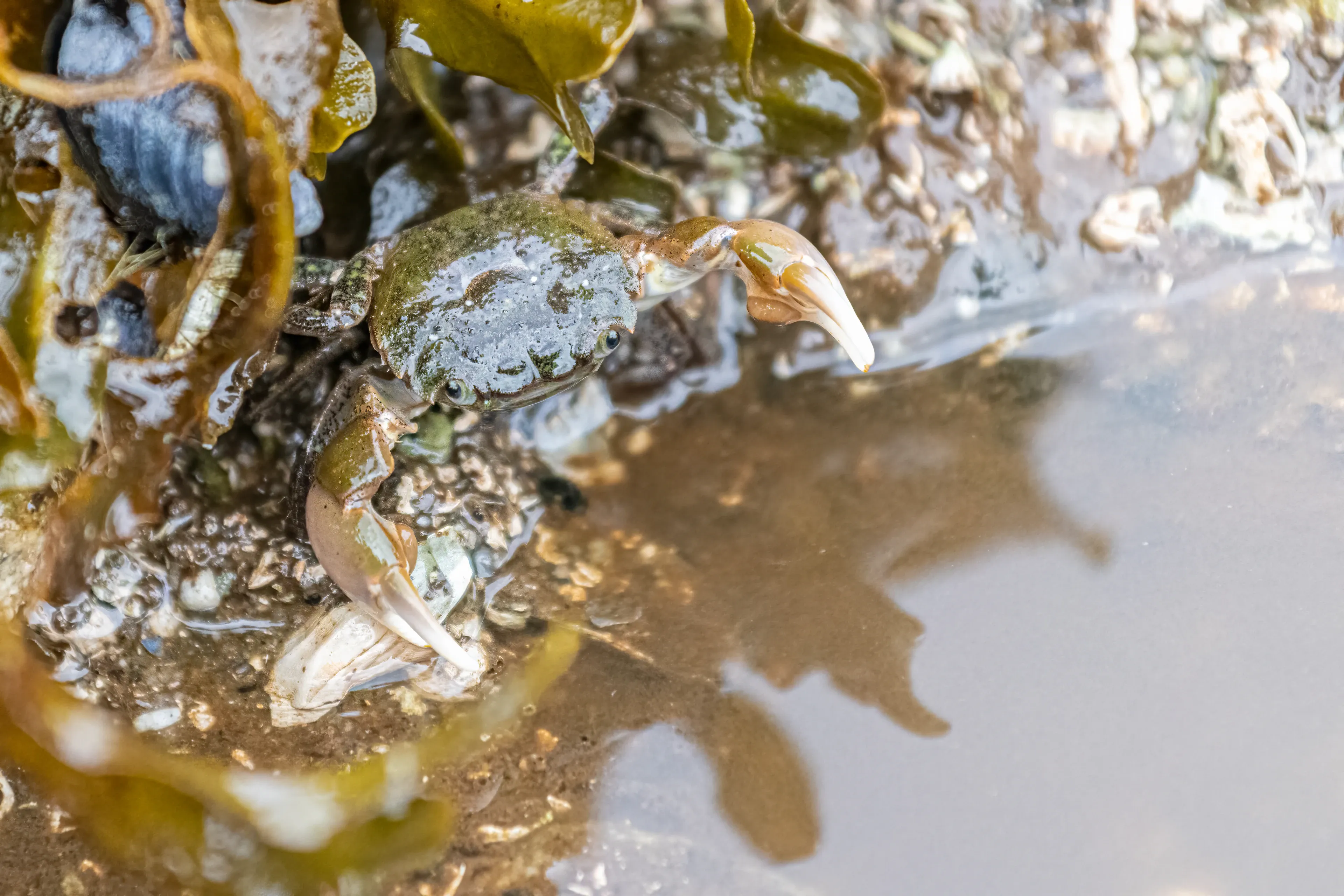 Real photograph
 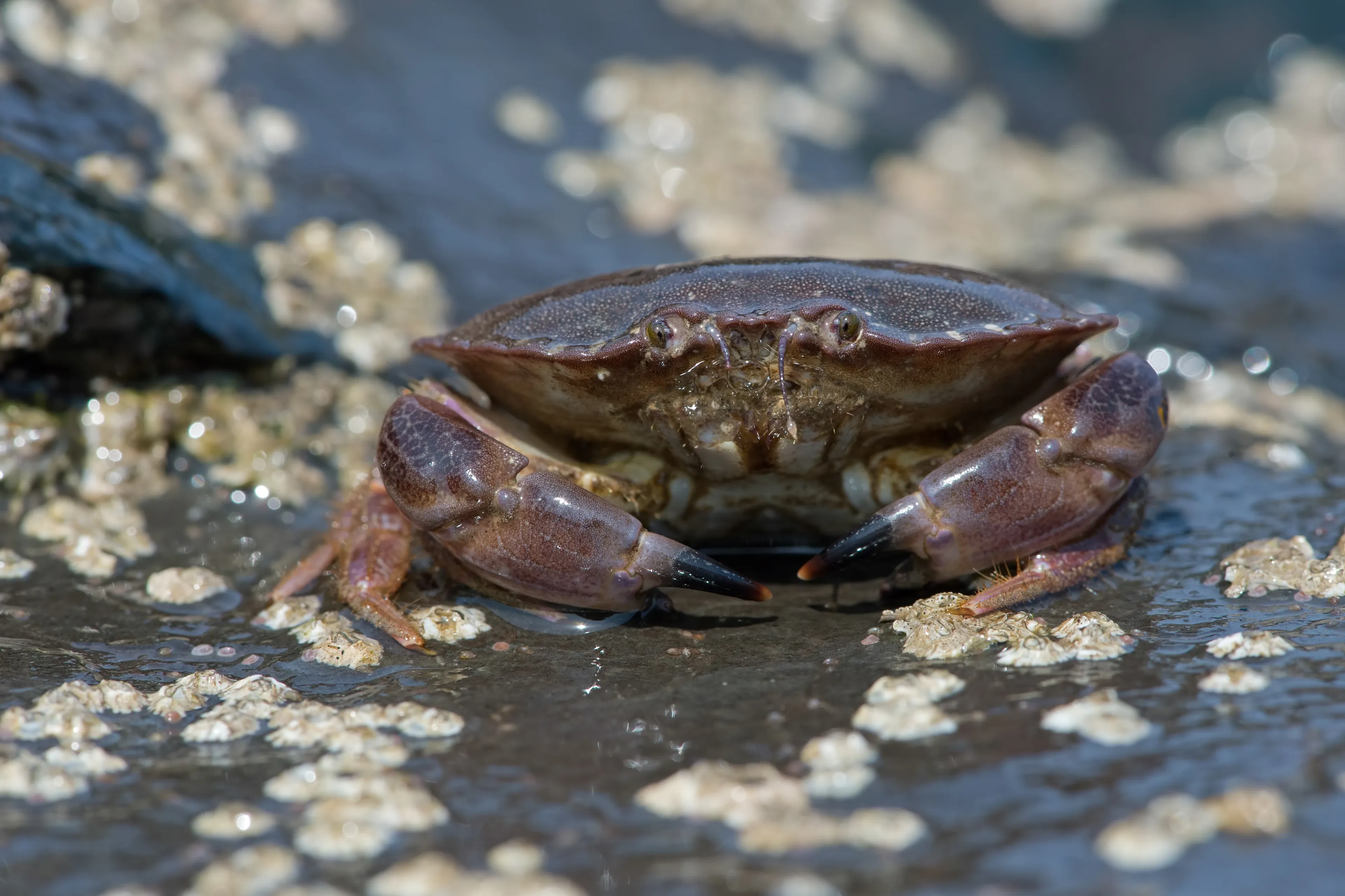 Real photograph
 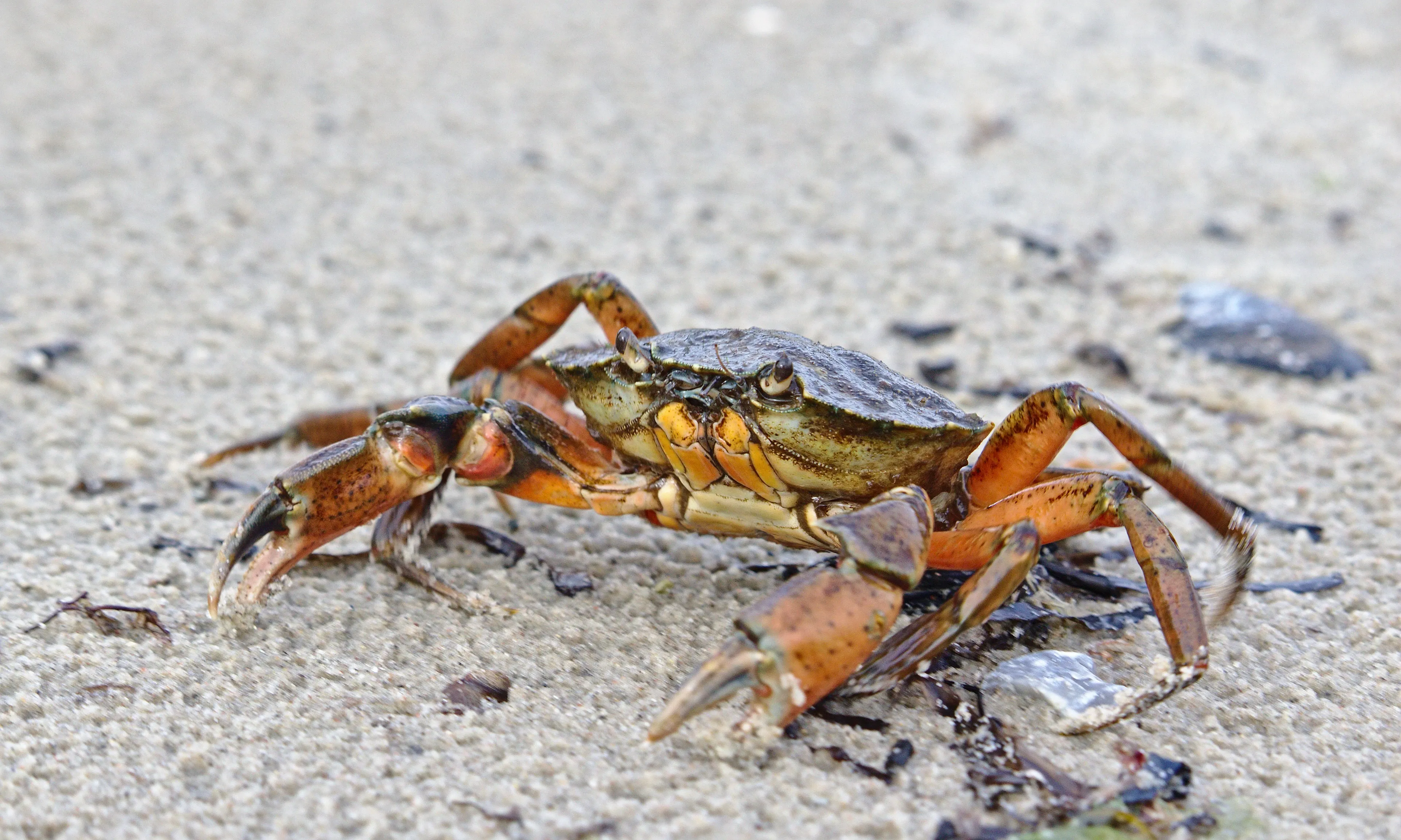 Real photograph
 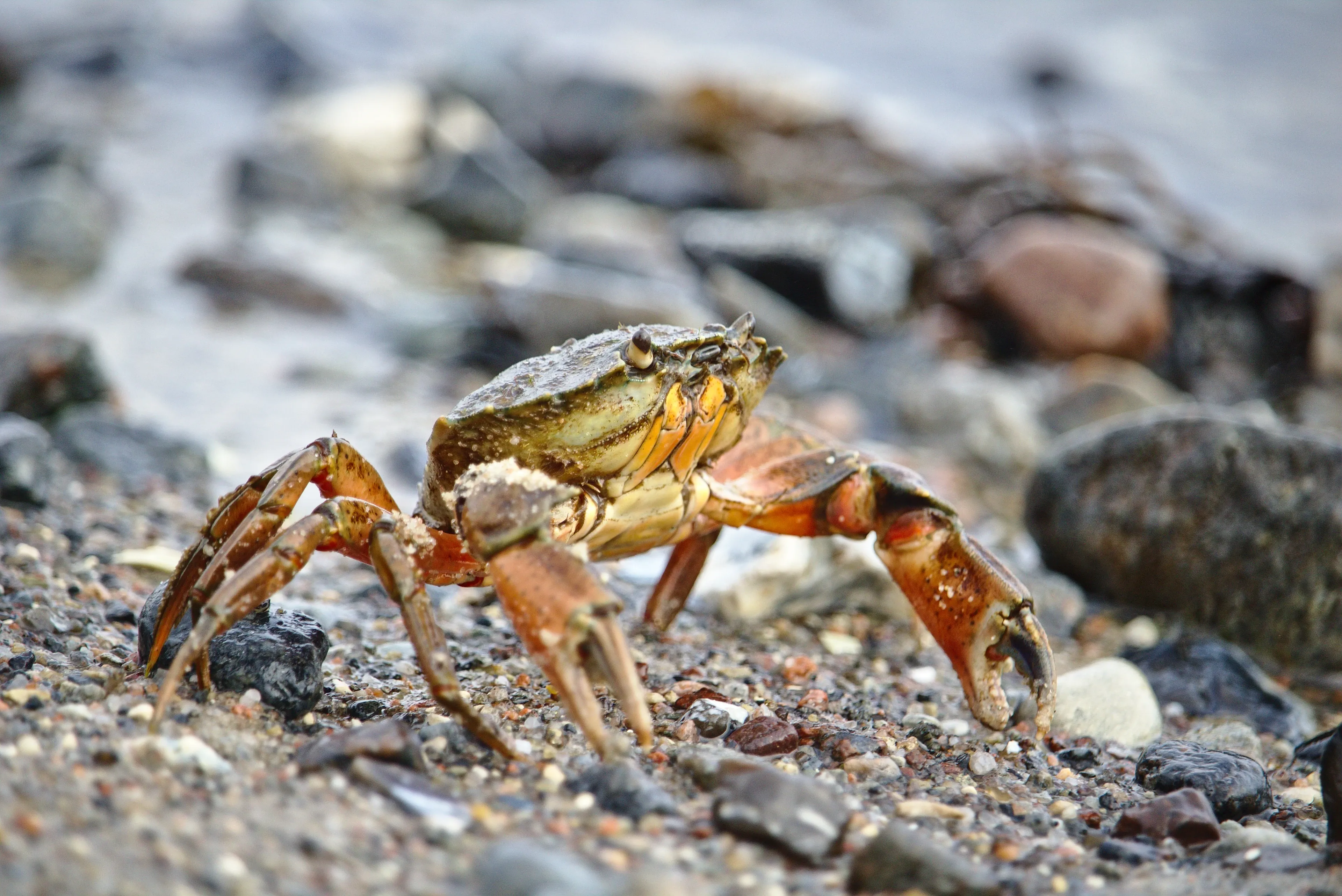 Real photograph
 Why we love them
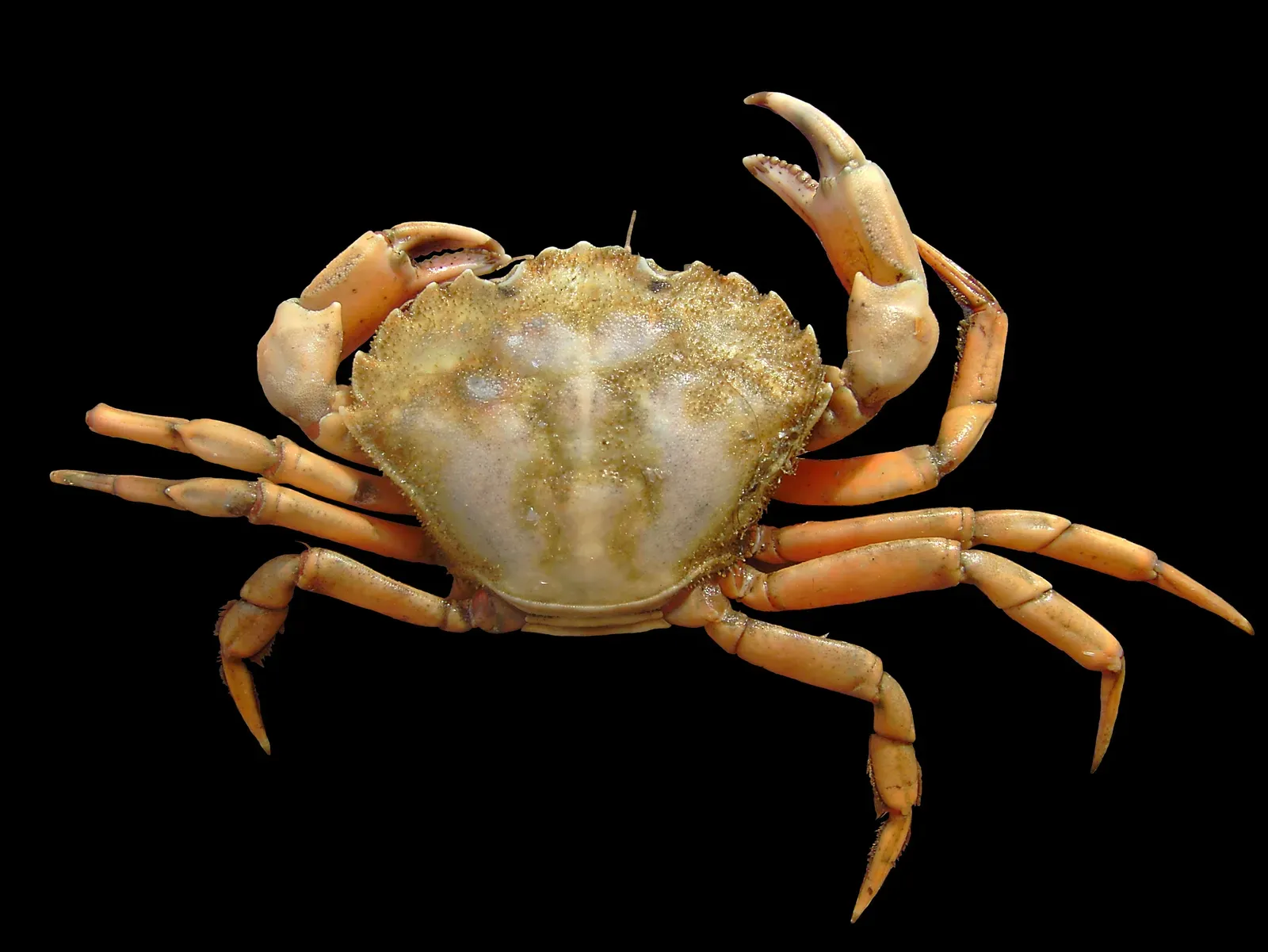
The common shore crab is a tough little crab found along rocky coasts and in rock pools. It has a wide, flat shell, ten legs, and two front legs tipped with pincers. Most shore crabs are green, which helps them hide among the seaweed and stones. When the tide slips out, you can often spot one scuttling quickly for cover under a rock.
Watch a shore crab move and you will see it hurry sideways rather than forwards. Its legs are built for a speedy side-shuffle across slippery rocks. The two pincers at the front are handy tools. The crab uses them to pick up food, to nip off tasty bits, and to hold on tight when it wants to stay safe and tucked out of sight.
Shore crabs come in many colours. Youngsters wear mottled patterns of green, grey and cream, like tiny pebbles. As they grow older, some turn orange or even red underneath. These changing colours help a crab blend into its home, whether that is dark seaweed, pale sand, or a shell-covered seabed. A well-hidden crab is a safe and happy crab.
A shore crab will eat almost anything it can find. It is an omnivore, munching mussels, snails, worms, seaweed and even scraps that other animals have left behind. This makes it a helpful tidy-upper of the shore, clearing away leftovers. It hunts and scavenges mostly around the water's edge, poking into cracks and peeking under stones for its next meal.
This crab is native to the coasts of Europe and North Africa. It has also been carried to other parts of the world by ships and other human travel, and in those new places it can become a serious invasive species that scientists monitor closely. Like all crabs, a shore crab wears its skeleton on the outside, so to grow bigger it must slip out of its old shell and grow a roomier one, a little at a time.
My home
Rocky shore, estuary, tide pool, coastal waters
Where I live
Africa, Europe, North America
What I eat
Mussels, snails, worms, small crabs, algae, carrion
How long I am
0.09 m
The common shore crab hurries sideways on its legs, scuttling quickly across rocks and rock pools instead of walking forwards.
A shore crab's colour can change through its life, from green to orange or red, which helps it blend into its surroundings and stay hidden.
Shore crabs are native to Europe and North Africa, but where ships have carried them to new coasts they can become invasive and change local shore life.
Every common shore crab can feel happy, scared and loved — just like you.
Looking after my friends
How many are there?
A survey of 15 Welsh shores found 416 common shore crabs—an average of about 0.23 per square metre.
This is a local average; individual survey squares ranged from none to 12 crabs.
Estimate source: Population characteristics and predation rates of the dominant soft-bodied and durophagous predators on temperate intertidal shores
How are they doing?
No global assessmentThis animal does not have a global extinction-risk assessment recorded in this system.
You can help by learning their names, keeping wild places clean, and telling someone why this animal matters.
Where this came from
- Carcinus maenas — IUCN Red List status check — IUCN Red List of Threatened Species
- Common shore crab (Carcinus maenas) — MarLIN — The Marine Life Information Network (Marine Biological Association)
- Carcinus maenas — Wikipedia
- Population characteristics and predation rates of the dominant soft-bodied and durophagous predators on temperate intertidal shores — Royal Society Open Science