 ← All animals
 bird · Turdus merula
Common Blackbird
Gallery
4 photos Real photograph 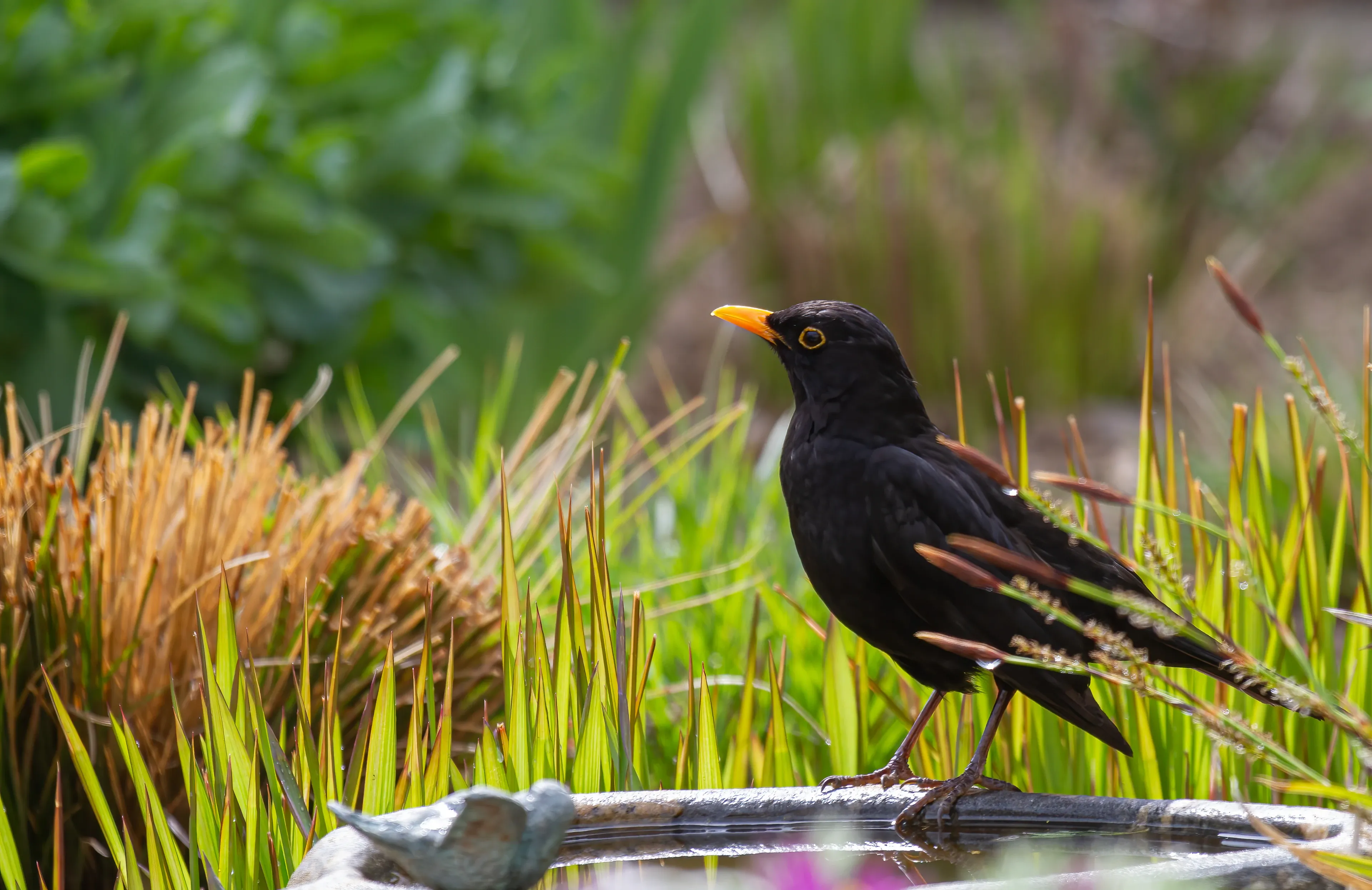 Real photograph
  Real photograph
  Real photograph
 Why we love them
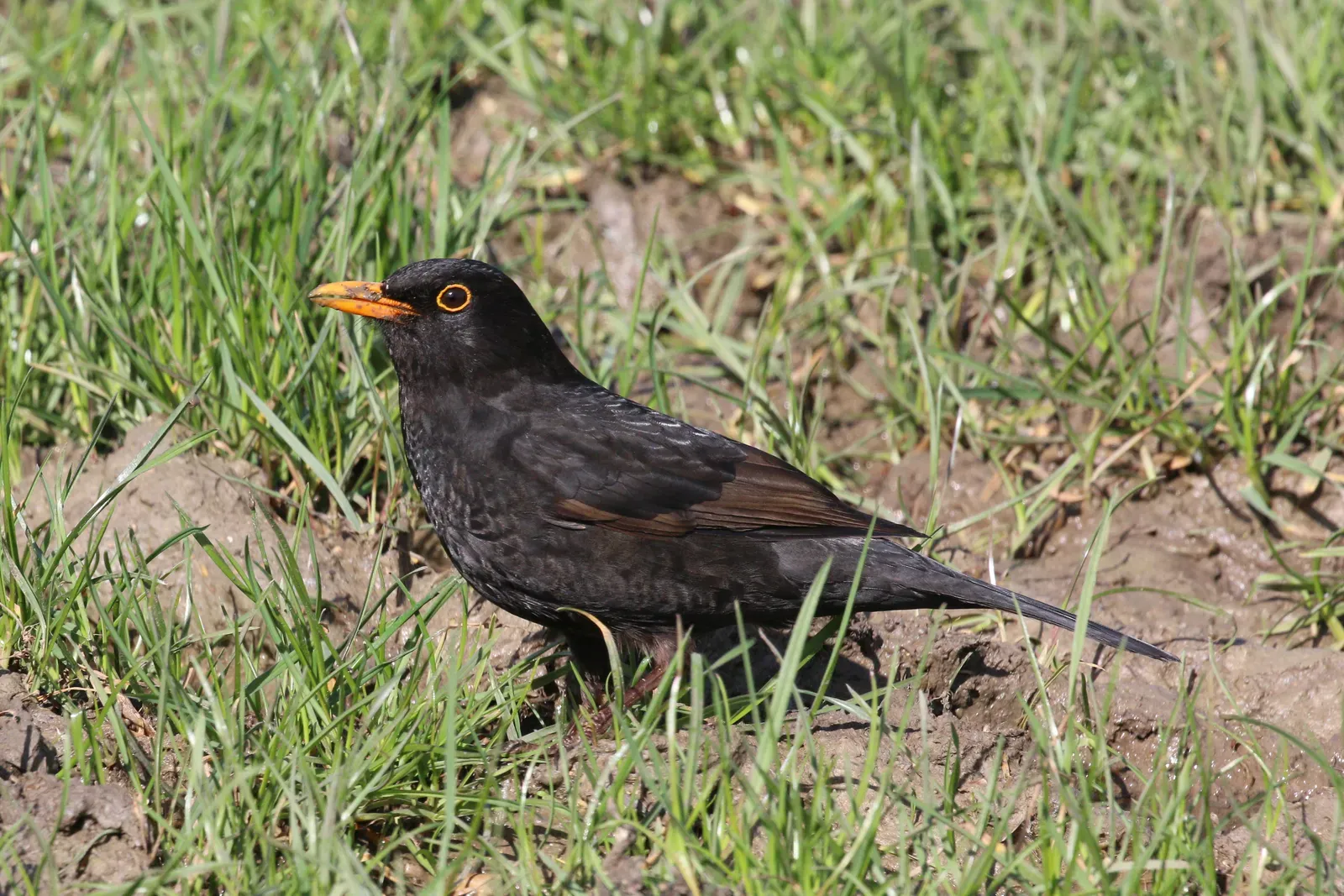
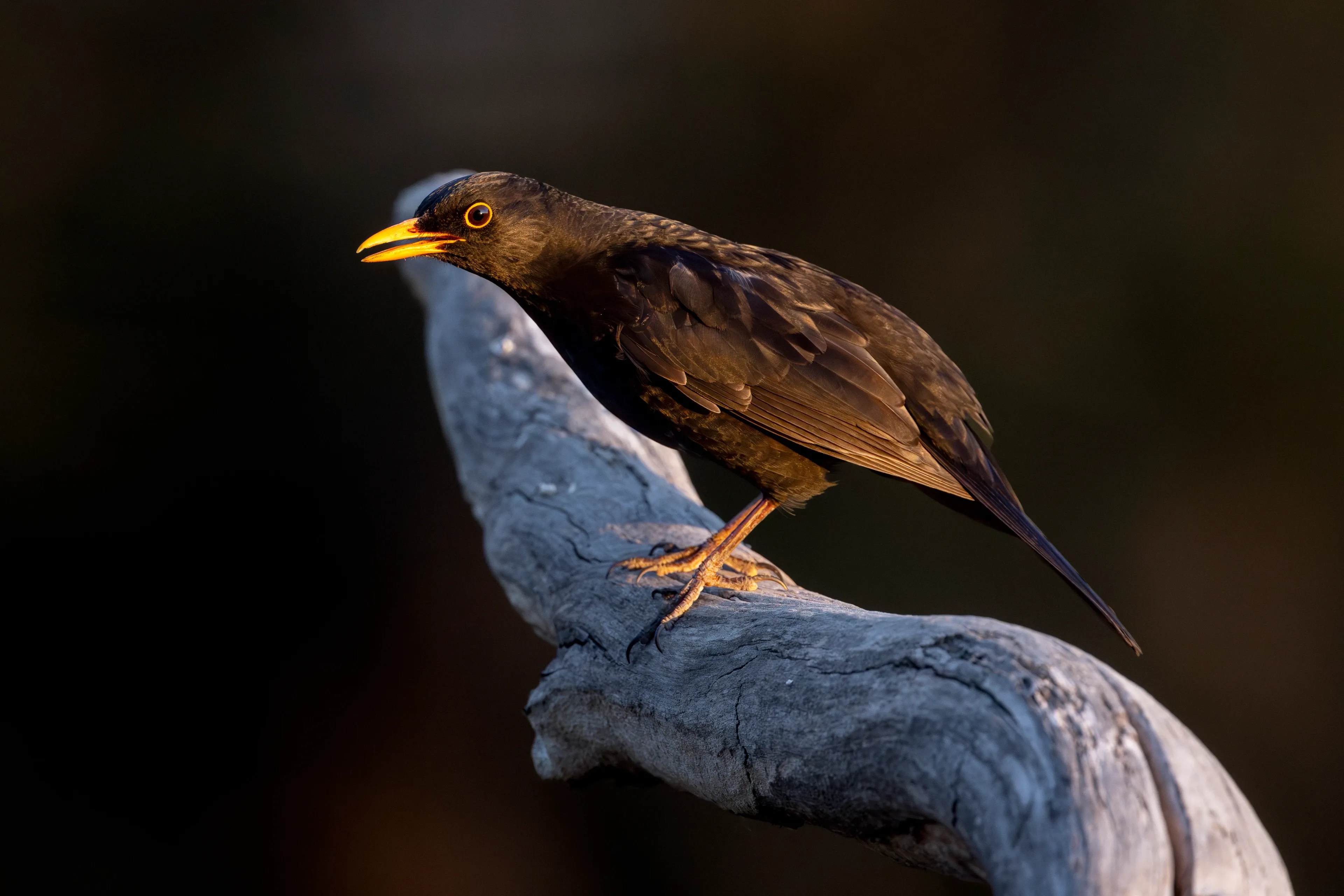
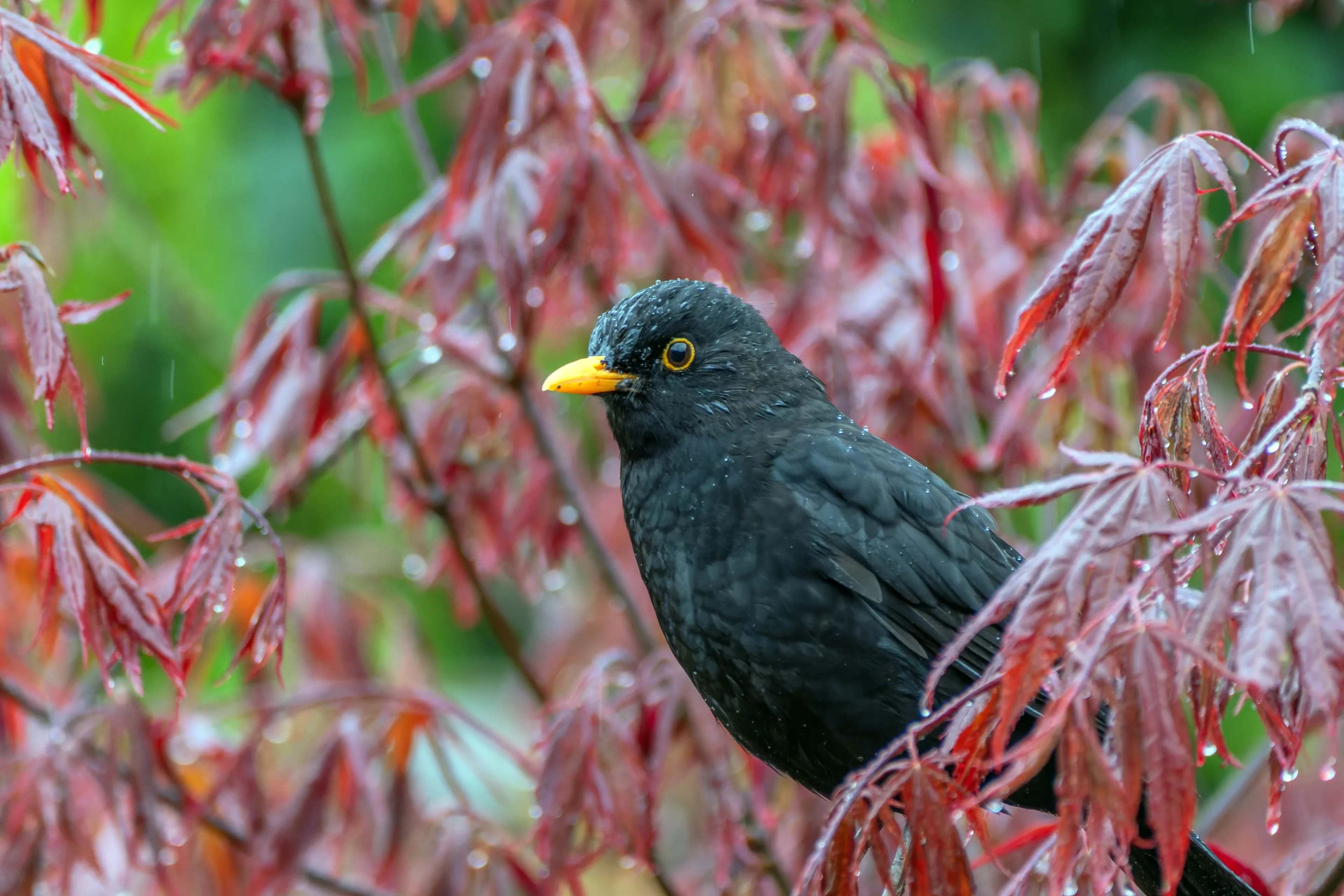
The common blackbird is one of the most familiar garden birds across Europe. The male is easy to spot: his feathers are a glossy, inky black, and he has a cheerful orange-yellow bill and a slim yellow ring around each eye. The female looks quite different, dressed in soft, warm brown, which helps her stay hidden while she sits on her nest.
Blackbirds are wonderful singers. From early spring, the male perches on a rooftop, fence, or high branch and pours out a rich, flute-like warble. It is one of the best-loved sounds of a spring morning. Clever birds, they can even weave sounds they have heard nearby into their song, adding their own little twists.
These birds are omnivores, which means they enjoy many kinds of food. You might see one hopping across a lawn, tilting its head, and then tugging a wriggly earthworm from the soil. Blackbirds also snap up insects and love to eat berries and fruit, especially in autumn when hedges are full of them.
Blackbirds build tidy, cup-shaped nests using grass, leaves, and mud, often tucked into a bush or hedge. A pair may raise two or three families of chicks in a single year. On average a wild blackbird lives only a couple of years, but a lucky few have reached more than twenty.
There are a great many blackbirds in the world, and the species is listed as Least Concern, which means it is not in danger. Even so, blackbirds do best where there are hedges to nest in and damp, insect-rich ground to feed on. Leaving a few berry bushes and a patch of unmown grass is a lovely way to make a garden welcoming for them.
My home
Woodland, gardens, parks, farmland, hedgerows
Where I live
Africa, Asia, Europe
What I eat
Earthworms, insects, berries, fruits
How long I am
0.235–0.29 m
How heavy I am
0.08–0.125 kg
How long I live
21 years
The male blackbird is glossy black with a bright orange-yellow bill and a thin yellow ring around each eye, while the female is a soft dark brown.
The male sings a rich, flute-like warble from rooftops and treetops, and it can even copy other sounds it hears nearby.
Blackbirds are omnivores that tug earthworms from the lawn, hunt insects, and feast on berries and fruit.
Every common blackbird can feel happy, scared and loved — just like you.
Looking after my friends
How many are there?
Scientists estimate about 79–160 million common blackbirds in Europe.
This covers Europe rather than the whole species range, and its snapshot year has not been verified.
Estimate source: Common blackbird
How are they doing?
Lower extinction riskThis species has a lower global extinction risk right now. Local populations can still grow or shrink.
You can help by learning their names, keeping wild places clean, and telling someone why this animal matters.
Where this came from
- Turdus merula (Common Blackbird) — Red List Assessment — IUCN Red List of Threatened Species / BirdLife International (Red List Authority for birds)
- Turdus merula (common blackbird) — Animal Diversity Web, University of Michigan Museum of Zoology
- Common blackbird — Wikipedia