Today's animal friend · 21 August 2026
The Rooftop Flute Player: Meet the Common Blackbird
A glossy singer, a worm-tugging detective, and a quiet helper of berry bushes: the common blackbird turns ordinary green places into an outdoor adventure.
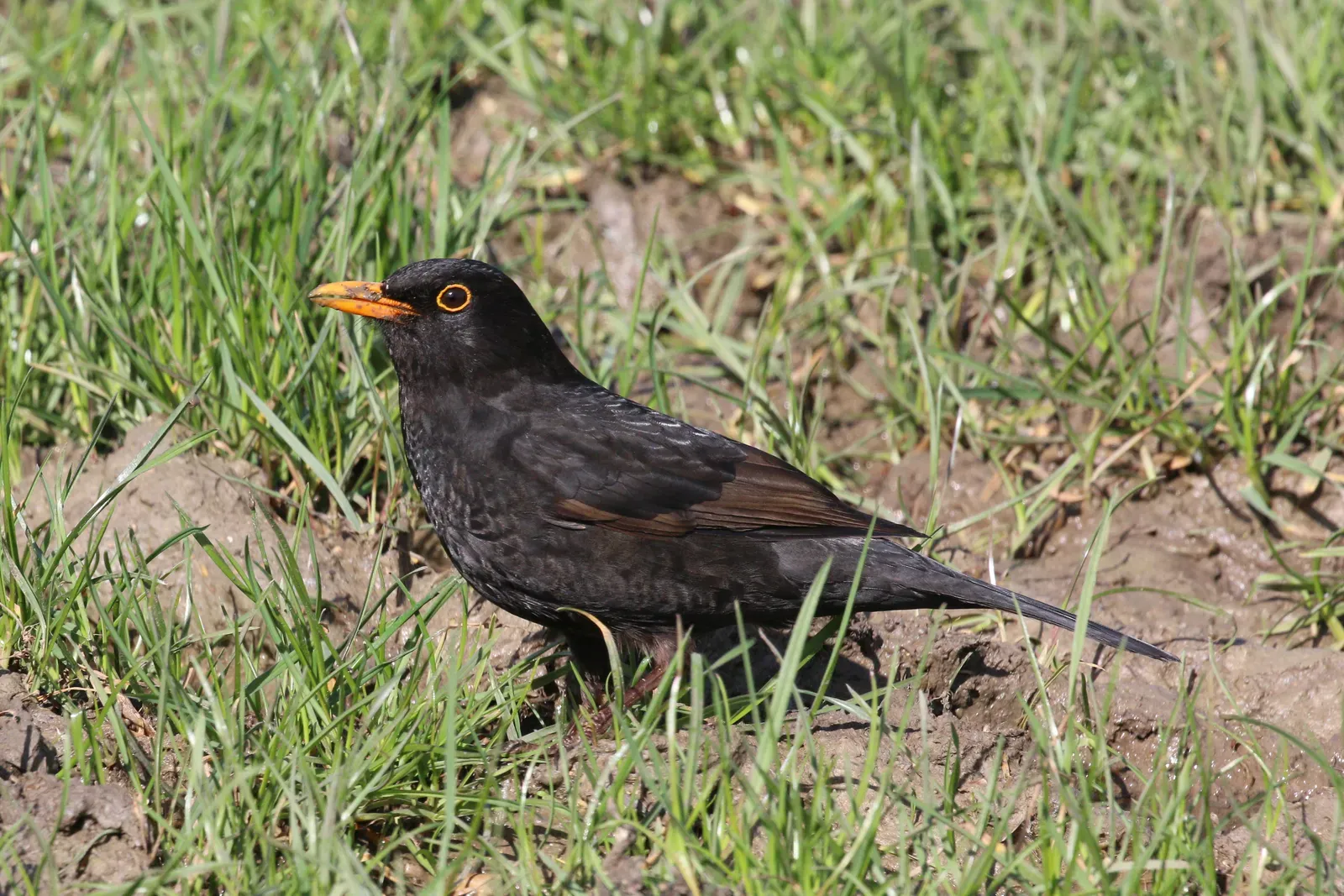
A glossy singer, a worm-tugging detective, and a quiet helper of berry bushes: the common blackbird turns ordinary green places into an outdoor adventure.
Listen—who put a flute on the roof?
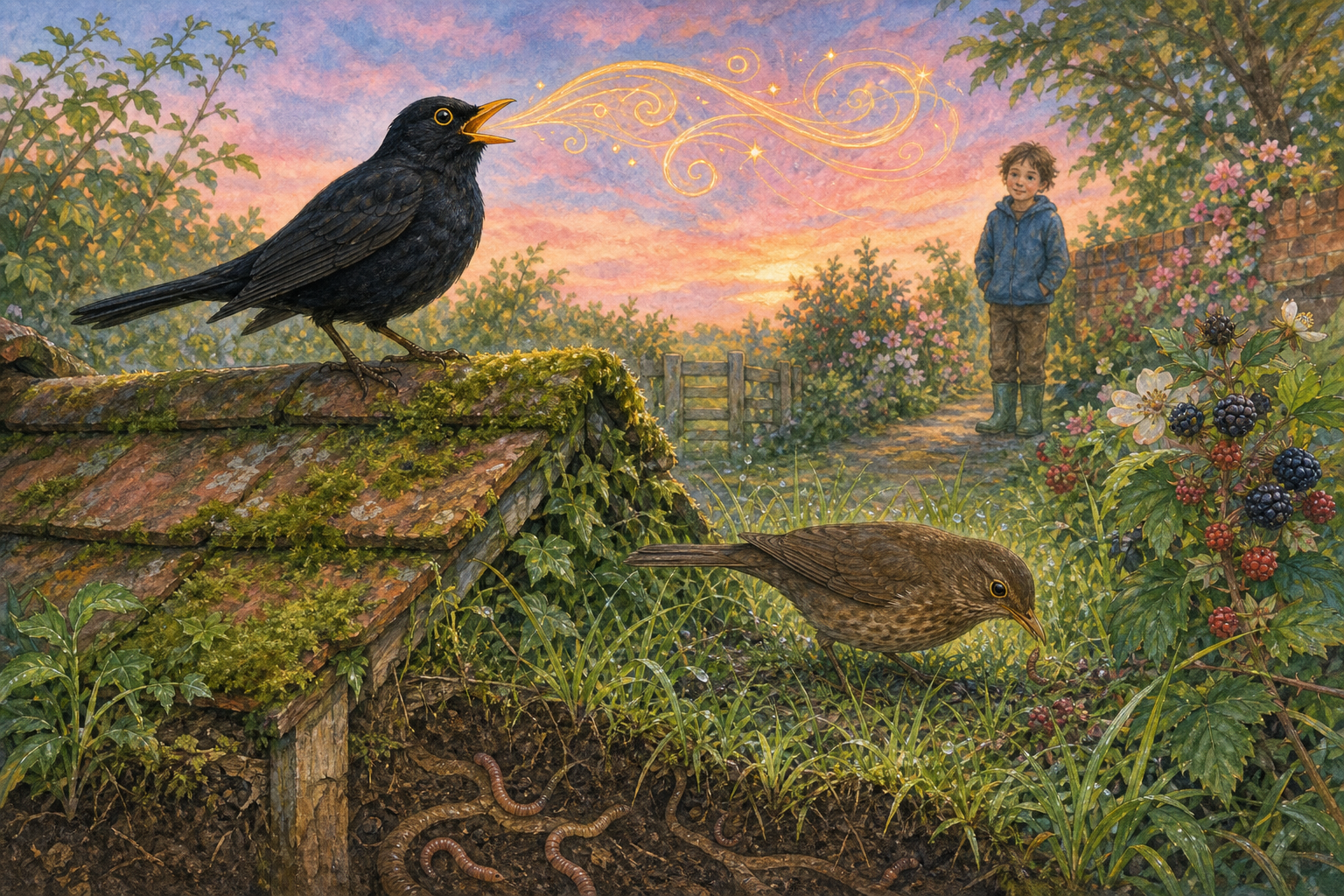
The morning is still rubbing sleep from its eyes. Dew beads on the grass. Then, from a rooftop or the top of a tree, comes a rich, rolling warble: whee-oo, twirly-whistle, flourish! It sounds a little as if someone gave a flute to a bird and asked it to show off. That musician may be a male common blackbird, also called the Eurasian blackbird, Turdus merula.
He is a true thrush, not one of the different birds called “blackbirds” in North America. Common blackbirds live across Europe, western Asia, and North Africa, and people have also introduced them to Australia and Aotearoa New Zealand. So, depending on where you live, the singer in the garden may be a neighbour you hear every day—or a bird you meet only in books.
Blackbirds are active by day, when lawns, paths, hedges, and berry bushes are bright with possibilities. Their songs are especially famous in spring, but a listening adventure can begin whenever you step outside quietly. Can you hear a phrase that rises, pauses, and tumbles down again?
Evidence: IUCN Red List of Threatened Species / BirdLife International (Red List Authority for birds): Turdus merula (Common Blackbird) — Red List Assessment; Animal Diversity Web, University of Michigan Museum of Zoology: Turdus merula (common blackbird); Wikipedia: Common blackbird
A suit of ink—or a coat of warm brown?
If the singer lands in clear view, look for the male’s smart outfit: glossy black feathers, a bright orange-yellow bill, and a thin yellow ring around each eye. Against a grey fence or a green hedge, he can look like a tiny evening sky with two sunny details added at the last minute.
Female common blackbirds usually look very different. They are soft dark brown rather than glossy black. This is a lovely reminder that one species does not have to come in only one “uniform.” If you spot a brown bird hopping through a shrub, slow down before deciding what you have seen.
A common blackbird is about 23.5 to 29 centimetres long—roughly the length of a school ruler, though not nearly as useful for drawing straight lines. It is a medium-sized garden bird, made for weaving through bushes and dashing over open ground.
Evidence: Animal Diversity Web, University of Michigan Museum of Zoology: Turdus merula (common blackbird); Wikipedia: Common blackbird
Why is that bird staring at the lawn?
A blackbird on grass often stops, tilts its head, hops, and suddenly tugs. What is it doing? Hunting breakfast. Common blackbirds are omnivores: they eat both animal foods and plant foods. Earthworms, insects, berries, and fruit can all be on the menu.
That means a lawn is not just a green carpet. To a blackbird, damp soil may be a wriggly-food cupboard. A hedge in fruit can become a colourful snack bar. In autumn especially, berries and fruit matter. When a blackbird eats fleshy fruit and later carries seeds away, it can help spread some plants to new places. A meal can become a tiny planting mission.
Their feeding style makes them fun to watch. They hop and run over open ground, then vanish into cover like someone who has remembered an urgent appointment in a bush. Give them space, and you may see the whole puzzle unfold: pause, listen, peck, tug, hop.
Evidence: Animal Diversity Web, University of Michigan Museum of Zoology: Turdus merula (common blackbird); Wikipedia: Common blackbird
Can a song have a borrowed bit in it?
Yes—common blackbirds can make their own rich, fluted songs and may copy sounds they hear nearby. Imagine learning a tune from your street, then slipping a small piece of it into your own concert. A blackbird’s song is not a recording, though. It is a living performance from a bird perched high above the garden.
Males often sing from rooftops, treetops, fences, or other high places. During the breeding season, pairs are socially monogamous and defend their territory. Both females and males help defend that patch of home. Outside the breeding season or during migration, blackbirds can be found in looser groups.
Some common blackbirds migrate seasonally, while others stay closer to home in milder places. This makes sense when you picture their needs: food, shelter, and safe places to rest matter more than a bird’s address. Wherever they are, their song helps turn an ordinary patch of sky into a stage.
Evidence: Animal Diversity Web, University of Michigan Museum of Zoology: Turdus merula (common blackbird); Wikipedia: Common blackbird
The hedge is more than a hedge
Common blackbirds use woodland, gardens, parks, farmland with hedges, and shrubby edges. That is why they can feel so familiar: they share some of the same places where people walk dogs, kick leaves, wait for buses, or eat an apple outdoors.
But “familiar” does not mean “unimportant.” A hedge can offer cover and nesting places. Berry-bearing shrubs offer food. Soil and lawn patches can hold invertebrates for foraging. A garden does not need to look wild in every corner to welcome wildlife, but leaving some plant-rich, insect-friendly space can make a real difference to a hungry bird.
In some rural areas, agricultural change and the loss of hedgerows can be local pressures for blackbirds. Keeping hedges and berry-bearing shrubs is a hopeful, practical way to care for the small worlds between fields, fences, and footpaths. Even a scruffy-looking corner may be busy with lives we have not noticed yet.
Evidence: Animal Diversity Web, University of Michigan Museum of Zoology: Turdus merula (common blackbird); Wikipedia: Common blackbird
Are common blackbirds safe? A hopeful answer, with a job for us
The common blackbird is listed as Least Concern on the IUCN Red List. It has a very large range, and the European population has been estimated at 79 to 160 million individuals, with the overall picture described as generally stable. That is good news worth chirping about.
Still, “Least Concern” is not a magic shield. It does not mean every blackbird has everything it needs in every place. Local changes to farmland and hedges can matter, and every bird needs food, cover, and room to live its birdy life. Protecting green spaces is not only for rare animals; it is also a way of keeping everyday wonders nearby.
Try being a blackbird detective on your next walk. Where are the hedges? Where might berries grow? Is there soft ground for worms? You do not need to touch, chase, or feed a bird to become its friend. Watching patiently, sharing space, and helping adults care for plants are excellent adventure skills.
Evidence: IUCN Red List of Threatened Species / BirdLife International (Red List Authority for birds): Turdus merula (Common Blackbird) — Red List Assessment; Animal Diversity Web, University of Michigan Museum of Zoology: Turdus merula (common blackbird); Wikipedia: Common blackbird
A kind choice can begin at the dinner table
A blackbird’s berry-and-worm meals remind us that living things depend on many connected habitats: soil, plants, insects, water, and shelter. We can care about those connections in our own choices, too. The World Health Organization describes healthy diets in general as including foods such as whole grains, vegetables, fruit, pulses, nuts, and seeds.
Choosing more plant-based meals can be a gentle way to show kindness to animals and care for the places wildlife needs. The IPCC reports that shifts toward sustainable, healthy, more plant-based diets can reduce food-system emissions and pressure on land and biodiversity. That does not mean judging anyone’s lunchbox. It means noticing that a bean stew, veggie wrap, or fruit snack can be one small vote for a kinder, greener world.
If you want to try new plant foods, make it an adventure with a parent, carer, or another trusted adult. Perhaps start by choosing a favourite: crunchy peas, sweetcorn, lentils in a soup, banana on toast, or berries in porridge. Meanwhile, outside, the blackbird will be conducting its own very different breakfast orchestra.
Evidence: World Health Organization: Healthy diet; Intergovernmental Panel on Climate Change: Climate Change 2022: Mitigation of Climate Change — Chapter 7
Kindness grows in gardens—and on plates
A common blackbird depends on a lively web of plants, soil, insects, and shelter. Choosing to protect hedges and green spaces is one way to care for that web.
Choosing more meals built around vegetables, fruit, whole grains, pulses, nuts, and seeds can be another positive act of care. Global health guidance includes these foods as part of healthy diets, and climate science finds that more plant-based, sustainable diets can lower pressure on land and biodiversity. Try new foods with a trusted adult, with curiosity rather than rules: kindness can be delicious.
Evidence: World Health Organization: Healthy diet; Intergovernmental Panel on Climate Change: Climate Change 2022: Mitigation of Climate Change — Chapter 7
Questions people ask
Why do common blackbirds hop across the grass?
They forage on open ground, looking for food such as earthworms and insects. Their pauses and head-tilts are part of a careful search, not a dance rehearsal—though it can look like one.
Evidence: Animal Diversity Web, University of Michigan Museum of Zoology: Turdus merula (common blackbird); Wikipedia: Common blackbird
Do female common blackbirds look black?
Female common blackbirds are generally soft dark brown, while males are glossy black with a yellow-orange bill and yellow eye-ring.
Evidence: Animal Diversity Web, University of Michigan Museum of Zoology: Turdus merula (common blackbird); Wikipedia: Common blackbird
What does Least Concern mean?
It means the species is not currently considered at high global risk of extinction. Common blackbirds have a very large range and an overall population picture described as generally stable, though local habitat changes can still affect them.
Evidence: IUCN Red List of Threatened Species / BirdLife International (Red List Authority for birds): Turdus merula (Common Blackbird) — Red List Assessment; Wikipedia: Common blackbird; Animal Diversity Web, University of Michigan Museum of Zoology: Turdus merula (common blackbird)
How can I help without bothering a blackbird?
Watch from a respectful distance and help care for green places. Keeping hedges, berry-bearing shrubs, and patches with healthy soil and insects can support feeding and shelter.
Evidence: Animal Diversity Web, University of Michigan Museum of Zoology: Turdus merula (common blackbird); Wikipedia: Common blackbird
Read the evidence
Sources behind this story
- Turdus merula (Common Blackbird) — Red List Assessment — IUCN Red List of Threatened Species / BirdLife International (Red List Authority for birds)
- Turdus merula (common blackbird) — Animal Diversity Web, University of Michigan Museum of Zoology
- Common blackbird — Wikipedia
- Healthy diet — World Health Organization
- Climate Change 2022: Mitigation of Climate Change — Chapter 7 — Intergovernmental Panel on Climate Change
Health information is general education, not personal medical advice. Young readers should make food choices with a trusted adult and qualified health professional.