 ← All animals
 crustacean · Birgus latro
Coconut Crab
Gallery
4 photos Real photograph 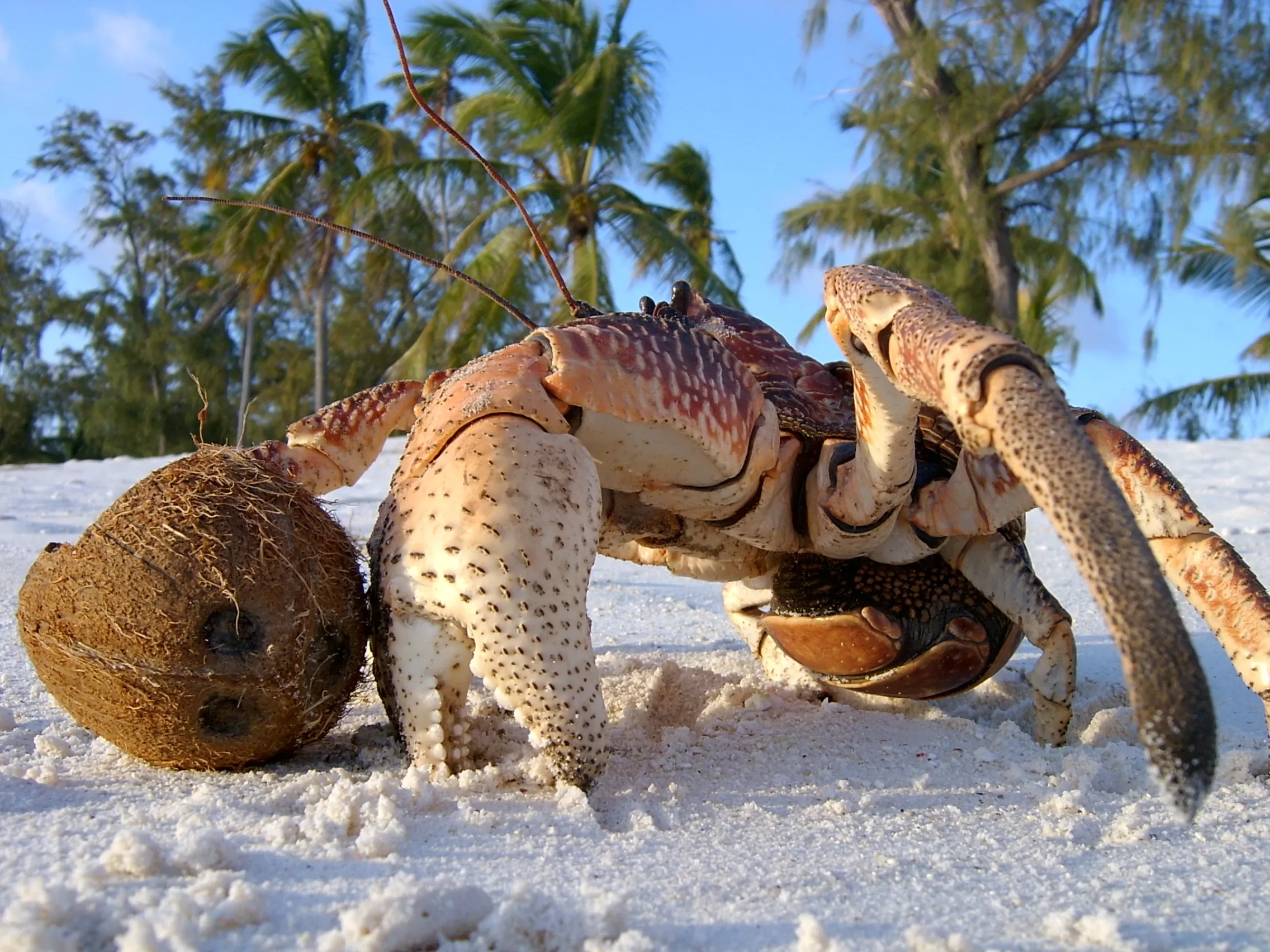 Real photograph
 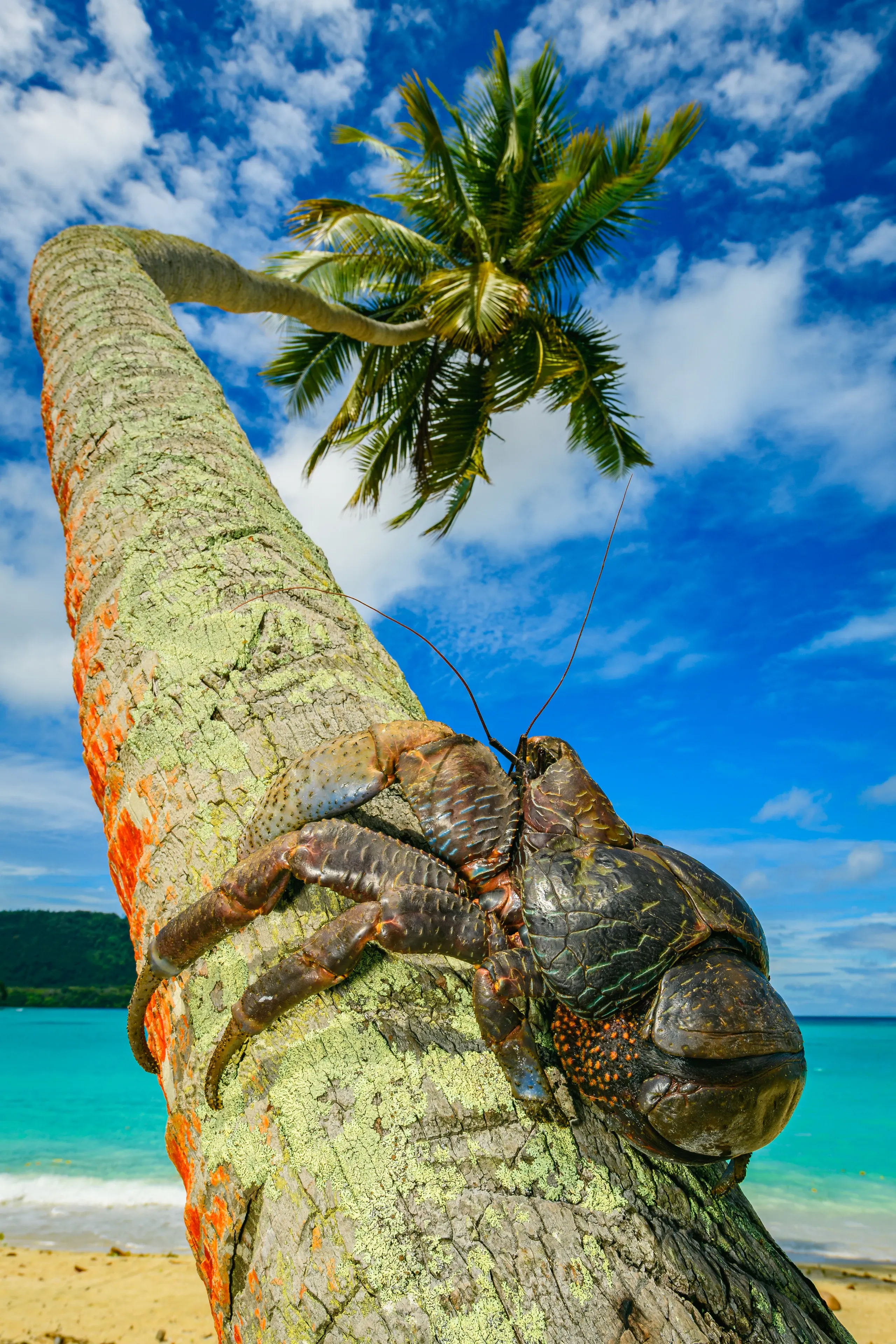 Real photograph
 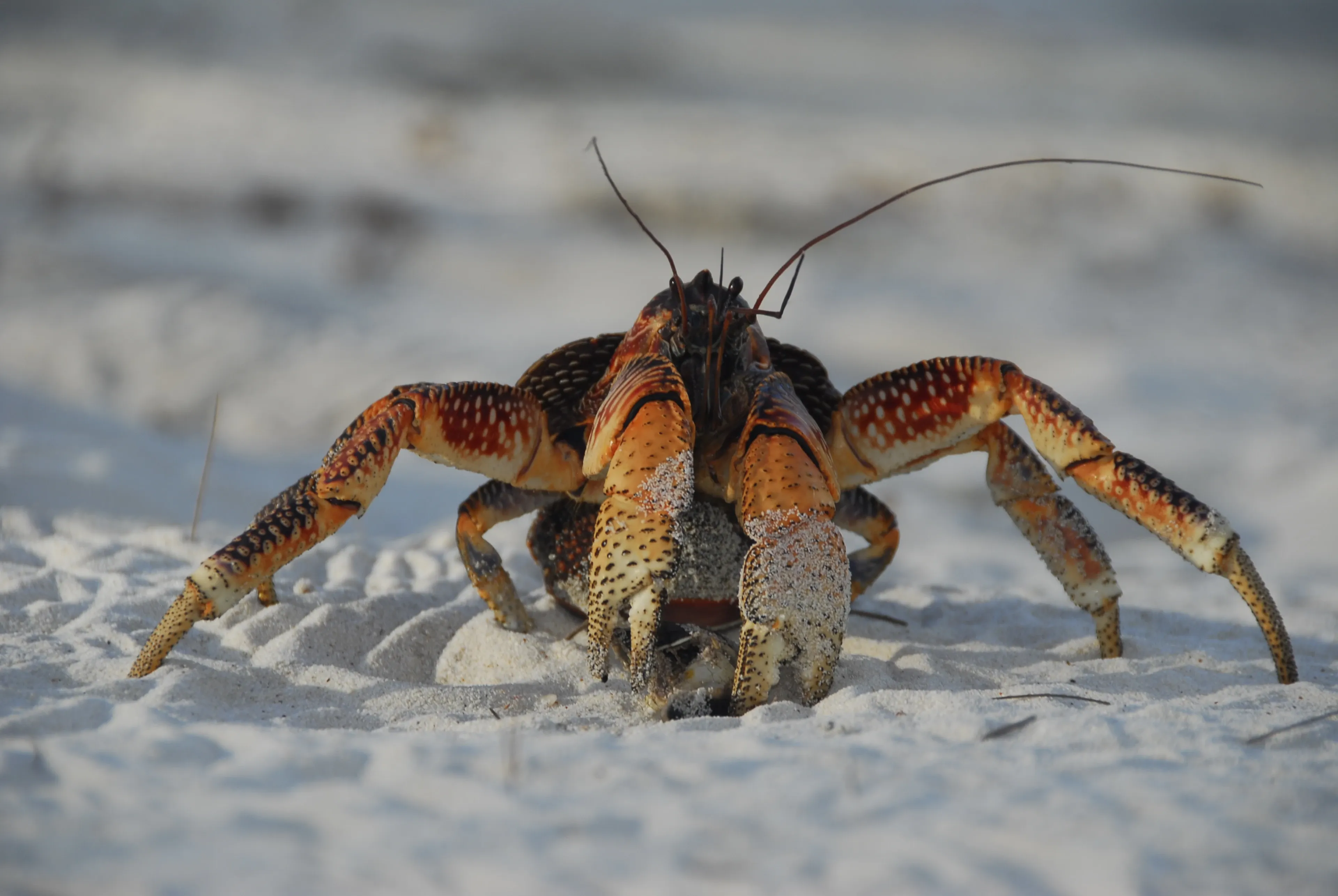 Real photograph
 Why we love them
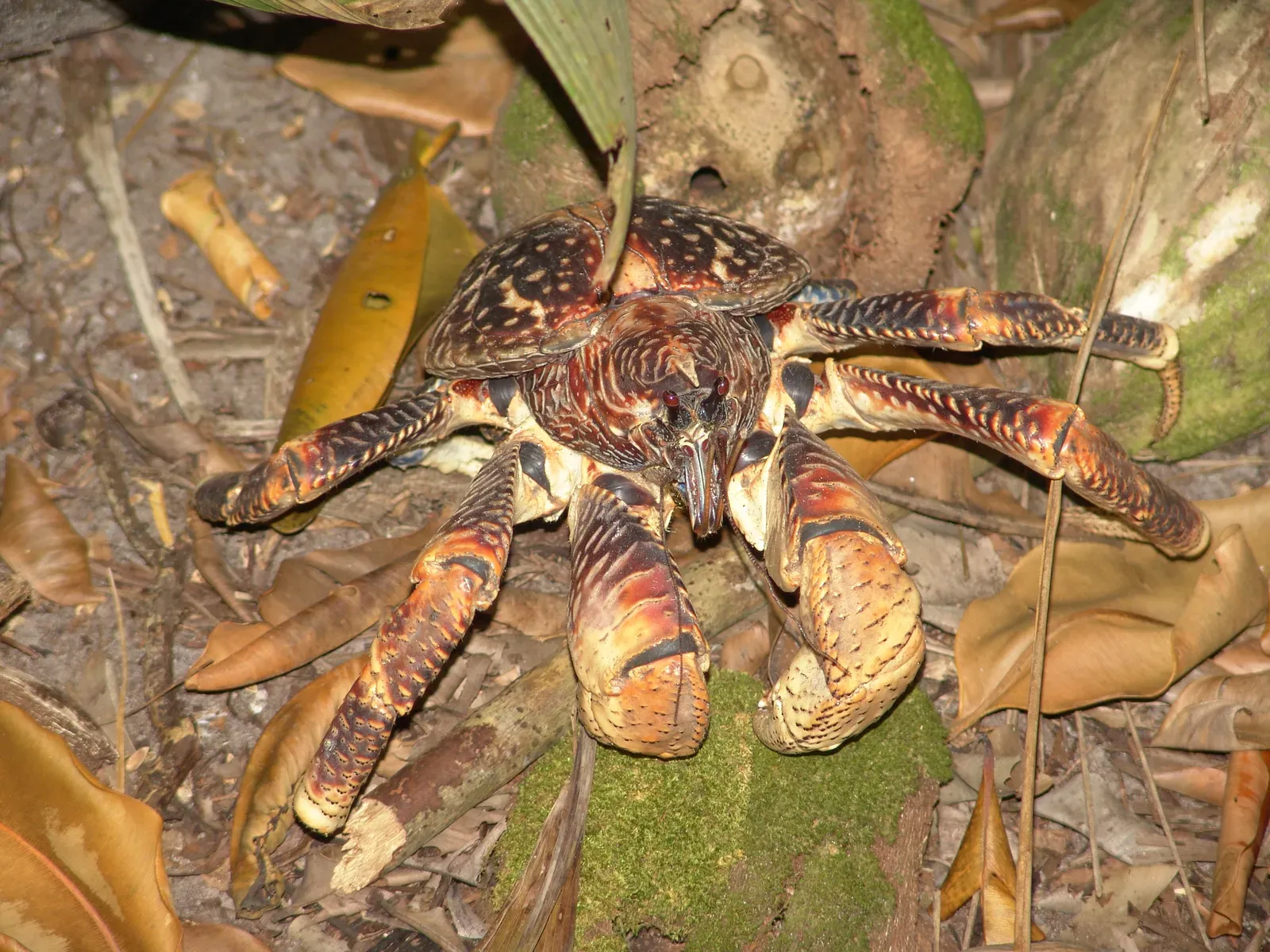
The coconut crab is a giant crab that lives on warm, sandy islands in the Indian and Pacific Oceans. It is the largest crab in the world that lives on land, and it is so big that its legs can stretch almost a whole metre from tip to tip. A grown-up coconut crab can weigh about as much as a pet cat.
Unlike most crabs, the coconut crab spends its life on land instead of in the sea. It digs cosy burrows in the sand or hides among rocks and tree roots to stay cool during the hot day. When the sun goes down, it comes out to explore and look for food.
Coconut crabs are wonderful climbers. Using their strong, pointed legs, they can climb tree trunks to reach food or escape danger. They got their name from living near coconut palms on tropical islands, even though coconuts are not their main everyday meal.
The coconut crab has enormous, powerful claws, called pincers. It uses them to tear into fruit, nuts, and other tough snacks it finds on the ground. Coconut crabs also eat seeds, fallen plant pith, and bits of other animals they find, so they are handy tidy-uppers of the island.
Coconut crabs grow very slowly and can live for a surprisingly long time, so their numbers drop if too many are taken. On some islands there are now rules about how many people may catch, and special protected areas where the crabs can live safely. These help make sure the world's biggest land crab keeps climbing the palm trees for a long time to come.
My home
Tropical island, coast, coastal forest
Where I live
Pacific Ocean, Indian Ocean
What I eat
Fruit, nuts, seeds, dead animals, plant pith
How long I am
0.4 m
How heavy I am
4.1 kg
How long I live
60 years
The coconut crab is the biggest arthropod that lives on land, and its legs can spread almost a metre wide, about as long as a child's arm span.
Coconut crabs are strong climbers and can shimmy up trees using their powerful, pointed legs.
Despite their name, coconut crabs mostly scavenge fruit, nuts, seeds and leftover scraps; coconuts are not their main everyday food.
Every coconut crab can feel happy, scared and loved — just like you.
Looking after my friends
How many are there?
A published estimate put the Christmas Island coconut-crab population at about 1.26 million.
This is a historical estimate for one exceptionally large island population, not a worldwide total.
Estimate source: Meta- and subpopulation estimation with disparate data: coconut crabs in the Western Indian Ocean
How are they doing?
VulnerableThis species has a high risk of extinction in the wild unless the pressures on it improve.
You can help by learning their names, keeping wild places clean, and telling someone why this animal matters.
Where this came from
- Birgus latro (Coconut Crab) — Red List Assessment — IUCN Red List of Threatened Species
- Birgus latro (coconut crab) — Animal Diversity Web, University of Michigan Museum of Zoology
- Coconut crab — Wikipedia
- Meta- and subpopulation estimation with disparate data: coconut crabs in the Western Indian Ocean — Animal Conservation