Today's animal friend · 1 September 2026
The Tūī’s Tiny Bow Tie and Giant Voice
A walk beneath flowering trees in Aotearoa New Zealand can become a sound adventure when a tūī is nearby. Listen closely: this dark-feathered bird has a white throat tuft, a taste for nectar, and a talent for unexpected noises.
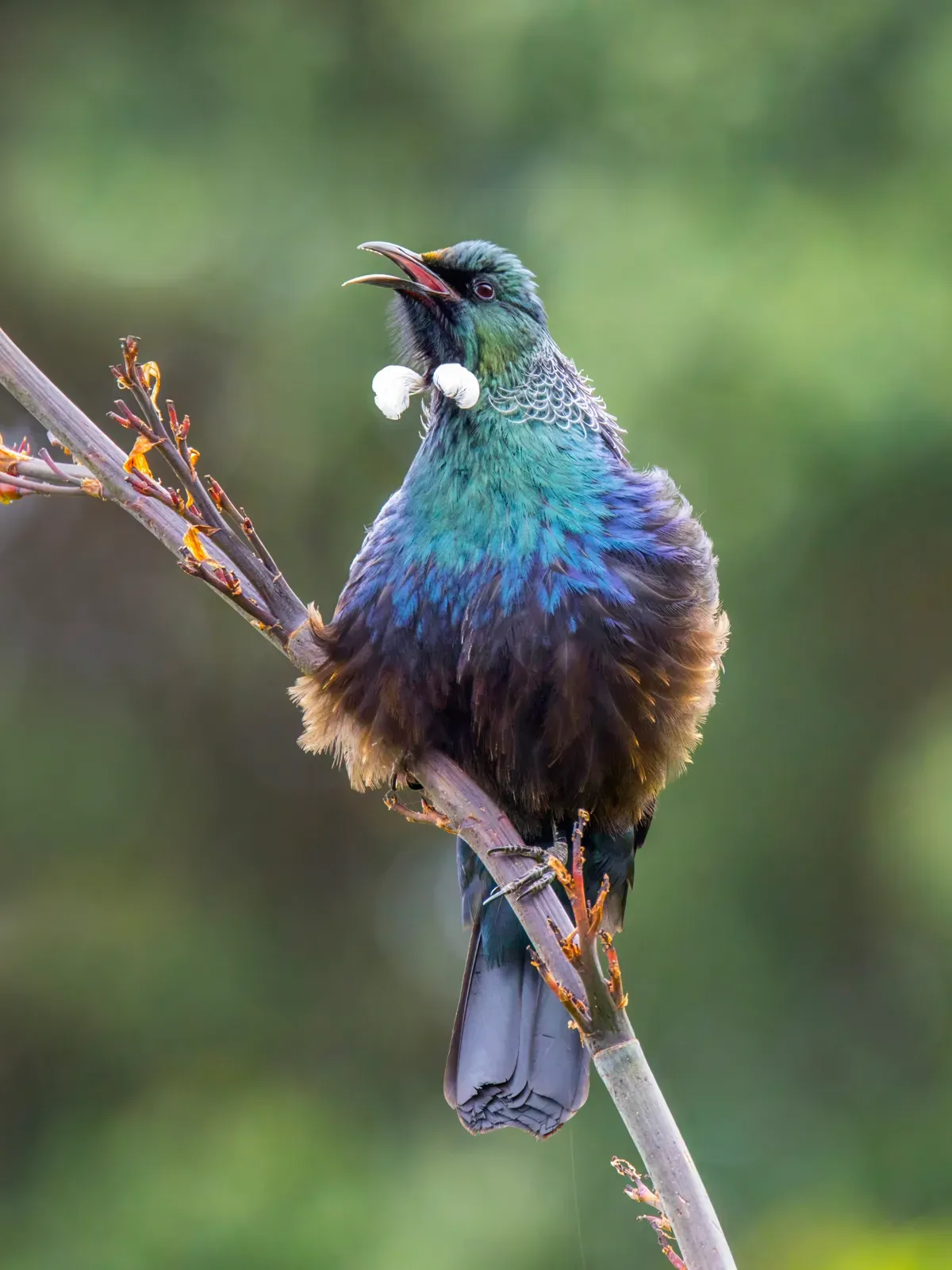
A walk beneath flowering trees in Aotearoa New Zealand can become a sound adventure when a tūī is nearby. Listen closely: this dark-feathered bird has a white throat tuft, a taste for nectar, and a talent for unexpected noises.
A ringtone in the treetops?
Imagine you are walking through a garden on a bright morning. Leaves rustle. A flower brushes your sleeve. Then—brrring!—a noise like a phone ringtone pops out of a tree. But nobody is answering a phone. A tūī is singing overhead.
The tūī, or Prosthemadera novaeseelandiae, is a bird found only in Aotearoa New Zealand. It is active in the daytime, when it can be spotted in native broadleaf forest, other native forests, and gardens with good food growing nearby. From far away, a tūī may look almost black. Step into sunshine, though, and its feathers can gleam green, blue, and bronze, as if someone had hidden tiny bits of coloured glass among them.
Look for its famous white throat feathers. They form a curly little tuft that bobs as the bird sings. It can look a bit like a very fancy bow tie—one that never has to be straightened before a party.
Evidence: IUCN Red List of Threatened Species / BirdLife International (Red List Authority for birds): Prosthemadera novaeseelandiae (Tui) — Red List Assessment; New Zealand Department of Conservation (Te Papa Atawhai): Tui — New Zealand native land birds; Wikipedia: Tūī
Why does a tūī sound like a whole noisy neighbourhood?
Tūī are highly vocal mimics. That means they can copy sounds they hear, including calls of other birds such as bellbirds and some human-made sounds, including phone ringtones. Their voices can be bubbling, clicking, whistling, and surprising. Listening for one is less like hearing a single instrument and more like hearing a tiny sound-effects studio hidden in a branch.
Long ago, Māori sometimes trained tūī to repeat spoken words. That history helps us see just how closely people have noticed this remarkable bird for a long time. A tūī is not simply making random noise: its voice is part of the living soundscape of Aotearoa New Zealand.
Here is a good outdoor challenge: when you hear an odd sound in a flowering tree, pause before deciding what made it. Could it be a bellbird? A phone? Or a clever tūī borrowing a sound for its own song? The best clue may be the bobbing white bow tie.
Evidence: New Zealand Department of Conservation (Te Papa Atawhai): Tui — New Zealand native land birds; Wikipedia: Tūī
The flower café with a feathered customer
Tūī belong to the honeyeater family, and nectar is their main food. Nectar is the sweet liquid inside flowers: a bit like a flower’s tiny café counter, except the customer arrives with wings and no wallet. Tūī reach into blossoms to drink, twisting and dangling as they feed.
While a tūī visits flowers, pollen can cling to it and travel to another flower. This makes tūī important pollinators of native plants, including flax, also called harakeke, and kōwhai. Pollination helps plants make seeds, so a nectar-sipping bird can quietly help new plants begin their lives.
Nectar is not the whole menu. Tūī also eat fruit and insects frequently, and sometimes pollen and seeds. That varied menu helps explain why flowering or fruiting places can be especially good tūī habitat. A garden can be more than a neat patch of plants; when it offers the right flowers and fruit, it can be part of a bird’s busy daily route.
There is one odd nectar tale to hold lightly: flax nectar can sometimes ferment, and a tūī that drinks it may fly in a wobbly, tipsy-looking way. It is a funny image, but the truly amazing part is the ordinary visit—the bird and flower helping each other, again and again.
Evidence: New Zealand Department of Conservation (Te Papa Atawhai): Tui — New Zealand native land birds; Wikipedia: Tūī
Where does this glossy singer live?
Tūī are endemic to New Zealand, which means they naturally live nowhere else in the world. They occur on the North, South, and Stewart Islands, as well as many offshore islands. That makes every tūī song a special part of one place on Earth.
A tūī may be at home among broadleaf trees in native forest, yet it can also visit gardens. Think of it as a forest neighbour willing to call by when the snacks are good. Flowering and fruiting habitats matter because they provide the nectar and fruit tūī use.
The bird’s name carries a macron: tūī. Taking care with names is one small way of paying attention. And attention is where wildlife friendship begins. Instead of rushing past a dark bird in a tree, we can stop, watch for a flash of colour, and wonder what it is doing there.
Evidence: New Zealand Department of Conservation (Te Papa Atawhai): Tui — New Zealand native land birds; Wikipedia: Tūī
A brave little bird, with some big challenges
The tūī is listed as Least Concern globally and as Not Threatened in New Zealand. In places with good pest control and plenty of flowering or fruiting habitat, tūī can be locally abundant. That is encouraging news: careful work by people and healthy places for birds can make a real difference.
Still, “not threatened” does not mean “nothing to worry about.” Introduced predators and habitat loss are important pressures on tūī. A forest or garden needs to be more than pretty. It needs safe places, native plants, and room for the food web—the many living links between flowers, insects, fruit, and animals.
Kids cannot solve every conservation challenge alone, and nobody expects them to. But you can be a sharp-eyed neighbour. Notice native flowers. Give birds space rather than chasing them for a closer look. Join an adult in a local planting or restoration day if one is available. Every protected patch of flowering, fruiting habitat is another possible stop on a tūī’s daily journey.
Evidence: IUCN Red List of Threatened Species / BirdLife International (Red List Authority for birds): Prosthemadera novaeseelandiae (Tui) — Red List Assessment; New Zealand Department of Conservation (Te Papa Atawhai): Tui — New Zealand native land birds; Wikipedia: Tūī
Listening is its own kind of adventure
A tūī does not need to perform tricks for us to be wonderful. It is already doing important work: drinking nectar, moving pollen, eating fruit and insects, and filling forests and gardens with sound. Its white throat tuft, shimmering feathers, and mimicry make it easy to remember, but its everyday life is worth noticing too.
Next time you are outdoors in Aotearoa New Zealand, try a “slow listening minute.” Stand still with a trusted grown-up. Listen for whistles, clicks, or a strangely familiar electronic-sounding call. Look up only after you have listened. You may not see a tūī every time, but the waiting changes the walk. Suddenly, the trees are not background scenery. They are full of neighbours with places to go.
And if a tūī does appear, you do not have to do much. Enjoy the moment. Let it choose the distance. A wild bird is not a decoration or a toy; it is a lively individual with its own important day underway—perhaps heading to the next flower café.
Evidence: New Zealand Department of Conservation (Te Papa Atawhai): Tui — New Zealand native land birds; Wikipedia: Tūī
A kind choice that reaches beyond the garden
Caring about a tūī can begin with caring about its flowers, forest, and freedom to live wild. We can also widen that kindness to other animals in our everyday choices. A meal built around vegetables, fruit, whole grains, pulses, nuts, and seeds can be colourful, filling, and a chance to try new flavours with family.
The World Health Organization includes these plant foods in guidance on healthy diets, while the IPCC reports that shifts toward sustainable, healthy, more plant-based diets can reduce food-system emissions and pressure on land and biodiversity. That does not mean one child has to make every decision alone. It means small, cheerful choices—like enjoying a bean dish, a lentil soup, or a favourite fruit snack with a trusted adult—can be one way to show care for animals and the living places they need.
A tūī does not ask us to be perfect. Its busy flower-to-flower journey offers a simpler invitation: notice the connections, choose gentleness where you can, and leave room for other lives to flourish.
Evidence: World Health Organization: Healthy diet; Intergovernmental Panel on Climate Change: Climate Change 2022: Mitigation of Climate Change — Chapter 7
Questions people ask
Is a tūī a parrot?
No. A tūī is a passerine bird in the honeyeater family, Meliphagidae. Its skill at copying sounds can make it seem parrot-like, but it belongs to a different bird group.
Evidence: New Zealand Department of Conservation (Te Papa Atawhai): Tui — New Zealand native land birds; Wikipedia: Tūī
What does a tūī eat?
Nectar is its main food. Tūī also eat fruit and insects often, and sometimes pollen and seeds. When they feed at flowers, they can carry pollen between them.
Evidence: New Zealand Department of Conservation (Te Papa Atawhai): Tui — New Zealand native land birds; Wikipedia: Tūī
Why are tūī important to plants?
They are important pollinators. As they drink nectar from native flowers such as flax and kōwhai, they can help move pollen, which helps plants make seeds.
Evidence: New Zealand Department of Conservation (Te Papa Atawhai): Tui — New Zealand native land birds; Wikipedia: Tūī
Are tūī in danger?
The species is listed as Least Concern globally and Not Threatened in New Zealand, but introduced predators and habitat loss still matter. Good pest control and flowering or fruiting habitat can support local tūī numbers.
Evidence: IUCN Red List of Threatened Species / BirdLife International (Red List Authority for birds): Prosthemadera novaeseelandiae (Tui) — Red List Assessment; New Zealand Department of Conservation (Te Papa Atawhai): Tui — New Zealand native land birds; Wikipedia: Tūī
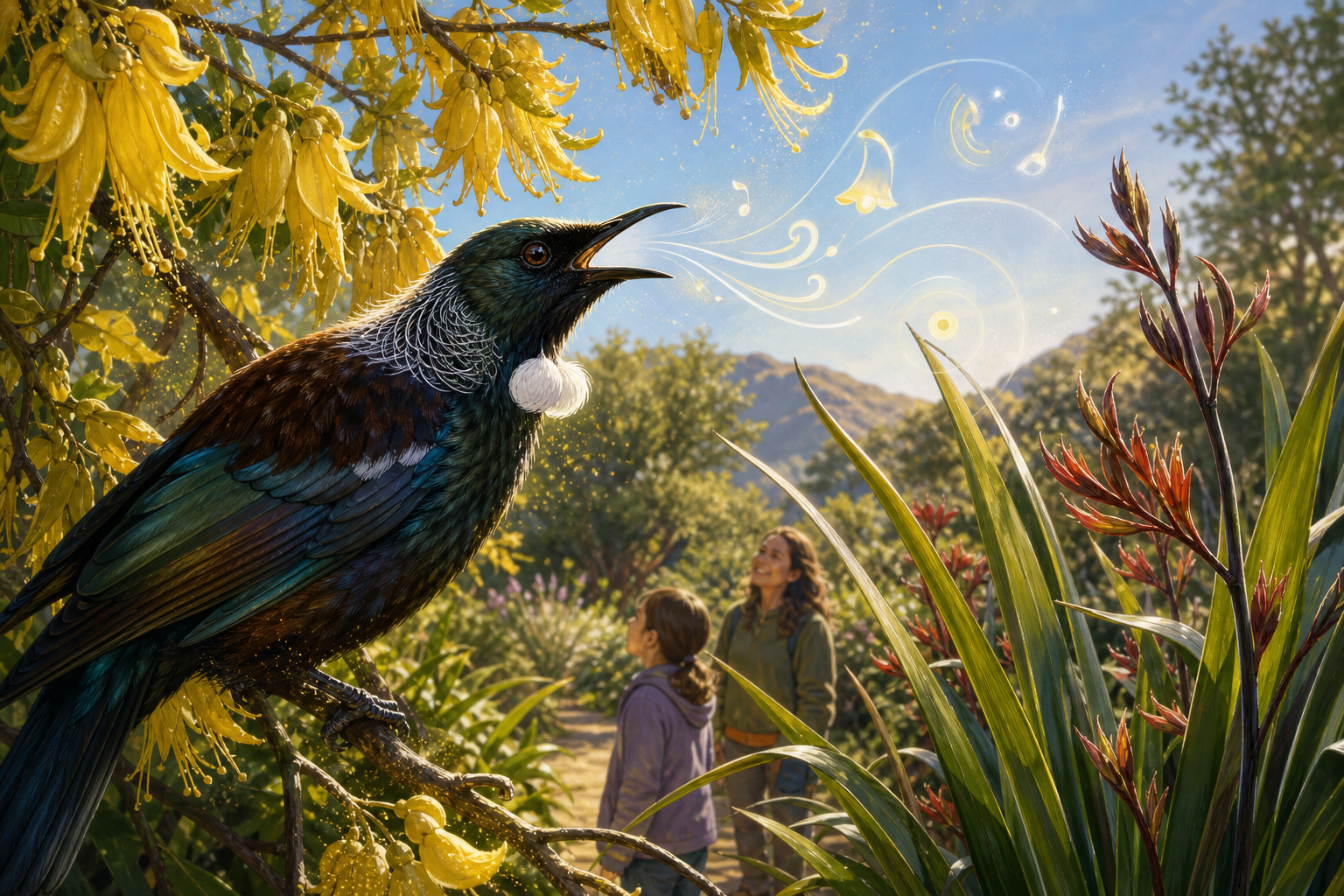
Read the evidence
Sources behind this story
- Prosthemadera novaeseelandiae (Tui) — Red List Assessment — IUCN Red List of Threatened Species / BirdLife International (Red List Authority for birds)
- Tui — New Zealand native land birds — New Zealand Department of Conservation (Te Papa Atawhai)
- Tūī — Wikipedia
- Healthy diet — World Health Organization
- Climate Change 2022: Mitigation of Climate Change — Chapter 7 — Intergovernmental Panel on Climate Change
Health information is general education, not personal medical advice. Young readers should make food choices with a trusted adult and qualified health professional.