Today's animal friend · 29 July 2026
Snow Leopard: The Mountain Ghost with a Scarf for a Tail
A snow leopard can wrap its tail around itself like a cosy scarf. That is only the beginning of this high-mountain adventure.
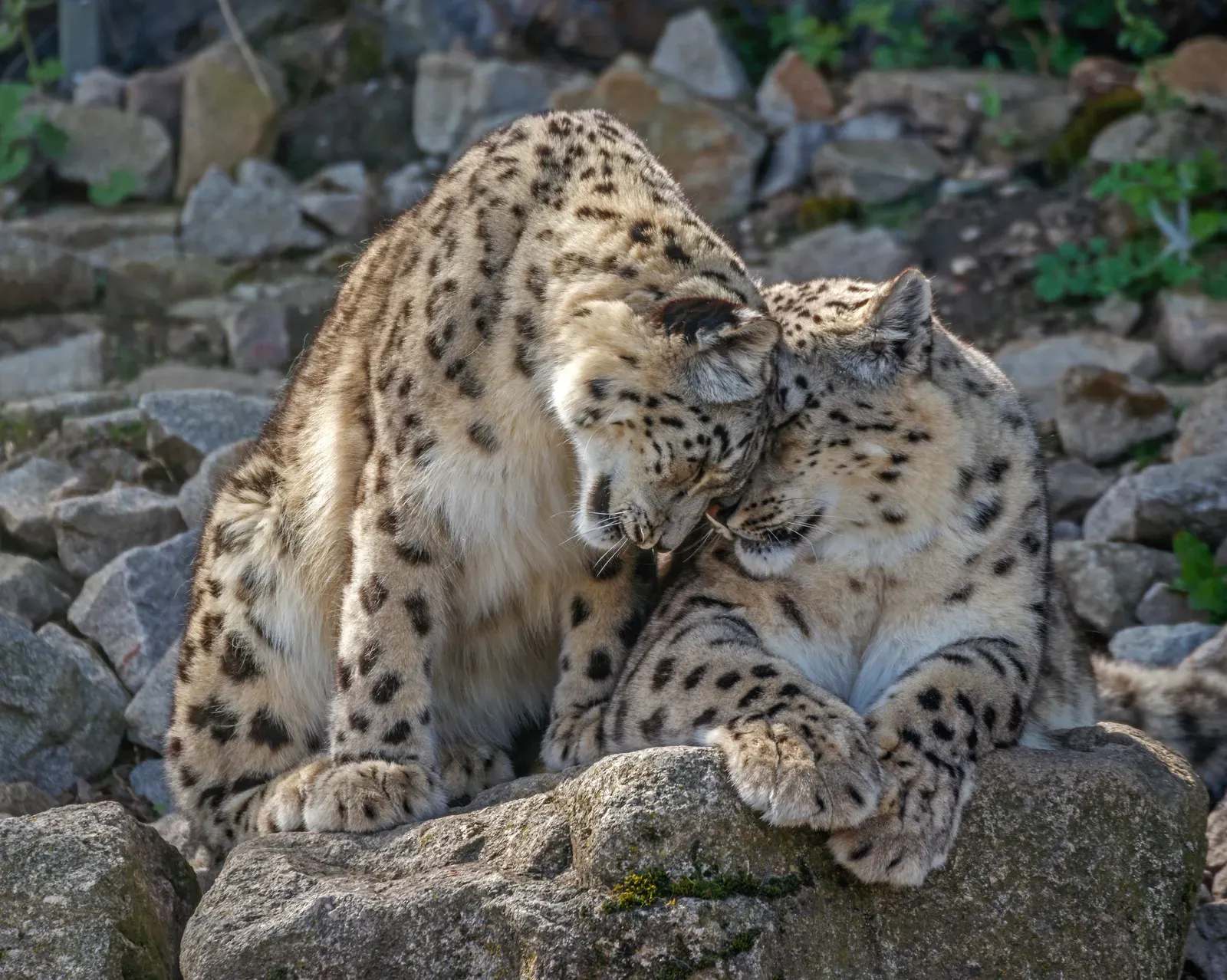
A snow leopard can wrap its tail around itself like a cosy scarf. That is only the beginning of this high-mountain adventure.
A flicker of spots on the mountain
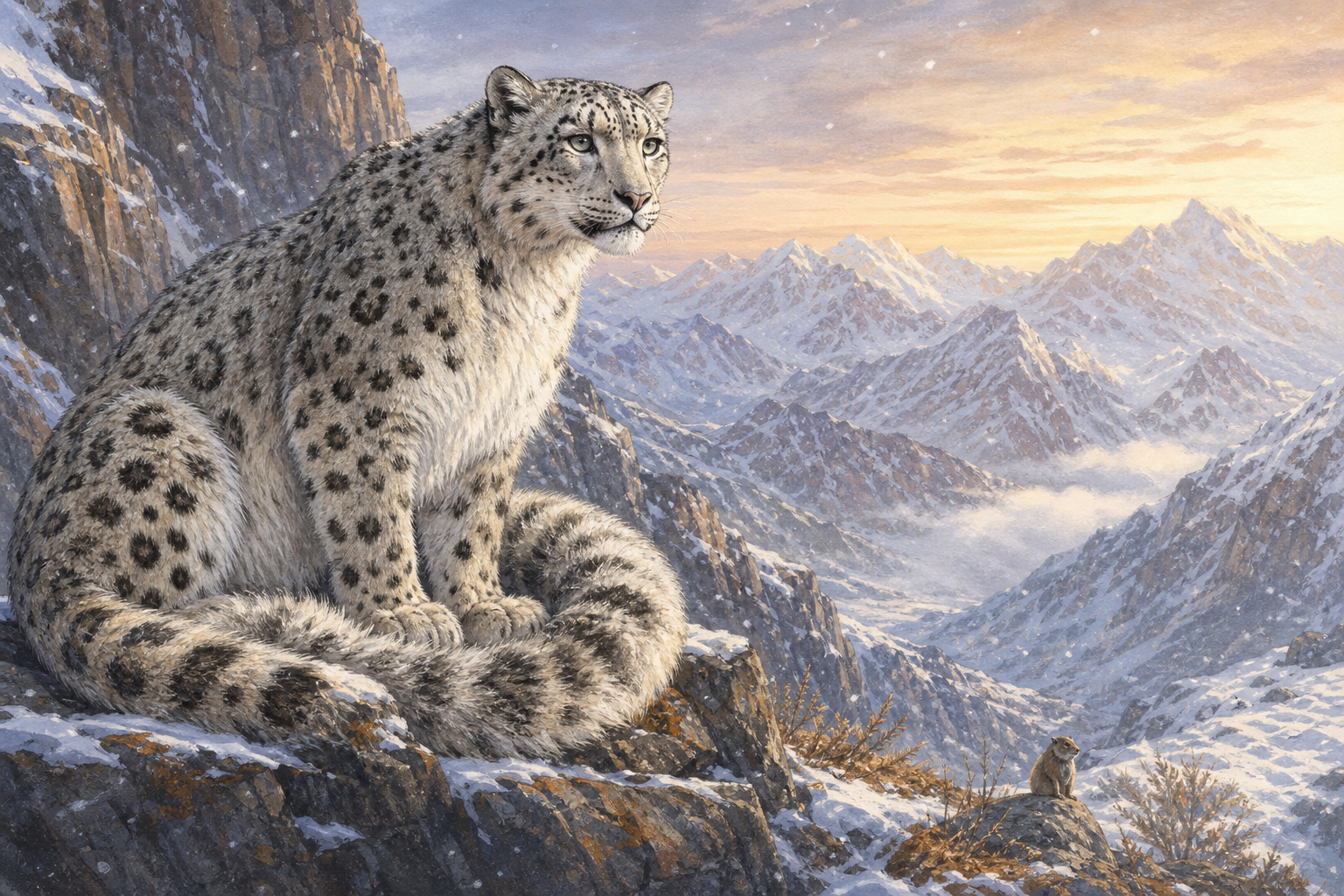
Imagine a mountainside where the wind whistles between rocks and the ground crunches with snow. You look up at a pale grey boulder—and then the “boulder” blinks. A snow leopard has been sitting there all along.
This large cat, whose scientific name is Panthera uncia, lives among the high mountains and alpine rocky slopes of Asia. It is sometimes called an ounce, though it is definitely not a tiny unit of measurement in a maths book. Snow leopards live across mountain ranges in about 12 Asian countries, where steep cliffs, chilly air, and rocky ledges make a giant outdoor obstacle course.
Their pale fur is marked with dark spots and rings. Against snow, stone, and shadow, that coat makes a snow leopard astonishingly difficult to spot. It is not trying to win a hide-and-seek medal, of course. Blending in helps this mountain hunter move through its home without being easily seen.
Evidence: IUCN Red List of Threatened Species: Panthera uncia (Snow leopard) — Red List Assessment; World Wide Fund for Nature (WWF): Snow Leopard; Wikipedia (English): Snow leopard
Built for boulders, balance, and big jumps
A snow leopard’s body is made for mountain life. Its head-and-body length can be about 75 to 150 centimetres—roughly the length of a child-sized bed at the larger end—and it can weigh about 27 to 54 kilograms. Yet its most eye-catching extra is its tail: about 80 to 105 centimetres long, almost as long as its body.
That thick, fluffy tail is a multitool. While the cat moves across uneven rocks, it helps with balance. When the temperature drops and the leopard rests, it can curl the tail around itself for warmth, like pulling up a soft scarf. If your scarf also helped you stay steady while hopping across a slippery wall, it would be a very useful scarf indeed.
And then there are those back legs. Snow leopards can leap up to about six times their own body length. Picture lining up six copies of yourself on the ground and jumping over all of them. A snow leopard’s leap helps it travel through the steep, broken landscape of rocky slopes. Its thick fur also keeps it warm in the cold and adds to its rocky, snowy disguise.
Evidence: World Wide Fund for Nature (WWF): Snow Leopard; Wikipedia (English): Snow leopard; IUCN Red List of Threatened Species: Panthera uncia (Snow leopard) — Red List Assessment
What is on a mountain cat’s menu?
Snow leopards are carnivores, meaning they eat other animals. In their mountain homes, they hunt wild sheep and goats and smaller mammals. Their prey can include blue sheep, ibex, argali, markhor, marmots, and hares. Which animals are available changes from one mountain area to another.
Why does that matter beyond a hungry snow leopard? As an apex predator, the cat is part of the mountain ecosystem’s busy web of life. By hunting wild sheep, goats, and smaller mammals, snow leopards help shape prey populations. A mountainside is not just rocks with animals sprinkled on top; it is a neighbourhood of living things connected in many ways.
Snow leopards generally live alone, apart from mother-and-young care. That can make a wild sighting rare and special. A person may walk through a snow leopard landscape and never see one—not because the cat is imaginary, but because it is such an expert at using its quiet, camouflaged home.
Evidence: World Wide Fund for Nature (WWF): Snow Leopard; Wikipedia (English): Snow leopard; IUCN Red List of Threatened Species: Panthera uncia (Snow leopard) — Red List Assessment
Why does this hidden cat need neighbours?
Even a brilliant climber cannot solve every problem with a spectacular jump. Snow leopards face habitat loss, fewer wild prey animals, conflict with herders, and poaching. These pressures do not look exactly the same in every country or valley, but together they make life harder for a species already spread across huge mountain landscapes.
The snow leopard is listed as Vulnerable in the IUCN conservation framing used here. WWF estimates that about 4,000 to 6,500 remain in the wild, and the overall population is thought likely to be decreasing. Those numbers are estimates, not a roll call: many snow leopards are difficult to find in such vast, rugged places.
There is room for hope, because people can act. Protecting mountain habitat means protecting the rocky routes and resting places snow leopards need. Protecting wild prey helps keep their food web working. Reducing conflict with herders can help people and leopards share mountain regions more safely, while stopping poaching removes another serious danger. Conservation is not one magic button. It is many careful choices, made by people who care about the mountains and the lives within them.
Evidence: IUCN Red List of Threatened Species: Panthera uncia (Snow leopard) — Red List Assessment; World Wide Fund for Nature (WWF): Snow Leopard; Wikipedia (English): Snow leopard
A mountain mystery worth keeping
Snow leopards remind us that being hard to see does not mean being unimportant. Their spotted coats, soaring leaps, and scarf-like tails are wonderful on their own. They also belong to a larger high-mountain world of wild sheep, goats, marmots, hares, cliffs, snow, and people.
You do not have to scramble up an icy Asian ridge to be on this animal’s side. Start by noticing that every creature has a home and a way of living that matters. Ask good questions when you see wildlife stories: What does this animal need? What problems is it facing? Who is working nearby to help? Curiosity is not a small thing. It is often the first step toward caring.
If you ever draw a snow leopard, give it a wide rocky ledge, a swirl of pale spots, and a tail with plenty of room to curl. Then leave a little mystery in the picture. Somewhere behind the next boulder, the mountain ghost may be watching the snow drift past—perfectly at home in a world that deserves protection.
Evidence: World Wide Fund for Nature (WWF): Snow Leopard; Wikipedia (English): Snow leopard; IUCN Red List of Threatened Species: Panthera uncia (Snow leopard) — Red List Assessment
A kind choice can begin at the dinner table
Snow leopards hunt because that is how they live; people get to make choices. One gentle way to show care for animals and wild places is to enjoy more plant-based meals—perhaps beans in a burrito, lentils in soup, chickpeas in a curry, or peanut butter on toast. The World Health Organization includes foods such as whole grains, vegetables, fruit, pulses, nuts, and seeds in a healthy varied diet.
The IPCC reports that shifts toward sustainable, healthy, more plant-based diets can reduce food-system emissions and pressure on land and biodiversity. That does not mean judging what is on anyone else’s plate. It means trying curious, delicious choices with your family or trusted adults, and remembering that kindness can stretch from your kitchen to faraway mountain homes.
Evidence: World Health Organization: Healthy diet; Intergovernmental Panel on Climate Change: Climate Change 2022: Mitigation of Climate Change — Chapter 7
Questions people ask
Is a snow leopard actually a leopard?
It is a large cat in the family Felidae, with the scientific name Panthera uncia. Snow leopards are also called ounces, but “ounce” is simply another name for the same animal.
Evidence: World Wide Fund for Nature (WWF): Snow Leopard; Wikipedia (English): Snow leopard
Why is its tail so huge?
Its long, thick tail helps it balance on rocky ground and can be wrapped around its body for warmth when it rests in cold mountain conditions.
Evidence: World Wide Fund for Nature (WWF): Snow Leopard; Wikipedia (English): Snow leopard
Can snow leopards really jump that far?
Yes. Their powerful back legs can launch them up to about six times their own body length, a useful ability on steep mountain slopes.
Evidence: World Wide Fund for Nature (WWF): Snow Leopard; Wikipedia (English): Snow leopard
How can people help snow leopards?
Helpful approaches include protecting mountain habitat and wild prey, reducing conflict between herders and leopards, and preventing poaching.
Evidence: IUCN Red List of Threatened Species: Panthera uncia (Snow leopard) — Red List Assessment; World Wide Fund for Nature (WWF): Snow Leopard
Read the evidence
Sources behind this story
- Panthera uncia (Snow leopard) — Red List Assessment — IUCN Red List of Threatened Species
- Snow Leopard — World Wide Fund for Nature (WWF)
- Snow leopard — Wikipedia (English)
- Healthy diet — World Health Organization
- Climate Change 2022: Mitigation of Climate Change — Chapter 7 — Intergovernmental Panel on Climate Change
Health information is general education, not personal medical advice. Young readers should make food choices with a trusted adult and qualified health professional.