Today's animal friend · 22 November 2026
The Red Fox’s Twilight Trot
A red fox can make a home in forests, fields, farms, and even near city streets. Let’s meet this bright-eyed traveller and see the world from fox-height.
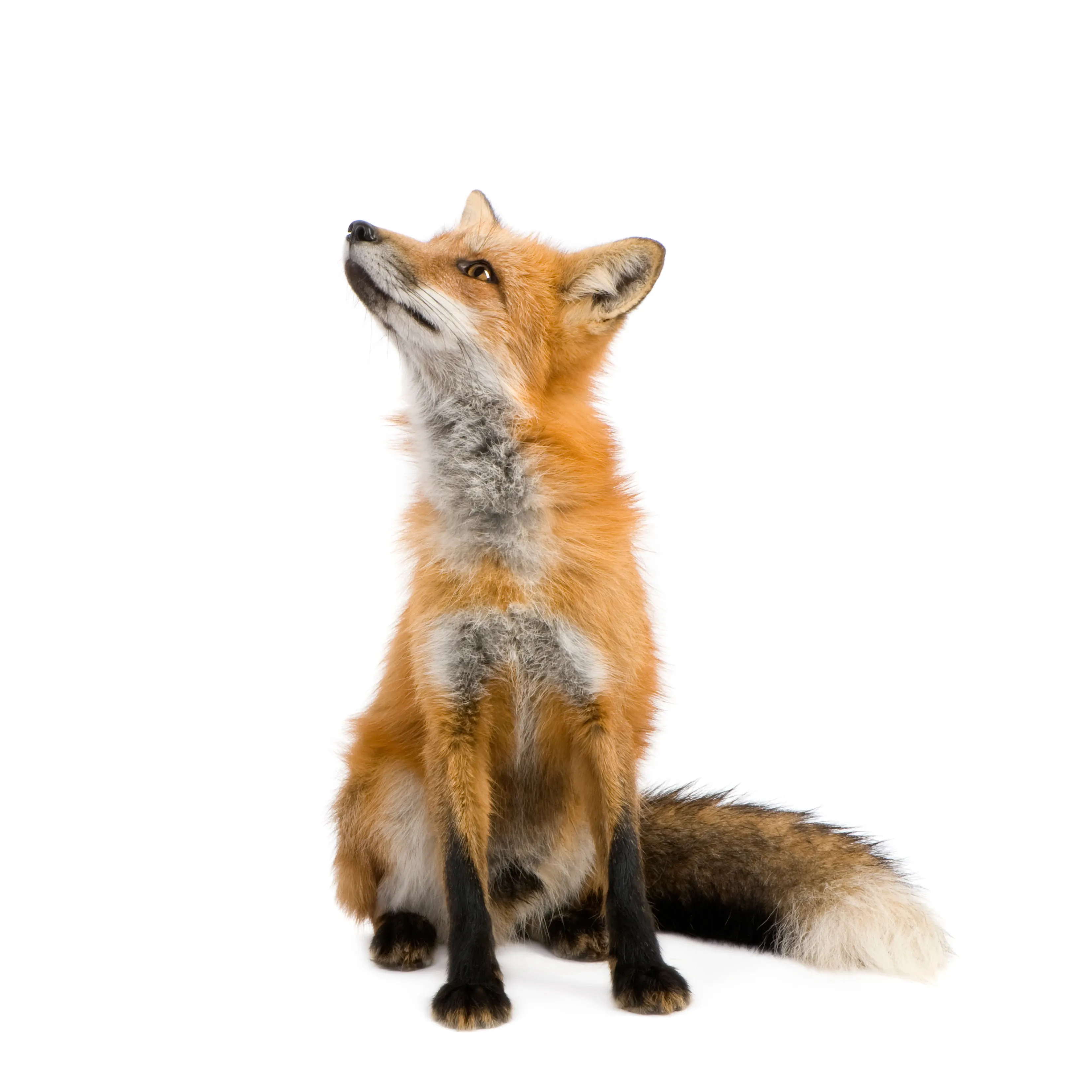
A red fox can make a home in forests, fields, farms, and even near city streets. Let’s meet this bright-eyed traveller and see the world from fox-height.
When the daylight turns silver, a fox may be listening
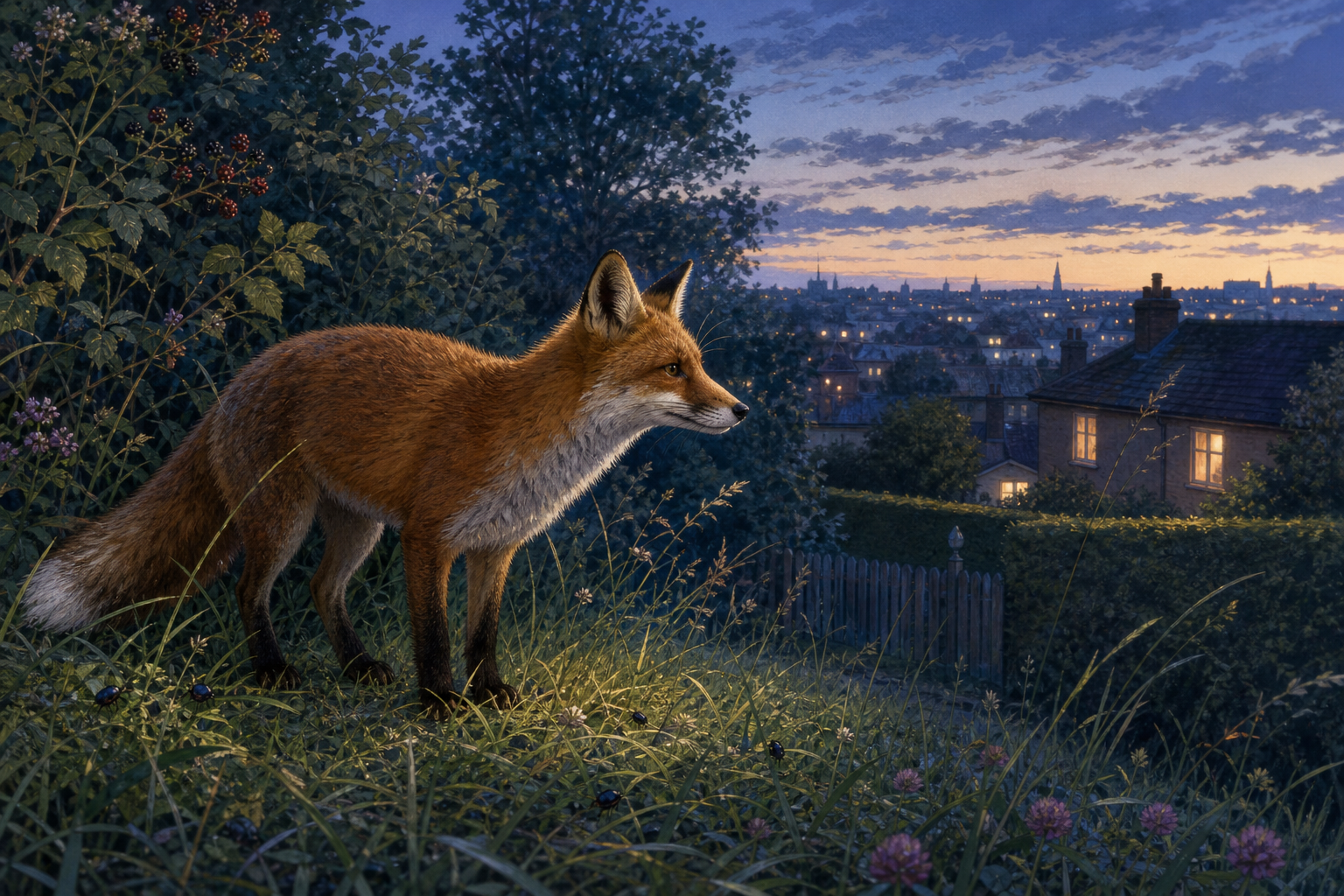
Imagine the sky going soft and grey, like someone has rubbed a blue crayon gently over the evening. In a field, a small reddish shape pauses. Its ears stand tall. Its nose points forward. Then—trot, trot, trot—it slips through the grass on quiet paws.
Meet the red fox, or Vulpes vulpes. It is a member of the dog family, although it does not need a lead, a tennis ball, or a raincoat with tiny ducks on it. Red foxes do much of their hunting around dusk, dawn, and at night. While many people are brushing their teeth or packing lunches, a fox may be beginning its busy shift.
The surprising part? The red fox lives in more places than any other member of the dog family. It can be found in forests and grasslands, on farmland, and in urban places too. One fox’s evening route might pass hedges and fields; another’s might weave near gardens and city streets. Wherever it lives, it needs food and places to rest.
A glimpse can feel magical because foxes are often on the move when the world is quieter. If you are lucky enough to spot one, the kindest superpower is simply to watch from a distance and let it carry on with its fox business.
Evidence: IUCN Red List of Threatened Species: Vulpes vulpes (Red Fox) — Red List Assessment; Animal Diversity Web, University of Michigan Museum of Zoology: Vulpes vulpes (red fox)
What does a red fox look like up close?
A red fox is not a giant animal pretending to be small. Adults stand about 35 to 50 centimetres at the shoulder—roughly knee-high for many children—and their head-and-body length is about 45 to 90 centimetres. Their weight varies a lot too, from about 2.2 to 14 kilograms. That is a useful reminder: no two wild foxes are exactly alike.
Many have warm reddish-orange fur, a pale tummy, darker legs, tall ears, and a pointed nose. Behind comes the famous fluffy tail, called a brush. It looks a bit like the grandest feather duster imaginable, except it belongs to someone who would be extremely offended if you tried to dust a shelf with it.
Their family name, Canidae, also includes dogs and wolves. Yet a red fox has its own particular look and its own way of travelling through the world. Its small, alert shape is made for noticing what is happening around it: a rustle in grass, a beetle under leaves, or a possible snack nearby.
Red foxes are the largest of the “true foxes” in the genus Vulpes. Still, they can be surprisingly easy to miss. A fox does not need to be loud to be remarkable. Sometimes being quick, watchful, and wonderfully good at blending into an evening scene is quite enough.
Evidence: IUCN Red List of Threatened Species: Vulpes vulpes (Red Fox) — Red List Assessment; Animal Diversity Web, University of Michigan Museum of Zoology: Vulpes vulpes (red fox)
Dinner can be a mouse… or a berry
So what is on a fox’s menu? Red foxes are omnivores, meaning they eat both animal and plant foods. Depending on what is available, they may eat mice, rabbits, birds, insects, and fruit. Think of a fox as a flexible eater, not a picky restaurant critic with a tiny bow tie.
This flexibility helps explain why red foxes can live in such different places. Food changes with seasons and habitats. In one place, small mammals may be important; in another, insects or fruit may be easier to find. Foxes may also cache extra food—tucking it away for later, rather like saving the last biscuit, only outdoors and without a biscuit tin.
Foxes can matter to the places where they live. By eating small prey such as rodents and rabbits, they can help limit those populations. After eating fruit, they may also help spread seeds. Nature is full of these connecting threads: a berry becomes a meal, and a seed may travel to a new spot.
But a fox’s story depends on where it is. In places where red foxes have been introduced, including Australia, they can harm native wildlife. Caring about animals means noticing the whole neighbourhood, not cheering for one species while forgetting the others who live there.
Evidence: IUCN Red List of Threatened Species: Vulpes vulpes (Red Fox) — Red List Assessment; Animal Diversity Web, University of Michigan Museum of Zoology: Vulpes vulpes (red fox)
Where does a fox put its paws? Almost everywhere
Red foxes occur across much of Europe, Asia, North Africa, and North America, and they have also been introduced to Australia and some other places. They use a wide mix of habitats: forest, grassland, farmland, scrub, mountain areas, desert edges, suburbs, and cities. That is an impressive travel list for an animal with no suitcase.
A fox does not live in every single patch of those huge regions, of course. It looks for what it needs: food and cover. Areas where different kinds of habitat meet, such as a hedge beside a field, can be especially useful. They offer hiding places, pathways, and chances to search for meals.
During the day, red foxes may rest in an earthen den. Dens are also important family places. Kits—baby foxes—are born there, and adults care for them. Red foxes often live in family groups made up of an adult male, one or two adult females, and young. Sometimes other non-breeding adults help too. That sounds rather like a household where everyone has a job, except nobody is asked to unload the dishwasher.
Outside family life, foxes are mostly solitary and partly territorial. Their home areas vary according to how much food and cover the landscape provides. A crowded city block, a farm edge, and a woodland may each ask a fox to solve a different daily puzzle.
Evidence: IUCN Red List of Threatened Species: Vulpes vulpes (Red Fox) — Red List Assessment; Animal Diversity Web, University of Michigan Museum of Zoology: Vulpes vulpes (red fox)
Is the red fox safe? The answer has a twist
Globally, the red fox is listed by the IUCN as Least Concern, with a stable overall population trend. Its huge range and ability to live in many human-changed landscapes are part of that picture. This is encouraging news: red foxes have proved to be remarkable adapters.
Yet “Least Concern” does not mean “nothing to care about.” In different places, foxes can face hunting, persecution, disease outbreaks such as mange, and conflict with people. Local situations can be very different from the global headline. In introduced ranges, protecting native wildlife may mean carefully managing fox populations too.
So what can a young fox-friend do? Make room for curiosity. If a fox visits your area, do not chase it or try to feed it. Tell an adult if you see an animal that seems unwell or injured, and let local wildlife experts decide what help is needed. Outdoors, keep your eyes open for signs of life: tracks, a rustle, a flash of fur disappearing behind a hedge.
A red fox is worth protecting not because it is perfect, but because it is a living neighbour with needs, family life, and a place in the web of nature. Wonder is a good first step toward wiser choices.
Evidence: IUCN Red List of Threatened Species: Vulpes vulpes (Red Fox) — Red List Assessment; Animal Diversity Web, University of Michigan Museum of Zoology: Vulpes vulpes (red fox)
A gentle choice for foxes, fields, and fellow creatures
The fox’s mixed menu can remind us that food connects many lives. People can make caring choices too. Meals built around vegetables, fruit, whole grains, pulses such as beans and lentils, nuts, and seeds can be part of a healthy varied diet. If you want to try more plant-based or fully vegan meals, make it a cheerful family adventure: perhaps bean tacos, lentil pasta sauce, or a fruit-and-oat breakfast.
It is not about being perfect or telling someone else what to eat. It is about noticing that animals are not ingredients; they are fellow travellers with their own important lives. Choosing plant-forward foods can be one practical way to show kindness while discovering delicious new things.
There is a planet-sized reason to be curious, too. The IPCC reports that shifts toward sustainable, healthy, more plant-based diets can reduce food-system emissions and pressure on land and biodiversity. When we choose with care, we can help leave more room for wild homes—from grassy fields full of small creatures to the quiet fox paths at twilight.
If food changes feel interesting to you, chat with a trusted adult. The best adventure is one your family can explore thoughtfully, with everyone’s needs in mind.
Evidence: World Health Organization: Healthy diet; Intergovernmental Panel on Climate Change: Climate Change 2022: Mitigation of Climate Change — Chapter 7
Small choices, shared world
A fox searching for berries, beetles, or small prey shows how closely food and wildlife are linked. We can bring that same attention to our own plates by enjoying more meals centred on plants: vegetables, fruit, whole grains, pulses, nuts, and seeds.
More plant-based eating can be a gentle vote for animals and for wilder spaces. Global health guidance describes these foods as parts of a healthy varied diet, while climate science finds that sustainable, healthy, more plant-based diets can reduce pressure from food systems on emissions, land, and biodiversity. Try new foods with a trusted adult, with curiosity rather than rules.
Evidence: World Health Organization: Healthy diet; Intergovernmental Panel on Climate Change: Climate Change 2022: Mitigation of Climate Change — Chapter 7
Questions people ask
Are red foxes dogs?
Red foxes are not pet dogs, but they are in the dog family, Canidae, along with dogs and wolves. They are true foxes in the genus Vulpes.
Evidence: IUCN Red List of Threatened Species: Vulpes vulpes (Red Fox) — Red List Assessment; Animal Diversity Web, University of Michigan Museum of Zoology: Vulpes vulpes (red fox)
Why might a fox be seen in a city?
Red foxes can use urban and suburban habitats as well as forests, grasslands, and farmland. They look for food and cover, often moving around at dusk or at night.
Evidence: IUCN Red List of Threatened Species: Vulpes vulpes (Red Fox) — Red List Assessment; Animal Diversity Web, University of Michigan Museum of Zoology: Vulpes vulpes (red fox)
What should I do if I see a fox?
Watch quietly from a distance and do not chase or feed it. If the animal seems injured or unwell, tell a trusted adult so local wildlife experts can advise.
Evidence: IUCN Red List of Threatened Species: Vulpes vulpes (Red Fox) — Red List Assessment; Animal Diversity Web, University of Michigan Museum of Zoology: Vulpes vulpes (red fox)
Do red foxes eat only meat?
No. They are omnivores. Their diet can include mice, rabbits, birds, insects, and fruit, and it changes with what is available locally.
Evidence: IUCN Red List of Threatened Species: Vulpes vulpes (Red Fox) — Red List Assessment; Animal Diversity Web, University of Michigan Museum of Zoology: Vulpes vulpes (red fox)
Read the evidence
Sources behind this story
- Vulpes vulpes (Red Fox) — Red List Assessment — IUCN Red List of Threatened Species
- Vulpes vulpes (red fox) — Animal Diversity Web, University of Michigan Museum of Zoology
- Healthy diet — World Health Organization
- Climate Change 2022: Mitigation of Climate Change — Chapter 7 — Intergovernmental Panel on Climate Change
Health information is general education, not personal medical advice. Young readers should make food choices with a trusted adult and qualified health professional.