Today's animal friend · 20 November 2026
Polar Bear: The Sea Bear Who Walks on Water—Mostly Frozen Water
Its fur is see-through, its paws are snowshoes, and its hunting ground is a shifting sheet of sea ice. Meet the polar bear—and find gentle ways to care for the world it calls home.
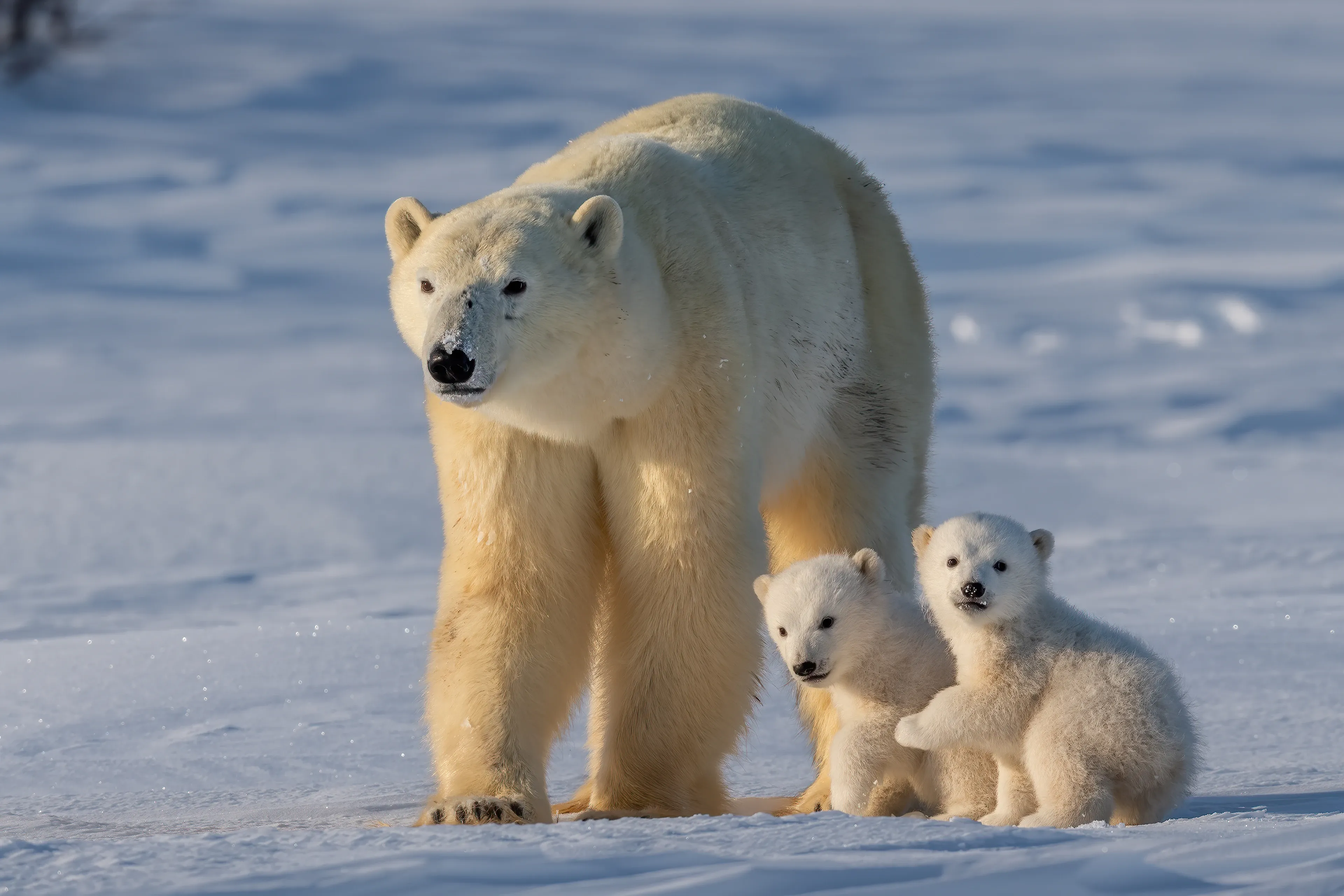
Its fur is see-through, its paws are snowshoes, and its hunting ground is a shifting sheet of sea ice. Meet the polar bear—and find gentle ways to care for the world it calls home.
A white shape on a creaky ice road
Imagine standing beside a frozen ocean. The wind makes your cheeks tingle. Under your boots, the ice gives a tiny squeak and groan, as if the sea is talking in its sleep. Across that shining, bumpy world pads a polar bear: huge, quiet, and wonderfully at home.
A polar bear is also called a sea bear, which makes perfect sense. Its scientific name, Ursus maritimus, means “sea bear,” and this bear spends much of its life on sea ice—the frozen skin that forms over the Arctic Ocean. Sea ice is not just scenery. It is a travel route, a resting place, and, most importantly, a hunting ground.
Polar bears live around the Arctic, including areas near Greenland, Canada, Alaska, Russia, and Svalbard. They may use Arctic coasts and tundra too, but sea ice is the place their lives are most closely tied to. A bear on ice may look like it is taking a snowy stroll. Really, it is moving through its essential home.
Evidence: IUCN Red List of Threatened Species: Ursus maritimus (Polar Bear) — Red List Assessment; World Wildlife Fund (WWF): Polar Bear; Wikipedia: Polar bear
Wait—its white fur is see-through?
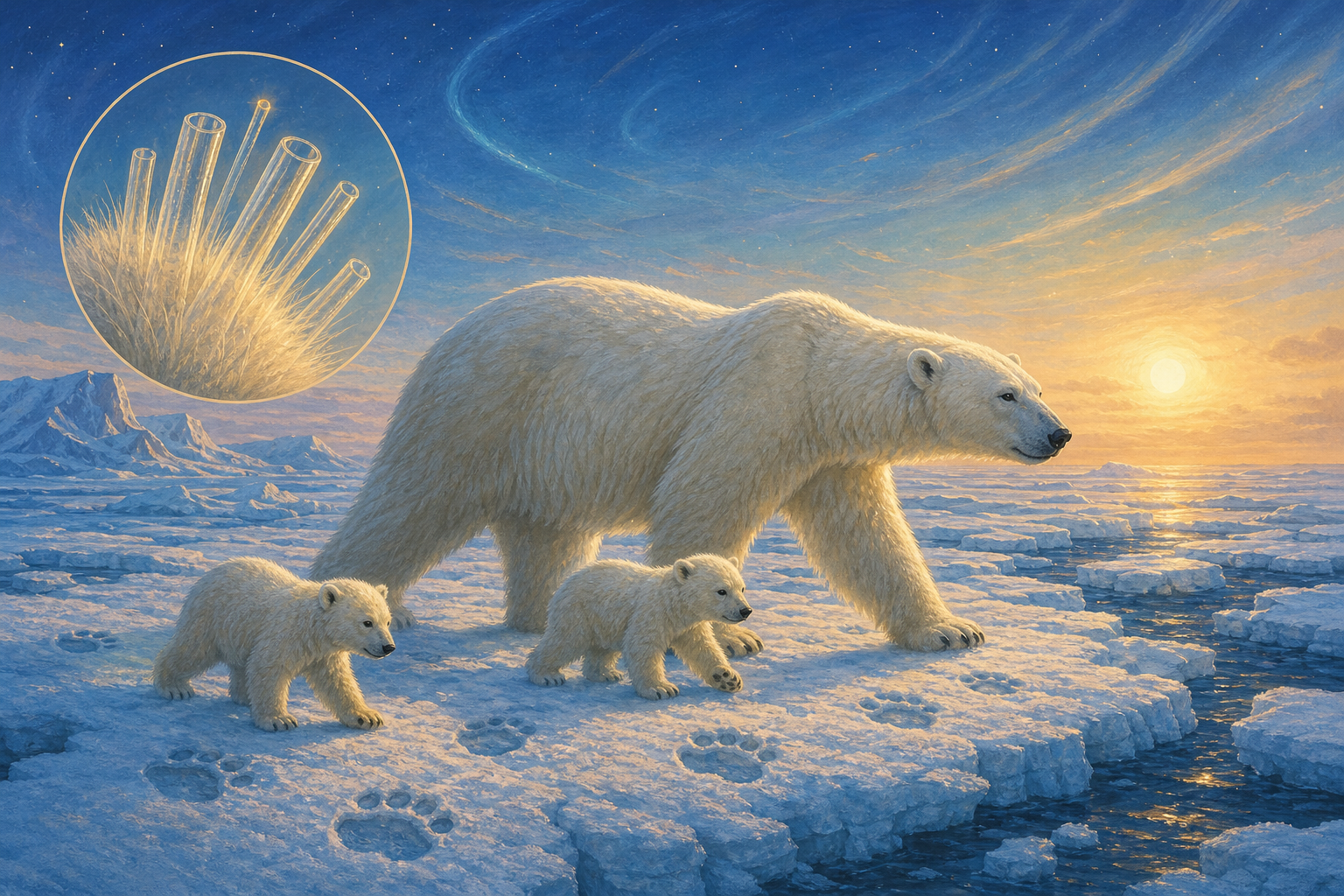
Yes! A polar bear’s coat looks snowy white, yet its hairs are transparent and hollow. Light bouncing around the hairs makes the coat appear white. The hollow hairs also help trap warmth from the sun. Nature has made a coat that is rather like a clever winter jacket—except no zip, and definitely no pocket for snacks.
The bear’s large paws are equally brilliant. They can act like snowshoes, helping it move over ice and snow. Picture trying to cross a soft, snowy garden in narrow shoes, then trying again in big flat slippers. Wide paws spread the bear’s weight and help it keep going.
Adult polar bears vary greatly in size. Males are commonly about 2 to 2.5 metres long and can weigh roughly 300 to 800 kilograms; females are generally smaller. Either way, this is the world’s biggest bear: an animal far too large to mistake for a fluffy snowbank, even from a very, very silly distance.
Evidence: World Wildlife Fund (WWF): Polar Bear; Wikipedia: Polar bear; IUCN Red List of Threatened Species: Ursus maritimus (Polar Bear) — Red List Assessment
Paws forward: a bear goes swimming
What happens when the ice ends? A polar bear can swim. It uses its big front paws to paddle and keeps its back legs behind it to help steer. WWF describes polar bears as able to sustain swimming at about six miles per hour. That is a powerful stroke for an animal wearing a fur coat.
Swimming is part of why “sea bear” is such a fine name. But the bear does not swim simply for fun on a sunny holiday. Sea ice helps it travel between feeding places, rest, and hunt. When ice shifts, breaks, or melts, a polar bear’s map of the world changes beneath its paws.
Polar bears can be active during the day and around twilight. They are generally solitary, meaning they usually travel alone rather than in a pack. Still, one important exception is a mother and her cubs. Their time together is a busy, close-knit lesson in how to live in a cold and changeable place.
Evidence: World Wildlife Fund (WWF): Polar Bear; Wikipedia: Polar bear; IUCN Red List of Threatened Species: Ursus maritimus (Polar Bear) — Red List Assessment
The patient hunt beneath the ice
A polar bear is a carnivore, and ringed seals and bearded seals are its main foods. The bear uses sea ice to find them. This is why a flat white surface can be much more than a surface: it connects a hunter with the food it needs in the Arctic cold.
You might wonder why the bear needs food that is so rich. Living and moving in a freezing environment takes energy, and seals provide the fat polar bears rely on. This does not make the bear mean. It is simply a wild animal, shaped over time for a particular home and a particular way of finding food.
As an apex predator, the polar bear is one of the Arctic’s top hunters. Its life is closely woven into the sea-ice ecosystem. When we learn how the bear depends on ice and seals, we can see something important: habitats are not backdrops. They are neighbourhoods full of connected lives.
Evidence: World Wildlife Fund (WWF): Polar Bear; Wikipedia: Polar bear; IUCN Red List of Threatened Species: Ursus maritimus (Polar Bear) — Red List Assessment
From loaf-sized cub to ice explorer
Here is a surprising beginning for such a giant bear: a newborn polar bear cub weighs about as much as a loaf of bread. A mother gives birth in a cosy snow den, then feeds her cub rich milk while it grows. From that small start comes an animal that may eventually be longer than a sofa.
Cubs stay with their mother for up to around two and a half years. That is a long learning time, and it matters. A young bear must discover how to move through its icy world and find food. Its mother is not just company; she is its teacher, guide, and very warm family member.
It is easy to cheer for the fuzzy cub, but adult bears are amazing too. A calm mother leading cubs across snow tells a story of patience, memory, and care. Even in a wide, windy landscape, family learning can make all the difference.
Evidence: World Wildlife Fund (WWF): Polar Bear; Wikipedia: Polar bear; IUCN Red List of Threatened Species: Ursus maritimus (Polar Bear) — Red List Assessment
Why the ice road needs friends
The polar bear is listed as Vulnerable on the IUCN Red List in the registered 2015 assessment. That means it faces a high risk in the wild if pressures are not addressed. The assessment summarised the global population at about 22,000 to 31,000 bears, while the overall trend was unknown. Different Arctic areas can have different stories, so one number cannot tell us everything.
The primary Arctic-wide threat is climate-driven loss and worsening quality of sea-ice habitat. Pollution and energy development are also recorded pressures. Less suitable sea ice can make it harder for bears to travel and reach the seals that are their main food.
Caring does not have to mean feeling hopeless. It can mean paying attention, supporting efforts that limit climate change, reducing pollution, and treating Arctic habitat as a precious home rather than empty space. A polar bear cannot write a postcard asking for help. But its disappearing ice road is a message we can learn to read.
Evidence: IUCN Red List of Threatened Species: Ursus maritimus (Polar Bear) — Red List Assessment; World Wildlife Fund (WWF): Polar Bear; Wikipedia: Polar bear
A small choice, connected to a very big north
We cannot all visit the Arctic, and polar bears do not need us to pretend we are bears. They need people to make kind, thoughtful choices in our own homes and communities. One gentle place to begin is the plate: trying tasty meals built around vegetables, fruit, pulses such as beans and lentils, whole grains, nuts, and seeds, with a trusted adult helping choose what works for your family.
The World Health Organization describes these foods as parts of a healthy varied diet. The IPCC reports that shifts toward sustainable, healthy, more plant-based diets can reduce food-system emissions and pressure on land and biodiversity. Choosing a plant-forward or vegan meal sometimes—or more often, if it is right for your family—can be a caring vote for animals and the living places they depend on.
No one needs to be perfect to be helpful. Perhaps you could try bean tacos, lentil pasta sauce, or a colourful veggie-and-grain bowl. Ask a grown-up to cook with you. Each kind choice is small, like one snowflake. Together, choices can help make a larger change.
Evidence: World Health Organization: Healthy diet; Intergovernmental Panel on Climate Change: Climate Change 2022: Mitigation of Climate Change — Chapter 7; World Wildlife Fund (WWF): Polar Bear
Kindness can travel farther than we think
A polar bear’s main food is seals because that is how this wild carnivore survives in its Arctic home. We can admire the bear without copying its menu. Humans have choices, and choosing more plant-based foods is one compassionate way to think about animals, climate, and the places where wildlife lives.
Healthy eating is personal, especially for growing children. With a parent, carer, or qualified health professional to guide your family, enjoy the many plant foods WHO includes in a varied diet: vegetables, fruits, pulses, whole grains, nuts, and seeds. The IPCC finds that more plant-based, sustainable healthy diets can lower food-system emissions and reduce pressure on land and biodiversity. That is a hopeful connection from an ordinary lunch to the faraway Arctic.
Evidence: World Health Organization: Healthy diet; Intergovernmental Panel on Climate Change: Climate Change 2022: Mitigation of Climate Change — Chapter 7; World Wildlife Fund (WWF): Polar Bear
Questions people ask
Are polar bears really white?
They look white, but their hairs are transparent and hollow. Light bouncing around those hairs makes the coat look white against ice and snow.
Evidence: Wikipedia: Polar bear; World Wildlife Fund (WWF): Polar Bear
Do polar bears live only on land?
No. They use Arctic coasts and tundra, but they depend especially on sea ice for travelling, resting, and hunting seals.
Evidence: World Wildlife Fund (WWF): Polar Bear; Wikipedia: Polar bear
How can a tiny cub become such a huge bear?
A newborn cub is around loaf-of-bread size, then grows while nursing and learning from its mother for up to about two and a half years.
Evidence: World Wildlife Fund (WWF): Polar Bear; Wikipedia: Polar bear
Read the evidence
Sources behind this story
- Ursus maritimus (Polar Bear) — Red List Assessment — IUCN Red List of Threatened Species
- Polar Bear — World Wildlife Fund (WWF)
- Polar bear — Wikipedia
- Healthy diet — World Health Organization
- Climate Change 2022: Mitigation of Climate Change — Chapter 7 — Intergovernmental Panel on Climate Change
Health information is general education, not personal medical advice. Young readers should make food choices with a trusted adult and qualified health professional.