 ← All animals
 mammal · Ursus maritimus
Polar bear
Gallery
7 photos Real photograph 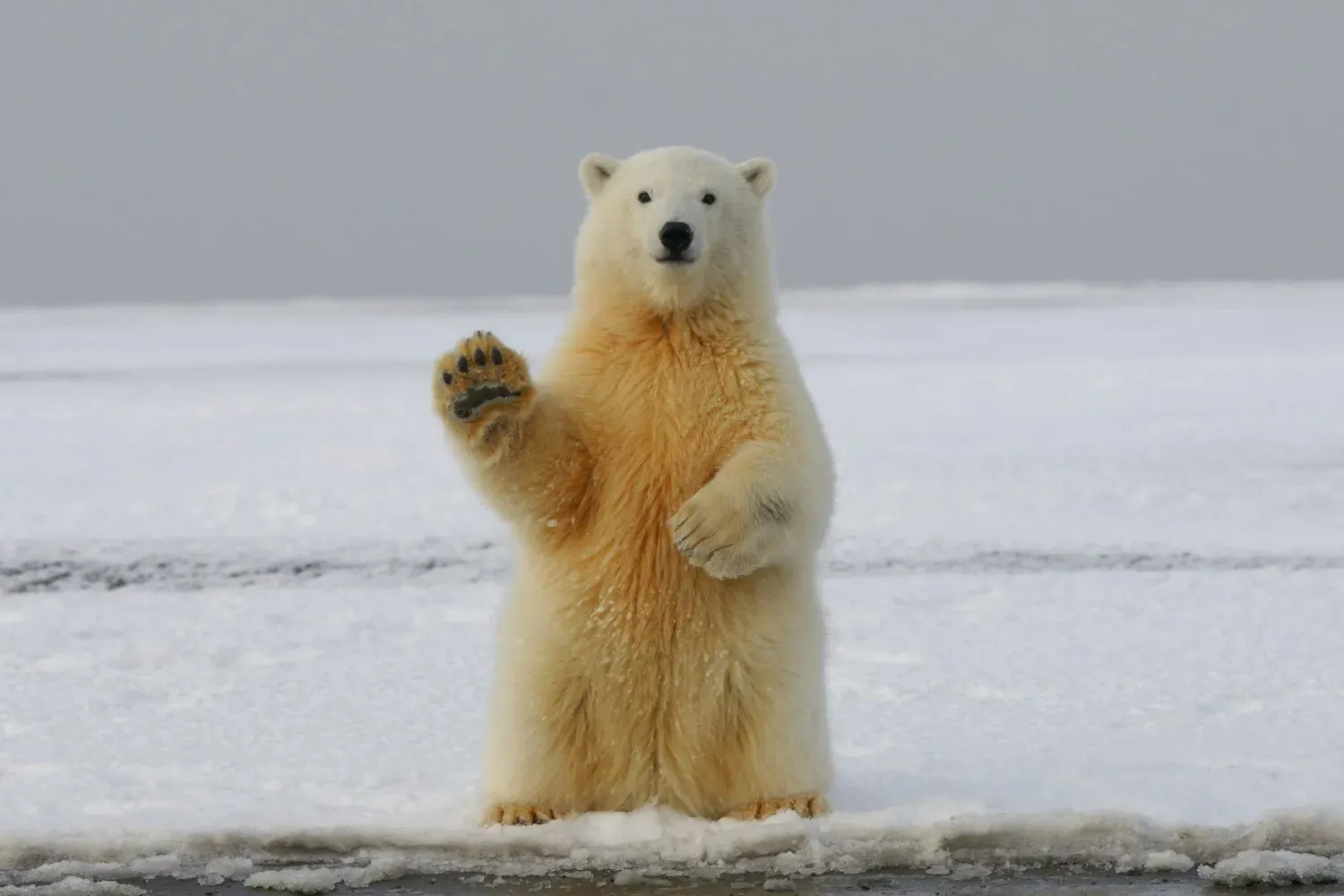 Real photograph
 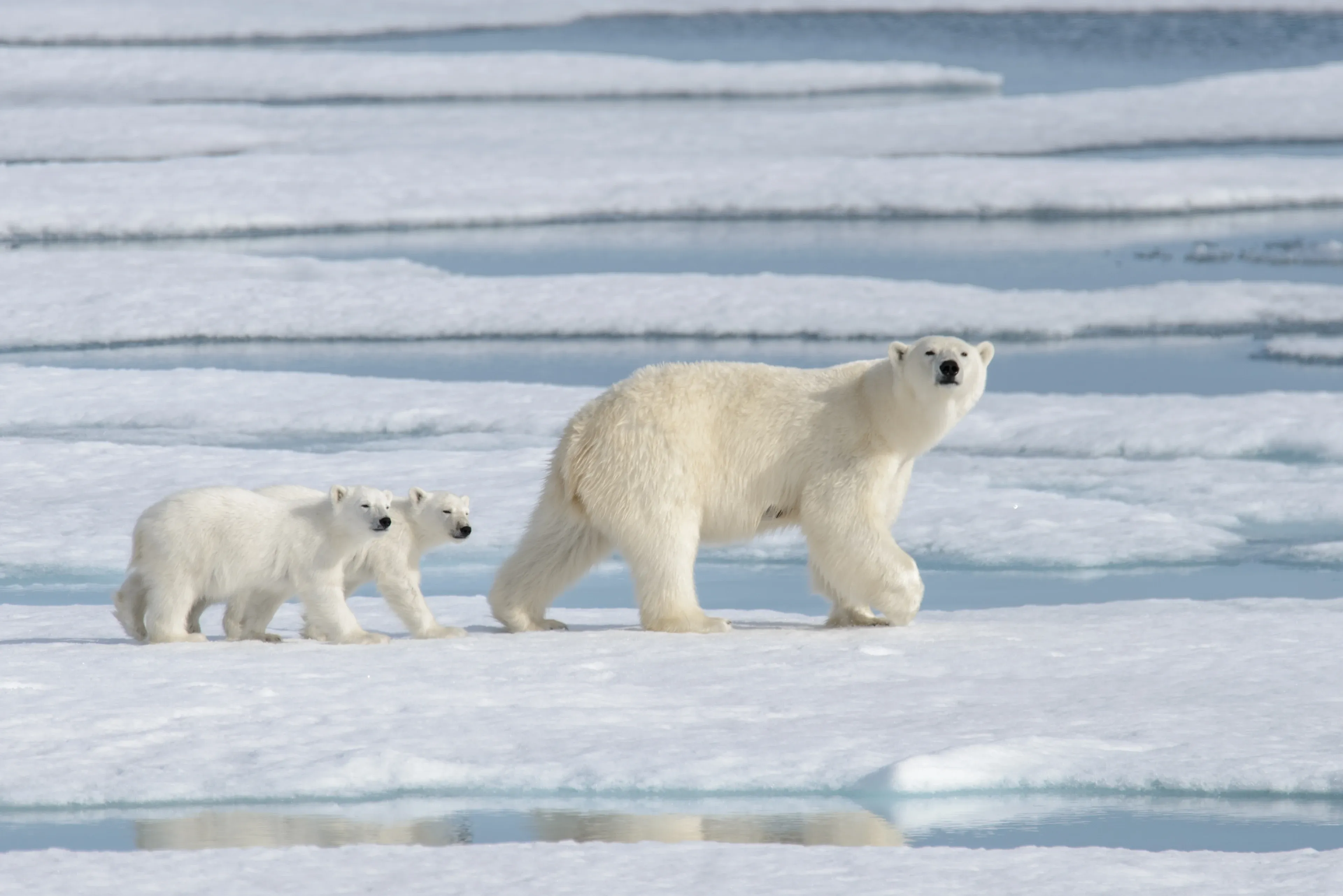 Real photograph
 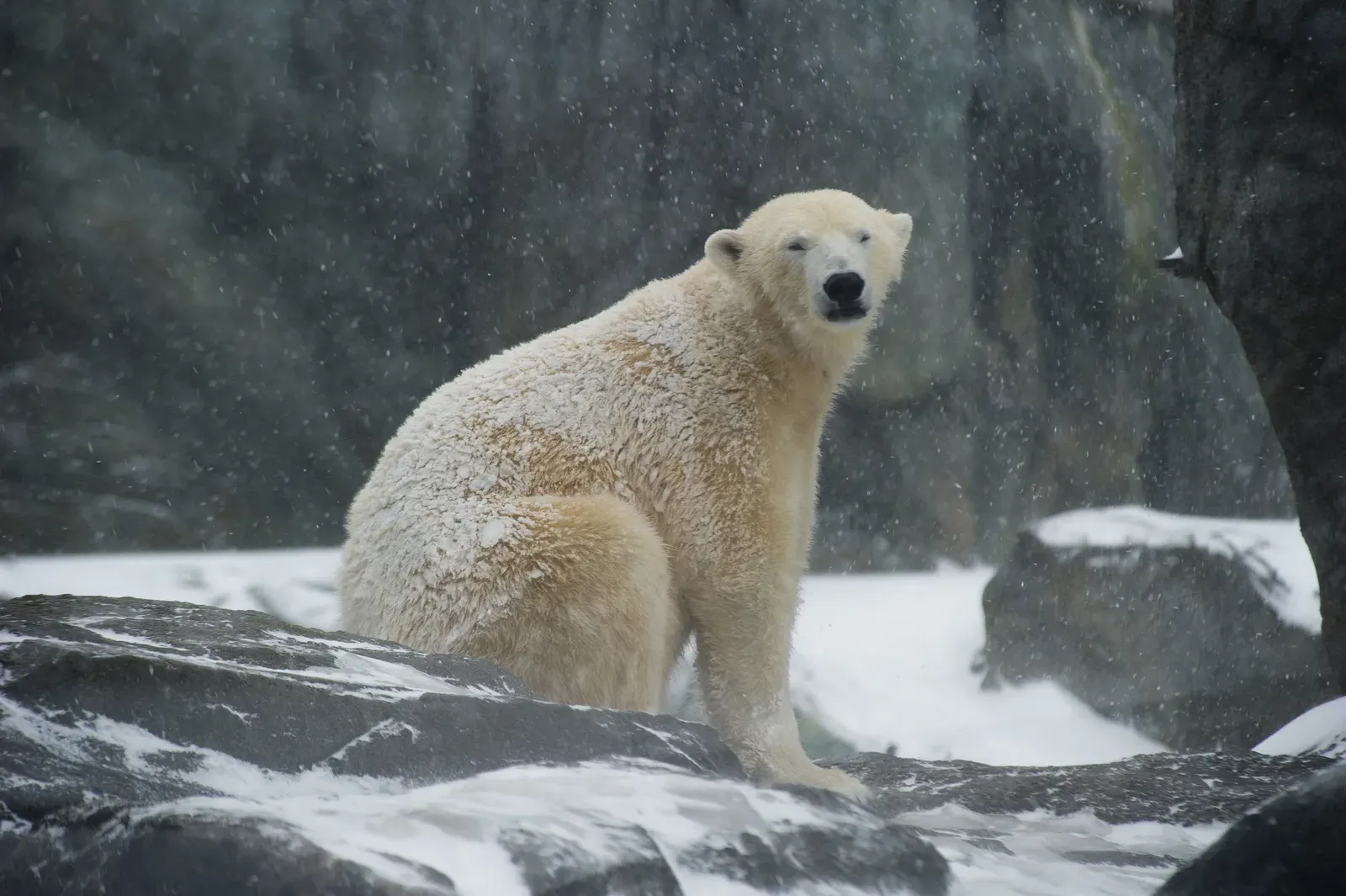 Real photograph
 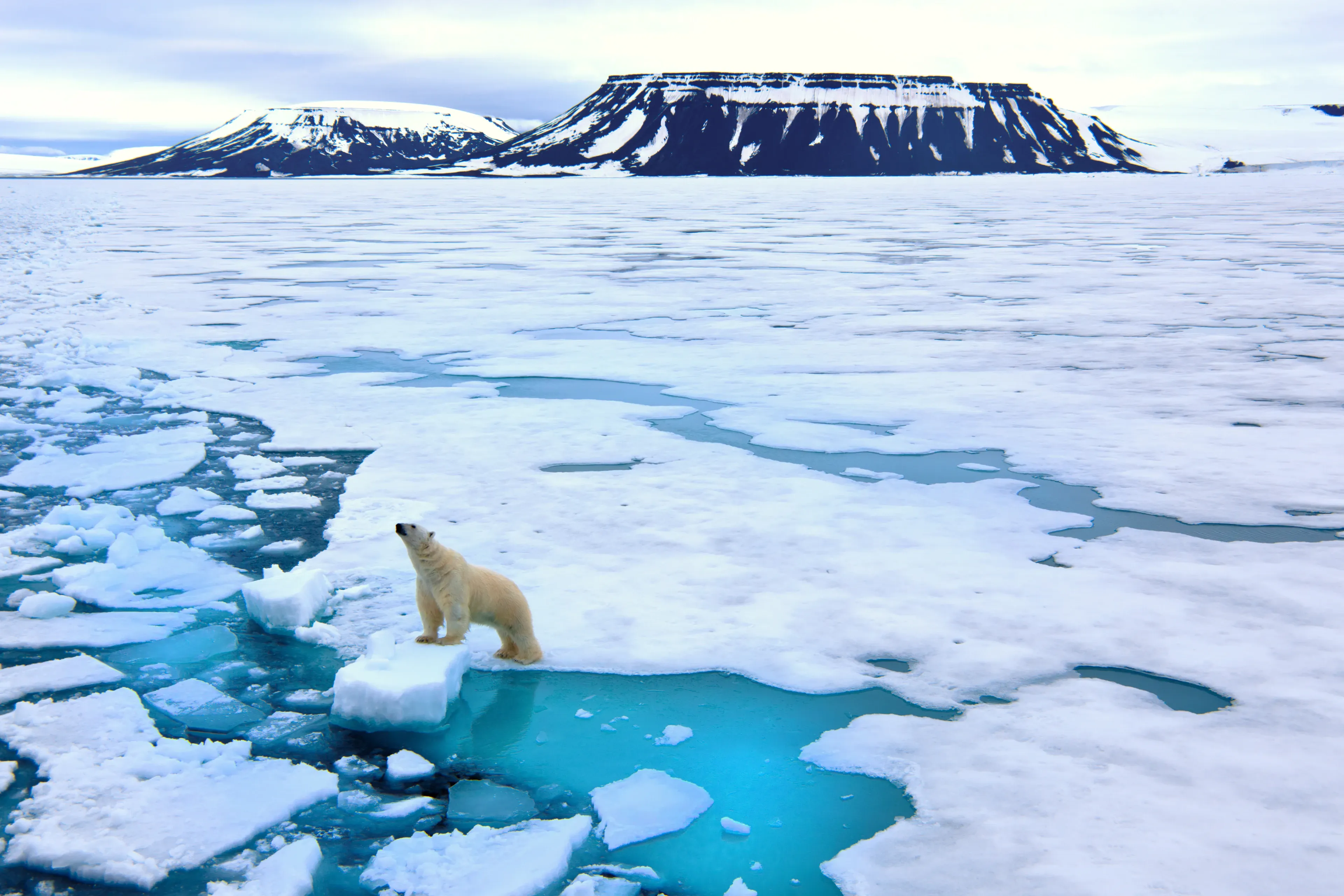 Real photograph
  Real photograph
  Real photograph
 Why we love them
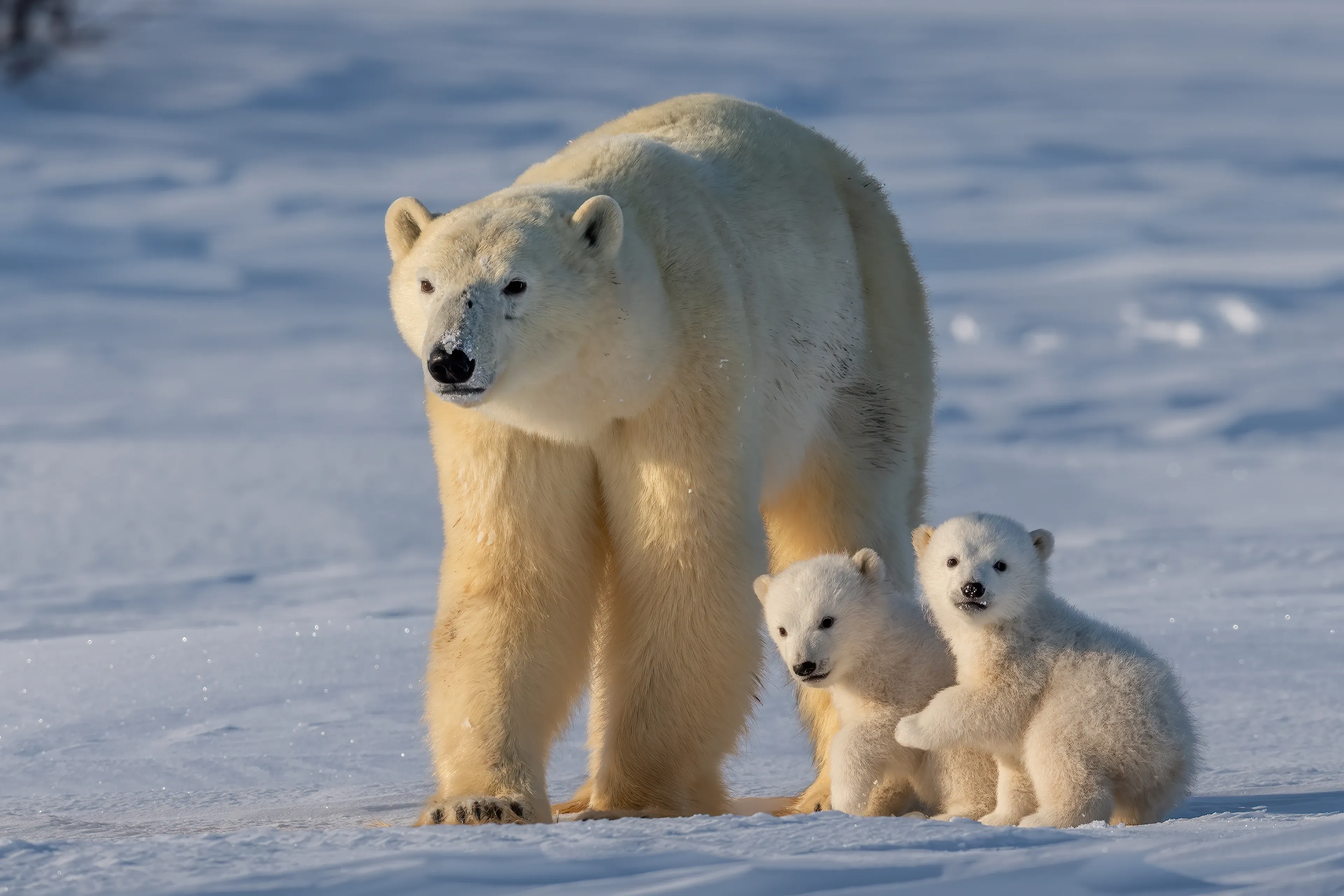
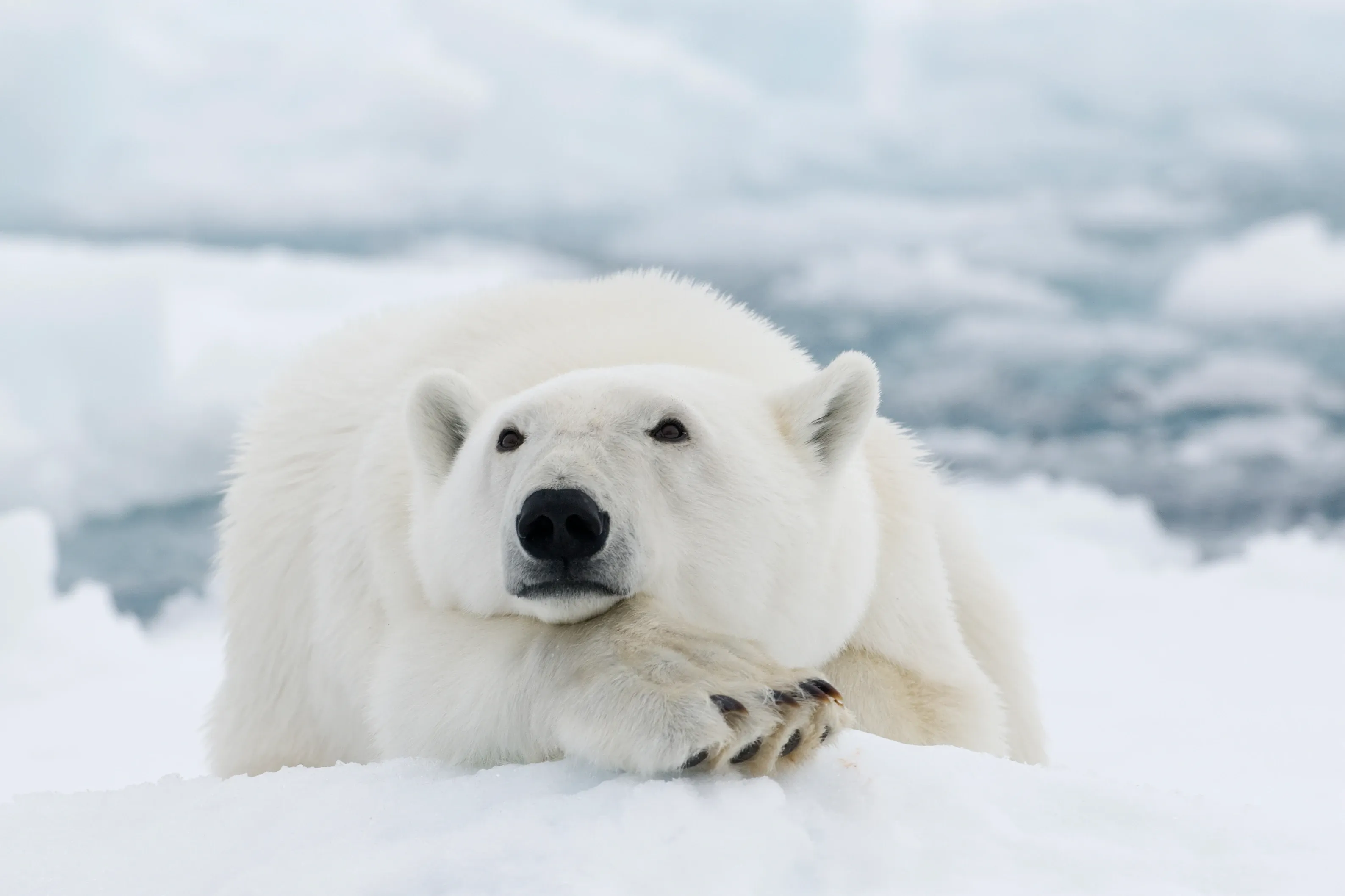
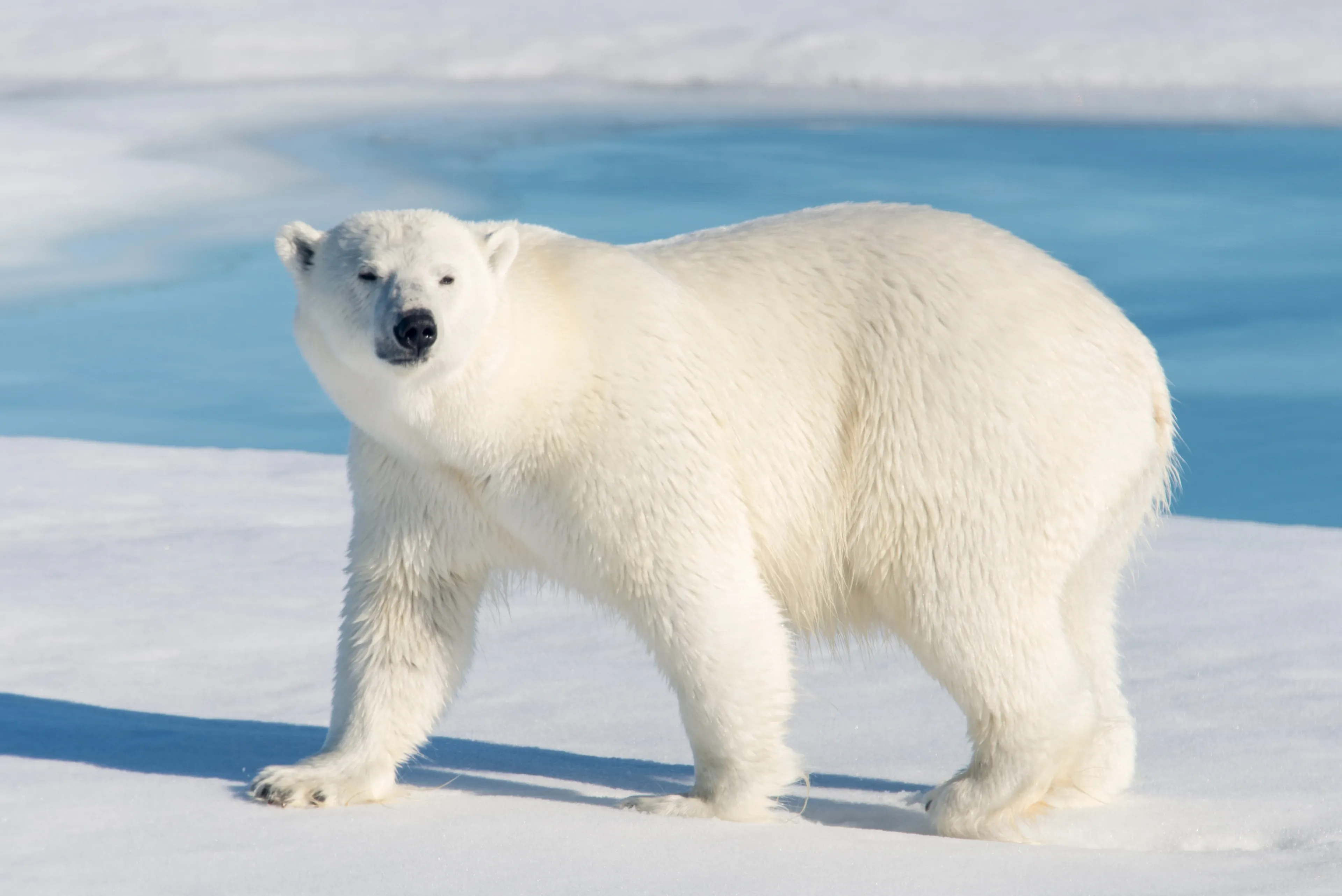
The polar bear is the biggest bear in the world, and it lives in the icy far north around the Arctic. Its thick coat looks snowy white, which helps it blend in with the ice and snow. Its scientific name, Ursus maritimus, means "sea bear", because it spends so much of its life on the frozen sea.
A polar bear is built to stay warm in the cold. Under its fur it has a thick layer of fat and a water-repellent coat that keeps out the chill, even in freezing water. Each hair is really see-through and hollow, and the coat only looks white because of the way it bounces the light. Its huge paws are as wide as a dinner plate and work like snowshoes on the slippery ice.
Polar bears are excellent swimmers. They paddle with their big front paws and hold their back legs flat behind them like a rudder to steer. They mostly eat seals, which give them the rich fat they need to live in such a cold place, and they use the sea ice as a place to travel, rest, and find food.
Mother polar bears dig cosy dens in the snow, where their cubs are born in the warmth. A newborn cub is very small, about the size of a loaf of bread, and it drinks its mother's rich milk to grow big and strong. The cubs stay with their mother for around two years while she teaches them how to live on the ice.
Polar bears are a vulnerable animal. The sea ice they depend on is melting as the Arctic grows warmer, which makes it harder for them to reach the seals they eat. People all around the world are working to look after the Arctic so that polar bears will always have their icy home.
My home
Sea ice, arctic coast, tundra
Where I live
Arctic Ocean
What I eat
Ringed seals, bearded seals
How long I am
1.8–2.5 m
How heavy I am
150–800 kg
How long I live
30 years
A polar bear's fur looks white, but each hair is really see-through and hollow, which helps trap the sun's warmth.
Polar bears are strong swimmers and can paddle a long way using their big front paws like oars.
A newborn polar bear cub is tiny and weighs only about as much as a loaf of bread.
Every polar bear can feel happy, scared and loved — just like you.
Looking after my friends
How many are there?
Between 22,000 and 31,000 polar bears were estimated worldwide in 2015.
This global range combines estimates from separate polar bear subpopulations.
How are they doing?
VulnerableThis species has a high risk of extinction in the wild unless the pressures on it improve.
You can help by learning their names, keeping wild places clean, and telling someone why this animal matters.
Where this came from
- Ursus maritimus (Polar Bear) — Red List Assessment — IUCN Red List of Threatened Species
- Polar Bear — World Wildlife Fund (WWF)
- Polar bear — Wikipedia