Today's animal friend · 18 November 2026
Moonlight’s Little Pine Cone: Meet the Chinese Pangolin
This gentle, scaly mammal has no teeth, a super-sticky tongue, and one very important reason to be protected.
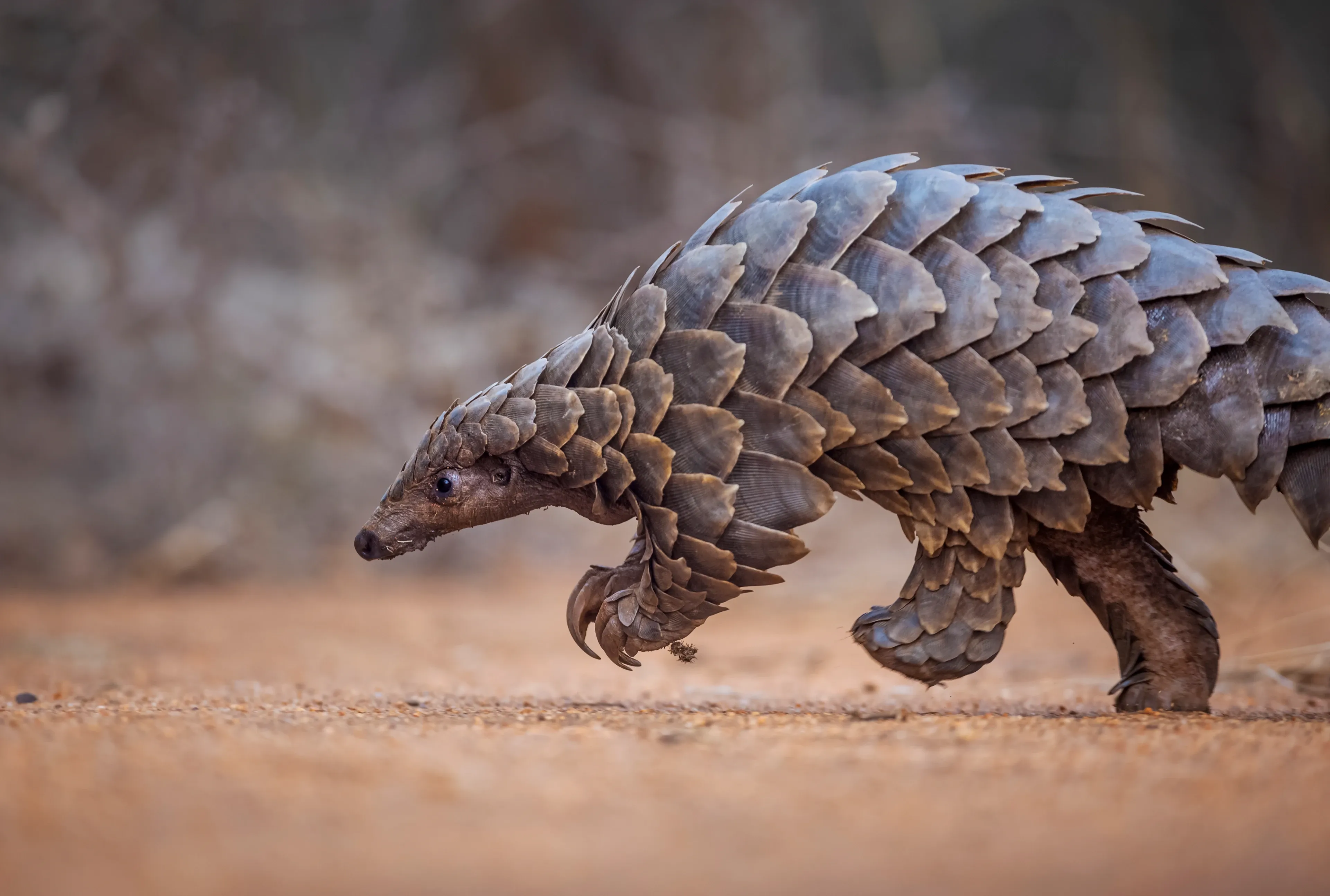
This gentle, scaly mammal has no teeth, a super-sticky tongue, and one very important reason to be protected.
A rustle, a sniff, and—wait—is that a pine cone walking?
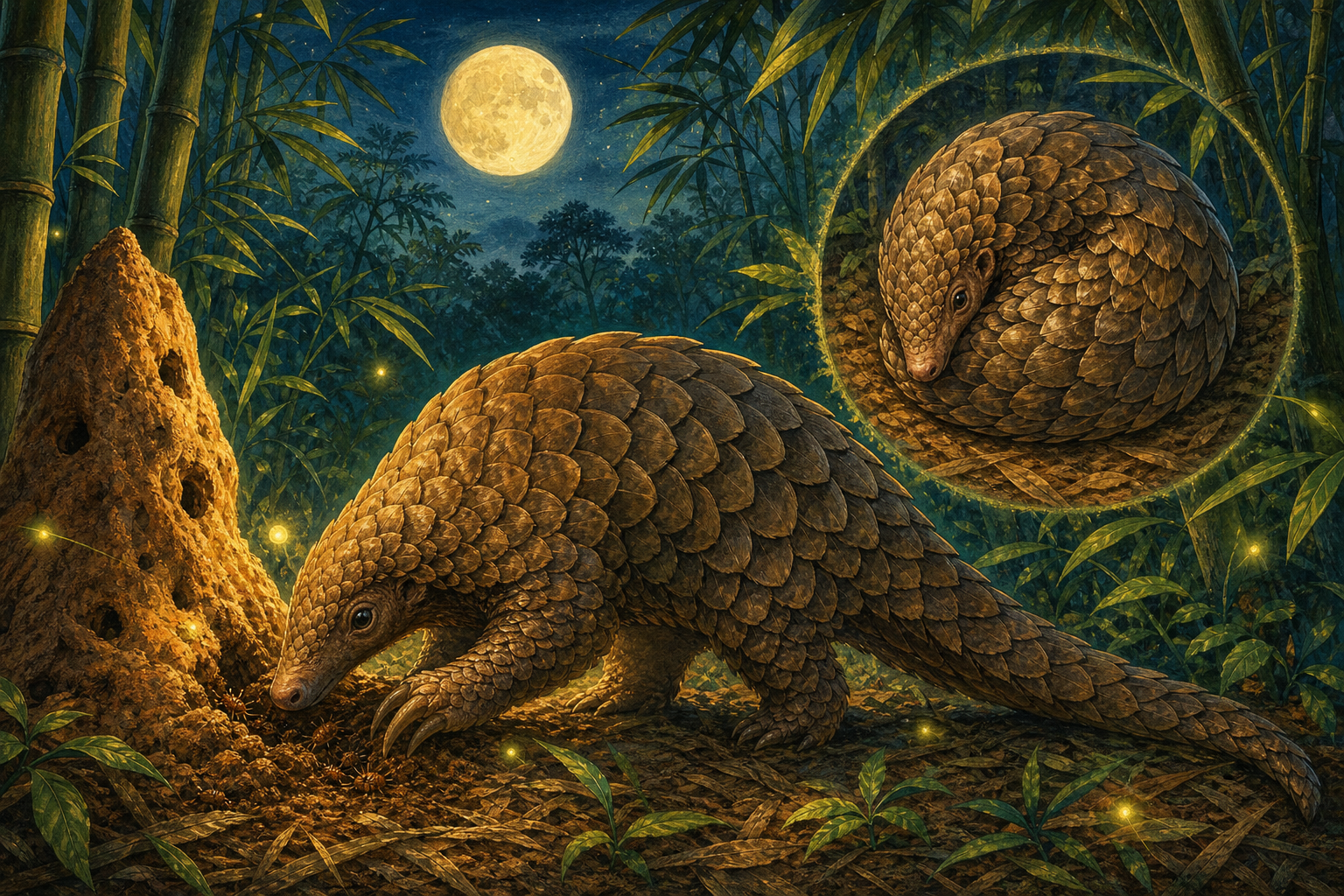
Night has settled over an Asian forest or grassy hillside. Leaves whisper under tiny feet. Something sniffs at the ground, pauses beside an insect nest, and begins to dig. In the moonlight, it looks a little like a pine cone that has decided to go on an adventure.
It is a Chinese pangolin, also called a scaly anteater. Its scientific name is Manis pentadactyla. A pangolin is a mammal, just as we are—but it is the only mammal covered in hard scales. What a magnificent piece of animal weirdness!
Those scales overlap like the tiles on a roof. They are made of keratin, the same material in your hair and fingernails. So, in a very strange way, a pangolin is wearing a suit made from fingernail-like armour. Nature clearly enjoys a surprising design challenge.
Evidence: IUCN Red List of Threatened Species: Manis pentadactyla (Chinese Pangolin) — Red List Assessment; Animal Diversity Web, University of Michigan Museum of Zoology: Manis pentadactyla (Chinese pangolin); Wikipedia (English): Chinese pangolin
What does a pangolin do when it feels nervous? It becomes a ball.
A pangolin’s scales protect its back, while its tummy is soft. If danger worries it, the animal tucks in its head and curls into a tight ball. The tough, overlapping scales face outward, helping shield the softer underside. Picture a pine cone closing up, except this one can walk away later.
This does not mean pangolins want to be bothered. They are generally quiet, solitary animals, and the Chinese pangolin is most active at night. During the day, it may rest in a burrow it has dug with strong claws. At night, its world is full of smells, soil, and the busy underground pathways of insects.
Chinese pangolins live in parts of Asia, in places including forests, grasslands, and bamboo forest habitats. Their head-and-body length is about 40 to 58 centimetres, with a tail adding more length. They may weigh about as much as a small backpack, though every pangolin is its own particular size.
Evidence: Animal Diversity Web, University of Michigan Museum of Zoology: Manis pentadactyla (Chinese pangolin); Wikipedia (English): Chinese pangolin; IUCN Red List of Threatened Species: Manis pentadactyla (Chinese Pangolin) — Red List Assessment
Dinner with no teeth? Bring on the sticky tongue.
Imagine arriving at dinner with no teeth at all. A pangolin does exactly that—and manages beautifully. It is an insect-eater that specialises in ants and termites. Instead of chewing, it reaches into nests and mounds with a long, sticky tongue and gathers its tiny meal.
Its front claws help open the hard-packed ground. Then comes the tongue: quick, sticky, and perfectly suited to a snack that would be far too fiddly for fingers. The tongue can be longer than the pangolin’s body, which sounds like something from a cartoon, but is one of this animal’s extraordinary real-life features.
By digging into insect nests and mounds, a pangolin is part of the busy food web of its habitat. It disturbs soil as it searches and feeds, while ants and termites remain its main menu. No pizza slices, no crunchy carrots—just an expert’s very specialised insect supper.
Evidence: Animal Diversity Web, University of Michigan Museum of Zoology: Manis pentadactyla (Chinese pangolin); Wikipedia (English): Chinese pangolin; IUCN Red List of Threatened Species: Manis pentadactyla (Chinese Pangolin) — Red List Assessment
Tail, claws, scales: a nighttime adventure kit
A Chinese pangolin is built for exploring. Its strong claws are useful for digging burrows and opening up insect homes. Some individuals use a gripping, or prehensile, tail when climbing. Think of it as an extra helper for holding onto branches—not a hand, exactly, but a handy tail nonetheless.
Pangolins belong to their own mammal order, Pholidota, and their family is Manidae. That scientific sorting may sound like a cupboard full of complicated labels, but it helps people understand how animals are related. Chinese pangolins are one of eight living pangolin species; this story is especially about Manis pentadactyla, not every pangolin everywhere.
The more we notice an animal’s special skills, the more amazing its home becomes too. A dark forest is not empty just because we cannot see much in it. For a pangolin, it can be a map of scents, tunnels, roots, insects, and safe places to rest.
Evidence: Animal Diversity Web, University of Michigan Museum of Zoology: Manis pentadactyla (Chinese pangolin); Wikipedia (English): Chinese pangolin; IUCN Red List of Threatened Species: Manis pentadactyla (Chinese Pangolin) — Red List Assessment
Why does this quiet creature need loud human help?
The Chinese pangolin is listed as Critically Endangered on the IUCN Red List, with a decreasing population. That is a serious warning: this animal faces an extremely high risk of disappearing from the wild if people do not protect it.
Pangolins are harmed by poaching and illegal wildlife trade, including trade in their scales and meat. Losing habitat also makes life harder. A creature that depends on forests, grasslands, burrows, and insect-rich places cannot simply pack a suitcase and move when those places vanish.
There is hope in action. Protecting habitat, enforcing rules against poaching and illegal trade, and supporting conservation efforts can all help. Chinese pangolins are also listed in CITES Appendix I, an international protection aimed at stopping commercial trade. Caring is not just a feeling; it can become a choice to safeguard wild neighbours.
Evidence: IUCN Red List of Threatened Species: Manis pentadactyla (Chinese Pangolin) — Red List Assessment; Wikipedia (English): Chinese pangolin; Animal Diversity Web, University of Michigan Museum of Zoology: Manis pentadactyla (Chinese pangolin)
A small kindness can ripple outward
It is easy to feel far away from a nocturnal animal in an Asian forest. But caring can begin close to home: learn about wildlife, share accurate stories, and encourage grown-ups to support trusted conservation work. Never buy wildlife products or treat an animal’s body as a souvenir.
We can also make everyday food choices with kindness in mind. The World Health Organization describes healthy eating patterns that include foods such as vegetables, fruit, whole grains, pulses, nuts, and seeds. The IPCC reports that shifts toward sustainable, healthy, more plant-based diets can reduce pressure from food systems on land, biodiversity, and the climate.
That is not about being perfect or telling another family what to eat. It is an invitation to try a plant-filled meal with a trusted adult, discover a new bean or noodle dish, and remember that animals are friends with their own lives to live. Somewhere in the dark, a pangolin may be sniffing its way toward supper too.
Evidence: World Health Organization: Healthy diet; Intergovernmental Panel on Climate Change: Climate Change 2022: Mitigation of Climate Change — Chapter 7; IUCN Red List of Threatened Species: Manis pentadactyla (Chinese Pangolin) — Red List Assessment
Let the pangolin keep its midnight mission
A pangolin is not a product, a medicine ingredient, or a collectible object. It is a living animal on a nighttime mission: sniff, dig, slurp, curl up, rest, repeat. We can help by refusing wildlife products and by supporting protection for wild habitats.
At the table, compassionate choices can be part of the same big picture. Meals rich in plant foods such as pulses, vegetables, fruit, grains, nuts, and seeds can be part of a healthy pattern, and more plant-based food systems can ease pressure on climate, land, and biodiversity. Explore kindly with your family and a trusted health professional if you need personal food advice.
Every respectful choice says something simple: wild animals belong in wild places, getting on with their wonderfully peculiar lives.
Evidence: World Health Organization: Healthy diet; Intergovernmental Panel on Climate Change: Climate Change 2022: Mitigation of Climate Change — Chapter 7; IUCN Red List of Threatened Species: Manis pentadactyla (Chinese Pangolin) — Red List Assessment
Questions people ask
Is a pangolin a reptile because it has scales?
No. A pangolin is a mammal. Its scales are unusual because they are made of keratin, like human hair and fingernails—not reptile scales.
Evidence: Animal Diversity Web, University of Michigan Museum of Zoology: Manis pentadactyla (Chinese pangolin); Wikipedia (English): Chinese pangolin; IUCN Red List of Threatened Species: Manis pentadactyla (Chinese Pangolin) — Red List Assessment
Why is it called a scaly anteater?
The nickname fits its armour-like scales and its fondness for ants. It also eats termites, using a long sticky tongue because it has no teeth.
Evidence: Animal Diversity Web, University of Michigan Museum of Zoology: Manis pentadactyla (Chinese pangolin); Wikipedia (English): Chinese pangolin
Can all pangolins be described in exactly the same way?
Not quite. There are eight living pangolin species. This feature focuses on the Chinese pangolin, Manis pentadactyla, so its conservation status and details should not automatically be applied to every other pangolin species.
Evidence: IUCN Red List of Threatened Species: Manis pentadactyla (Chinese Pangolin) — Red List Assessment; Animal Diversity Web, University of Michigan Museum of Zoology: Manis pentadactyla (Chinese pangolin); Wikipedia (English): Chinese pangolin
Read the evidence
Sources behind this story
- Manis pentadactyla (Chinese Pangolin) — Red List Assessment — IUCN Red List of Threatened Species
- Manis pentadactyla (Chinese pangolin) — Animal Diversity Web, University of Michigan Museum of Zoology
- Chinese pangolin — Wikipedia (English)
- Healthy diet — World Health Organization
- Climate Change 2022: Mitigation of Climate Change — Chapter 7 — Intergovernmental Panel on Climate Change
Health information is general education, not personal medical advice. Young readers should make food choices with a trusted adult and qualified health professional.