Today's animal friend · 27 July 2026
Moonlight, Mud, and a Walking Pine Cone: Meet the Chinese Pangolin
Follow the rustle through an Asian forest and discover why Manis pentadactyla is one of nature’s most surprising neighbours.
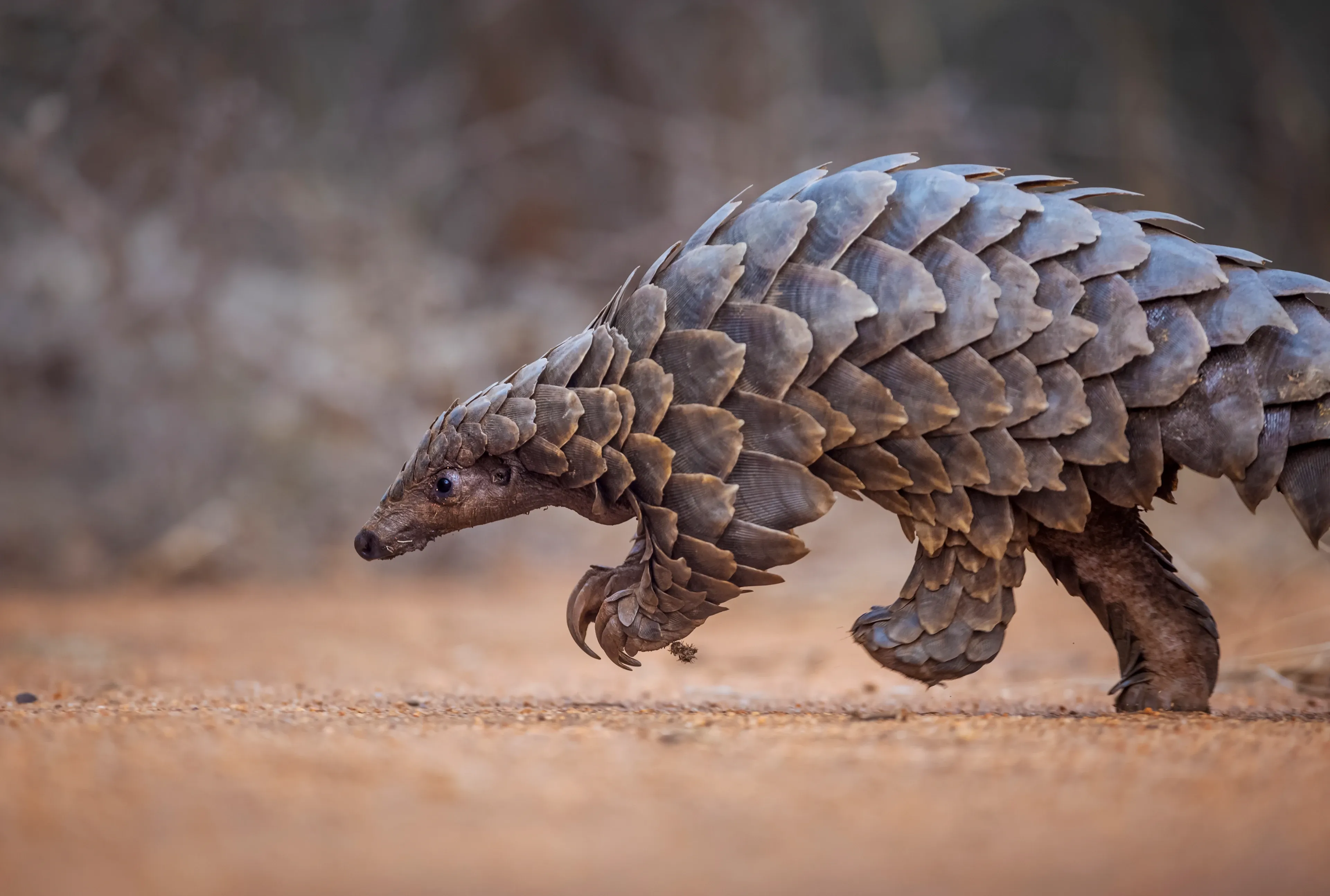
Follow the rustle through an Asian forest and discover why Manis pentadactyla is one of nature’s most surprising neighbours.
A rustle in the dark—was that a pine cone walking?
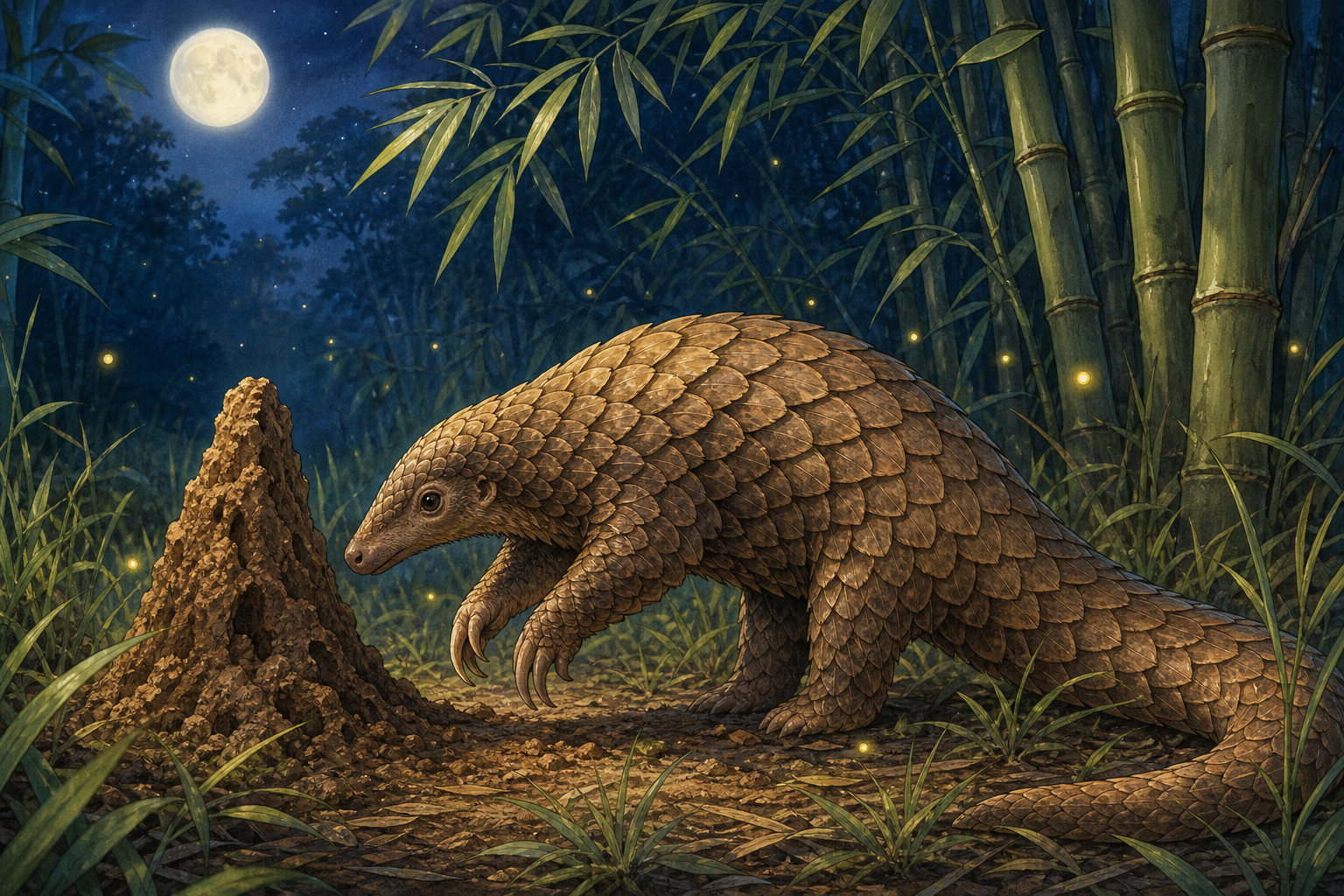
Imagine a quiet forest after sunset. The busy daytime noises have faded. Then—scritch, scritch—strong claws work at the earth. A small, low shape shuffles through the darkness, covered in overlapping brown scales. It looks rather as if a pine cone has put on boots and gone for a midnight stroll.
This is a Chinese pangolin, also called a scaly anteater. Its scientific name is Manis pentadactyla. It is a mammal, just as you are, but it belongs to a very special mammal family: Manidae. The Chinese pangolin lives in parts of Asia, where forests, grasslands, and bamboo forest can offer places to search for food and shelter.
Here is the astonishing bit: pangolins are the only mammals covered in hard scales. The scales are made of keratin—the same material in your fingernails and hair. So a pangolin is not wearing armour borrowed from somewhere else. It grows its own remarkable, fingernail-like coat.
Chinese pangolins are mostly active at night. That means a moonlit walk is more their style than a sunny afternoon parade. Their quiet habits can make them hard to spot, but that does not make them unimportant. It makes every glimpse feel like finding a secret in the leaves.
Evidence: IUCN Red List of Threatened Species: Manis pentadactyla (Chinese Pangolin) — Red List Assessment; Animal Diversity Web, University of Michigan Museum of Zoology: Manis pentadactyla (Chinese pangolin); Wikipedia (English): Chinese pangolin
What happens when a pangolin gets nervous? Roll!
A pangolin has a clever safety move. When it feels threatened, it tucks in its head and curls into a tight ball. Its tough, overlapping scales face outward while its softer underside is protected inside. Think of a tiny, scaly hedgehog-style bundle—though pangolins and hedgehogs are very different animals.
The scales are not magic shields, of course. A pangolin still needs a safe place to live. But curling up is a brilliant example of an animal using the body it has. No helmet to find, no zip to fasten: just curl, tuck, and wait.
Pangolins also have strong front claws. These are useful tools for digging. A Chinese pangolin can burrow, making a tucked-away place to rest during the day. Some pangolins use a gripping, prehensile tail when climbing, too. Between claws, scales, and tail, this animal seems built for a life of careful exploring.
A Chinese pangolin’s head and body measure about 40 to 58 centimetres, with a tail of about 25 to 38 centimetres. It may weigh about 2 to 7 kilograms. That is small enough to seem like a mysterious forest neighbour, yet wonderfully equipped for its night-time missions.
Evidence: Animal Diversity Web, University of Michigan Museum of Zoology: Manis pentadactyla (Chinese pangolin); Wikipedia (English): Chinese pangolin; IUCN Red List of Threatened Species: Manis pentadactyla (Chinese Pangolin) — Red List Assessment
Dinner without teeth? Yes, please!
Now for the pangolin’s unusual menu. It is an insectivore, meaning it eats insects—especially ants and termites. A pangolin’s idea of a splendid supper is not a sandwich or a slice of pizza. It is an ant nest or termite mound.
But wait: how does it chew? It does not. Pangolins have no teeth at all. Instead, they use a long, sticky tongue to collect their tiny prey. After using those sturdy claws to dig into a nest or mound, a pangolin can reach in with its tongue and gather up ants and termites.
That may sound like a strange meal to us, but every animal has its own food puzzle to solve. A squirrel cracks nuts. A bird may snatch insects from the air. A pangolin investigates the ground with claws and tongue. Different bodies, different brilliant solutions.
By digging into insect nests and mounds while feeding, pangolins are part of the busy food webs of their habitats. Their digging also disturbs soil. Even a quiet animal can be part of a lively neighbourhood of roots, insects, plants, and other creatures.
You might wonder whether a pangolin is an anteater. The nickname “scaly anteater” makes sense because of its favourite foods, but the Chinese pangolin is its own kind of mammal: Manis pentadactyla, in the pangolin family.
Evidence: Animal Diversity Web, University of Michigan Museum of Zoology: Manis pentadactyla (Chinese pangolin); Wikipedia (English): Chinese pangolin; IUCN Red List of Threatened Species: Manis pentadactyla (Chinese Pangolin) — Red List Assessment
Where does this midnight explorer roam?
The Chinese pangolin belongs to Asia. Records describe it from places including Nepal, Assam, the eastern Himalaya, Burma, and China. Across this broad region, it may use forests, grasslands, and bamboo forest habitats. Picture a landscape with soil to dig, cover to move through, and insect meals hidden beneath the surface.
Its world is not a zoo exhibit with a neat little label. It is a real home shared with countless plants and animals. A patch of forest is more than a collection of trees; it can be a path, a hiding place, a food-searching ground, and a sleeping place for a nocturnal mammal.
Because pangolins are mostly active at night and are generally solitary, their lives can be easy for people to miss. Perhaps that is a reason to pay closer attention. Not every important animal is loud, colourful, or always in view. Some do their work while the rest of the forest is whispering.
The Chinese pangolin is one of eight living pangolin species. This story is about the Chinese pangolin in particular, so its conservation story belongs to this species—not automatically to every pangolin relative around the world.
Evidence: Animal Diversity Web, University of Michigan Museum of Zoology: Manis pentadactyla (Chinese pangolin); Wikipedia (English): Chinese pangolin; IUCN Red List of Threatened Species: Manis pentadactyla (Chinese Pangolin) — Red List Assessment
Why does this little armour-wearer need friends?
The Chinese pangolin is listed as Critically Endangered on the IUCN Red List, with a decreasing population trend in the 2019 assessment. That is a serious warning: this species faces an extremely high risk of disappearing from the wild unless people act to protect it.
One major danger is poaching and illegal wildlife trade, including trade in pangolin scales and meat. Habitat loss is another threat. It is deeply unfair: the scales that help a pangolin curl up for protection do not protect it from people who take it from its home.
There is hope, and hope is not just wishing. It can mean enforcing rules that stop illegal trade, including CITES Appendix I protections; caring for remaining habitat; and supporting conservation work that reduces illegal taking. It can also mean learning the truth: pangolin scales are keratin, the same stuff as hair and fingernails, not a treasure that belongs in trade.
Children can be pangolin friends without trekking through a forest at midnight. Share a fact that surprises someone. Choose books, projects, and organisations that treat wildlife with respect. Ask grown-ups where wildlife information comes from. Curiosity is not small; it is often where caring begins.
A pangolin cannot stand up and make a speech about its future. But its scaly curl, powerful claws, and silent night walk say plenty: “This home matters. Please leave room for me.”
Evidence: IUCN Red List of Threatened Species: Manis pentadactyla (Chinese Pangolin) — Red List Assessment; Wikipedia (English): Chinese pangolin; Animal Diversity Web, University of Michigan Museum of Zoology: Manis pentadactyla (Chinese pangolin)
A kindness that reaches beyond the dinner table
Caring about pangolins can lead to a bigger question: how can our everyday choices show kindness to animals and their homes? One cheerful place to start is with plants. Meals built around vegetables, fruit, whole grains, pulses such as beans and lentils, nuts, and seeds can be colourful, filling, and full of interesting flavours.
The World Health Organization includes these foods in guidance about healthy diets. The IPCC also reports that shifts toward sustainable, healthy, more plant-based diets can help reduce food-system emissions and pressure on land and biodiversity. In other words, a bean burrito, vegetable curry, or hummus sandwich can be one small vote for a world with more room for wild neighbours.
This is not about judging anyone’s family or what is on their plate. Food traditions, budgets, allergies, and needs differ. If you want to try more plant-based meals, chat with a trusted grown-up. Perhaps you could help choose one new plant-powered recipe, then give it a very official Pangolin Taste-Test score.
The Chinese pangolin does not need us to eat exactly like it does—ants and termites can stay firmly on its menu, thank you very much. It needs people to notice that every creature has a life of its own, not a job as a product. Choosing compassion, learning carefully, and making room for nature are ways of saying: the midnight forest has friends.
Evidence: World Health Organization: Healthy diet; Intergovernmental Panel on Climate Change: Climate Change 2022: Mitigation of Climate Change — Chapter 7; IUCN Red List of Threatened Species: Manis pentadactyla (Chinese Pangolin) — Red List Assessment
Try a “Room for Wildlife” meal
For one family meal, explore a plant-based favourite together: perhaps bean tacos, a lentil soup, vegetable noodles, or a colourful grain-and-veg bowl. The aim is not perfection. It is practising the idea that kind choices can be tasty, too.
WHO guidance highlights varied diets rich in vegetables, fruit, whole grains, pulses, nuts, and seeds. The IPCC says healthier, more plant-based eating patterns can reduce pressure on land, biodiversity, and food-system emissions. With a trusted grown-up, pick something that suits your family and celebrate every curious bite.
Evidence: World Health Organization: Healthy diet; Intergovernmental Panel on Climate Change: Climate Change 2022: Mitigation of Climate Change — Chapter 7
Questions people ask
Are pangolin scales like reptile scales?
No. A pangolin is a mammal, and its hard scales are made of keratin—the same material as human hair and fingernails. This makes pangolins uniquely scaly among mammals.
Evidence: Animal Diversity Web, University of Michigan Museum of Zoology: Manis pentadactyla (Chinese pangolin); Wikipedia (English): Chinese pangolin; IUCN Red List of Threatened Species: Manis pentadactyla (Chinese Pangolin) — Red List Assessment
Why does a pangolin curl into a ball?
When threatened, it curls tightly so its overlapping scales cover the outside and help protect its soft underside.
Evidence: Animal Diversity Web, University of Michigan Museum of Zoology: Manis pentadactyla (Chinese pangolin); Wikipedia (English): Chinese pangolin
What does a Chinese pangolin eat?
It is a specialist insect-eater. It eats ants and termites, using strong claws to dig and a long sticky tongue to gather food. Pangolins have no teeth.
Evidence: Animal Diversity Web, University of Michigan Museum of Zoology: Manis pentadactyla (Chinese pangolin); Wikipedia (English): Chinese pangolin
Can one person help pangolins?
Yes. Learn and share accurate facts, support respect for wildlife and habitat, and encourage grown-ups to choose conservation-minded groups and actions that help stop illegal wildlife trade.
Evidence: IUCN Red List of Threatened Species: Manis pentadactyla (Chinese Pangolin) — Red List Assessment; Wikipedia (English): Chinese pangolin
Read the evidence
Sources behind this story
- Manis pentadactyla (Chinese Pangolin) — Red List Assessment — IUCN Red List of Threatened Species
- Manis pentadactyla (Chinese pangolin) — Animal Diversity Web, University of Michigan Museum of Zoology
- Chinese pangolin — Wikipedia (English)
- Healthy diet — World Health Organization
- Climate Change 2022: Mitigation of Climate Change — Chapter 7 — Intergovernmental Panel on Climate Change
Health information is general education, not personal medical advice. Young readers should make food choices with a trusted adult and qualified health professional.