Today's animal friend · 11 November 2026
Nurse Shark: The Seabed’s Midnight Slurper
By day, a nurse shark may look like a very large brown cushion resting beneath a reef ledge. By night, it patrols the seabed with an astonishingly powerful slurp.
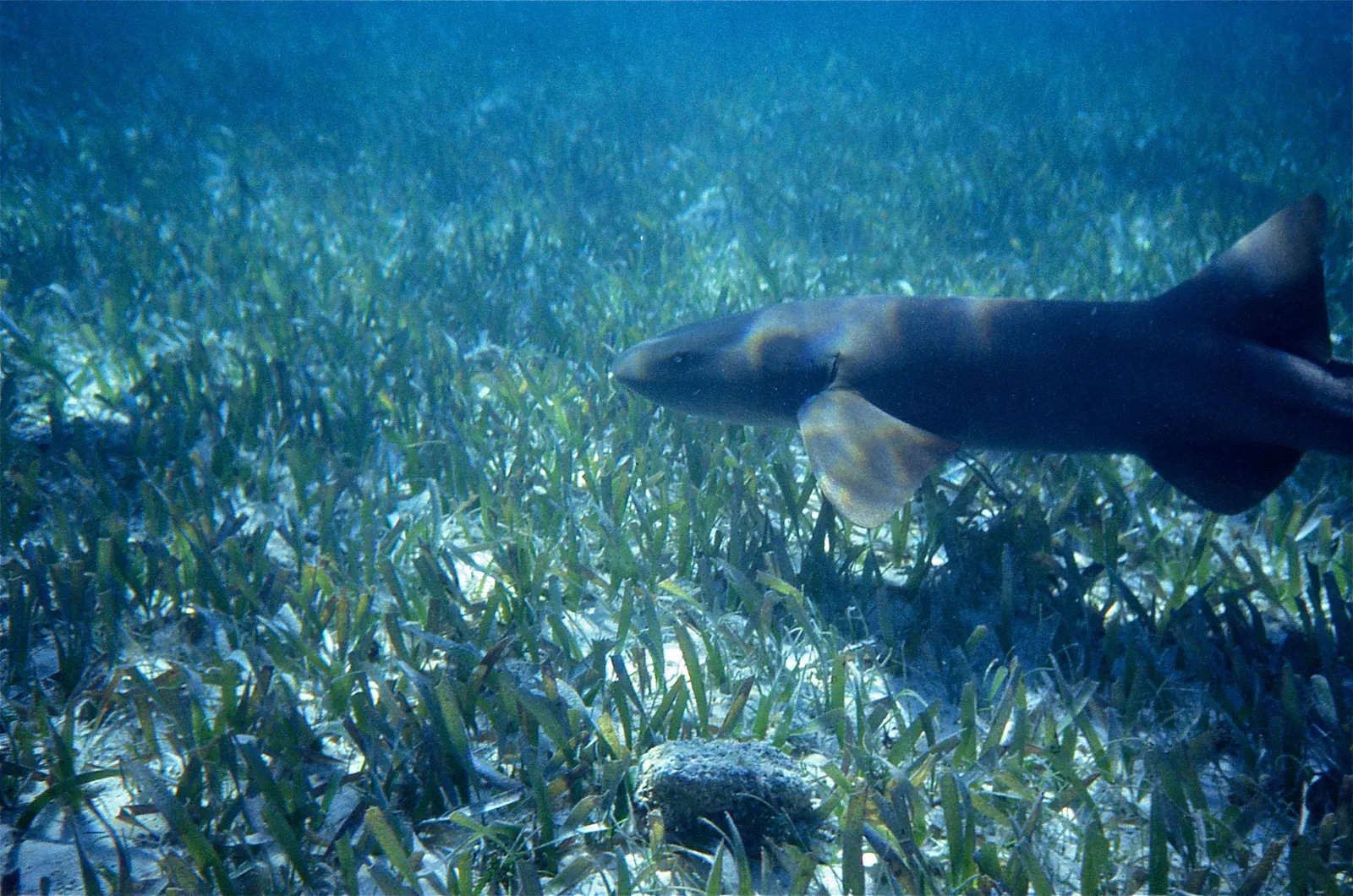
By day, a nurse shark may look like a very large brown cushion resting beneath a reef ledge. By night, it patrols the seabed with an astonishingly powerful slurp.
Shhh… there’s a shark snoozing under that ledge
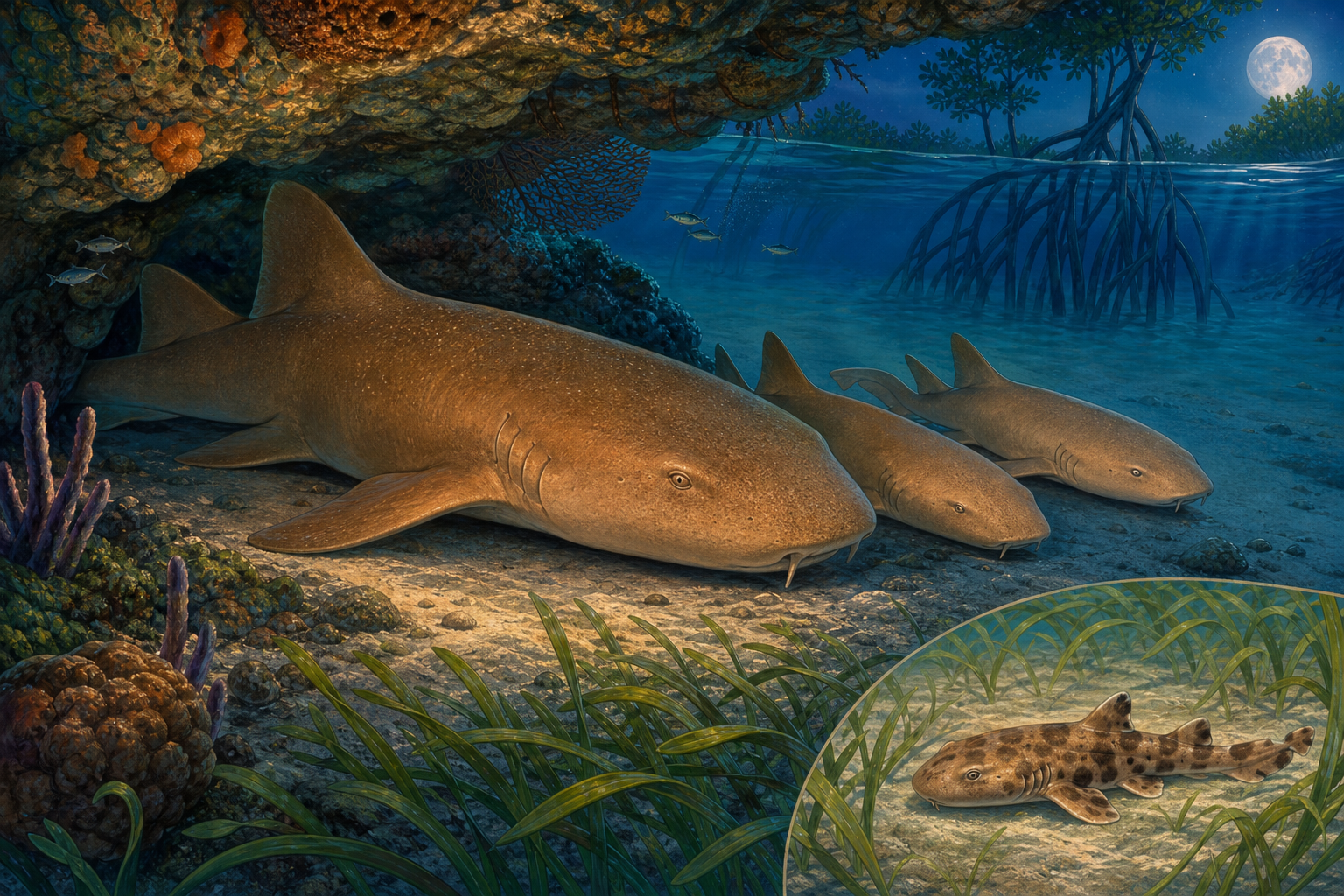
Imagine slipping into warm, clear coastal water. Sunbeams wobble across the sand. A mangrove root twists nearby, and a reef wall makes a cool, shadowy hideout. Then you spot it: a brown nurse shark resting on the seabed, almost as calmly as a dog asleep under a table.
That first surprise is worth pausing for. Not every shark is zooming through the sea all day. The nurse shark, whose scientific name is Ginglymostoma cirratum, is slow-moving and often rests during daylight hours. It may settle beneath rocky ledges or in crevices, sometimes alongside other nurse sharks in a cosy resting group. A shark sleepover—just with fewer pillows and much more sand.
Nurse sharks live in tropical and subtropical coastal waters of the Atlantic and eastern Pacific. Their neighbourhoods can include coral reefs, seagrass flats, mangroves, and rocky reefs. Young sharks especially use shallow places such as reefs, seagrass, and mangrove areas, while larger ones can rest around deeper reefs and ledges.
A full-grown nurse shark can reach about 3.08 metres long. That is longer than a grand piano is wide—quite a presence for an animal that often chooses to spend the day being wonderfully still.
Evidence: IUCN Red List of Threatened Species: Ginglymostoma cirratum (Nurse Shark) — Red List Assessment; Animal Diversity Web (University of Michigan Museum of Zoology): Ginglymostoma cirratum — Animal Diversity Web; Wikipedia: Nurse shark
When the lights go down, out comes the slurp
As daylight fades, the nurse shark’s quiet day shifts into a nighttime search. It heads over the seabed to find food. Rather than racing after every meal, it often looks for animals hiding in or near the bottom.
Its special trick is suction feeding. The shark presses its small mouth close to the sand or a hiding place and sucks prey in. Its suction is among the strongest recorded for animals living in water. Think of a vacuum cleaner, only living, swimming, and definitely not available for cleaning your bedroom.
A nurse shark eats small fish, including stingrays, along with crustaceans, molluscs, and sea urchins. Crustaceans include creatures such as crabs and shrimp; molluscs include animals such as snails. This makes the nurse shark a coastal seabed predator, finding small animals among reefs, seagrass, and mangrove shores.
Near its mouth are whisker-like feelers called barbels. These help the shark locate food that may be tucked away in the sand. So although it can look sleepy in the daytime, a nurse shark has a practical plan for its nighttime shift: feel, search, slurp.
Evidence: Animal Diversity Web (University of Michigan Museum of Zoology): Ginglymostoma cirratum — Animal Diversity Web; Wikipedia: Nurse shark
A spotted beginning
Baby nurse sharks begin life at about 30 centimetres long—roughly the length of a school ruler. They arrive wearing a spotty pattern. As they grow, those spots gradually fade, leaving the smoother brown colouring often seen in adults.
Young nurse sharks use shallow coastal habitats, including coral reefs, seagrass flats, and mangrove islands. These watery places are not empty blue space. They are busy, layered homes: seagrass can wave like an underwater meadow, mangrove roots can make a tangled maze, and coral reefs offer nooks and crannies.
That is why protecting coastal habitats matters. A nurse shark does not live in only one kind of place. Different parts of its life connect with reefs, seagrass, mangroves, rocky areas, and the sandy seabed between them. Looking after a neighbourhood means looking after its many rooms.
Nurse sharks are often solitary while feeding at night. During the day, though, they can gather in resting groups and return to familiar places. It is a good reminder that being social does not have to mean chatting constantly. Sometimes friendship is simply choosing the same shady spot for a quiet rest.
Evidence: Animal Diversity Web (University of Michigan Museum of Zoology): Ginglymostoma cirratum — Animal Diversity Web; Wikipedia: Nurse shark
Why a calm shark needs our loud care
The nurse shark is globally listed as Vulnerable on the IUCN Red List. In plain language, that means it faces a high risk in the wild and needs care. Its situation is not identical everywhere: some regional assessments are less worrying, while fishing pressure is more serious in other places.
Fishing can affect nurse sharks when they are directly targeted or accidentally caught as bycatch—animals caught when fishers were trying to catch something else. Because nurse sharks are coastal animals, pressure from fishing in coastal waters can be especially important.
There is hopeful work we can understand even from far away. Protecting shallow reef, seagrass, and mangrove habitats helps keep important nurse-shark spaces safer. Careful fishing practices, including reducing targeted catch and bycatch, can help too. These are not magic buttons; they are thoughtful choices that give a slow-moving shark a better chance to rest, feed, and grow.
If you ever see sharks in a zoo, aquarium, on a boat trip, or in a video, curiosity is brilliant—but calm respect is part of it. Wild animals deserve room to choose where they go, hide, and rest. The best kind of shark fan is the kind who admires without bothering.
Evidence: IUCN Red List of Threatened Species: Ginglymostoma cirratum (Nurse Shark) — Red List Assessment; Animal Diversity Web (University of Michigan Museum of Zoology): Ginglymostoma cirratum — Animal Diversity Web; Wikipedia: Nurse shark
A different way to picture a shark
Movies sometimes make sharks seem like one big set of teeth. But the nurse shark offers another picture: a bottom-dweller resting under a ledge, a spotted youngster in a shallow nursery habitat, and a nighttime hunter using suction rather than a high-speed chase.
That does not make it boring. It makes it astonishing. In one day, a nurse shark can be both still as a fallen log and equipped with an underwater slurp powerful enough to pull hidden prey from the seabed. Nature is full of animals that are more interesting when we trade scary guesses for careful questions.
Here is a question to carry outdoors: what homes are hidden below the surface of a place that looks ordinary? A patch of seagrass, a mangrove edge, or a reef shadow may be somebody’s shelter, nursery, lunch counter, or nap spot. For a nurse shark, it can be all of those at different times.
Caring begins with noticing. Notice the animal, notice its home, and notice that a quiet creature can still be important. The nurse shark has been doing its slow, sandy, midnight work for a very long time. It deserves a safe place to keep doing it.
Evidence: Animal Diversity Web (University of Michigan Museum of Zoology): Ginglymostoma cirratum — Animal Diversity Web; Wikipedia: Nurse shark
A kind choice can ripple outward
Nurse sharks eat other animals because that is how their bodies and lives work. People get to make choices, though. One gentle way to care about ocean animals is to explore tasty plant-forward meals: beans, lentils, whole grains, vegetables, fruit, nuts, and seeds can all be part of a varied healthy diet. If your family is thinking about bigger food changes, talk with a trusted adult and a qualified health professional.
Choosing more plant foods can be a quiet vote for a kinder future. The World Health Organization highlights varied diets rich in plant foods, and the IPCC reports that shifts toward sustainable, healthy, more plant-based diets can lower food-system emissions and reduce pressure on land and biodiversity. You do not have to be perfect to be a friend to animals. Perhaps it starts with one curious new meal—and with remembering that a mangrove-shadow nap spot may be a nurse shark’s home, not a resource for us to take.
Evidence: World Health Organization: Healthy diet; Intergovernmental Panel on Climate Change: Climate Change 2022: Mitigation of Climate Change — Chapter 7
Questions people ask
Are nurse sharks active during the day?
They are mainly active at night. During the day, they commonly rest on the seabed under ledges or in crevices, sometimes in groups with other nurse sharks.
Evidence: Animal Diversity Web (University of Michigan Museum of Zoology): Ginglymostoma cirratum — Animal Diversity Web; Wikipedia: Nurse shark
What does a nurse shark eat?
It eats small fish, including stingrays, plus crustaceans, molluscs, and sea urchins. Much of this food is found on or near the seabed.
Evidence: IUCN Red List of Threatened Species: Ginglymostoma cirratum (Nurse Shark) — Red List Assessment; Animal Diversity Web (University of Michigan Museum of Zoology): Ginglymostoma cirratum — Animal Diversity Web; Wikipedia: Nurse shark
Why do nurse sharks matter?
They are part of coastal reef, seagrass, mangrove, and rocky-reef communities, where they feed on small fish and invertebrates along the bottom. Protecting their homes also supports these rich coastal habitats.
Evidence: Animal Diversity Web (University of Michigan Museum of Zoology): Ginglymostoma cirratum — Animal Diversity Web; Wikipedia: Nurse shark
How can kids help nurse sharks?
Learn about coastal habitats, respect wildlife from a distance, and share accurate shark stories instead of scary myths. With a trusted adult, you can also support choices that protect ocean habitats and reduce pressure on wild animals.
Evidence: IUCN Red List of Threatened Species: Ginglymostoma cirratum (Nurse Shark) — Red List Assessment; Animal Diversity Web (University of Michigan Museum of Zoology): Ginglymostoma cirratum — Animal Diversity Web; Wikipedia: Nurse shark
Read the evidence
Sources behind this story
- Ginglymostoma cirratum (Nurse Shark) — Red List Assessment — IUCN Red List of Threatened Species
- Ginglymostoma cirratum — Animal Diversity Web — Animal Diversity Web (University of Michigan Museum of Zoology)
- Nurse shark — Wikipedia
- Healthy diet — World Health Organization
- Climate Change 2022: Mitigation of Climate Change — Chapter 7 — Intergovernmental Panel on Climate Change
Health information is general education, not personal medical advice. Young readers should make food choices with a trusted adult and qualified health professional.