Today's animal friend · 9 November 2026
The Swan That Hums Across the Water
On a quiet pond, a mute swan can look like a floating cloud. Look—and listen—closely, because this graceful neighbour has much more going on than its name suggests.
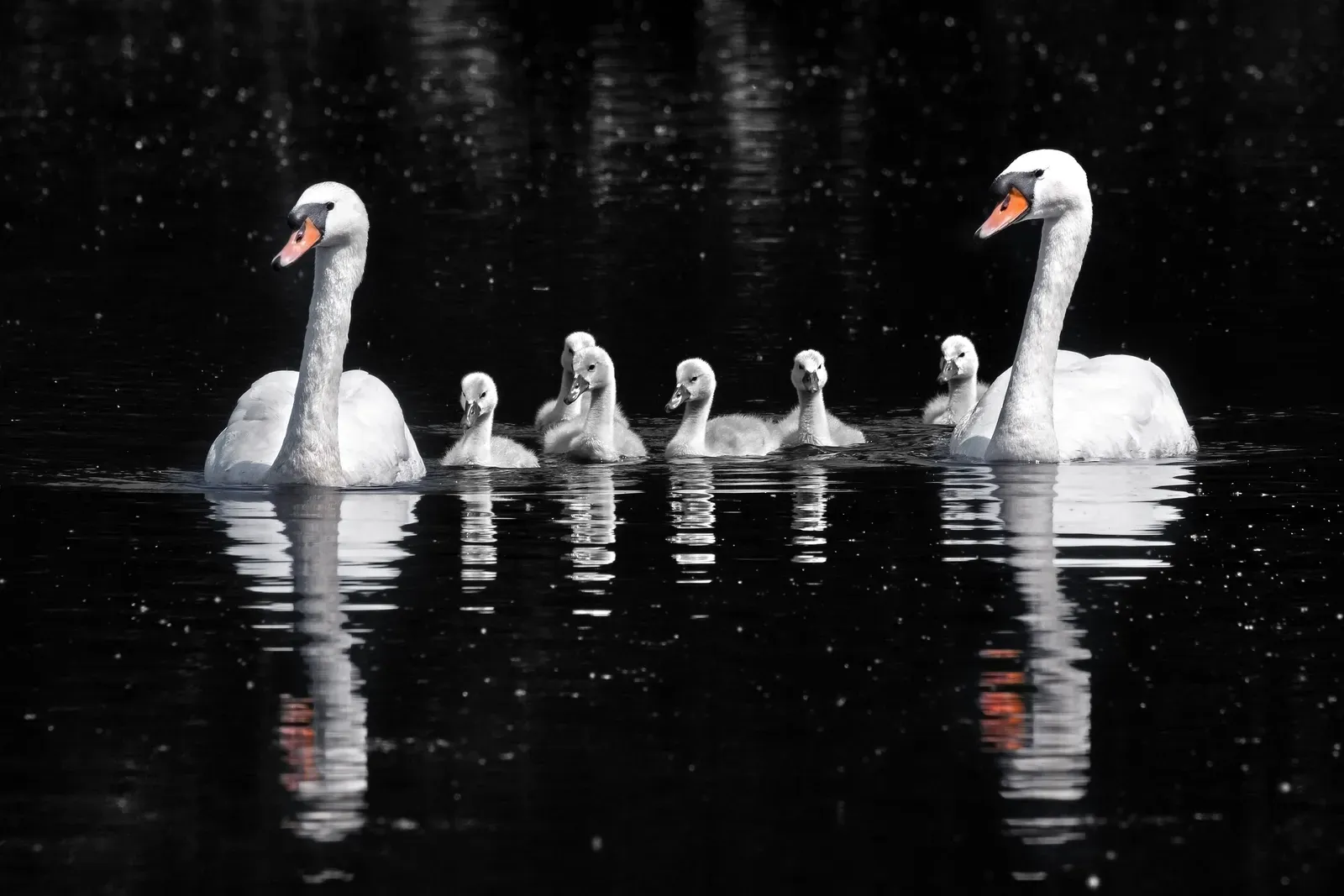
On a quiet pond, a mute swan can look like a floating cloud. Look—and listen—closely, because this graceful neighbour has much more going on than its name suggests.
First comes the hum
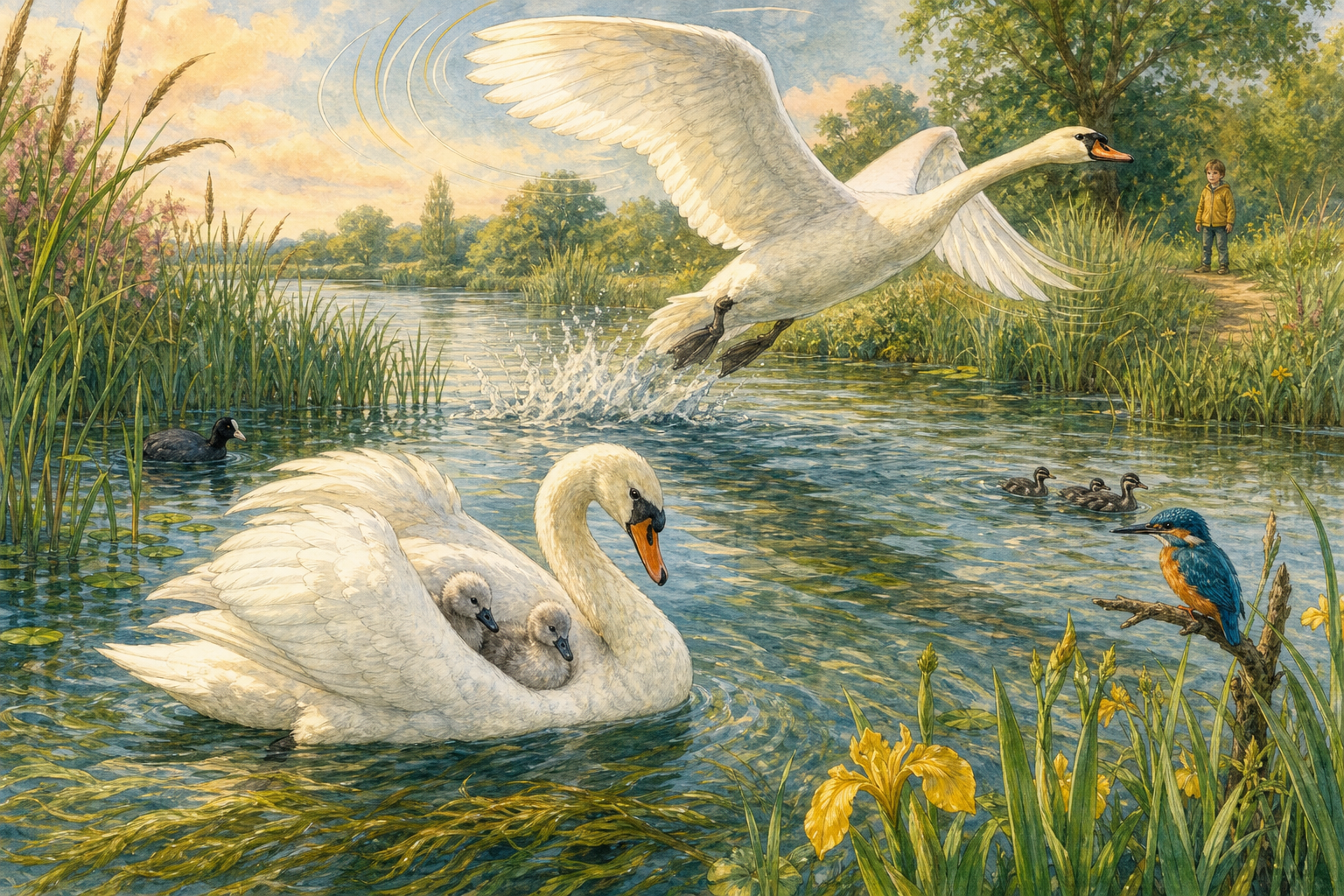
Imagine you are beside a lake on a breezy afternoon. Reeds tickle the shore. The water wrinkles like a rumpled blue blanket. Then a huge white bird rises from the lake, feet pattering for a moment across the surface before it lifts away.
You might expect a loud honk. Instead, you may hear a deep, throbbing hum from its broad wings. That is a mute swan, Cygnus olor, flying overhead. “Mute” is a slightly silly name: these swans are quieter than some other swans, but they are not silent. They can hiss, snort, and make soft sounds too.
A mute swan is one of the heaviest birds able to fly. Its body can be about as long as a tall grown-up is from knees to shoulders, and it can weigh as much as a large dog. Yet those powerful wings can carry it through the air. Graceful does not mean flimsy!
Evidence: Animal Diversity Web, University of Michigan Museum of Zoology: Cygnus olor (mute swan); IUCN Red List of Threatened Species / BirdLife International: Cygnus olor (Mute Swan) — Red List Assessment
A white boat with an S-shaped neck
On the water, a mute swan often glides with its long neck curved into an S and its bill pointing down. Its white feathers, orange bill, and black knob at the base of the bill make a handsome, easy-to-spot combination. Males and females look alike, although males are generally larger.
These are waterbirds in the duck, goose, and swan family, Anatidae. They spend their daylight hours swimming, feeding, resting, and guarding space around a nest during the breeding season. A swan drifting past can look as calm as a toy boat—but it is always busy noticing its watery world.
Mute swans use lakes, ponds, rivers, open marshes, and sheltered coastal or estuary waters. They live naturally across parts of Europe and Asia. People introduced them to North America long ago, and they are now widespread there too. In winter, some use more sheltered marine waters. Wherever they are, water is not just scenery. It is home, dinner table, and travel route all at once.
Evidence: Animal Diversity Web, University of Michigan Museum of Zoology: Cygnus olor (mute swan); IUCN Red List of Threatened Species / BirdLife International: Cygnus olor (Mute Swan) — Red List Assessment
How do you eat pondweed without diving?
Here is the swan’s clever trick: it does not need to dive like a little underwater submarine. Instead, it plunges its long head and neck beneath the surface to reach plants growing below. Picture someone leaning over a snack table—except the snack table is a pond bottom and the diner has feathers.
Mute swans eat mostly aquatic vegetation. Pond plants and grasses are important foods, with small amounts of aquatic insects, molluscs, and other tiny water animals sometimes included. As a swan pulls at plants, fragments can float free for other waterbirds to use. One animal’s leafy lunch can become another bird’s lucky nibble.
A swan’s feeding helps us notice why healthy wetlands matter. A pond with plants, clean water, muddy edges, and reed beds is full of hiding places and food. It may look quiet from a bench, but below the surface and among the stems, it is more like a bustling neighbourhood.
Evidence: Animal Diversity Web, University of Michigan Museum of Zoology: Cygnus olor (mute swan); IUCN Red List of Threatened Species / BirdLife International: Cygnus olor (Mute Swan) — Red List Assessment
The back-seat ride for a cygnet
Baby swans are called cygnets, and they begin life fluffy and grey rather than snowy white. One of the loveliest mute-swan sights is a cygnet tucked between a parent’s wings, riding on the adult’s back as the family swims. It is a feathery back-seat ride—no seat belt, but an excellent view.
Mute swans usually form a pair for at least a breeding season. Together, the adults defend a large territory and share work around incubation and caring for their young. That teamwork matters when a family has eggs or small cygnets near the water’s edge.
People sometimes say swans always mate for life. Their partnerships can last, but the evidence does not promise that every pair stays together forever. The truer, and still wonderful, story is that swans can be devoted co-parents, working together when their young need them.
Evidence: Animal Diversity Web, University of Michigan Museum of Zoology: Cygnus olor (mute swan); IUCN Red List of Threatened Species / BirdLife International: Cygnus olor (Mute Swan) — Red List Assessment
Strong wings, tender places
The mute swan is listed as Least Concern on the IUCN Red List, and its global population trend has been recorded as increasing. That is encouraging news. But “Least Concern” does not mean “nothing to care about.” Wetlands still need people who value them, and individual birds can be harmed by dangers around water.
Lead fishing weights or shot that are swallowed have caused serious poisoning problems in the past, especially in Britain before controls reduced the risk. Keeping feeding waters free of lead tackle is one helpful action. Looking after wetland plants and clean shorelines helps many water-loving creatures, from insects to birds.
There is another thoughtful twist in North America. Because mute swans were introduced there, territorial birds can compete with native waterfowl in some places. Wildlife carers may manage local flocks to protect native species. Caring for animals means paying attention to place, listening to local experts, and making room for the whole wetland community.
Evidence: IUCN Red List of Threatened Species / BirdLife International: Cygnus olor (Mute Swan) — Red List Assessment; Animal Diversity Web, University of Michigan Museum of Zoology: Cygnus olor (mute swan)
Try a swan-sized moment of wonder
Next time you visit a pond, give its residents room. Watch from a respectful distance, especially near nests or young birds. Notice the curved neck, the slow paddle of webbed feet, or the way a swan reaches underwater for plants. If one takes off, pause and listen for that wing-made hum.
You do not have to touch a wild animal to be its friend. You can be a friend by keeping litter out of water, never leaving fishing tackle behind, and helping grown-ups care for local green spaces. Small choices can be like tiny ripples: they travel farther than we expect.
And remember the flying white bird with the not-quite-quiet name. It is a powerful flier, a careful parent, a wetland grazer, and a neighbour with a whole world beneath its feet.
Evidence: Animal Diversity Web, University of Michigan Museum of Zoology: Cygnus olor (mute swan); IUCN Red List of Threatened Species / BirdLife International: Cygnus olor (Mute Swan) — Red List Assessment
A kind choice that reaches beyond the pond
A swan searching for pondweed is a gentle reminder that plants can be nourishing. The World Health Organization describes healthy diets as varied and rich in foods such as vegetables, fruit, whole grains, pulses, nuts, and seeds. Food needs differ from person to person, so children can explore new meals with a trusted adult and, when needed, a qualified health professional.
Choosing more plant-based foods can be a kind, hopeful way to care about animals and the places they live. The IPCC reports that shifts toward sustainable, healthy, more plant-based diets can reduce food-system emissions and pressure on land and biodiversity. A bean burrito, lentil soup, or pea-packed pasta will not magically fix everything—but shared choices can add up, like many small ripples joining across a lake.
You do not need to be perfect to be thoughtful. Try noticing the living neighbours around you, celebrate plant foods that you enjoy, and let care guide your next curious choice.
Evidence: World Health Organization: Healthy diet; Intergovernmental Panel on Climate Change: Climate Change 2022: Mitigation of Climate Change — Chapter 7
Questions people ask
Why is it called a mute swan if it makes sounds?
The name means it is comparatively quiet, not silent. Mute swans can hiss, snort, and make soft notes, while their wings make a noticeable humming or throbbing sound in flight.
Evidence: Animal Diversity Web, University of Michigan Museum of Zoology: Cygnus olor (mute swan)
Can mute swans really fly when they are so big?
Yes. They are among the heaviest flying waterbirds. Their broad wings help them lift a body that can weigh about as much as a large dog.
Evidence: Animal Diversity Web, University of Michigan Museum of Zoology: Cygnus olor (mute swan)
Do mute swans live only on freshwater ponds?
No. They use lakes, ponds, rivers, marshes, and sheltered coastal or estuary waters. Some spend more time on marine waters in winter.
Evidence: Animal Diversity Web, University of Michigan Museum of Zoology: Cygnus olor (mute swan)
What should I do if I see a swan family?
Enjoy watching from a respectful distance and let the birds choose where to go. Never leave litter or fishing tackle by the water, and ask an adult about local wetland-care projects.
Evidence: Animal Diversity Web, University of Michigan Museum of Zoology: Cygnus olor (mute swan); IUCN Red List of Threatened Species / BirdLife International: Cygnus olor (Mute Swan) — Red List Assessment
Read the evidence
Sources behind this story
- Cygnus olor (Mute Swan) — Red List Assessment — IUCN Red List of Threatened Species / BirdLife International
- Cygnus olor (mute swan) — Animal Diversity Web, University of Michigan Museum of Zoology
- Healthy diet — World Health Organization
- Climate Change 2022: Mitigation of Climate Change — Chapter 7 — Intergovernmental Panel on Climate Change
Health information is general education, not personal medical advice. Young readers should make food choices with a trusted adult and qualified health professional.