 ← All animals
 bird · Cygnus olor
Mute Swan
Gallery
4 photos Real photograph 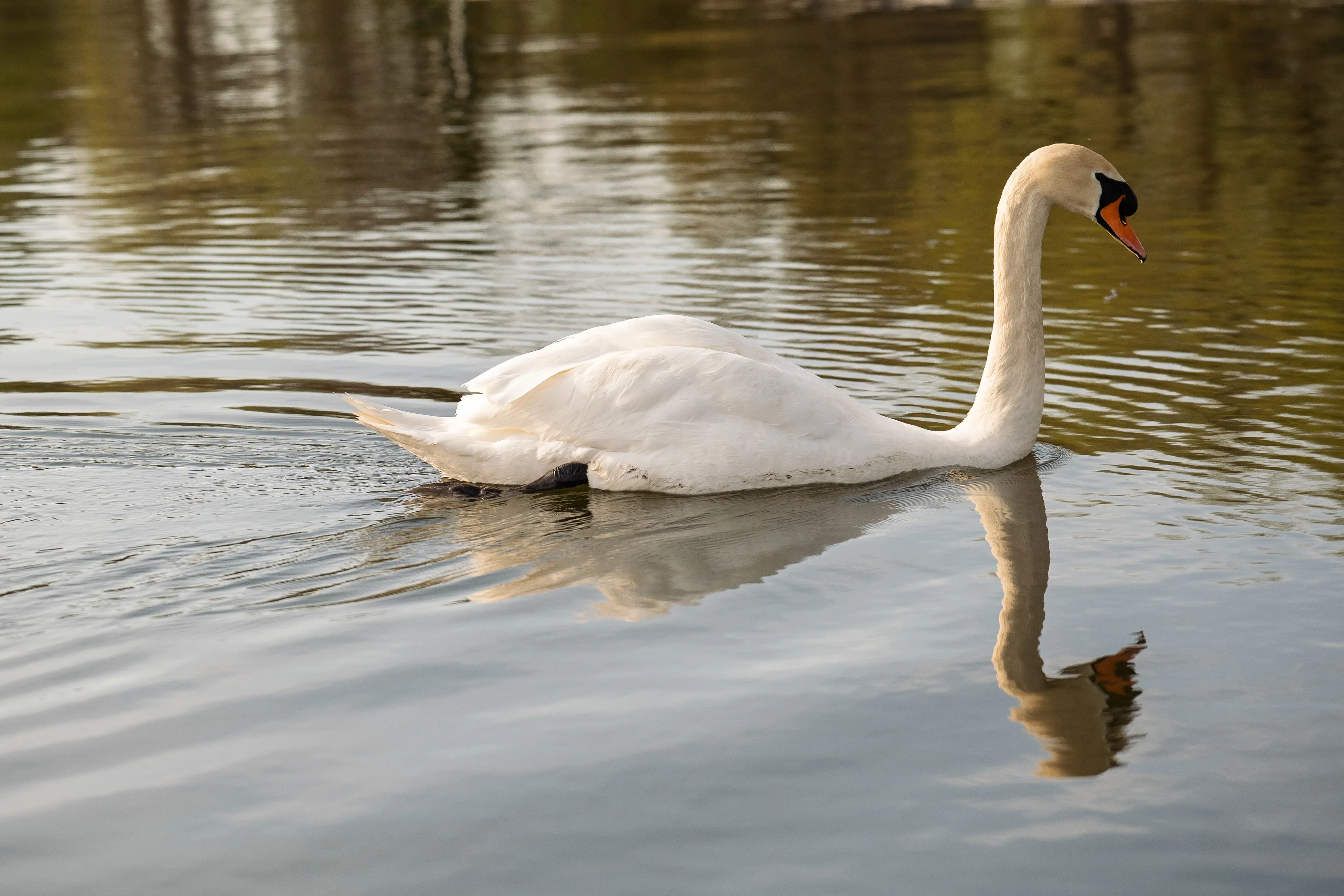 Real photograph
  Real photograph
  Real photograph
 Why we love them
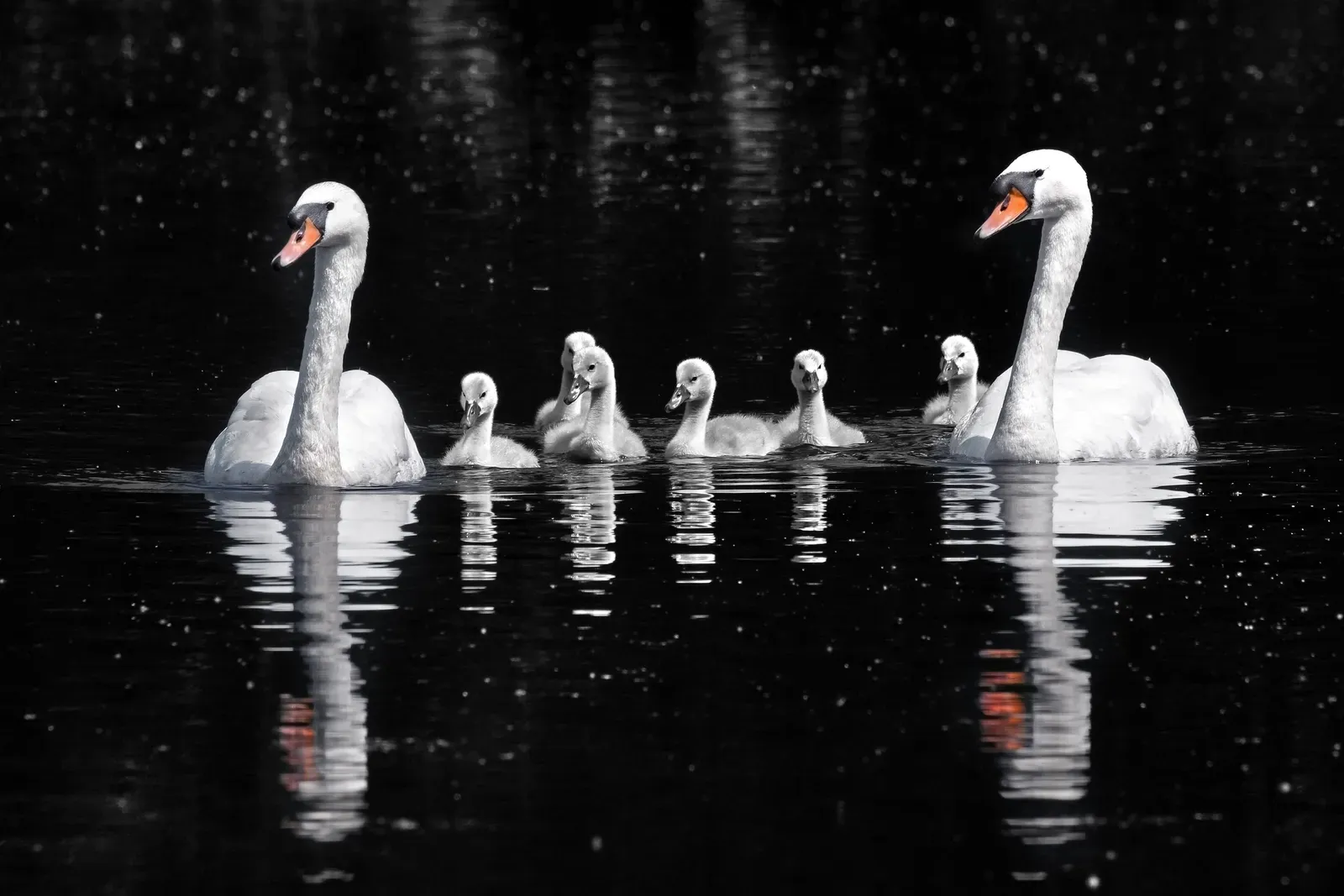
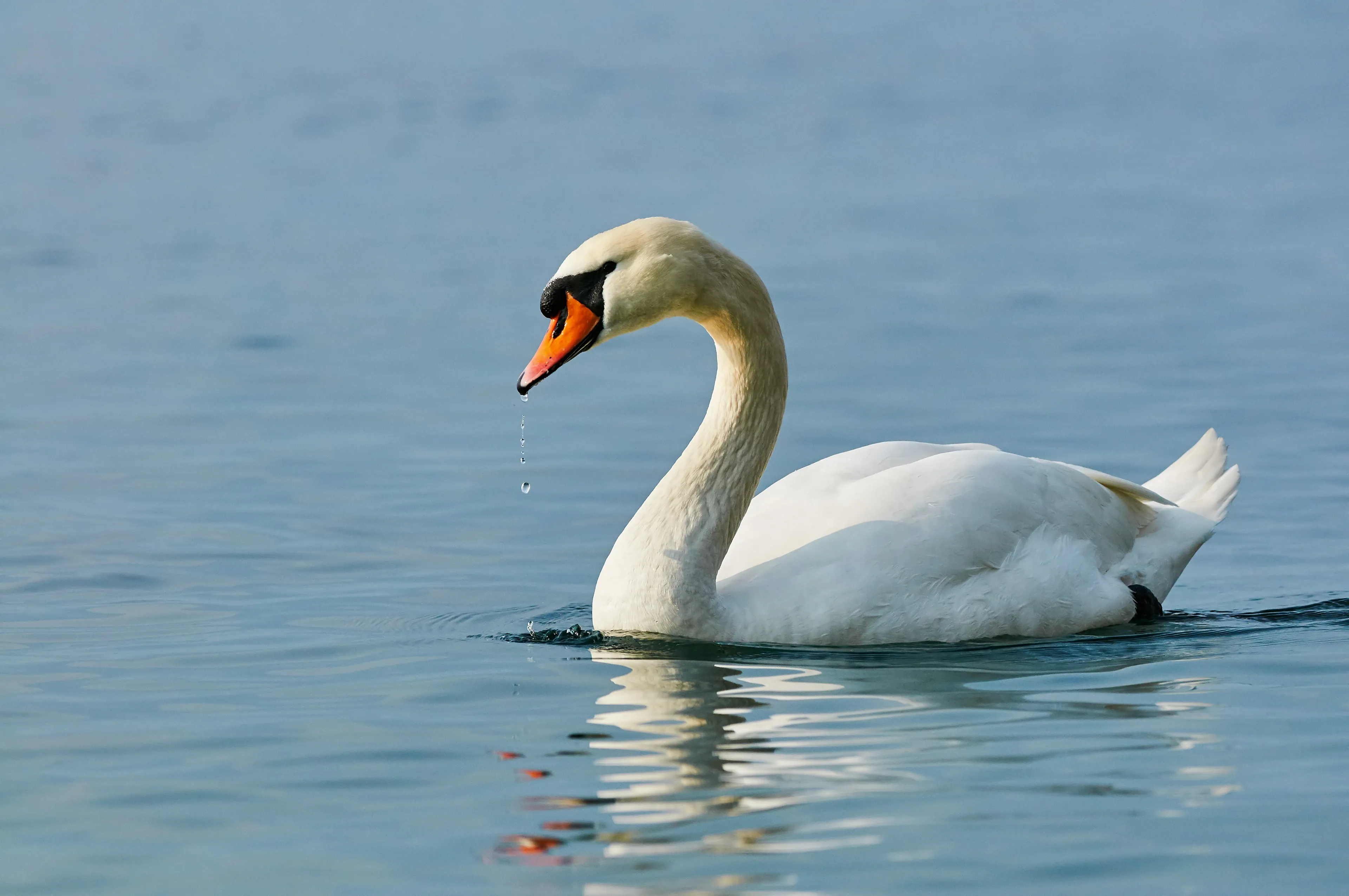
The mute swan is a large white water bird with a long, graceful neck that it often curves into a soft S shape. It has an orange bill with a black knob at the top, which makes it easy to tell apart from other swans. Males are a little bigger than females, and both glide across the water looking calm and elegant.
Mute swans live on lakes, ponds, rivers, and quiet coastal waters. They are native to Europe and parts of Asia, and long ago people brought them to North America, where they now live in many places too. In winter some of them move to warmer water near the sea.
These swans are mostly plant eaters. They dip their long necks right under the water to reach the leafy plants growing on the bottom, and they also nibble grasses on land. Now and then they eat a few small water insects or fish along with their green meals.
Mute swans build big nests from reeds and grass near the water's edge. A pair usually stays together for many years and often fixes up the same nest each spring. The mother keeps the eggs warm for about five weeks, and when the cygnets hatch, both parents look after them. Sometimes the little ones ride on their mother's back, tucked between her wings.
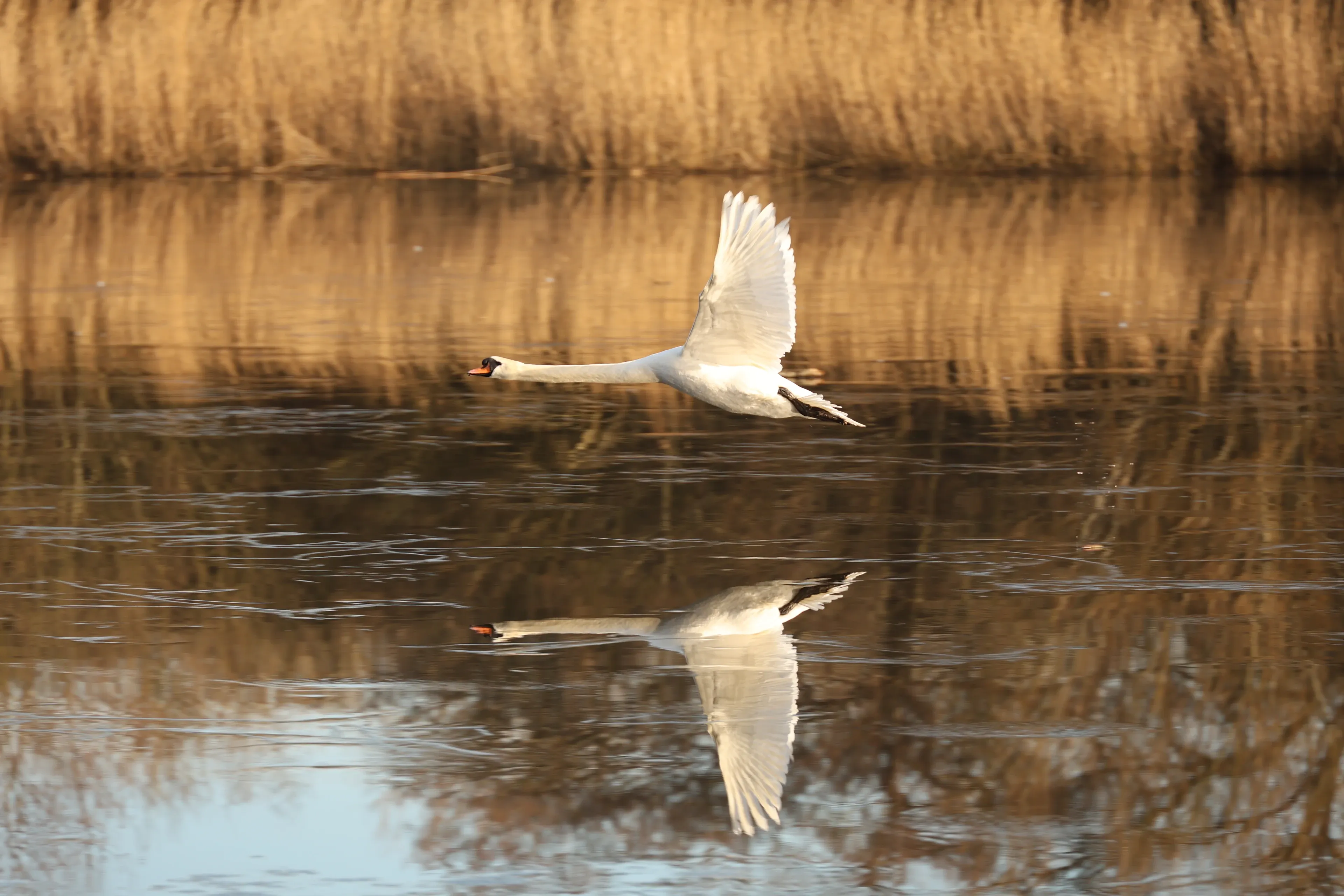
Their name is a bit of a puzzle, because mute swans are not really silent. They are just quieter than other swans, making soft grunts and hisses instead of loud honks. When they fly, their broad wings make a lovely throbbing, whistling sound that you can hear from far away.
There are plenty of mute swans in the world, so they are not in danger. People still help them by keeping wetlands clean, moving old lead fishing weights that can make them sick, and marking power lines so the big birds do not fly into them.
My home
Lake, pond, river, marsh, coastal water
Where I live
Asia, Europe, North America
What I eat
Water plants, pondweed, grasses, water insects, small fish
How long I am
1.4–1.6 m
How heavy I am
7.6–14.3 kg
How long I live
10–20 years
The mute swan is one of the heaviest birds that can still fly, and a big male can weigh as much as a large dog, around twelve kilograms.
A mother swan sometimes carries her fluffy grey babies, called cygnets, tucked on her back between her wings while she swims.
Mute swans usually pair up with one partner and stay together for many years, mending and reusing the same big nest each spring.
Every mute swan can feel happy, scared and loved — just like you.
Looking after my friends
How many are there?
The native mute-swan population is estimated at about 500,000 adults and young after the breeding season.
This seasonal total covers the native range and does not include every introduced population.
Estimate source: Mute swan
How are they doing?
Lower extinction riskThis species has a lower global extinction risk right now. Local populations can still grow or shrink.
You can help by learning their names, keeping wild places clean, and telling someone why this animal matters.
Where this came from
- Cygnus olor (Mute Swan) — Red List Assessment — IUCN Red List of Threatened Species / BirdLife International
- Cygnus olor (mute swan) — Animal Diversity Web, University of Michigan Museum of Zoology
- Mute swan — Wikipedia