Today's animal friend · 2 November 2026
The Kākā’s Tiny Paintbrush Tongue
A kākā can swoop through a forest, shout across a valley, then use a tongue like a tiny paintbrush to sip a sweet snack. Meet this remarkable parrot and the people helping its calls return.
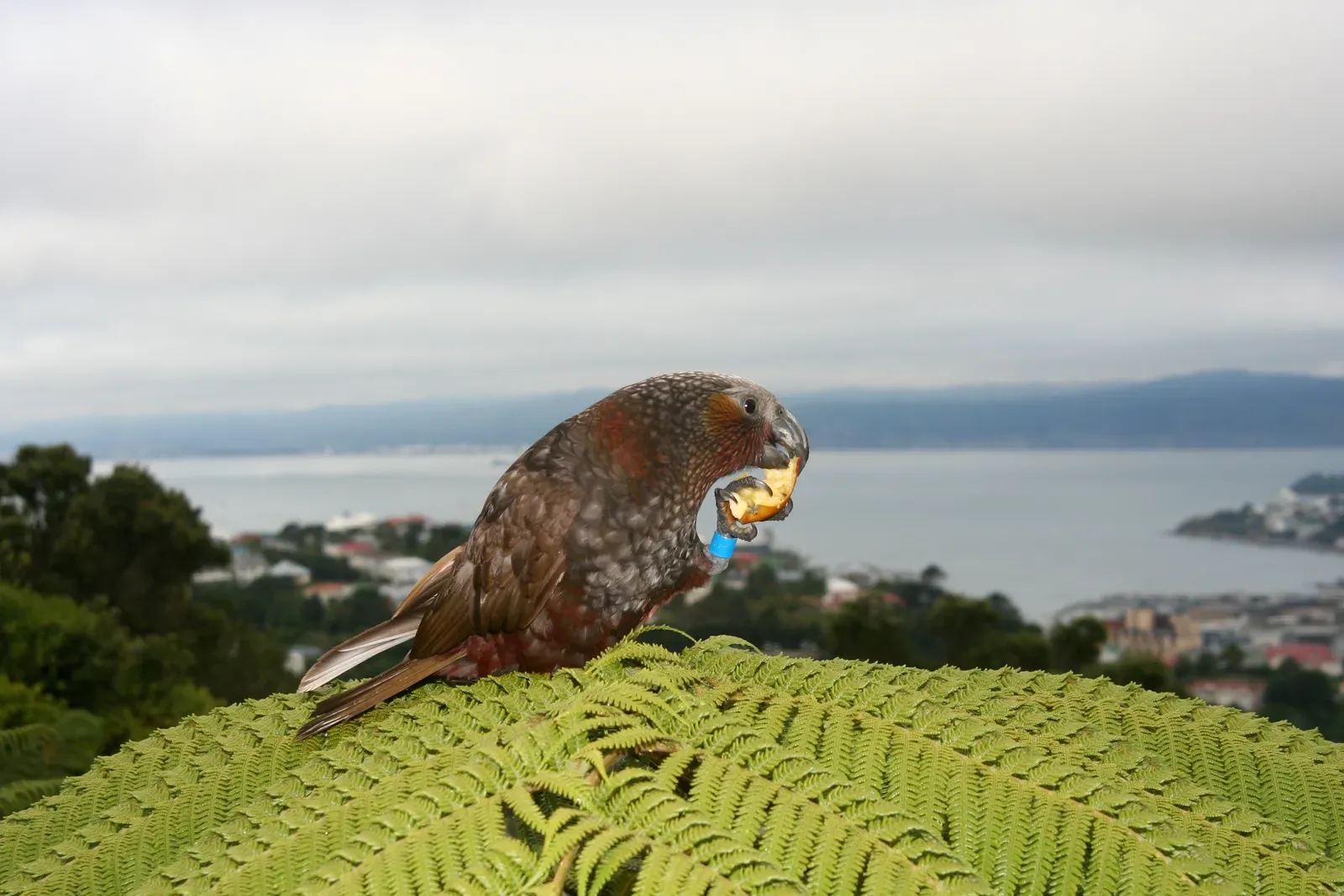
A kākā can swoop through a forest, shout across a valley, then use a tongue like a tiny paintbrush to sip a sweet snack. Meet this remarkable parrot and the people helping its calls return.
A shout from the treetops!
Imagine walking beneath a green roof of leaves in Aotearoa New Zealand. A sharp, lively call bounces across the valley. Then a brownish parrot flashes overhead, with a surprise of red and orange hidden beneath its wings. That forest comedian is a kākā—pronounced “kaa-kaa,” not cocoa!
The kākā, or Nestor meridionalis, is a large native forest parrot found nowhere else on Earth. It belongs to a special parrot family called Strigopidae and is a close cousin of the kea, the parrot famous for living among chilly mountain landscapes. The kākā prefers a leafier address: lowland and mid-altitude native forests.
During the day, kākā climb and travel through the canopy—the high, sunlit world made by treetops. They may call from tall trees or call as they fly over valleys. If a forest had its own noisy neighbourhood chat, a kākā would probably be among the first to join in.
Evidence: IUCN Red List of Threatened Species / BirdLife International (Red List Authority for birds): Nestor meridionalis (New Zealand Kaka) — Red List Assessment; New Zealand Birds Online (Te Papa / Ornithological Society of New Zealand): Kākā | Kaka — Nestor meridionalis; Wikipedia: Kākā
What fits inside a parrot beak? A paintbrush!
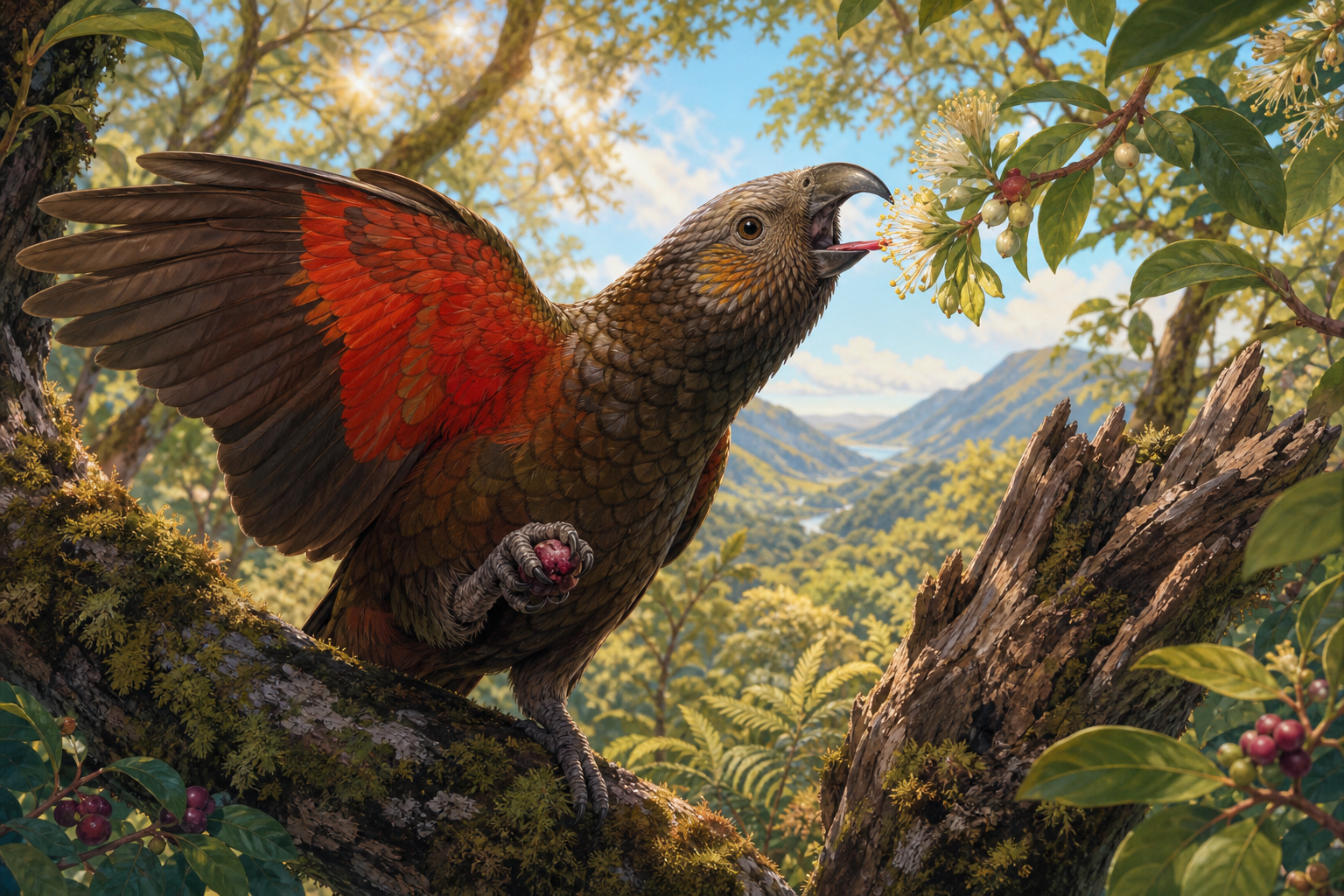
Here is the kākā’s brilliant food-tool secret: its tongue has a brush-like tip. Picture the tiniest paintbrush you can imagine, except it is busy tasting sweet nectar from flowers, sap from trees, and honeydew. Honeydew is a sugary substance made by small insects, and kākā lap it up with that specialised tongue.
A kākā is an omnivore, which means its menu includes plant foods and animals. It eats fruit, berries, seeds, nectar, sap, and insects. That is quite a forest picnic—more choices than many lunchboxes, though probably a bit too crunchy for humans.
When it finds something tasty, the kākā can hold food in one foot, rather as we hold a biscuit in a hand. Its strong hooked beak helps it work on seeds and search old wood for grubs. A kākā feeding in a tree is not simply grabbing snacks. It is climbing, gripping, probing, peeling, and tasting—like a determined little explorer with feathers.
Evidence: IUCN Red List of Threatened Species / BirdLife International (Red List Authority for birds): Nestor meridionalis (New Zealand Kaka) — Red List Assessment; New Zealand Birds Online (Te Papa / Ornithological Society of New Zealand): Kākā | Kaka — Nestor meridionalis; Wikipedia: Kākā
Big parrot, busy forest life
An adult North Island kākā is about 38 to 44 centimetres long—roughly the length of a school ruler plus a little extra. It weighs about 340 to 400 grams, around the weight of a couple of small cans of soup. South Island birds tend to be larger, following a north-to-south size pattern.
Kākā spend much of their time in trees, but they are not necessarily always in one giant party. They may forage alone or in small groups, and can gather in bigger flocks when food is especially plentiful. Imagine friends meeting because somebody has discovered the best berry bush in town.
Their varied diet links them to many parts of the forest. As they move among fruiting trees, flowers, seed sources, sap, and insects, they are part of the busy forest food web. A food web is the tangle of living things that depend on one another—not a spider’s web made of silk, but a web of meals, movement, and shared habitat.
Evidence: New Zealand Birds Online (Te Papa / Ornithological Society of New Zealand): Kākā | Kaka — Nestor meridionalis; Wikipedia: Kākā
Why can’t we meet one everywhere?
Because the kākā lives only in Aotearoa New Zealand, every safe forest matters enormously. Long ago, it was more widespread. Today it remains in native forests on both main islands and on some offshore islands, but it does not simply live in every place where forest used to grow.
The species is listed as Vulnerable on the IUCN Red List. Kākā have declined because native forest has been lost and because introduced predators, including cats, rats, possums, and stoats, can threaten birds and their nests. They also face competition from wasps and bees for honeydew, one of their sweet foods.
That can sound like a very long list for one lively parrot to deal with. Yet the kākā’s story is not only about trouble. It is also about people noticing, caring, and getting to work. Protecting a forest protects hiding places, feeding places, and the pathways kākā use high above the ground.
Evidence: IUCN Red List of Threatened Species / BirdLife International (Red List Authority for birds): Nestor meridionalis (New Zealand Kaka) — Red List Assessment; New Zealand Birds Online (Te Papa / Ornithological Society of New Zealand): Kākā | Kaka — Nestor meridionalis; Wikipedia: Kākā
Good news has wings
In managed forests, protected sanctuaries, and predator-free islands, work to control introduced predators is helping kākā recover. New Zealand’s threat classification lists the species as Recovering, and the global IUCN status remains Vulnerable. Both ideas can be true at once: there is hopeful progress in places where help is happening, while the species still needs serious protection overall.
This is a reminder that conservation is not a magic wand. It is more like caring for a garden year after year: protecting what is growing, repairing what has been damaged, and paying attention to what returns. When a kākā’s call is heard again in a forest, it can be a sign of many careful actions joining together.
You do not have to be a wildlife scientist to be part of the caring team. You can learn the names of native animals, listen closely outdoors, share accurate stories, and support groups that protect habitats. Curiosity is not “just” curiosity. It is often the first step toward looking after a place.
Evidence: IUCN Red List of Threatened Species / BirdLife International (Red List Authority for birds): Nestor meridionalis (New Zealand Kaka) — Red List Assessment; New Zealand Birds Online (Te Papa / Ornithological Society of New Zealand): Kākā | Kaka — Nestor meridionalis; Wikipedia: Kākā
A kind choice can start at your plate
The kākā’s forest menu is a cheerful reminder that plants can be full of colour, flavour, and energy: fruit, seeds, nectar, and more. For people, the World Health Organization describes healthy diets as varied and rich in foods such as vegetables, fruit, whole grains, pulses, nuts, and seeds. Food needs differ from person to person, so any big change is a good conversation to have with a trusted adult and a qualified health professional.
Trying a plant-forward meal can be one gentle way to practise kindness toward animals and the living world we share. Perhaps it is bean tacos, lentil soup, a colourful fruit salad, or a favourite meal made with plant ingredients. No gold stars, no scolding—just a curious taste adventure.
Choices that lean toward sustainable, healthy, more plant-based diets can also help reduce food-system emissions and pressure on land and biodiversity. That matters for forests: places where a kākā can call, climb, sip, and surprise the next listener with a flash of red beneath its wings.
Evidence: World Health Organization: Healthy diet; Intergovernmental Panel on Climate Change: Climate Change 2022: Mitigation of Climate Change — Chapter 7
Questions people ask
Is a kākā the same as a kea?
No. They are close cousins in the same parrot family. The kea is associated with mountain environments, while the kākā lives in native forests, including lowland and mid-altitude forest.
Evidence: New Zealand Birds Online (Te Papa / Ornithological Society of New Zealand): Kākā | Kaka — Nestor meridionalis; Wikipedia: Kākā
Why does a kākā need a brush-tipped tongue?
Its specialised tongue helps it lap sweet nectar, sap, and honeydew. It is a useful tool for reaching foods that are not easy to pick up like a berry or seed.
Evidence: Wikipedia: Kākā
Can kākā eat insects as well as fruit?
Yes. Kākā are omnivores. Their foods include fruit, berries, seeds, nectar, sap, honeydew, and invertebrates such as grubs found in old wood.
Evidence: IUCN Red List of Threatened Species / BirdLife International (Red List Authority for birds): Nestor meridionalis (New Zealand Kaka) — Red List Assessment; Wikipedia: Kākā
Are kākā becoming more common?
There are encouraging recoveries in managed sanctuaries and predator-controlled areas, and New Zealand lists the species as Recovering. Globally, though, the kākā is still listed as Vulnerable, so continued protection is important.
Evidence: IUCN Red List of Threatened Species / BirdLife International (Red List Authority for birds): Nestor meridionalis (New Zealand Kaka) — Red List Assessment; New Zealand Birds Online (Te Papa / Ornithological Society of New Zealand): Kākā | Kaka — Nestor meridionalis; Wikipedia: Kākā
Read the evidence
Sources behind this story
- Nestor meridionalis (New Zealand Kaka) — Red List Assessment — IUCN Red List of Threatened Species / BirdLife International (Red List Authority for birds)
- Kākā | Kaka — Nestor meridionalis — New Zealand Birds Online (Te Papa / Ornithological Society of New Zealand)
- Kākā — Wikipedia
- Healthy diet — World Health Organization
- Climate Change 2022: Mitigation of Climate Change — Chapter 7 — Intergovernmental Panel on Climate Change
Health information is general education, not personal medical advice. Young readers should make food choices with a trusted adult and qualified health professional.