 ← All animals
 bird · Nestor meridionalis
Kākā
Gallery
5 photos Real photograph 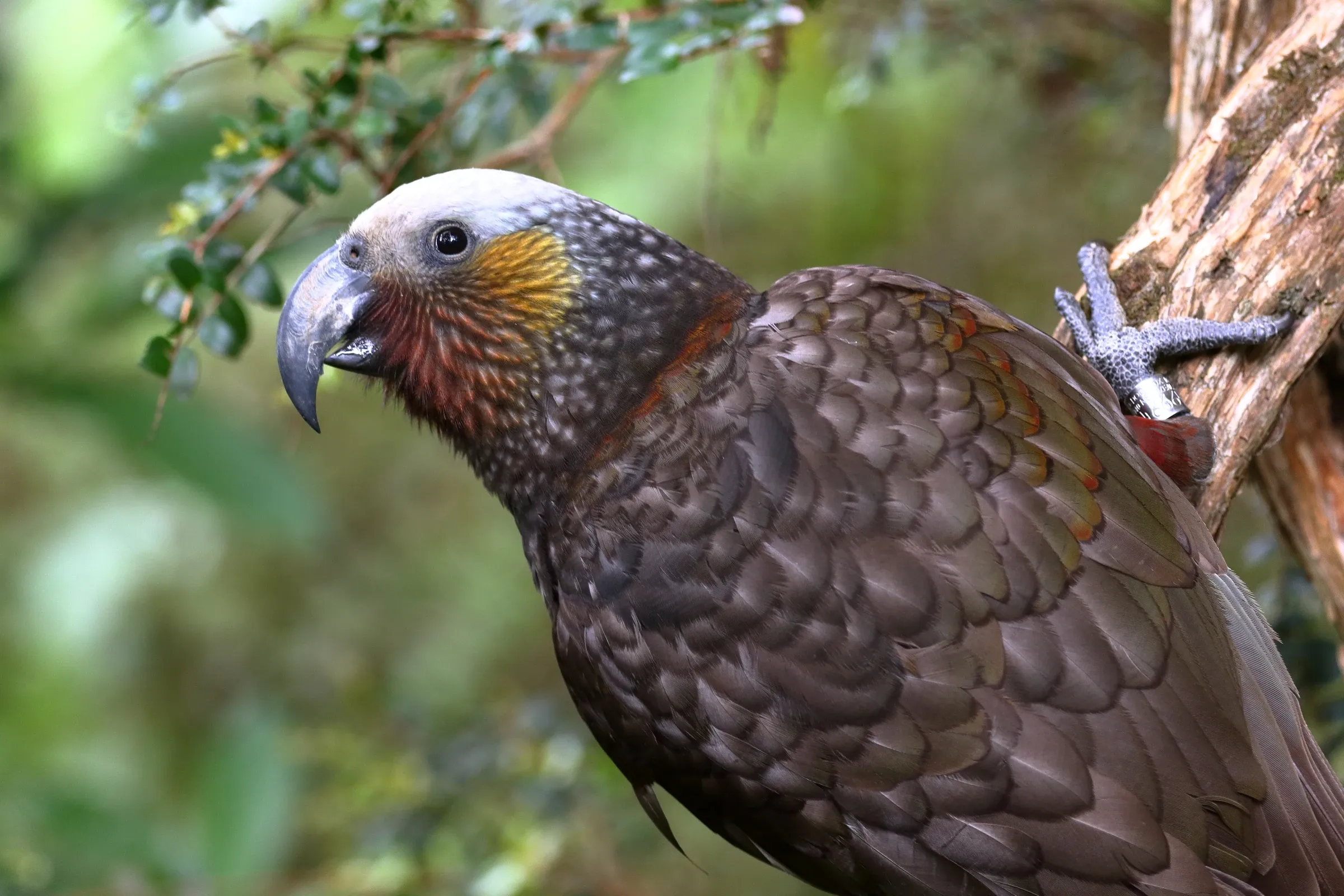 Real photograph
 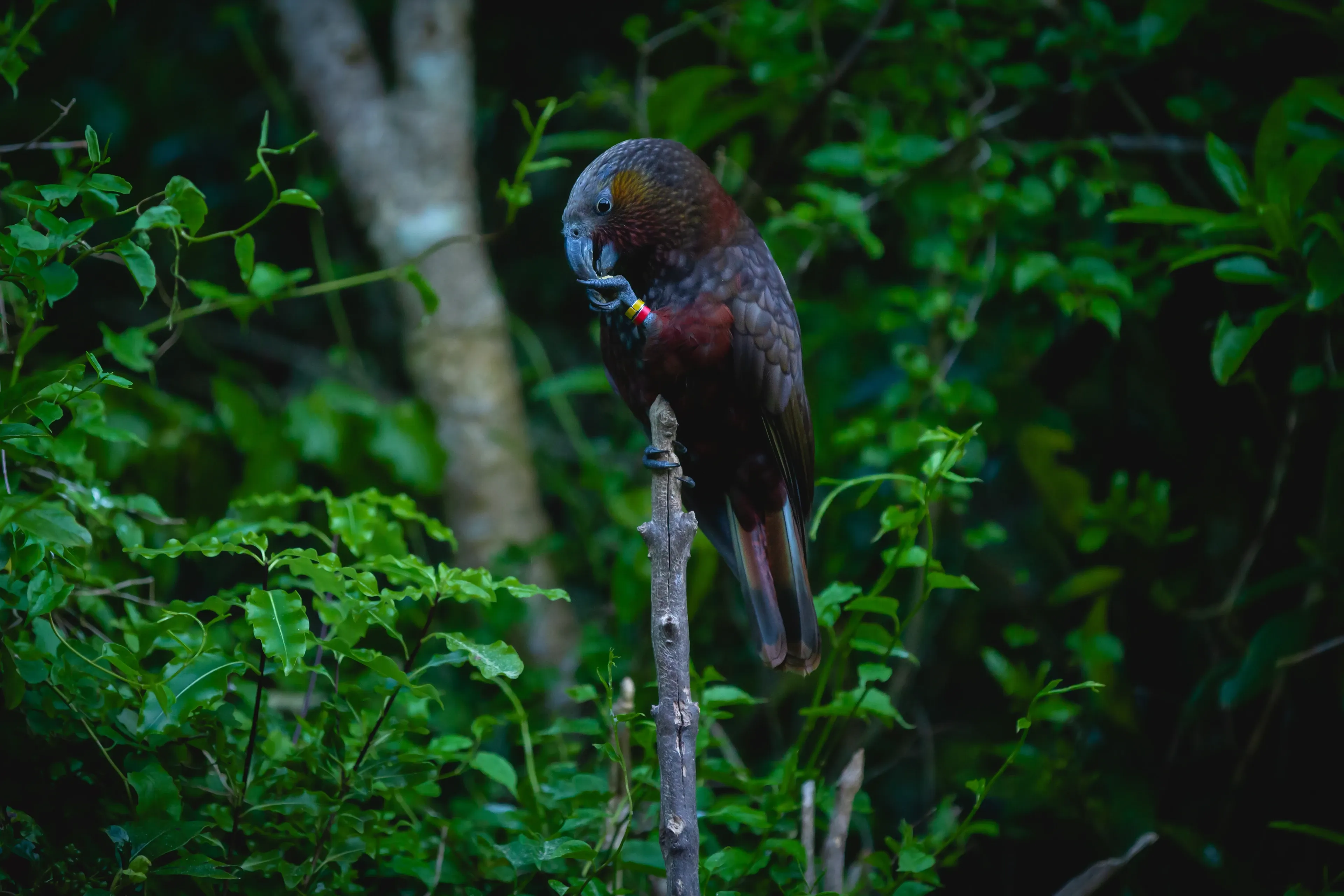 Real photograph
 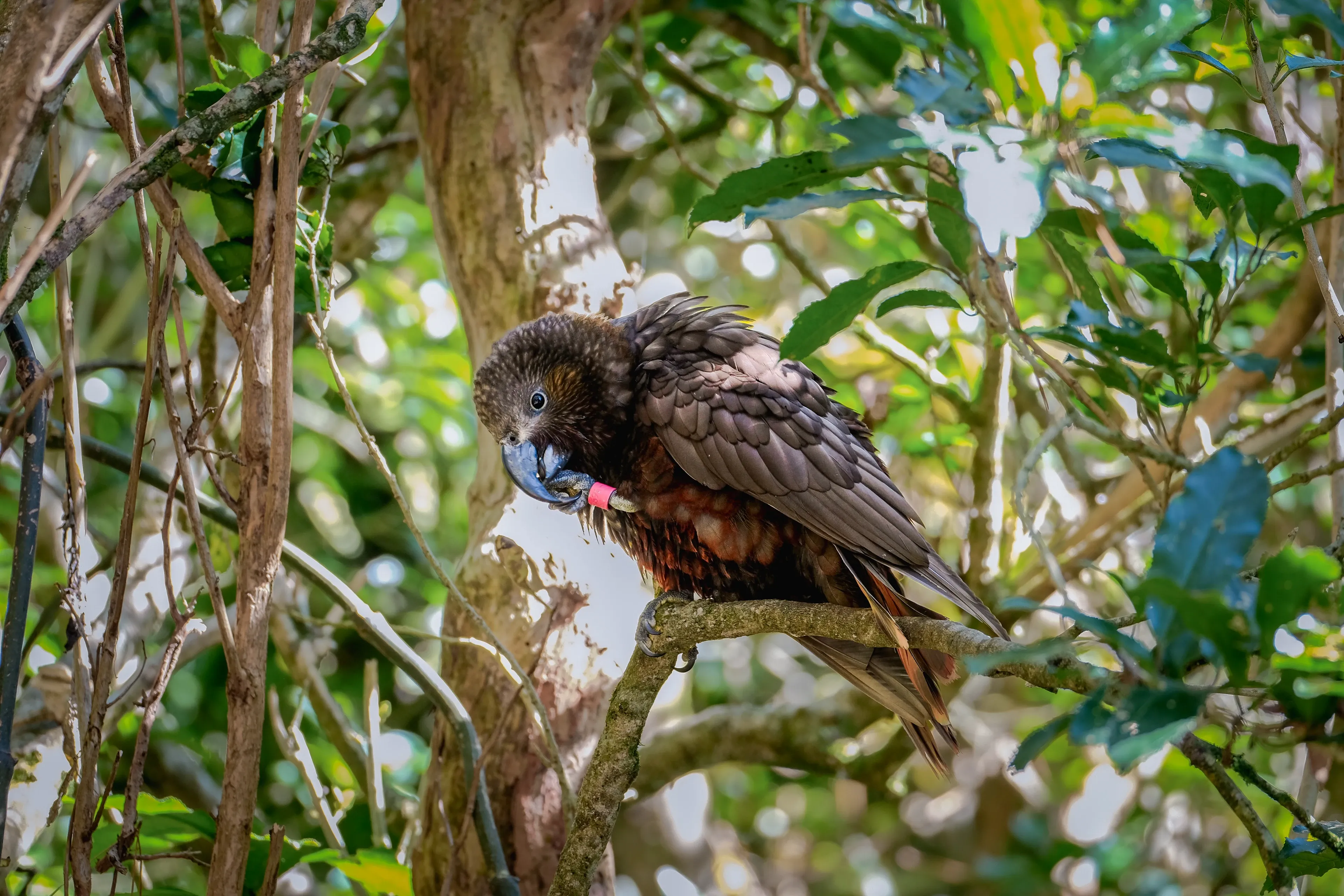 Real photograph
 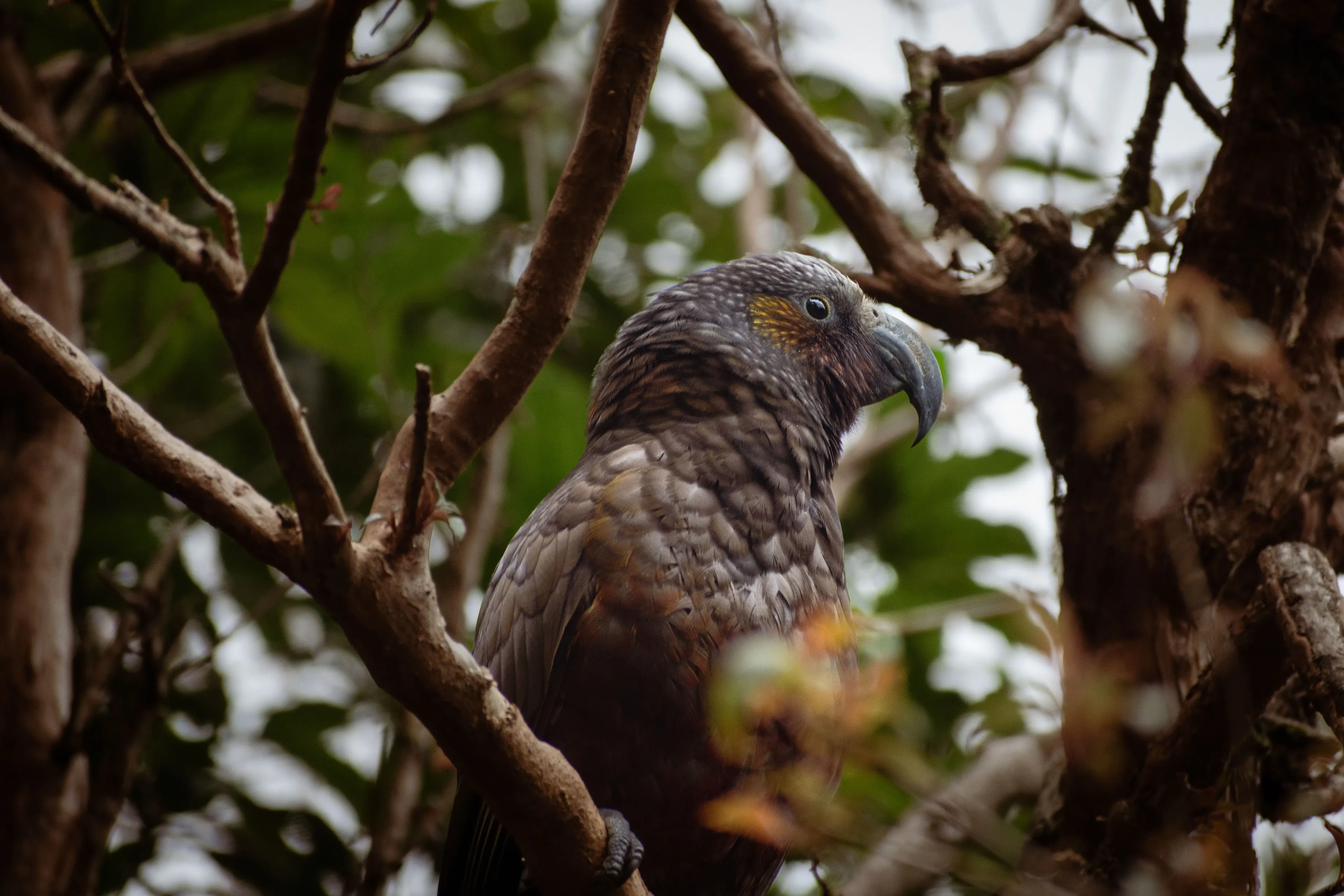 Real photograph
 Why we love them
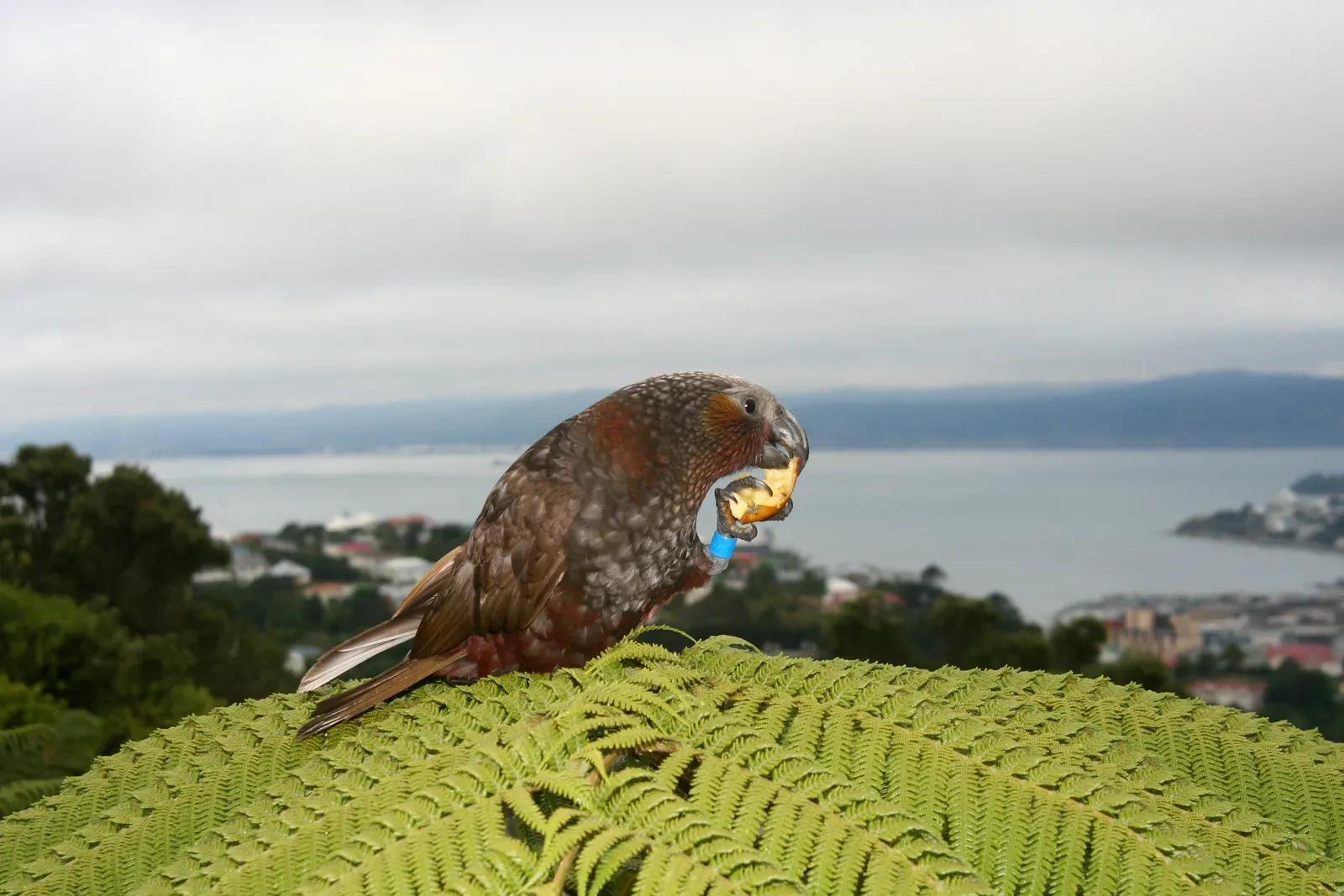
The kākā is a large, chatty forest parrot that lives in the green native forests of Aotearoa New Zealand. It has olive-brown feathers on top, but hidden under its wings are beautiful flashes of red and orange. Kākā love to call out to each other as they swoop between the treetops, filling the forest with their noisy, cheerful chatter.
The kākā has a clever secret inside its beak: a brush-tipped tongue that works almost like a tiny paintbrush. It uses this special tongue to lap up sweet nectar from flowers, sticky sap from trees, and honeydew made by little insects. These sugary treats give the kākā lots of energy for a busy day of flying and climbing through the forest.
When it eats, the kākā often stands on one foot and uses the other foot like a hand to hold its food. With its strong, hooked beak it can shred tough seed cones and dig deep into old wood to pull out plump grubs. Being an omnivore, the kākā happily eats fruit, berries, seeds, and insects, trying almost anything it can find.
The kākā is found only in Aotearoa New Zealand and nowhere else on Earth. It is a close cousin of the kea, the cheeky parrot that lives high in the snowy mountains. While the kea likes the cold peaks, the kākā prefers the leafy lowland forests, where it can climb, feed, and raise its chicks in the shelter of the trees.
Sadly, the kākā is a vulnerable bird, because animals like cats, rats, and possums that were brought to Aotearoa New Zealand hunt them and their eggs. The good news is that people are helping. In protected sanctuaries and on safe islands, kākā numbers are slowly climbing again, and the friendly squawk of the kākā is returning to forests where it had gone quiet.
My home
Lowland forest, native forest, mid altitude forest
Where I live
Oceania
What I eat
Fruit, berries, seeds, nectar, sap, insects
How long I am
0.38–0.44 m
How heavy I am
0.34–0.4 kg
The kākā has a special brush-tipped tongue, a bit like a tiny paintbrush, that it uses to lap up sweet nectar, sap, and honeydew.
Like other parrots, the kākā uses one foot like a hand to hold its food, and its strong hooked beak to dig juicy grubs out of old wood.
The kākā lives only in Aotearoa New Zealand and nowhere else in the world, and it is a close cousin of the mountain-loving kea.
Every kākā can feel happy, scared and loved — just like you.
Looking after my friends
How many are there?
New Zealand's Department of Conservation estimated about 2,650 kākā in the Waipapa Ecological Area in 2020.
This is one important local population, not all kākā in New Zealand.
Estimate source: Kākā at Waipapa 2000–2020
How are they doing?
VulnerableThis species has a high risk of extinction in the wild unless the pressures on it improve.
You can help by learning their names, keeping wild places clean, and telling someone why this animal matters.
Where this came from
- Nestor meridionalis (New Zealand Kaka) — Red List Assessment — IUCN Red List of Threatened Species / BirdLife International (Red List Authority for birds)
- Kākā | Kaka — Nestor meridionalis — New Zealand Birds Online (Te Papa / Ornithological Society of New Zealand)
- Kākā — Wikipedia
- Kākā at Waipapa 2000–2020 — New Zealand Department of Conservation