Today's animal friend · 6 September 2026
The Tiny Neighbour with the Giant Chirp
From dusty baths to caterpillar deliveries, this cheerful neighbour has a surprising story to tell.
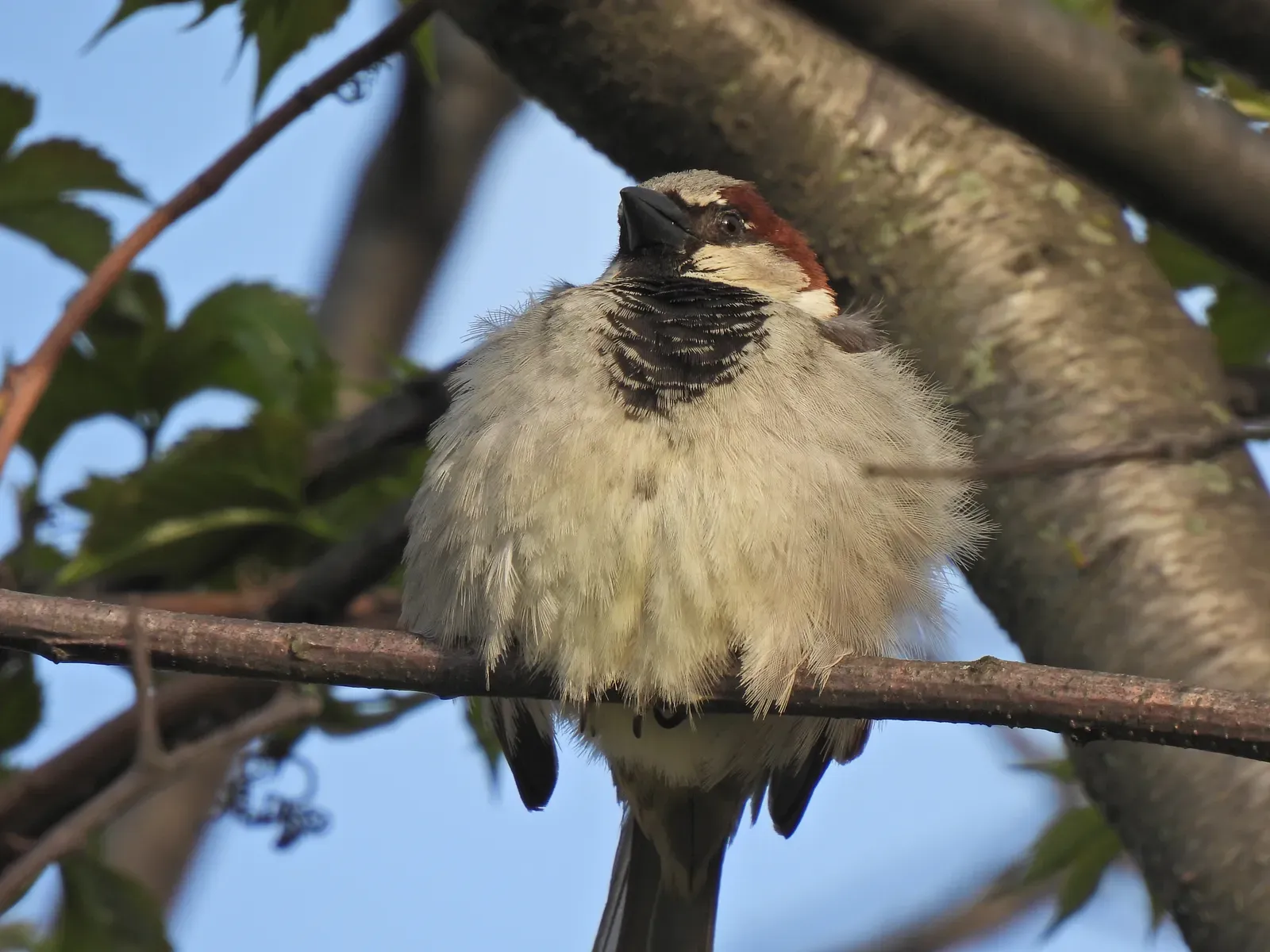
From dusty baths to caterpillar deliveries, this cheerful neighbour has a surprising story to tell.
Listen—there’s a whole neighbourhood in that hedge!
A burst of chirps rattles from the fence like a pocketful of tiny bells. One house sparrow hops across the path, then another appears, then three more—until the garden seems to be having a noisy meeting without inviting us. Their feathers are brown and grey, the colours of tree bark, toast crusts, and city pavement. Yet once you notice them, they are very hard to un-notice.
The house sparrow is called Passer domesticus by scientists. It is a small bird, about 14 to 18 centimetres long: shorter than a school ruler. But it has an enormous talent for living beside people. Towns, cities, farms, gardens, and other human settlements can all become sparrow country.
Here is the leaning-in-close fact: the house sparrow is among the world’s most widely distributed wild birds. It lives near people on almost every continent except Antarctica. No tiny chirping bird has set up home with humans quite so widely. Imagine being small enough to sit in two cupped hands, yet having relatives in places spread around the planet!
Evidence: IUCN Red List of Threatened Species / BirdLife International (Red List Authority for birds): Passer domesticus (House Sparrow) — Red List Assessment; Animal Diversity Web, University of Michigan Museum of Zoology: Passer domesticus (house sparrow); Wikipedia: House sparrow
A bird built for the busy bits of our world
House sparrows are daytime explorers. When the light comes up, they search for food in open, people-shaped places: a garden edge, a farmyard, a pavement beside a café, or the untidy corner where weeds have been allowed to grow. They do not need a faraway forest adventure to find a living. Their adventure is often right where ours is.
They are omnivores, which means their menu has more than one chapter. Adult sparrows eat seeds, grains, and weed seeds, and they may pick up crumbs. Their small, sturdy beaks are handy for this sort of pecking and crunching. A sparrow on the ground can look as if it is inspecting every speck with very serious detective skills.
But crumbs are not the whole story—and they are not the best food to depend on. Wild seeds and other natural foods matter. A garden with plants, seed heads, and a few wild corners can be more interesting to a sparrow than a perfectly scrubbed patch of ground. To a bird, “a little messy” can mean “a little wonderful.”
Evidence: Animal Diversity Web, University of Michigan Museum of Zoology: Passer domesticus (house sparrow); Wikipedia: House sparrow
The caterpillar parcel is for the babies
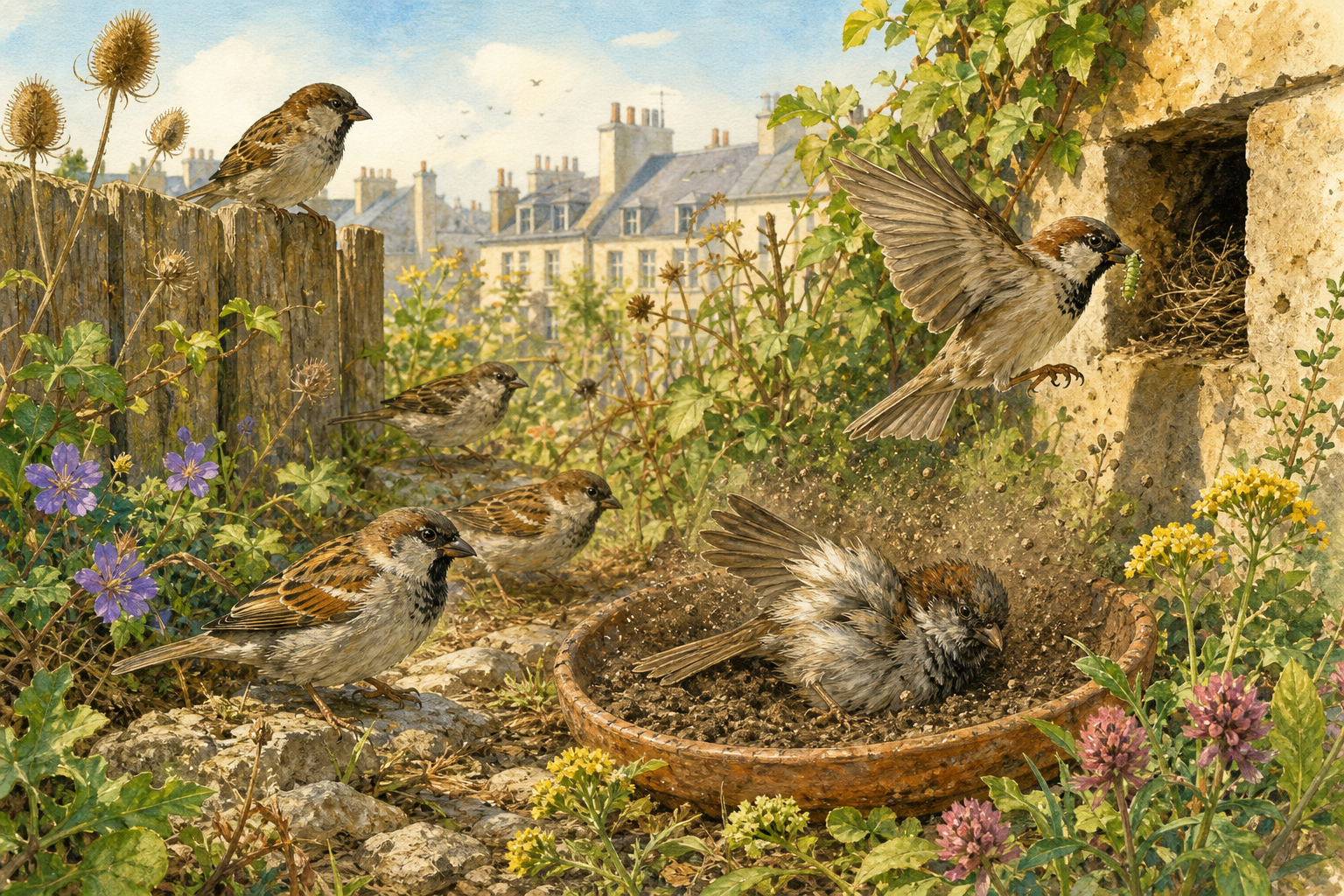
Why might a grown-up bird that enjoys seeds hurry home carrying an insect? Because hungry sparrow chicks need a different kind of meal. Parents feed their nestlings largely on soft insects, including caterpillars and beetles. A caterpillar is wriggly, not glamorous, and definitely not shaped like a takeaway pizza—but for a growing chick, it is important food.
Picture the nest as a very demanding nursery. Chicks gape with open beaks, and the adults make repeated food trips. The parents may be small, but their jobs are gigantic. This is one reason fewer insects can be a problem for sparrows in some places: fewer insects can mean less chick food.
So when you spot a caterpillar nibbling a leaf, it is easy to see only a leaf with holes in it. Look again. That little creature may be part of a bigger garden story—one that includes a chirping family tucked into a safe nesting spot nearby.
Evidence: Animal Diversity Web, University of Michigan Museum of Zoology: Passer domesticus (house sparrow); Wikipedia: House sparrow
Dust bath? Yes please!
After all that hopping and hunting, a house sparrow may suddenly crouch in dry soil and flick dust through its feathers. This is a dust bath. It can look as though the bird has decided to become a tiny, delighted puff of earth. Sparrows also take water baths. Clean-up time, sparrow style, is far more energetic than standing under a shower.
These birds are sociable. They often gather in flocks, calling and chirping together, and may nest in loose groups or clusters when suitable places are available. Their chatter is not just background noise. It is a sign that several small lives are sharing the same patch of the world.
Have you ever watched friends choose the same sunny bench at break time? Sparrows can give that same feeling: a group choosing a good place to eat, rest, or bathe. They remind us that a familiar place can still be full of secret dramas, arguments, reunions, and squeaky conversations.
Evidence: Animal Diversity Web, University of Michigan Museum of Zoology: Passer domesticus (house sparrow); Wikipedia: House sparrow
Why a common bird still needs caring neighbours
The house sparrow is listed by the IUCN as Least Concern globally, and its worldwide population is extremely large. That is encouraging news. Yet “common somewhere” does not mean “safe everywhere.” Numbers have been falling in many regions, including some towns and cities where people once expected sparrows to be everywhere.
Researchers and summaries point to several linked pressures in human-dominated places: fewer insects for chicks, fewer nooks for nests, and pesticide use. The exact mix can differ from place to place, so there is no single villain wearing a cartoon cape. Still, the message is clear: a bird that lives close to us is affected by the choices we make close to home.
Hope can be practical. Wild, insect-friendly edges in gardens and on farmland can help keep food around for chicks. Suitable nesting opportunities can matter too. If your family wants to put up a sparrow nest box or change a garden, ask a knowledgeable local wildlife group or trusted adult what suits your area. The kindest plan is one that helps local wildlife without troubling the neighbours already there.
Next time you hear a sparrow’s sharp little chirp, try thinking of it as a greeting from a fellow resident. It has made a life alongside people for a very long time. We can make room for its dust baths, its caterpillar errands, and its wonderfully rowdy flock songs.
Evidence: IUCN Red List of Threatened Species / BirdLife International (Red List Authority for birds): Passer domesticus (House Sparrow) — Red List Assessment; Animal Diversity Web, University of Michigan Museum of Zoology: Passer domesticus (house sparrow); Wikipedia: House sparrow
A gentle choice that reaches beyond the garden
Caring about a sparrow can begin with caring about all the small lives around our food and gardens. Choosing more plants on our plates—such as vegetables, fruit, whole grains, pulses, nuts, and seeds—can be a tasty way to show that care. The World Health Organization includes these foods in varied healthy diets; food choices are personal, so children should talk with a trusted adult and health professional about what is right for them.
There is a planet-sized reason to be curious, too. The IPCC explains that shifts toward sustainable, healthy, more plant-based diets can reduce food-system emissions and pressure on land and biodiversity. That does not require perfection. It can start with one cheerful plant-based meal, a new bean recipe, or noticing how a patch of flowers and insects helps a hungry sparrow family. Kind choices can be small—and still travel far.
Evidence: World Health Organization: Healthy diet; Intergovernmental Panel on Climate Change: Climate Change 2022: Mitigation of Climate Change — Chapter 7
Questions people ask
Is every little brown bird a house sparrow?
No. Many birds are small and brown, including other sparrow species. A house sparrow is specifically Passer domesticus, a member of the Passeridae family. Looking carefully, rather than guessing fast, is part of the fun.
Evidence: Animal Diversity Web, University of Michigan Museum of Zoology: Passer domesticus (house sparrow); Wikipedia: House sparrow
Why do house sparrows live so close to people?
They are strongly associated with human settlements and are highly adaptable there. Gardens, farms, towns, and cities can offer places to forage and nest.
Evidence: Animal Diversity Web, University of Michigan Museum of Zoology: Passer domesticus (house sparrow); Wikipedia: House sparrow
Can I help by leaving food outside?
A more lasting kindness is to help make outdoor spaces welcoming: natural seed sources, insect-rich planting, and safe nesting opportunities can support sparrows. Ask a trusted adult or local wildlife group for advice that fits your area.
Evidence: Animal Diversity Web, University of Michigan Museum of Zoology: Passer domesticus (house sparrow); Wikipedia: House sparrow
Read the evidence
Sources behind this story
- Passer domesticus (House Sparrow) — Red List Assessment — IUCN Red List of Threatened Species / BirdLife International (Red List Authority for birds)
- Passer domesticus (house sparrow) — Animal Diversity Web, University of Michigan Museum of Zoology
- House sparrow — Wikipedia
- Healthy diet — World Health Organization
- Climate Change 2022: Mitigation of Climate Change — Chapter 7 — Intergovernmental Panel on Climate Change
Health information is general education, not personal medical advice. Young readers should make food choices with a trusted adult and qualified health professional.