Today's animal friend · 15 August 2026
The Great Tit and the Milk-Bottle Mystery
A great tit may be small enough to fit along the length of a pencil, but its curiosity can fill a whole park.
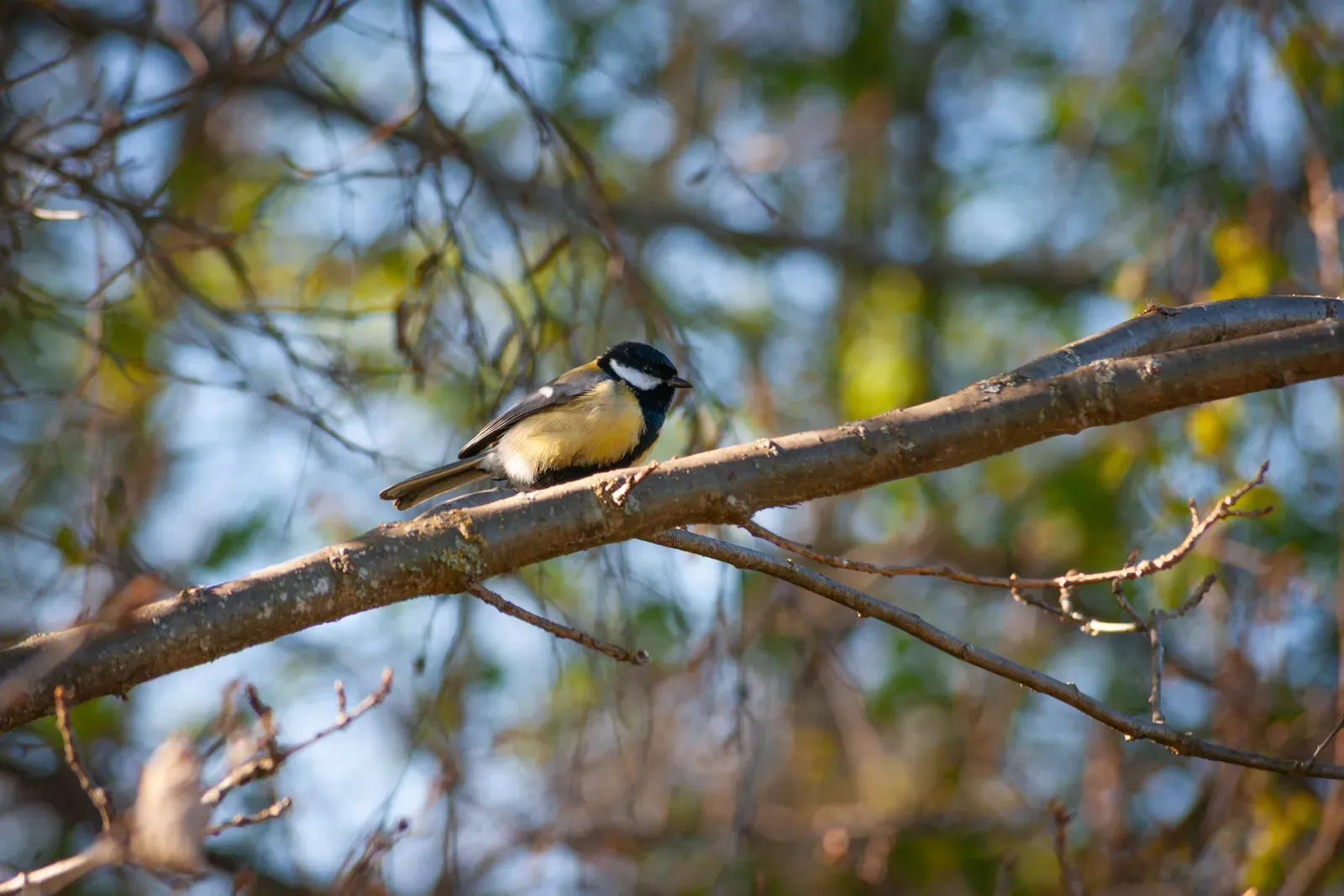
A great tit may be small enough to fit along the length of a pencil, but its curiosity can fill a whole park.
A tiny detective on the doorstep
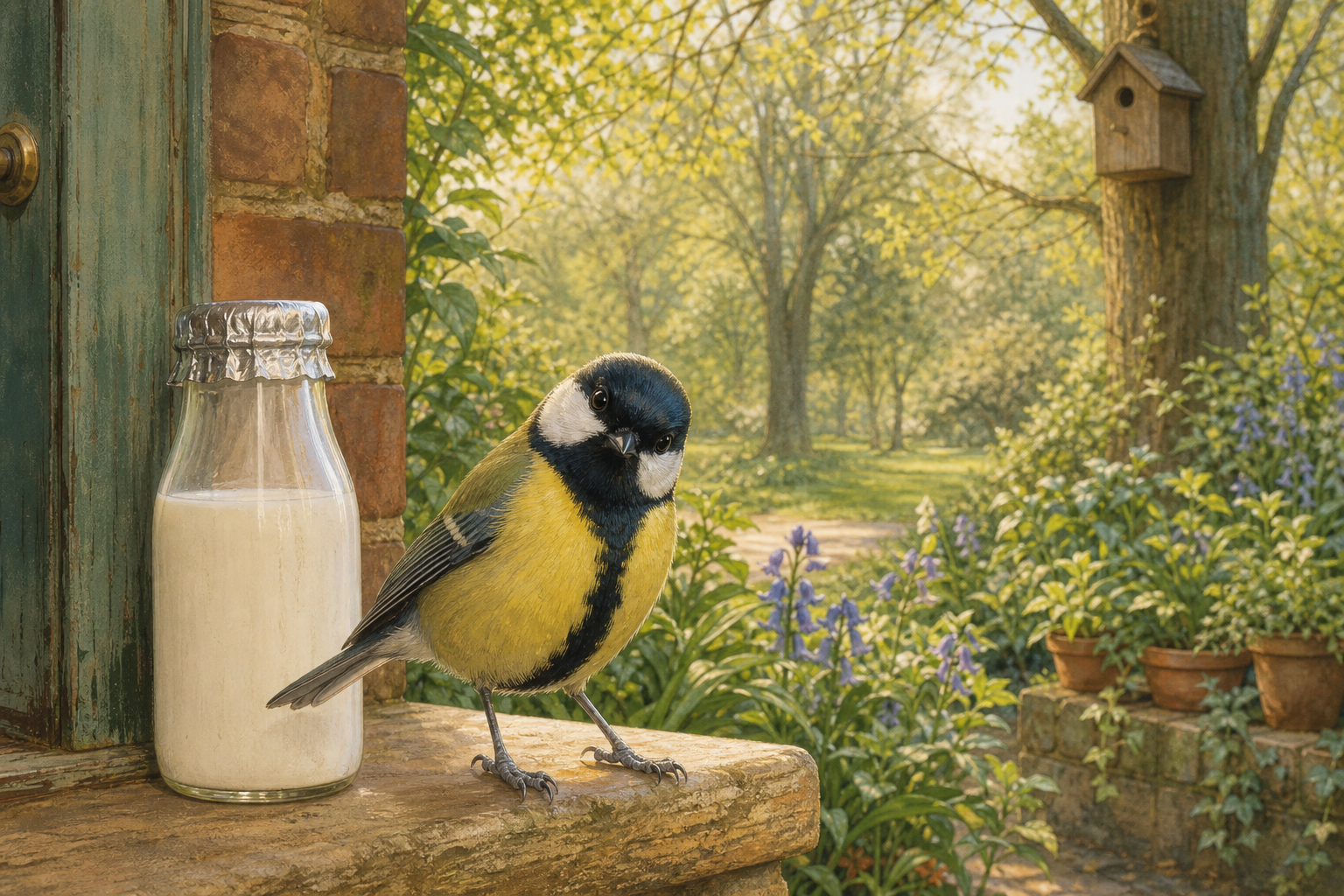
Imagine an old-fashioned morning in Britain: glass milk bottles are waiting on doorsteps, each sealed with a shiny foil lid. Along hops a great tit. It tilts its black-and-white head, pecks at the foil, and reaches the creamy top beneath. That sounds like a tale invented by someone who really likes breakfast, but it happened. Great tits learned this clever trick, and it spread from bird to bird.
This is the great tit, or Parus major: a small bird with the confidence of a much larger one. It is only about 12.5–14 centimetres long—roughly the length of a pencil—but it can turn an ordinary garden into a puzzle-solving playground. When you spot one, pause for a moment. What has caught its attention: a leaf, a crack in bark, a feeder, or perhaps a mystery snack?
Evidence: IUCN Red List of Threatened Species / BirdLife International (Red List Authority for birds): Parus major (Great Tit) — Red List Assessment; Animal Diversity Web, University of Michigan Museum of Zoology: Parus major (great tit); Wikipedia: Great tit
How to recognise a bird in a smart little suit
A great tit is dressed for easy spotting. Its head is black, its cheeks are bright white, and its chest is lemon yellow. Down the middle runs a bold black stripe, like it has zipped up a tiny jacket. Females have softer-looking colours and a narrower stripe than males, but both have that wonderful white-cheeked face.
They are birds of the daytime, so a walk to a park, a garden, or the edge of a wood gives you a chance to look. Great tits live in deciduous woodland and mixed forest, but they also make themselves at home in parks and gardens. They are found widely across Europe, parts of North Africa, the Middle East, and Central Asia. A big world, yet a small bird can make it feel close when it lands on a nearby branch.
Evidence: IUCN Red List of Threatened Species / BirdLife International (Red List Authority for birds): Parus major (Great Tit) — Red List Assessment; Animal Diversity Web, University of Michigan Museum of Zoology: Parus major (great tit); Wikipedia: Great tit
What is it doing in that tree? Hunting lunch
Great tits do not sit still for long. They search among leaves, twigs, and bark for insects, spiders, and especially caterpillars. Picture a feathered explorer checking every green tent flap in a jungle gym of branches. In summer, juicy caterpillars are especially important food for young birds.
When colder weather makes insects harder to find, great tits add seeds and nuts to the menu. That is why they may visit a garden feeder in winter. They are omnivores, meaning they eat both animal foods, such as insects and spiders, and plant foods, such as seeds and nuts.
Their caterpillar-hunting can matter beyond the tree. In one study in apple orchards, great tits reduced caterpillar damage by as much as about half. That does not mean every orchard will have exactly the same result. It does show how a little bird, simply following its appetite, can be part of a lively web connecting trees, insects, fruit, and people.
Evidence: IUCN Red List of Threatened Species / BirdLife International (Red List Authority for birds): Parus major (Great Tit) — Red List Assessment; Animal Diversity Web, University of Michigan Museum of Zoology: Parus major (great tit); Wikipedia: Great tit
Brainy beaks and pine-needle tools
Opening milk-bottle lids was not the only clever thing great tits have done. Some have been observed holding a pine needle in the beak and using it as a tool to poke for grubs in holes. A pine needle is not a sword or a magic wand. It is more like a very skinny snack-fetcher.
Why is that exciting? Because it reminds us that intelligence comes in many shapes. A great tit does not need hands to investigate a tricky place. It has sharp eyes, a nimble beak, and a determination that says, “There might be food in there, and I intend to find out.”
The milk-bottle story also gives us a friendly mystery to think about: how did the trick travel? The important evidence is that great tits learned to open the lids. Whether we watch a bird at a feeder or in a park, we can be careful not to assume it is doing nothing just because it is quiet. It may be studying the whole scene.
Evidence: IUCN Red List of Threatened Species / BirdLife International (Red List Authority for birds): Parus major (Great Tit) — Red List Assessment; Animal Diversity Web, University of Michigan Museum of Zoology: Parus major (great tit); Wikipedia: Great tit
Home can be a hole in a tree—or a nest box
During breeding time, great tits nest as pairs in holes in trees. They can also use wooden nest boxes. A nest box is a little like a weatherproof bedroom built into a garden, but it is still the bird’s space, not a toy or a house to peek into every day.
Outside the breeding season, great tits can join mixed flocks with other birds. Imagine several kinds of feathered neighbours moving through the trees together, each searching in its own way. A walk in a winter park can become a game of noticing: which bird has white cheeks? Which one is tapping, hopping, or flicking through the branches?
If your family wants to welcome birds, a nest box and suitable winter seeds or nuts can offer useful places to nest and forage. The kindest way to be a bird neighbour is to watch from a respectful distance, leave nests undisturbed, and let every visitor choose its own pace.
Evidence: Wikipedia: Great tit; Animal Diversity Web, University of Michigan Museum of Zoology: Parus major (great tit); IUCN Red List of Threatened Species / BirdLife International (Red List Authority for birds): Parus major (Great Tit) — Red List Assessment
Common does not mean “no need to care”
The great tit is listed as Least Concern on the IUCN Red List. It is widespread and common, and the reviewed sources describe it as well adapted to human-shaped places such as gardens and parks. That is cheerful news for anyone who loves seeing a flash of yellow near the window.
Still, “common” is not the same as “ordinary.” Every great tit is a busy animal with places to search, food to find, and a nest to protect. Parks, gardens, forest edges, and woodlands are more interesting when they have plenty of different plants and small creatures in them. Looking after nearby nature gives birds room to keep being themselves: puzzlers, hunters, parents, and unexpected doorstep detectives.
Next time you are outdoors, try the Great Tit Pause. Stand quietly for a minute and look at one tree from trunk to tip. You may not see a great tit every time. But you may notice how many hiding places, lunches, and adventures a tree can hold.
Evidence: IUCN Red List of Threatened Species / BirdLife International (Red List Authority for birds): Parus major (Great Tit) — Red List Assessment; Wikipedia: Great tit; Animal Diversity Web, University of Michigan Museum of Zoology: Parus major (great tit)
A kind choice that reaches beyond the garden
Watching a great tit hunt caterpillars can make us notice that every small creature is part of a bigger neighbourhood. We can practise kindness by enjoying wildlife without disturbing it, and by choosing meals that show care for animals and their homes too.
Plant-forward foods can be colourful and delicious: beans, lentils, vegetables, fruit, whole grains, nuts, and seeds. The World Health Organization includes these foods in guidance about healthy diets, while reminding us that food needs are personal. If you are curious about changing what you eat, chat with a parent, carer, or qualified health professional rather than trying to figure it out alone.
Choosing more plant-based meals can also be a hopeful way to care for the planet. The IPCC reports that shifts toward sustainable, healthy, more plant-based diets can reduce food-system emissions and pressure on land and biodiversity. No one meal has to do all the work. A bean wrap, lentil soup, or seed-topped fruit snack can be one gentle vote for a world where great tits—and all their tiny neighbours—have room to thrive.
Evidence: World Health Organization: Healthy diet; Intergovernmental Panel on Climate Change: Climate Change 2022: Mitigation of Climate Change — Chapter 7; Wikipedia: Great tit
Questions people ask
Is a great tit really “great”?
Its name does not mean it is huge. A great tit is about 12.5–14 centimetres long. “Great” helps distinguish it from some smaller tit species, while its bold colours make it feel wonderfully noticeable for such a small bird.
Evidence: Wikipedia: Great tit; Animal Diversity Web, University of Michigan Museum of Zoology: Parus major (great tit)
What should I look for first?
Look for the white cheeks against a black head, then the lemon-yellow chest with a black stripe. Great tits often forage actively among leaves and twigs in gardens, parks, and wooded places during the day.
Evidence: Wikipedia: Great tit; IUCN Red List of Threatened Species / BirdLife International (Red List Authority for birds): Parus major (Great Tit) — Red List Assessment; Animal Diversity Web, University of Michigan Museum of Zoology: Parus major (great tit)
Do great tits eat only seeds from feeders?
No. Their food includes insects, spiders, and caterpillars, as well as seeds and nuts. In summer they are especially insect-focused; when insects are harder to find in autumn and winter, seeds and nuts become more useful.
Evidence: Wikipedia: Great tit; Animal Diversity Web, University of Michigan Museum of Zoology: Parus major (great tit); IUCN Red List of Threatened Species / BirdLife International (Red List Authority for birds): Parus major (Great Tit) — Red List Assessment
Read the evidence
Sources behind this story
- Parus major (Great Tit) — Red List Assessment — IUCN Red List of Threatened Species / BirdLife International (Red List Authority for birds)
- Parus major (great tit) — Animal Diversity Web, University of Michigan Museum of Zoology
- Great tit — Wikipedia
- Healthy diet — World Health Organization
- Climate Change 2022: Mitigation of Climate Change — Chapter 7 — Intergovernmental Panel on Climate Change
Health information is general education, not personal medical advice. Young readers should make food choices with a trusted adult and qualified health professional.