 ← All animals
 bird · Parus major
Great Tit
Gallery
5 photos Real photograph 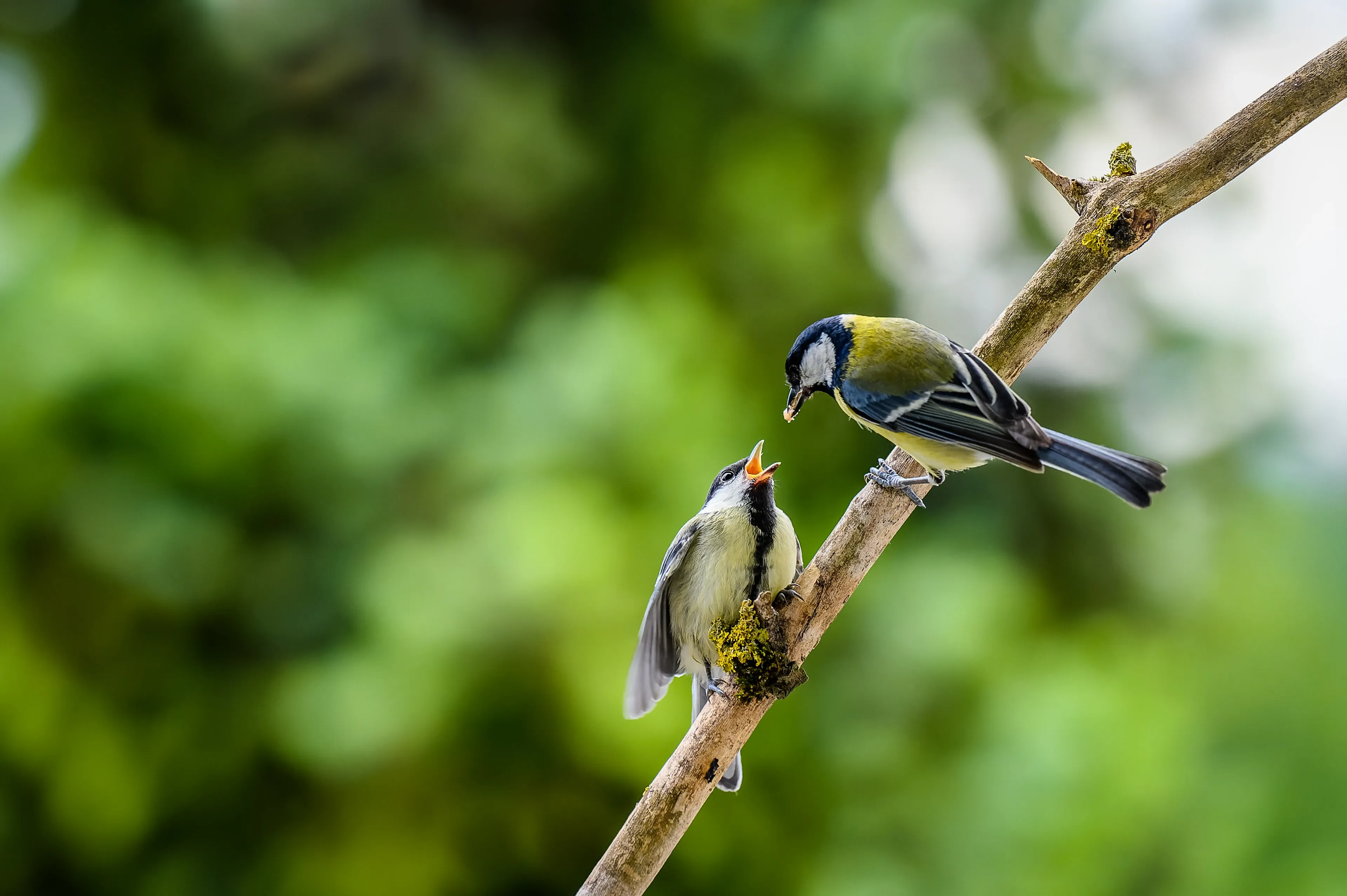 Real photograph
  Real photograph
  Real photograph
  Real photograph
 Why we love them
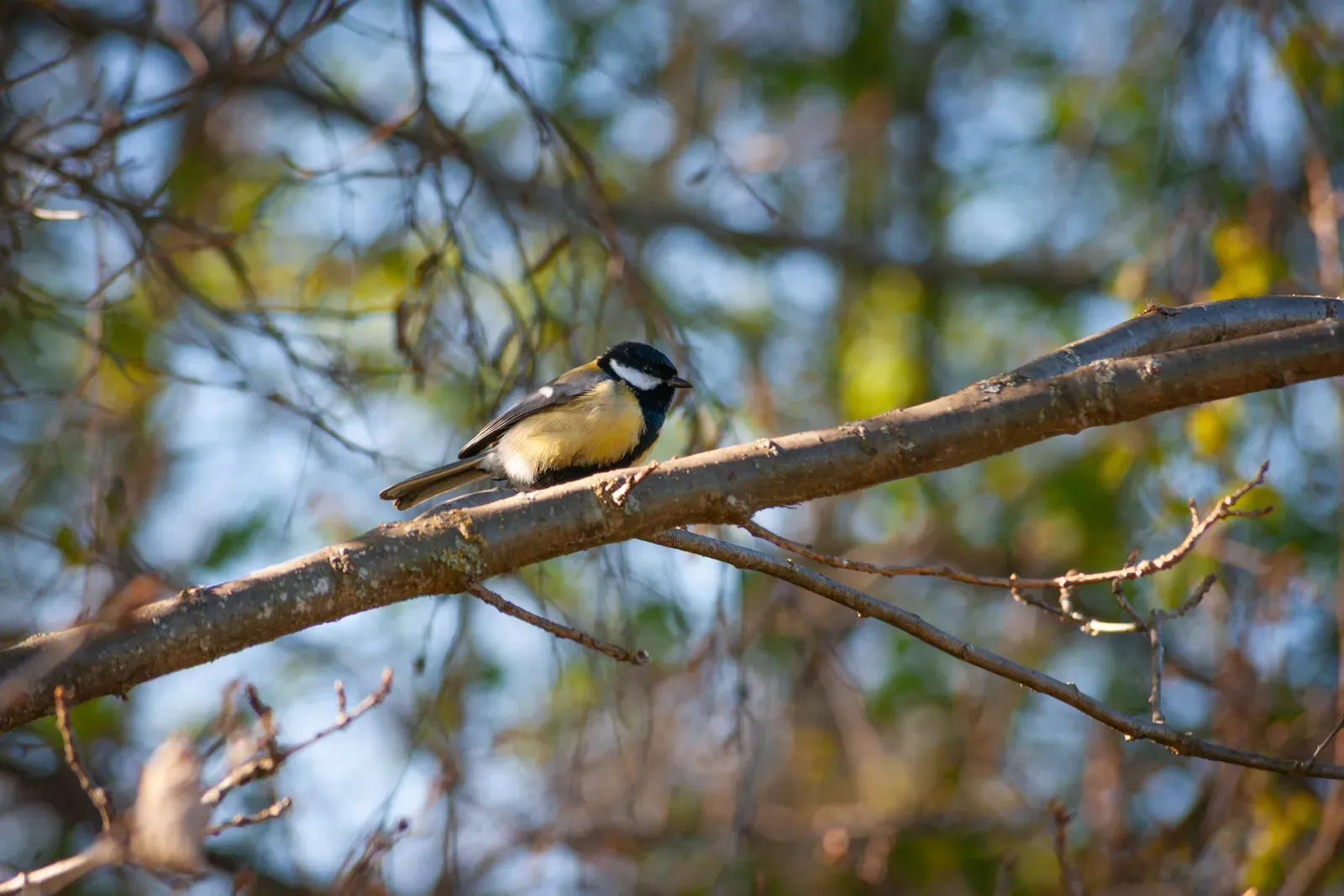
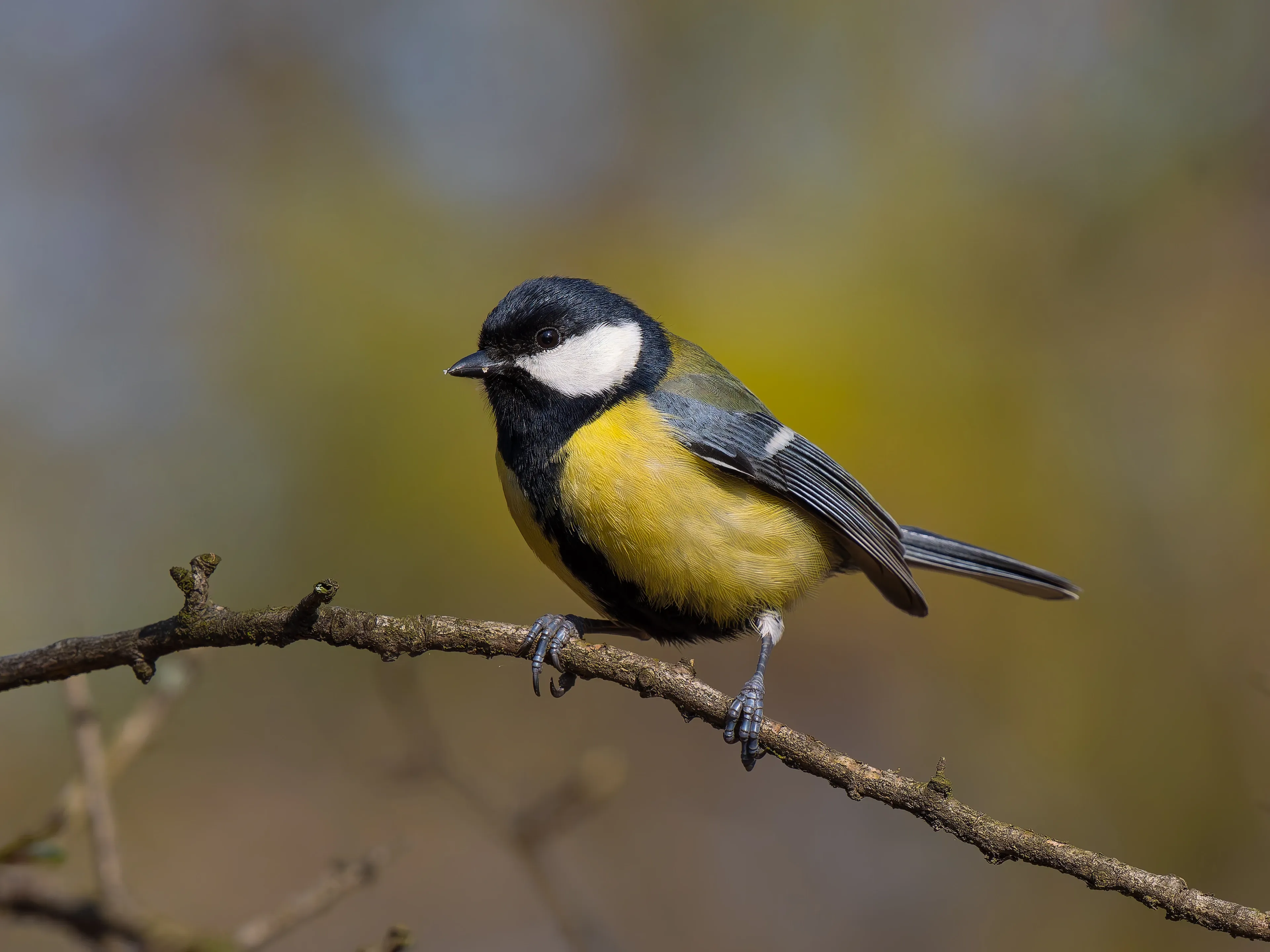
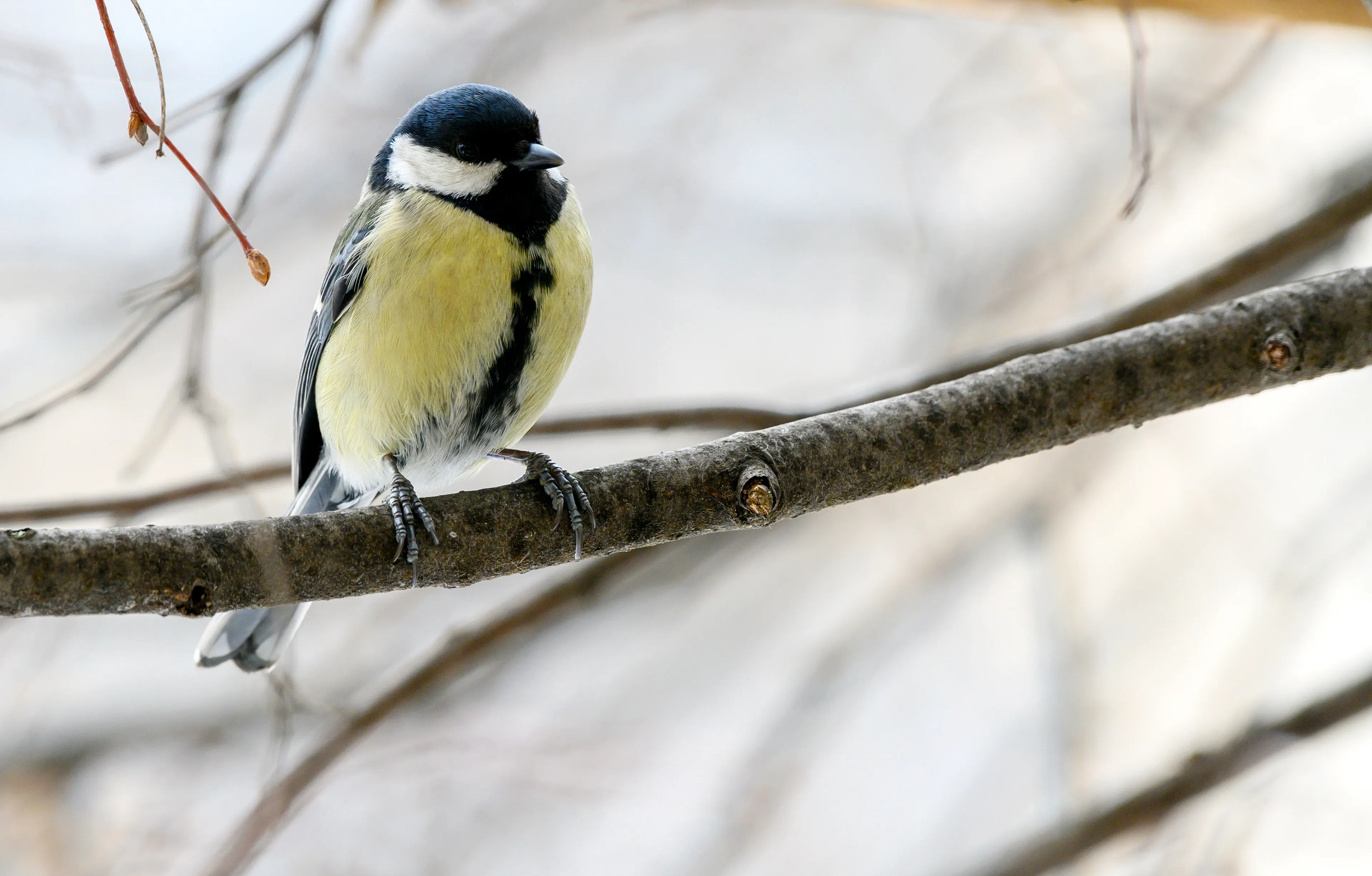
The great tit is a bright, bouncy little bird that is easy to recognise once you know what to look for. It has a smart black head with round white cheeks, and a sunny lemon-yellow chest with a bold black stripe running down the middle. Males and females look alike, though the female's colours are a touch softer and her belly stripe is thinner.
Although they are small, great tits are famously clever. Long ago in Britain, when milk was left on doorsteps in bottles with foil lids, great tits learned to peck the lids open and sip the creamy top. The trick spread from bird to bird across the country. Scientists have even watched great tits use a pine needle held in the beak as a little tool to poke grubs out of holes.
Great tits are hungry insect-hunters. They flit through leaves and twigs, snapping up caterpillars, spiders, beetles, and flies, and they feed juicy caterpillars to their chicks. In winter, when insects are hard to find, they switch to seeds and nuts, which makes them regular, welcome visitors at garden bird feeders.
Because they eat so many caterpillars, great tits are helpful friends to fruit growers. In one apple orchard study, the birds reduced caterpillar damage by about half. They also nest happily in holes in trees and in wooden nest boxes, which is why so many people put boxes up for them.
The great tit lives across Europe, parts of North Africa, the Middle East, and much of Asia, in woodlands, parks, and gardens. It is common and widespread, and listed as Least Concern. Putting up a nest box and offering seeds in winter is a simple way to help these lively birds thrive close to home.
My home
Deciduous woodland, mixed forest, forest edge, gardens, parks
Where I live
Africa, Asia, Europe
What I eat
Insects, spiders, caterpillars, seeds, nuts
How long I am
0.125–0.14 m
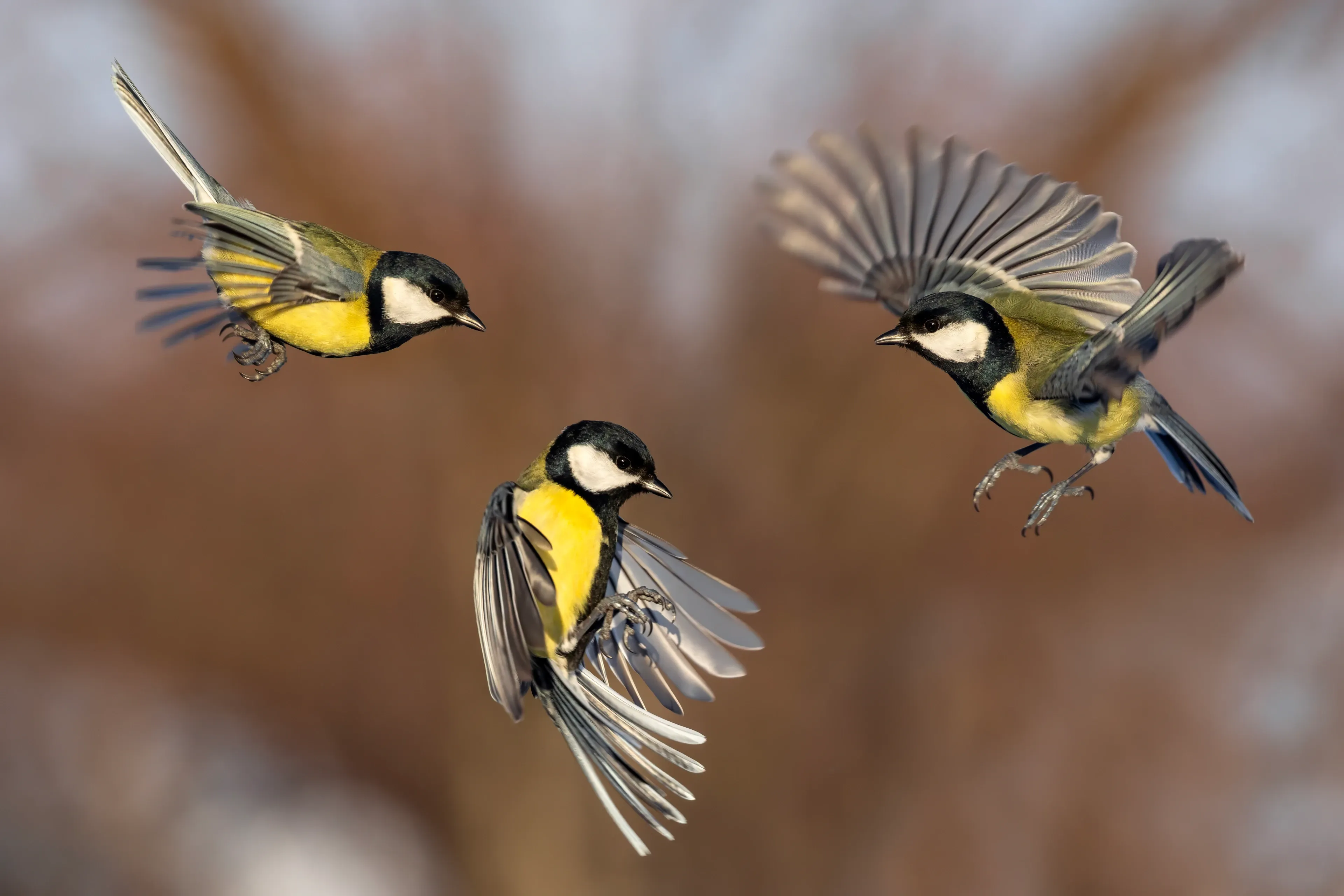
The great tit has a black head with white cheeks and a lemon-yellow chest crossed by a bold black stripe, and females look a little duller than males.
Great tits are clever problem-solvers — in Britain they learned to peck open the foil lids of doorstep milk bottles to reach the cream, and some even use pine needles as tools.
These busy little birds gobble up caterpillars and other insects, and in one study they cut caterpillar damage in apple orchards by as much as half.
Every great tit can feel happy, scared and loved — just like you.
Looking after my friends
How many are there?
BirdLife estimates about 127–205 million grown-up great tits in Europe.
This is Europe's mature population, not the larger worldwide population.
Estimate source: European Red List of Birds 2021
How are they doing?
Lower extinction riskThis species has a lower global extinction risk right now. Local populations can still grow or shrink.
You can help by learning their names, keeping wild places clean, and telling someone why this animal matters.
Where this came from
- Parus major (Great Tit) — Red List Assessment — IUCN Red List of Threatened Species / BirdLife International (Red List Authority for birds)
- Parus major (great tit) — Animal Diversity Web, University of Michigan Museum of Zoology
- Great tit — Wikipedia
- European Red List of Birds 2021 — BirdLife International