Today's animal friend · 21 September 2026
The Robin Who Sings, “This Patch Is Mine!”
Follow the tiny European robin through a rustly garden and discover why its orange bib is more like a polite keep-out sign than a party outfit.
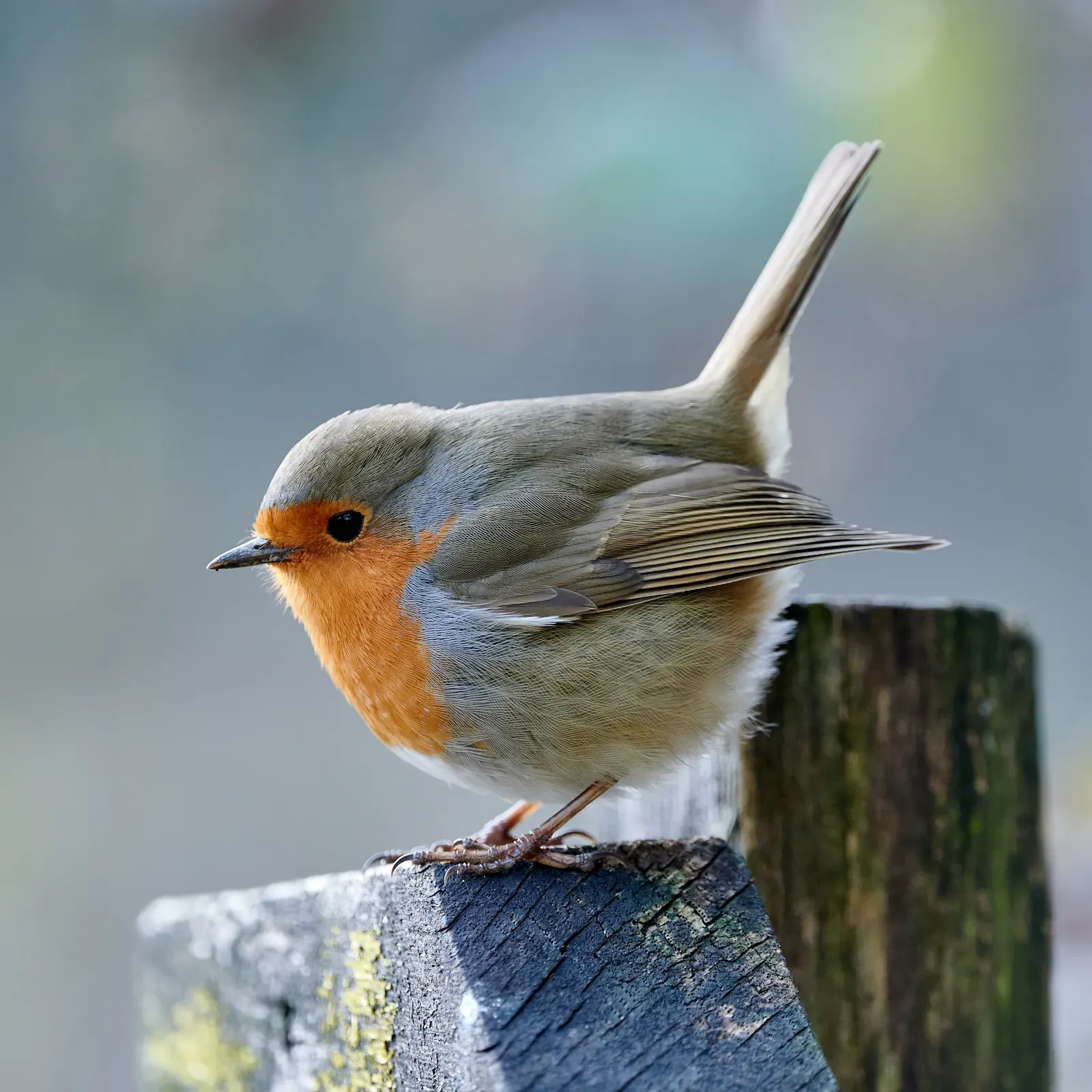
Follow the tiny European robin through a rustly garden and discover why its orange bib is more like a polite keep-out sign than a party outfit.
A tiny singer in the cold air
Imagine pulling on a coat for a chilly morning, when the garden is quiet except for one clear, bubbling song. There, on a low branch, sits a European robin, Erithacus rubecula. Its orange face and chest glow like a small autumn leaf against its brown back and pale tummy.
Here is the surprising bit: both male and female robins sing. They can sing through winter too, when many people expect birds to be tucked away and silent. A robin’s song is not only a tune for us to enjoy. It can help announce that its little feeding patch is already spoken for: “Hello! Robin living here!”
This is the European robin, sometimes called the robin or robin redbreast in the British Isles. It is not the same bird as the American robin, despite the shared nickname. Names can be mischievous that way—like two children in different schools both being called Sam.
Evidence: IUCN Red List of Threatened Species: Erithacus rubecula (European Robin) — Red List Assessment; Animal Diversity Web, University of Michigan Museum of Zoology: Erithacus rubecula (European robin); Wikipedia: European robin
Small enough to fit your imagination—and full of oomph
A European robin is about the length of a hand, roughly 12.5 to 14 centimetres from beak to tail. It weighs only around 16 to 22 grams: lighter than a small handful of coins. Yet this little bird has a mighty presence when it hops into view, tilts its head, and gives the garden a proper inspection.
Robins are day-active, so they do their searching, singing, hopping, and watching while the sun is up. Look carefully near the ground rather than only high in the trees. A robin often hunts on or close to the soil, where tasty wrigglers and crawlers may be hiding.
Its famous orange breast is useful, not merely fashionable. When another robin comes near a defended patch, the bright colour can be part of a warning. Add a song, a bold upright pose, and a puffed-looking chest, and the message is clear without anyone needing to shout. For much of the year, robins can be territorial, meaning they protect a place where they find food.
Evidence: IUCN Red List of Threatened Species: Erithacus rubecula (European Robin) — Red List Assessment; Animal Diversity Web, University of Michigan Museum of Zoology: Erithacus rubecula (European robin); Wikipedia: European robin
Why does a robin trail a gardener? Snack time!
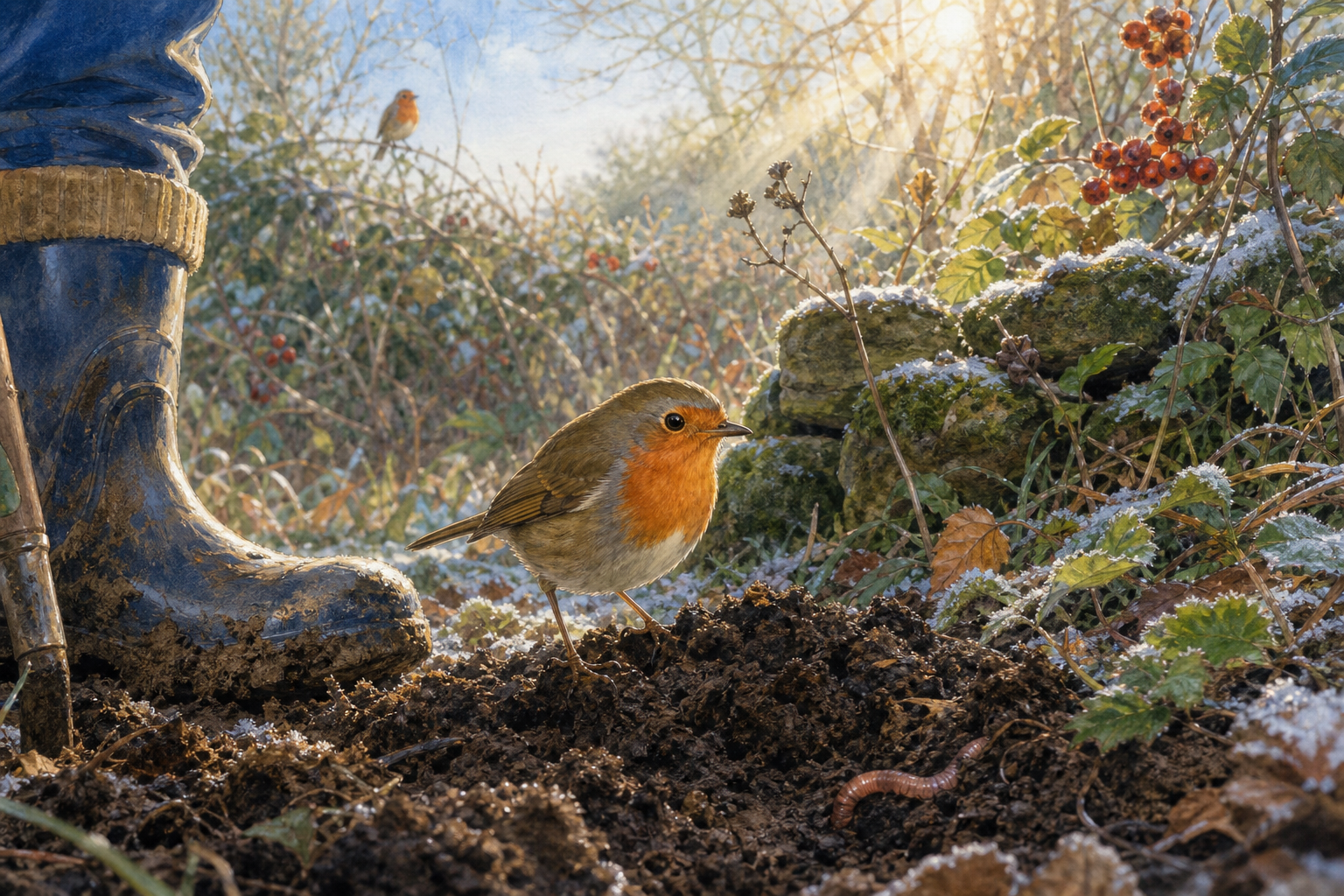
A spade turns the earth. A clump of soil tumbles over. Then—hop, hop—a robin may appear nearby. It is not checking whether the digging is neat. Freshly moved soil can reveal insects, earthworms, and spiders, which are all possible robin food. Clever timing!
European robins are omnivores. Much of their menu is made of small invertebrates, such as insects, worms, and spiders. When colder weather changes what is available, berries and seeds can also be important. A garden robin is not being a tiny best friend who wants to come indoors; it is a wild neighbour skilfully searching for supper.
That searching matters in the wider living world. Robins eat small ground creatures and seasonal fruit, while robins themselves can be food for other garden and woodland predators. Every creature is part of a busy set of connections, rather like one thread in a giant, living jumper. Pull away too many threads—such as places with healthy soil and shelter—and the whole pattern can become harder to hold together.
Evidence: IUCN Red List of Threatened Species: Erithacus rubecula (European Robin) — Red List Assessment; Animal Diversity Web, University of Michigan Museum of Zoology: Erithacus rubecula (European robin); Wikipedia: European robin
Where might you meet one?
The European robin lives across much of Europe, reaching east towards western Siberia and south to North Africa. It can be found in woodland, gardens, parks, and hedgerows—places with cover down low and ground where it can forage. A hedge may look like a leafy wall to us, but to a robin it can be shelter, a lookout, and a route through the neighbourhood.
Not every robin travels in the same way. Birds in western and southern parts of the range are often more settled, while robins farther north and east may migrate when winters are harsher. So the robin by a snowy path and the robin by a mild garden may lead rather different yearly lives.
If you want to be a patient robin-spotter, try standing still near shrubs or a hedge. Listen first. Then watch for a small bird making quick ground-level dashes, stopping to look around, and flashing that orange chest. The best wildlife-watching trick is wonderfully simple: become boring for a few minutes. No sudden arm windmills required.
Evidence: IUCN Red List of Threatened Species: Erithacus rubecula (European Robin) — Red List Assessment; Animal Diversity Web, University of Michigan Museum of Zoology: Erithacus rubecula (European robin); Wikipedia: European robin
A cheerful voice does not mean it needs nothing
Globally, the European robin is listed as Least Concern on the IUCN Red List. It has an extremely large range, its population is estimated in the hundreds of millions, and its overall trend is described as increasing. That is good news, and it means we can celebrate hearing robin song without pretending this bird is vanishing everywhere.
Still, “doing well globally” is not the same as “every robin has an easy life.” Hard winters can be difficult, and the loss of hedgerows or garden cover can make a local area less welcoming. A robin needs more than a pretty lawn. It needs shrubs, hedges, trees, quiet corners, and soil where it can search for food.
You can help make a place friendlier by valuing messy-looking nature: keep hedges and shrubs where possible, leave quiet cover, and avoid heavy pesticide use so the soil can stay rich in the small creatures robins eat. Ask an adult before changing anything in a garden or shared space. Even a small patch with shelter and lively soil can feel like a useful stop on a robin’s daily adventure.
Evidence: IUCN Red List of Threatened Species: Erithacus rubecula (European Robin) — Red List Assessment; Animal Diversity Web, University of Michigan Museum of Zoology: Erithacus rubecula (European robin); Wikipedia: European robin
The brave little neighbour lesson
It is easy to notice a robin because of its bright chest and bold song. But its real superpower may be attention. It listens for movement in the leaf litter, watches for turned soil, remembers a useful patch, and sings to make its presence known. All from a body lighter than a small handful of coins.
Next time you hear that clear garden song, try wondering: Is this robin guarding a snack-filled corner? Is it listening for an insect? Has a hedge helped it travel safely from one patch to another? Questions are a kind of wildlife magic. They turn an ordinary walk into a treasure hunt.
The robin does not need us to clap for it—though it would probably look very pleased if it did. What it needs is room for wild lives to continue: soil, cover, food, and people who notice that a small orange-chested bird is not a garden decoration. It is a neighbour with somewhere important to be.
Evidence: IUCN Red List of Threatened Species: Erithacus rubecula (European Robin) — Red List Assessment; Animal Diversity Web, University of Michigan Museum of Zoology: Erithacus rubecula (European robin); Wikipedia: European robin
A kind choice can start on your plate
Caring about a robin can make us notice how much a healthy patch of earth, a berrying shrub, and a living hedge matter. We can carry that caring spirit into everyday choices too. Meals built around vegetables, fruit, whole grains, pulses, nuts, and seeds can be colourful, filling, and full of possibilities—think bean chilli, lentil soup, or a seed-sprinkled salad shared with family.
Choosing more plant-based foods can be a gentle way to care about animals and the places they need. The World Health Organization includes plant foods such as vegetables, fruit, pulses, nuts, seeds, and whole grains in healthy dietary patterns, while the IPCC reports that shifts towards sustainable, healthy, more plant-based diets can reduce pressure from food systems on the climate, land, and biodiversity.
Nobody needs to be perfect, and children should make food choices with their trusted adults. Perhaps try one curious plant-powered recipe together and remember the robin: a small neighbour whose world is richer when the ground, plants, and other animals are allowed to flourish.
Evidence: World Health Organization: Healthy diet; Intergovernmental Panel on Climate Change: Climate Change 2022: Mitigation of Climate Change — Chapter 7
Questions people ask
Is a European robin the same as an American robin?
No. The European robin is Erithacus rubecula, a small bird in the Old World flycatcher family Muscicapidae. “Robin” is a name used for different birds in different places.
Evidence: IUCN Red List of Threatened Species: Erithacus rubecula (European Robin) — Red List Assessment; Animal Diversity Web, University of Michigan Museum of Zoology: Erithacus rubecula (European robin); Wikipedia: European robin
Why do robins sing in winter?
Robins may sing outside the breeding season because they defend feeding areas. Both males and females can sing, and a winter song can help tell other robins that a patch is occupied.
Evidence: IUCN Red List of Threatened Species: Erithacus rubecula (European Robin) — Red List Assessment; Animal Diversity Web, University of Michigan Museum of Zoology: Erithacus rubecula (European robin)
What does a European robin eat?
It eats small invertebrates including insects, earthworms, and spiders, and it also eats berries and seeds, especially when cold-weather food is useful.
Evidence: IUCN Red List of Threatened Species: Erithacus rubecula (European Robin) — Red List Assessment; Animal Diversity Web, University of Michigan Museum of Zoology: Erithacus rubecula (European robin); Wikipedia: European robin
Are European robins endangered?
No. The IUCN lists them as Least Concern, with a very large range and an increasing overall population trend. Local habitat still helps individual robins thrive.
Evidence: IUCN Red List of Threatened Species: Erithacus rubecula (European Robin) — Red List Assessment; Wikipedia: European robin
Read the evidence
Sources behind this story
- Erithacus rubecula (European Robin) — Red List Assessment — IUCN Red List of Threatened Species
- Erithacus rubecula (European robin) — Animal Diversity Web, University of Michigan Museum of Zoology
- European robin — Wikipedia
- Healthy diet — World Health Organization
- Climate Change 2022: Mitigation of Climate Change — Chapter 7 — Intergovernmental Panel on Climate Change
Health information is general education, not personal medical advice. Young readers should make food choices with a trusted adult and qualified health professional.