 ← All animals
 bird · Erithacus rubecula
European robin
Gallery
4 photos Real photograph 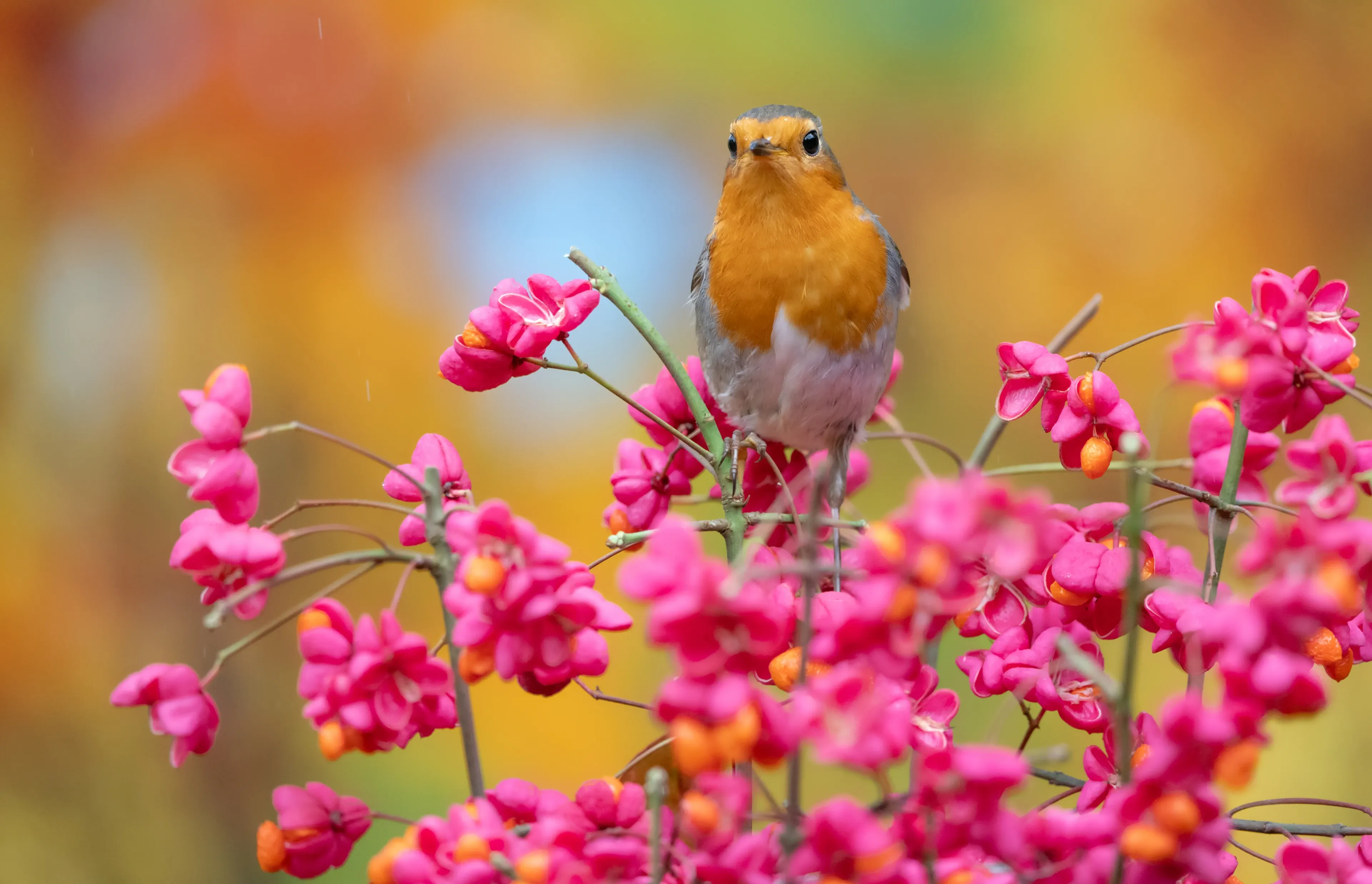 Real photograph
  Real photograph
  Real photograph
 Why we love them
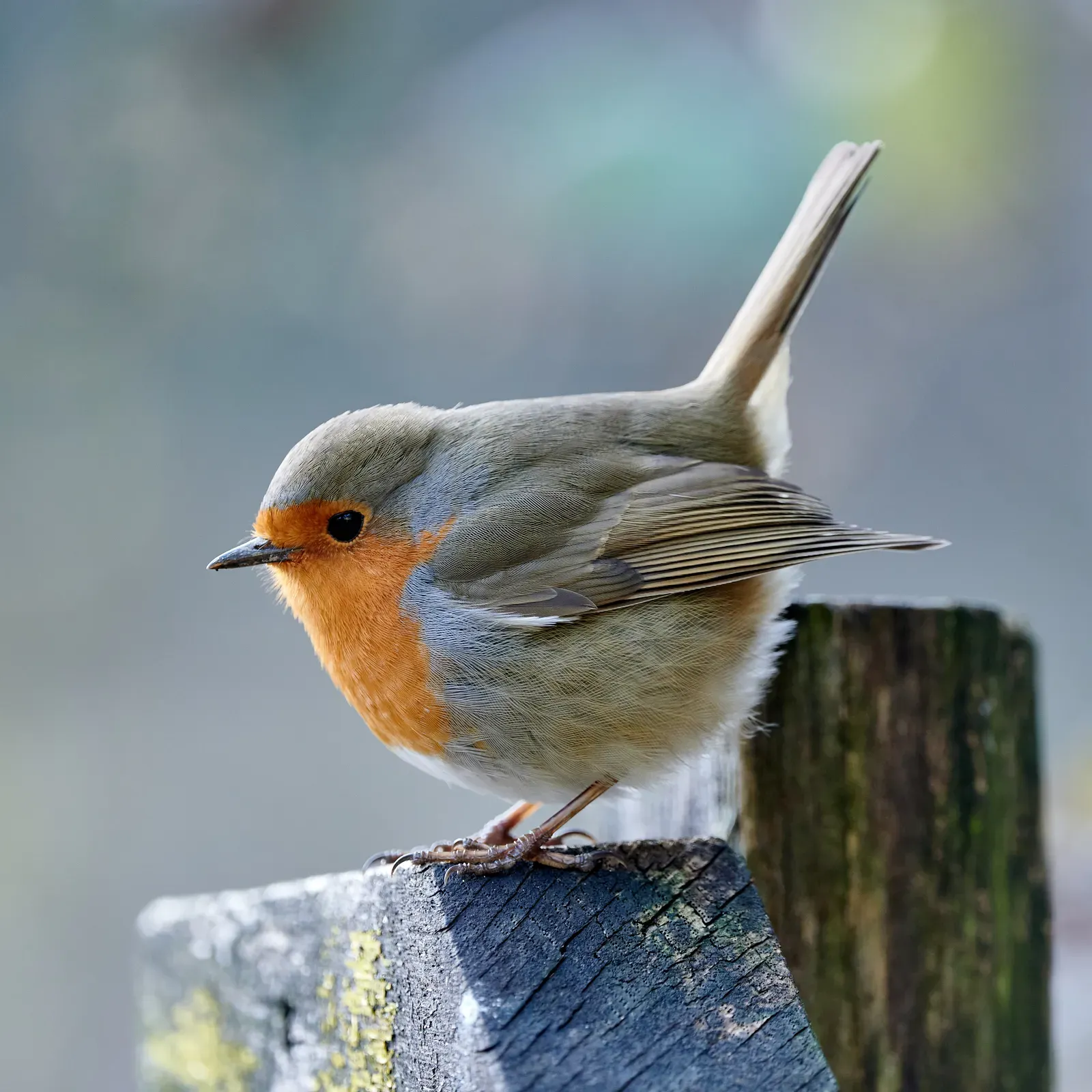
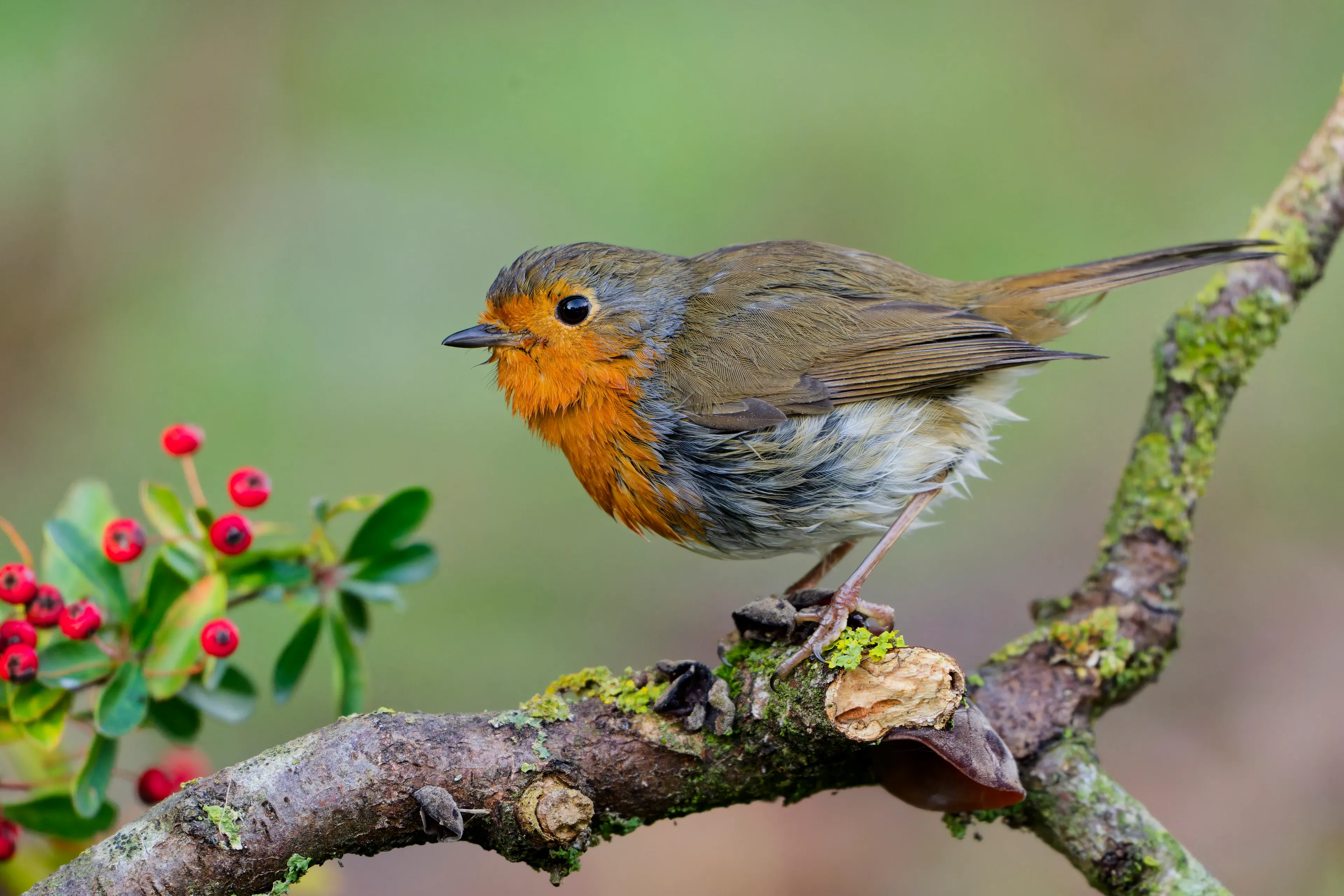
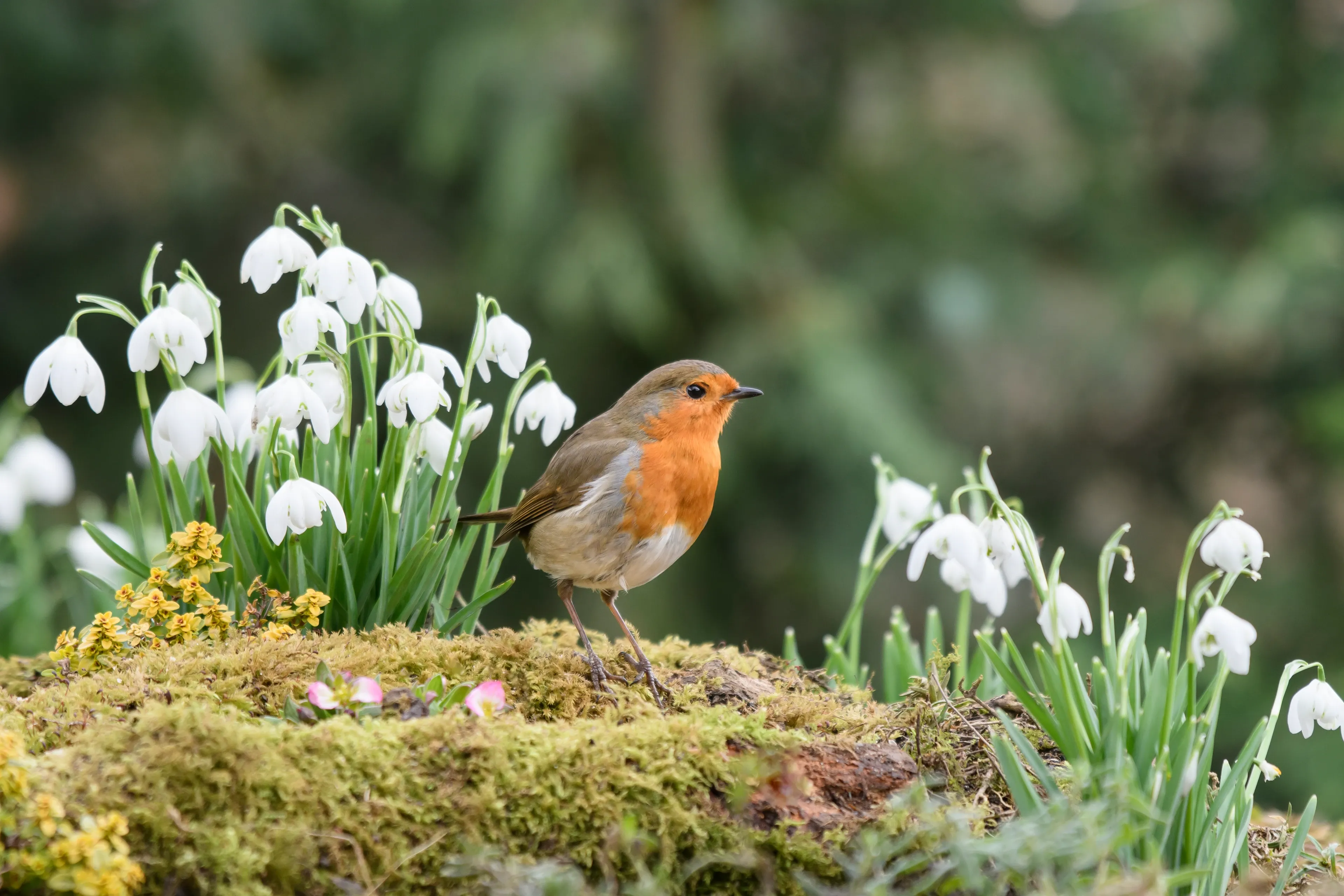
The European robin is a small, round garden bird with a bright orange face and chest, a brown back, and a pale tummy. It is only about the size of your hand and weighs no more than a couple of coins, yet it has a big personality. Robins live across Europe, into western Asia, and along the top of North Africa.
Robins are best known for their cheerful song. Both males and females sing, and they carry on singing all through the year, even in the cold of winter. This is because each robin looks after its own little patch of garden or woodland, and its song is a way of telling other robins, "this space is taken."
That bright orange breast has a job to do as well. When two robins meet at the edge of their patches, they puff out their chests to show off the colour and warn each other to keep their distance. Most of the time a good song and a bold orange front are enough to settle things without any fuss.
In Britain and Ireland, robins are famous for being friendly with people. When a gardener digs the soil, a robin will often hop up close behind, waiting to snatch the worms, spiders, and insects that get turned up. In winter they also eat berries and seeds to help them through the colder days.
Robins build cosy, cup-shaped nests out of moss, leaves, and grass, tucked into a hedge, a bank, or even an old kettle or flowerpot. The mother lays about five or six speckled eggs, and the young birds start out with plain brown feathers, growing their orange chests only as they get older.
There are plenty of robins in the wild, and their numbers are healthy, so experts list them as a species of least concern. Even so, robins do best when gardens and countryside have hedges, trees, and quiet corners where they can find food and build their nests.
My home
Woodland, garden, parkland, hedgerow
Where I live
Africa, Asia, Europe
What I eat
Insects, earthworms, spiders, berries, seeds
How long I am
0.125–0.14 m
How heavy I am
0.016–0.022 kg
How long I live
1–5 years
Both male and female robins sing, and they keep singing right through the winter, when they each guard their own little patch of garden.
Robins are famous for being friendly with gardeners, hopping close to freshly dug soil to snap up worms and insects.
A robin's orange breast is not just for show, it is used to warn other robins to stay off its patch of ground.
Every european robin can feel happy, scared and loved — just like you.
Looking after my friends
How many are there?
Bird experts estimate about 130–201 million European robins worldwide.
This is a broad global estimate assembled from regional bird surveys, not a direct worldwide census.
Estimate source: European Robin (Erithacus rubecula)
How are they doing?
Lower extinction riskThis species has a lower global extinction risk right now. Local populations can still grow or shrink.
You can help by learning their names, keeping wild places clean, and telling someone why this animal matters.
Where this came from
- Erithacus rubecula (European Robin) — Red List Assessment — IUCN Red List of Threatened Species
- Erithacus rubecula (European robin) — Animal Diversity Web, University of Michigan Museum of Zoology
- European Robin (Erithacus rubecula) — Romanian Ornithological Society