Today's animal friend · 27 October 2026
The European Mantis: The Garden Detective with Folded Arms
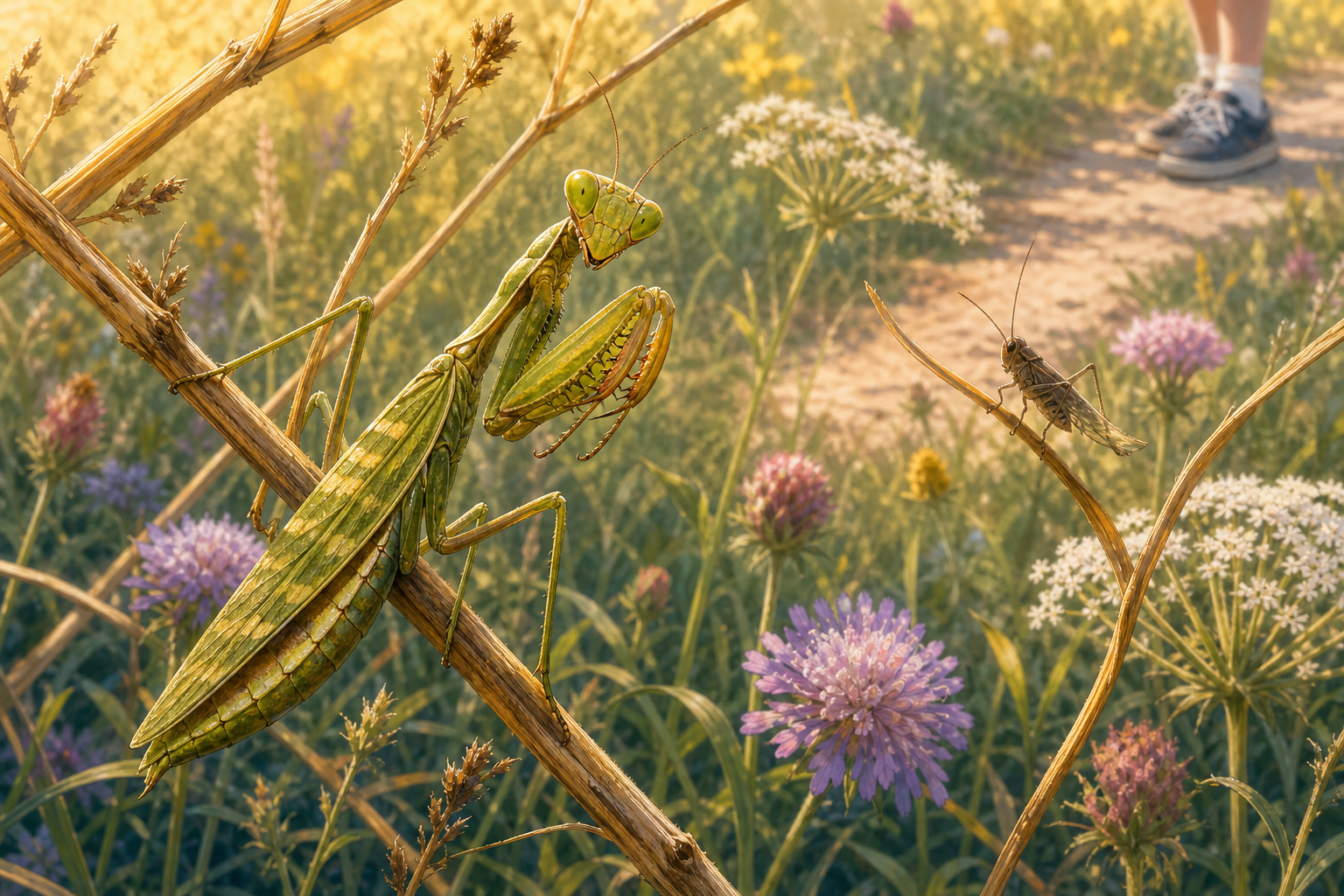
On a sunny path beside long grass, a European mantis may be watching far more closely than anyone expects. Let’s slow down, look carefully, and meet this remarkable insect neighbour.
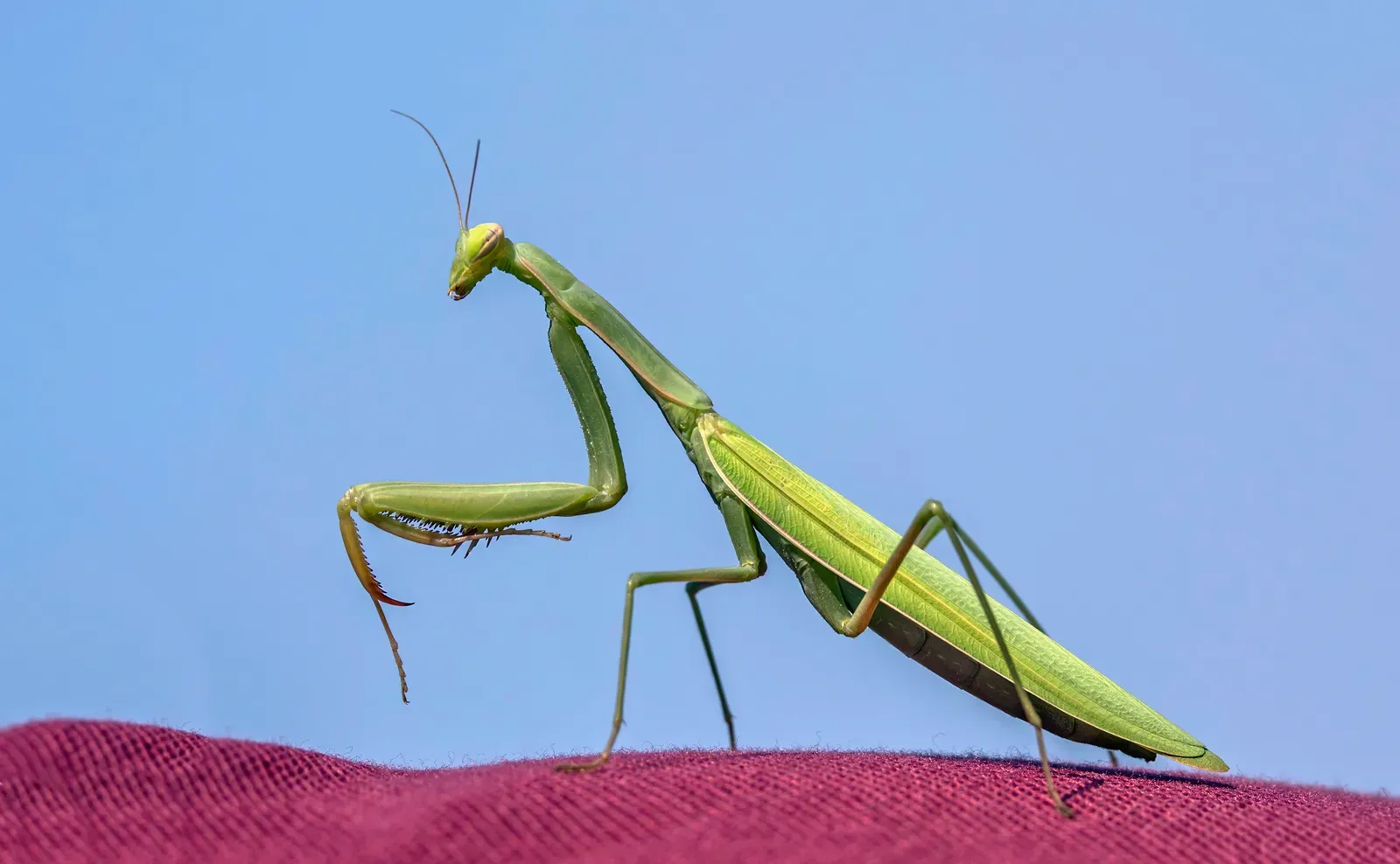
On a sunny path beside long grass, a European mantis may be watching far more closely than anyone expects. Let’s slow down, look carefully, and meet this remarkable insect neighbour.
A leaf that looks back
Imagine walking past a patch of sun-warmed grass. A breeze rustles the stems. A fly zips past with its tiny engine-buzz. Then one “leaf” turns its head and looks over its shoulder at you. Hello, European mantis!
The European mantis, or praying mantis, is an insect called Mantis religiosa. Its body is long and slender, its head is triangular, and its two front legs are usually folded in front of its chest. That pose is why people call it a praying mantis: it can look as though it has politely put its hands together.
But this is no sleepy garden decoration. A mantis can turn its head from side to side and even look behind itself—something very few insects can do. While its body stays still on a stem, its eyes can keep watch on the busy world around it. It is a little outdoor detective, complete with a bendy neck and a very serious face.
Evidence: Wikipedia: European mantis; Animal Diversity Web (University of Michigan Museum of Zoology): Mantis religiosa — Classification; IUCN Red List of Threatened Species: Mantis religiosa (European Mantis) — Red List Assessment
Camouflage: the art of not being noticed
European mantises can be green, brown, or yellowish. In fresh leaves, green can help one blend in. In dry grass, brown or straw-coloured shades can do the same job. If you have ever lost a pencil on a messy desk, you know how surprisingly hard it can be to spot something that matches its background.
This hiding trick matters because a mantis is an ambush hunter. Rather than charging about after every snack, it waits on a plant and watches. Its large compound eyes are suited to daylight vision, and it can scan and peer as it judges where a moving insect might be.
A patient mantis may look calm enough to be meditating, but it is really concentrating. Stillness is part of its superpower. It helps the mantis notice prey while making the mantis harder for other animals to notice, too.
Evidence: Wikipedia: European mantis; Animal Diversity Web (University of Michigan Museum of Zoology): Mantis religiosa — Classification; IUCN Red List of Threatened Species: Mantis religiosa (European Mantis) — Red List Assessment
Those “praying” arms are speedy grabbers
What happens when a cricket, grasshopper, fly, or moth comes close? The mantis’s folded front legs shoot outward in a rapid strike. These strong, spiny legs hold its catch. The moment is so quick that the mantis can seem to change from statue to action hero in a blink.
European mantises eat living insects and are daytime hunters. Their meals can include grasshoppers, crickets, flies, and moths. That means they are part of the tangled neighbourhood of a meadow or garden, where plants, insects, birds, and many other creatures are all connected.
It can feel strange to watch one small animal eat another. Nature is full of different ways of surviving, and the mantis is built for hunting insects. We can be interested without cheering for a chase. A gentle observer gives the mantis space, lets it choose its own path, and remembers that every tiny creature is busy living its own important life.
Evidence: Wikipedia: European mantis; Animal Diversity Web (University of Michigan Museum of Zoology): Mantis religiosa — Classification; IUCN Red List of Threatened Species: Mantis religiosa (European Mantis) — Red List Assessment
Where might this watchful neighbour live?
Look for the kind of place with plenty of plants: grassland, a meadow, shrubland, or a garden. A mantis needs stems and leaves to climb on, places to disappear into, and passing insects to watch. Warm, sunny vegetation can become its lookout tower, dining room, and hiding place all at once.
The European mantis occurs across Europe, Asia, and Africa. It has also become established in North America after being introduced there. So although its name begins with “European,” its story stretches across several parts of the world.
If you think you have spotted one, try a detective trick: do not grab it or poke at it. Watch from a respectful distance. Notice the colour, the folded front legs, and whether that little triangular head swivels. A photograph, if an adult says it is okay and the animal is left undisturbed, can be a kinder souvenir than a captive insect ever could be.
Evidence: Wikipedia: European mantis; Animal Diversity Web (University of Michigan Museum of Zoology): Mantis religiosa — Classification; IUCN Red List of Threatened Species: Mantis religiosa (European Mantis) — Red List Assessment
A foamy winter parcel
In autumn, after mating, a female European mantis makes an egg case called an ootheca. It begins frothy and then hardens into a tough, foamy pouch. Inside are many eggs, tucked away through winter like a carefully packed sleeping bag made for a whole tiny crowd.
When warmer spring weather arrives, young mantises hatch. They resemble very small versions of the adults and can begin hunting quickly. As they grow, they shed their outer skin several times. Imagine needing to step out of your whole outfit because you had grown too big for it—that is a fairly astonishing growing-up plan.
Mantises are mostly solitary except when mating. They do not need a team meeting or a playground crowd to get through the day. One watchful insect on one stem can make an entire patch of grass feel like a secret world.
Evidence: Wikipedia: European mantis; Animal Diversity Web (University of Michigan Museum of Zoology): Mantis religiosa — Classification; IUCN Red List of Threatened Species: Mantis religiosa (European Mantis) — Red List Assessment
Wonderful does not mean worry-free
Globally, the European mantis is listed as Least Concern on the IUCN Red List, based on a 2016 assessment. That is encouraging news. Still, a global label does not mean the animal is equally safe in every place. For example, it has been listed as endangered in Germany, where guidance also says animals should not be captured as pets.
So what is a mantis fan to do? Be a good neighbour to the small life outdoors. Leave patches of plants and grasses where insects can live. Look closely instead of collecting. Follow local rules, especially where a species is scarce. And share the best kind of mantis news: “I saw one, and I let it carry on with its day.”
A European mantis may be quiet, but it asks us to practise a powerful skill: paying attention. The next time grass whispers in the wind, pause. There could be a green, brown, or yellowish garden detective watching the whole scene—with its folded arms ready, its head turned, and its own wild adventure underway.
Evidence: Wikipedia: European mantis; IUCN Red List of Threatened Species: Mantis religiosa (European Mantis) — Red List Assessment; Animal Diversity Web (University of Michigan Museum of Zoology): Mantis religiosa — Classification
A kind choice can begin at the dinner table
A mantis reminds us that even a small creature has its own way of finding food, shelter, and safety. We can answer that reminder with kindness: notice animals as fellow travellers on Earth, not as things to use. Choosing more meals built around vegetables, fruit, whole grains, pulses, nuts, and seeds can be a cheerful way for families to explore tasty food while caring about other animals.
There is a planet-sized reason to be curious about plant-based meals, too. The IPCC reports that shifts toward sustainable, healthy, more plant-based diets can reduce food-system emissions and pressure on land and biodiversity. No one needs to be perfect: perhaps try bean tacos, lentil soup, chickpea sandwiches, or a colourful vegetable pasta with a trusted adult. Every thoughtful, animal-friendly choice is a small vote for a world with room for mantises—and many other wild neighbours.
Evidence: World Health Organization: Healthy diet; Intergovernmental Panel on Climate Change: Climate Change 2022: Mitigation of Climate Change — Chapter 7
Questions people ask
Why does a European mantis look as if it is praying?
Its powerful front legs rest folded in front of its chest, a pose that resembles hands held together. Those legs are actually specialised for catching prey in a fast reach.
Evidence: Wikipedia: European mantis; Animal Diversity Web (University of Michigan Museum of Zoology): Mantis religiosa — Classification; IUCN Red List of Threatened Species: Mantis religiosa (European Mantis) — Red List Assessment
Can a mantis really look behind itself?
Yes. Its highly mobile head can turn from side to side, including over its shoulder. That is an unusual ability among insects and helps it track activity around it.
Evidence: Wikipedia: European mantis; Animal Diversity Web (University of Michigan Museum of Zoology): Mantis religiosa — Classification; IUCN Red List of Threatened Species: Mantis religiosa (European Mantis) — Red List Assessment
What does a European mantis eat?
It is an insect hunter. Reported prey includes grasshoppers, crickets, flies, and moths, caught with rapid, spiny front legs.
Evidence: Wikipedia: European mantis; Animal Diversity Web (University of Michigan Museum of Zoology): Mantis religiosa — Classification; IUCN Red List of Threatened Species: Mantis religiosa (European Mantis) — Red List Assessment
Should I take one home if I find it?
No. The kind choice is to leave a wild mantis where it is and watch from a distance. Local protections can apply, and Germany, for example, has guidance against capturing them as pets.
Evidence: Wikipedia: European mantis; IUCN Red List of Threatened Species: Mantis religiosa (European Mantis) — Red List Assessment; Animal Diversity Web (University of Michigan Museum of Zoology): Mantis religiosa — Classification
Read the evidence
Sources behind this story
- European mantis — Wikipedia
- Mantis religiosa — Classification — Animal Diversity Web (University of Michigan Museum of Zoology)
- Mantis religiosa (European Mantis) — Red List Assessment — IUCN Red List of Threatened Species
- Healthy diet — World Health Organization
- Climate Change 2022: Mitigation of Climate Change — Chapter 7 — Intergovernmental Panel on Climate Change
Health information is general education, not personal medical advice. Young readers should make food choices with a trusted adult and qualified health professional.