Today's animal friend · 1 August 2026
The Penguin Dad with an Egg on His Feet
On sea ice beside Antarctica, an emperor penguin father shelters one precious egg while its mother feeds at sea. Follow this remarkable bird from a windy winter huddle to the blue, food-filled Southern Ocean—and discover why its icy home is
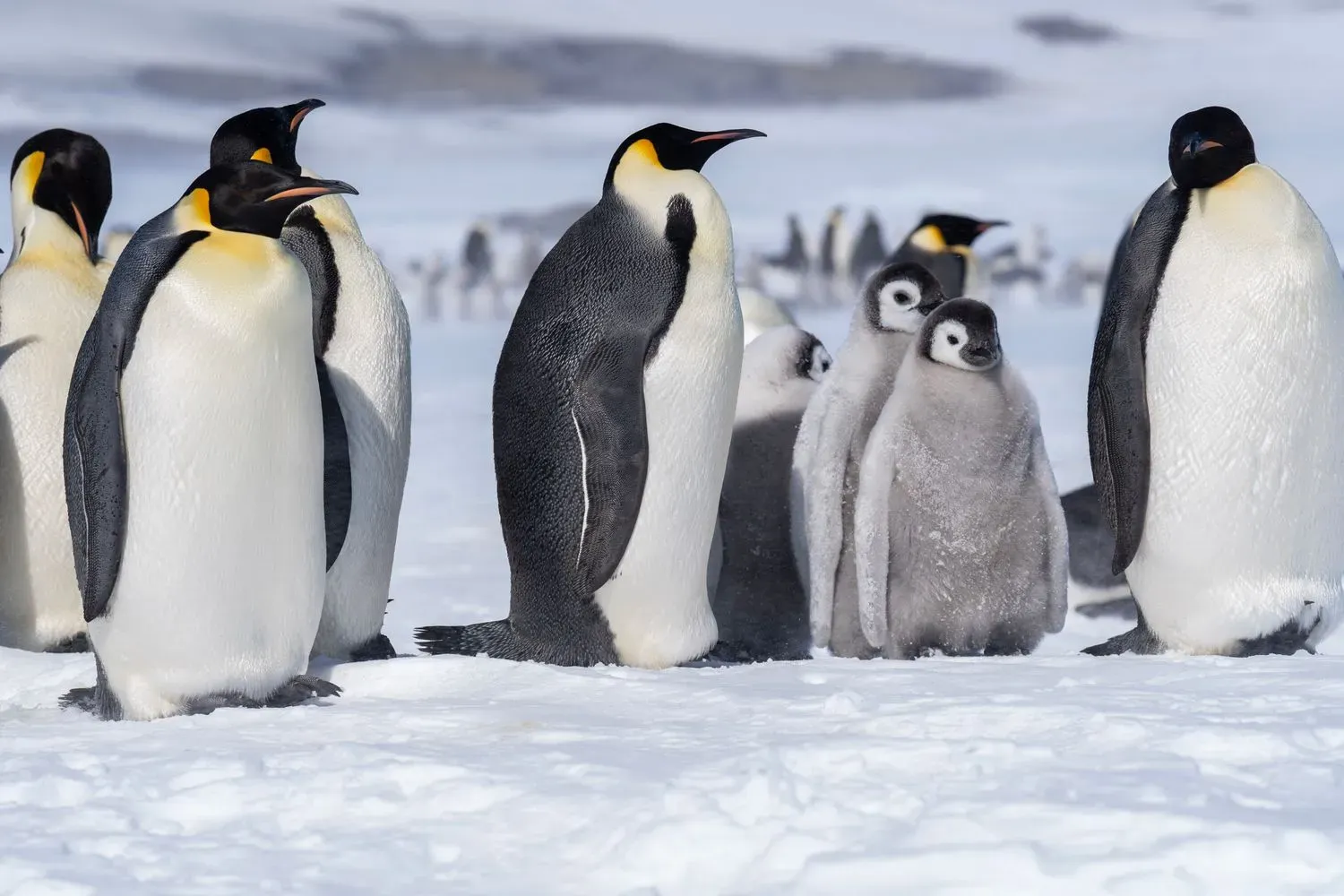
On sea ice beside Antarctica, an emperor penguin father shelters one precious egg while its mother feeds at sea. Follow this remarkable bird from a windy winter huddle to the blue, food-filled Southern Ocean—and discover why its icy home is
An egg in the middle of winter? Yes, really.
Picture a broad, white stretch of Antarctic sea ice. Wind whisks snow along the ground. The ocean is nearby, but it may feel a world away. In the middle of this frozen scene stands an emperor penguin father with an astonishing job: he is holding a single egg on top of his feet.
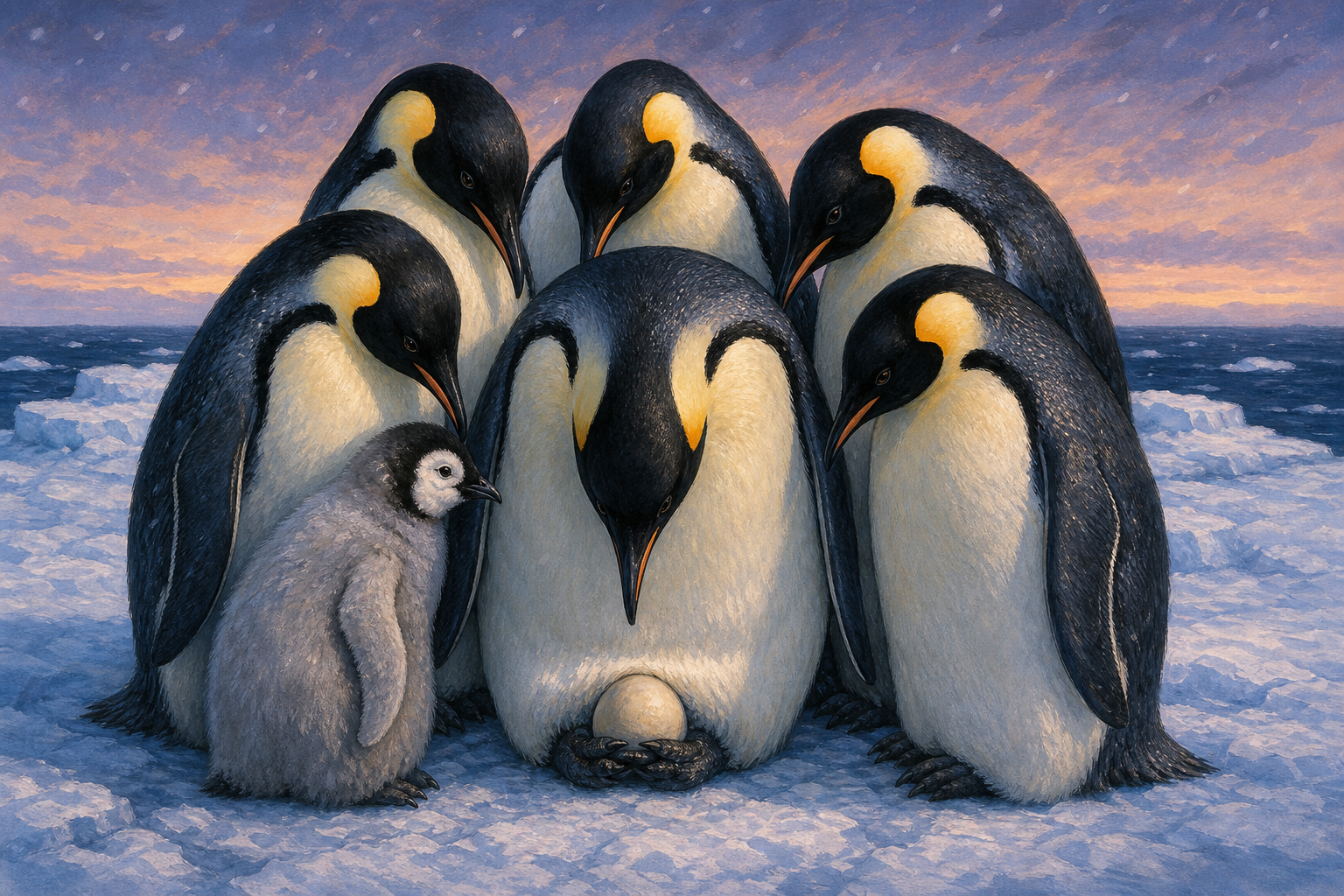
The egg is tucked beneath a warm fold of skin called a brood pouch. Keeping it off the ice matters. While the father incubates it, the mother travels to sea to feed. Emperor penguins are the only penguin species that breeds through the Antarctic winter, when conditions can be especially harsh. That makes this careful feet-and-pouch arrangement one of nature’s most surprising nursery scenes.
This is an emperor penguin, scientifically named Aptenodytes forsteri. It is the largest living penguin species, standing roughly as tall as a young child. Its dark back, pale belly, and soft yellow patches around its neck give it the look of a bird dressed for a very formal snowstorm.
Evidence: IUCN Red List of Threatened Species: Aptenodytes forsteri (Emperor Penguin) — Red List Assessment; BirdLife International (IUCN Red List Authority for birds): Emperor Penguin Aptenodytes forsteri — Species Factsheet; Australian Antarctic Program, Department of Climate Change, Energy, the Environment and Water: Emperor penguin; Animal Diversity Web, University of Michigan Museum of Zoology: Aptenodytes forsteri (emperor penguin)
Why the huddle is a moving warm-up room
Emperor penguins live around Antarctica, using coastal sea ice and the Southern Ocean. For breeding, they rely on stable fast ice: sea ice attached to the coastline. It is more like a vast frozen platform beside the continent than an ice cube bobbing in a glass.
When bitter winds sweep across that platform, the penguins gather in dense huddles. Pressing close helps reduce heat loss. The group is not a statue, though. Birds shuffle and change places, with individuals taking turns in the exposed outer area and the more sheltered middle. From far away, a huddle can look like a dark, gently rearranging patch on the ice.
Emperor penguins do not defend little nesting territories as some birds do. Their crowded colony life is built around getting through the cold together. After the chick hatches and the mother returns with food, both parents help care for it. In this family, a successful season depends on timing, teamwork, ice, and ocean meals all fitting together.
Evidence: Australian Antarctic Program, Department of Climate Change, Energy, the Environment and Water: Emperor penguin; Animal Diversity Web, University of Michigan Museum of Zoology: Aptenodytes forsteri (emperor penguin); International Union for Conservation of Nature (IUCN): Emperor penguin and Antarctic fur seal now Endangered due to climate change — IUCN Red List
On land: a waddle. Underwater: a wonder.
On the ice, an emperor penguin can seem delightfully awkward, as if it is wearing shoes made for a different adventure. Then it slips into the water. Its wings, too short for flying through air, become strong flippers that power it through the sea.
Emperor penguins hunt fish, including Antarctic silverfish, along with krill and squid. What is on the menu changes with the season and what is available nearby. They are carnivorous divers, searching beneath the surface of the Southern Ocean for the food that fuels their journeys, breeding season, feather changes, and chick care.
They are the deepest-diving birds known. Most dives are far shallower than their record-breaking ones, but an emperor penguin has been recorded reaching 565 metres down. Imagine a bird travelling downward through dim blue water farther than the height of many skyscrapers—then returning to the surface to breathe. It is an extraordinary skill, not a stunt: every dive is part of finding a meal in a demanding place.
Evidence: Australian Antarctic Program, Department of Climate Change, Energy, the Environment and Water: Emperor penguin; Animal Diversity Web, University of Michigan Museum of Zoology: Aptenodytes forsteri (emperor penguin)
The father’s careful shift—and the mother’s sea journey
After laying one egg, the mother heads to sea to feed. The father keeps the egg balanced on his feet under his brood pouch. He stays with it for weeks during this part of the breeding season, without eating. It is a huge effort, especially in the winter cold.
But this is not a story of one parent doing everything. The mother’s trip is essential too: she must find food in the ocean before returning. Once the chick arrives, the parents share its care. Think of it as a very long relay, with each parent taking a different crucial part and no cheering crowd—only wind, ice, calls, and a hungry youngster.
Adult emperor penguins commonly live about 15 to 20 years in the wild, although some live longer. Across those years, their needs are closely connected. The ocean is their hunting ground. Fast ice is a breeding place and is also important when they moult, or replace their feathers, because they are not waterproof during that time. For an emperor penguin, home is not just one spot on a map. It is an ice-and-ocean neighbourhood.
Evidence: Australian Antarctic Program, Department of Climate Change, Energy, the Environment and Water: Emperor penguin; Animal Diversity Web, University of Michigan Museum of Zoology: Aptenodytes forsteri (emperor penguin); International Union for Conservation of Nature (IUCN): Emperor penguin and Antarctic fur seal now Endangered due to climate change — IUCN Red List
When the frozen platform changes
Fast ice may look solid and everlasting, but it can break up early or fail to form in the right places and at the right times. A warming climate is shrinking and changing the Antarctic sea ice emperor penguins need for breeding, chick rearing, and moulting. A lost platform can turn a carefully timed family season upside down.
In 2026, the IUCN Red List assessed emperor penguins as Endangered, with a decreasing population trend. Climate-driven sea-ice loss is their main threat. Conditions differ around Antarctica, so not every colony experiences exactly the same outcomes. Still, the overall warning is serious: a bird so expertly adapted to ice needs that ice to remain dependable.
Scientists watch colonies and sea ice, including with satellite observations. Emperor penguins can be sentinels of change: how well their ice-linked colonies fare can help reveal what is happening in the wider Antarctic environment. Looking closely is not merely collecting facts. It helps people make wiser decisions about protection.
Evidence: IUCN Red List of Threatened Species: Aptenodytes forsteri (Emperor Penguin) — Red List Assessment; BirdLife International (IUCN Red List Authority for birds): Emperor Penguin Aptenodytes forsteri — Species Factsheet; International Union for Conservation of Nature (IUCN): Emperor penguin and Antarctic fur seal now Endangered due to climate change — IUCN Red List; Australian Antarctic Program, Department of Climate Change, Energy, the Environment and Water: Emperor penguin
A faraway friend, and a human-sized hope
The most important help for emperor penguins is something people must do together: cut greenhouse-gas emissions rapidly and dramatically, helping protect the fast ice on which they depend. Continued scientific monitoring and Antarctic Treaty decisions informed by the Endangered listing can also support protection efforts.
You do not need to visit Antarctica to care about it. You can stay curious about wildlife, share trustworthy information, and ask grown-ups thoughtful questions about how communities can protect the climate and living places. Big challenges need governments, scientists, communities, and families all playing a part.
Perhaps the emperor penguin huddle offers a gentle picture to remember. No penguin can command the weather. Yet the birds gather, shuffle, and share the cold edge. Their story is not a promise that everything will be easy. It is a reminder that cooperation matters—and that this remarkable bird is worth showing up for.
Evidence: International Union for Conservation of Nature (IUCN): Emperor penguin and Antarctic fur seal now Endangered due to climate change — IUCN Red List; BirdLife International (IUCN Red List Authority for birds): Emperor Penguin Aptenodytes forsteri — Species Factsheet; Australian Antarctic Program, Department of Climate Change, Energy, the Environment and Water: Emperor penguin
A kind choice can begin with curiosity
An emperor penguin is not a symbol made of black, white, and yellow feathers. It is a living neighbour with a sea to hunt in, ice to stand on, and a family season shaped by careful teamwork. Caring about that life can begin with noticing how our choices connect to the wider world.
One gentle option is exploring more plant-forward meals and snacks with your family: beans tucked into a burrito, lentils in soup, or fruit, whole grains, nuts, and seeds at breakfast. The World Health Organization describes healthy diets as including foods such as vegetables, fruit, whole grains, pulses, nuts, and seeds. The IPCC reports that sustainable, healthy, more plant-based diets can help reduce food-system emissions and pressure on land and biodiversity.
This is not about being perfect or judging anyone’s plate. Food needs vary, and children should talk with a trusted adult and qualified health professional about changes. Trying a new plant-forward dish can simply be one small, caring way to think about animals, climate, and the many homes we share.
Evidence: World Health Organization: Healthy diet; Intergovernmental Panel on Climate Change: Climate Change 2022: Mitigation of Climate Change — Chapter 7
Questions people ask
Can emperor penguins fly?
No. Emperor penguins are flightless seabirds. Their wings work as powerful flippers underwater, helping them swim and dive in search of food.
Evidence: Australian Antarctic Program, Department of Climate Change, Energy, the Environment and Water: Emperor penguin; Animal Diversity Web, University of Michigan Museum of Zoology: Aptenodytes forsteri (emperor penguin)
Why do emperor penguins huddle?
Huddling helps the birds reduce heat loss in fierce Antarctic conditions. The crowd shifts as birds take turns in more exposed and more sheltered positions.
Evidence: Australian Antarctic Program, Department of Climate Change, Energy, the Environment and Water: Emperor penguin; Animal Diversity Web, University of Michigan Museum of Zoology: Aptenodytes forsteri (emperor penguin)
What do emperor penguins eat?
They eat fish, especially Antarctic silverfish, as well as krill and squid. The mix of prey can change with the season.
Evidence: Australian Antarctic Program, Department of Climate Change, Energy, the Environment and Water: Emperor penguin; BirdLife International (IUCN Red List Authority for birds): Emperor Penguin Aptenodytes forsteri — Species Factsheet
How can food choices connect to penguins?
Food systems are part of the climate picture. The IPCC says sustainable, healthy, more plant-based diets can lower food-system emissions and reduce pressure on land and biodiversity. Children have different needs, so food changes should be discussed with a trusted adult and a qualified health professional.
Evidence: World Health Organization: Healthy diet; Intergovernmental Panel on Climate Change: Climate Change 2022: Mitigation of Climate Change — Chapter 7
Read the evidence
Sources behind this story
- Aptenodytes forsteri (Emperor Penguin) — Red List Assessment — IUCN Red List of Threatened Species
- Emperor Penguin Aptenodytes forsteri — Species Factsheet — BirdLife International (IUCN Red List Authority for birds)
- Emperor penguin — Australian Antarctic Program, Department of Climate Change, Energy, the Environment and Water
- Aptenodytes forsteri (emperor penguin) — Animal Diversity Web, University of Michigan Museum of Zoology
- Emperor penguin and Antarctic fur seal now Endangered due to climate change — IUCN Red List — International Union for Conservation of Nature (IUCN)
- Healthy diet — World Health Organization
- Climate Change 2022: Mitigation of Climate Change — Chapter 7 — Intergovernmental Panel on Climate Change
Health information is general education, not personal medical advice. Young readers should make food choices with a trusted adult and qualified health professional.