Today's animal friend · 25 August 2026
Electric Eel: The Fish with a Secret Spark
It looks like an eel, breathes air at the surface, and carries a powerful surprise inside its long body. Say hello to Electrophorus electricus.
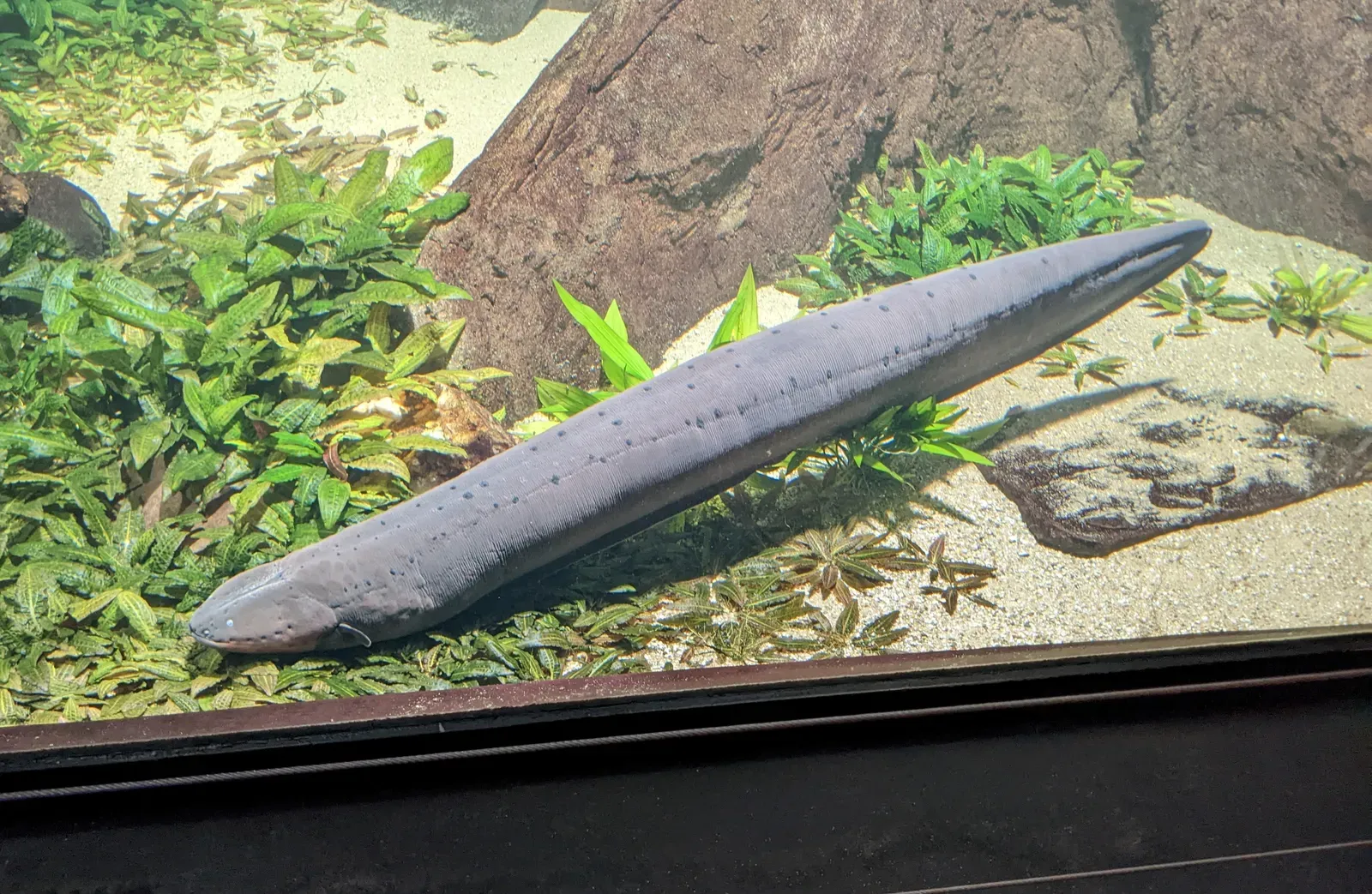
It looks like an eel, breathes air at the surface, and carries a powerful surprise inside its long body. Say hello to Electrophorus electricus.
A ripple, a gulp, a zap!
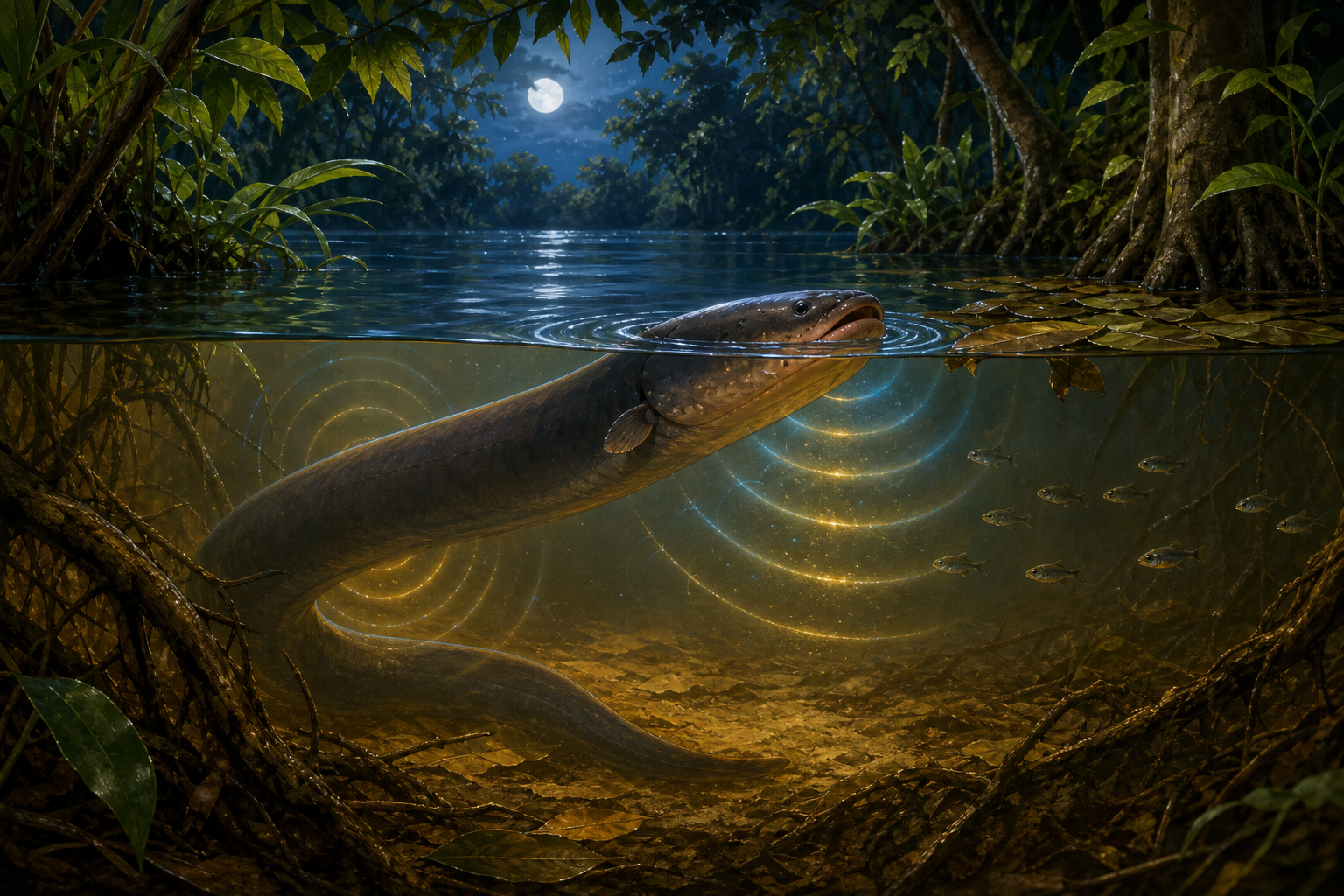
Picture a quiet, muddy pool in northern South America at night. The water is dark as cocoa. Leaves press against the banks, and the river bottom is hard to see. Then—ripple! A long fish rises, breaks the surface, and gulps a breath of air before slipping back down.
That fish may be an electric eel, Electrophorus electricus. Its most jaw-dropping talent is not a trick from a superhero film: it can make electricity strong enough to stun a fish. In water where eyes cannot do much work, that is a very useful surprise to keep in your pocket. Or, in this case, inside your body.
An electric eel can grow to about 2 metres long—roughly the length of a tall grown-up lying down—and reach about 20 kilograms. Yet even with such a dramatic name and shape, it is not a true eel. Nature has pulled a funny costume swap: the electric eel is a kind of knifefish.
So if you ever imagine one as a smooth, living river noodle with a built-in zapper, you are not far off. Just remember: it is a fish, not a noodle, and definitely not a creature to poke.
Evidence: IUCN Red List of Threatened Species: Electrophorus electricus (Electric Eel) — Red List Assessment; National Geographic: Electric Eel — National Geographic; Wikipedia: Electric eel — Wikipedia
“Wait—an eel that is not an eel?”
Yes! Names can be sneaky. Electric eels belong to a fish group called knifefish, in the order Gymnotiformes. They only look eel-like because they are long and round. Their scientific name, Electrophorus electricus, is a clue that electricity is their headline act.
This particular species lives in northern South America, in the Guiana Shield region. Older books may describe “electric eels” across a much broader area, because scientists used to group several similar-looking species under the same everyday name. In 2019, the genus was divided into three species, so it is important to keep the stories straight.
For this Animal Friend, we are following E. electricus. It belongs in freshwater places such as rivers, streams, swamps, shaded pools, and muddy bottoms. These can be low-oxygen places, which brings us to one of its strangest habits: an underwater fish that must visit the surface for air.
A name can be a starting point, not the whole story. Looking closer is how we discover that the river has more secrets than it first lets on.
Evidence: National Geographic: Electric Eel — National Geographic; Wikipedia: Electric eel — Wikipedia
How do you carry a thunderstorm?
Not in a tiny cloud above your head. An electric eel carries special electric organs inside its body. These organs contain many cells that work together rather like lots of tiny batteries switching on at once. The result can be a strong electrical discharge—at least about 600 volts from its main organ—that helps stun prey or discourage a threat.
That does not mean it blasts everything all the time. A giant zap would be a very noisy way to go shopping for dinner. Electric eels also make much gentler electrical signals, including low-voltage discharges used for sensing their surroundings. This ability is called electrolocation.
Why would a fish need such a sense? Imagine trying to find your way around a room when someone has turned off the lights and filled it with murky water. Electric eels have poor eyesight, so their electrical sensing helps them explore and find food in low-visibility places.
Their electricity is a brilliant adaptation, not a party trick for us. It helps this freshwater predator live in a world of shadows, silt, and hidden movement.
Evidence: National Geographic: Electric Eel — National Geographic; Wikipedia: Electric eel — Wikipedia
The nighttime snack search
When daylight fades, the electric eel becomes more active. It is mostly nocturnal, meaning it does much of its searching and hunting at night. That is when the murky river can feel especially mysterious: a twig bumps past, a small fish flicks its tail, and something long glides quietly below.
Electric eels are carnivores. Their diet is mainly fish, including smaller fish, and the broader catalogue of their foods includes invertebrates—animals without backbones. Electricity helps them detect and stun prey in water where a chase based only on eyesight would be tricky.
Then there is the breathing break. Electric eels are obligate air-breathers: they must surface to gulp air. They live underwater, but they cannot simply stay down forever and use only the oxygen in the water. Up they come, gulp, and down they go again.
That surface visit is a lovely reminder that animals do not have to fit our neat little boxes. Fish breathe underwater… except when this fish needs a breath from above. The natural world is gloriously full of plot twists.
Evidence: IUCN Red List of Threatened Species: Electrophorus electricus (Electric Eel) — Red List Assessment; National Geographic: Electric Eel — National Geographic; Wikipedia: Electric eel — Wikipedia
A river neighbour worth cheering for
Electric eels may sound fierce, but they are not movie monsters. They are wild animals with a job to do: finding food and moving through freshwater habitats in ways that suit their bodies. Their electric senses and shocks are tools for surviving, not invitations for close-up encounters.
The IUCN conservation listing records E. electricus as Least Concern, with a stable population trend in the 2021 assessment summary. That is encouraging news. It does not mean freshwater places stop mattering. Rivers, streams, swamps, and shaded pools are homes filled with many lives, from tiny invertebrates to fishes with surprising talents.
One helpful idea is to care about whole habitats, even when the creature we are admiring is not currently listed as threatened. Clean, living freshwater is never boring. It is a busy neighbourhood of roots, mud, ripples, air gulps, and creatures doing extraordinary things out of sight.
And there is a science-care reason to use the full species name when we can. Keeping E. electricus separate from its close relatives helps people understand which animals live where. Clear names can help clear thinking.
Evidence: IUCN Red List of Threatened Species: Electrophorus electricus (Electric Eel) — Red List Assessment; National Geographic: Electric Eel — National Geographic; Wikipedia: Electric eel — Wikipedia
A kind choice can travel downstream
Caring about an electric eel can begin with a simple thought: this remarkable fish is somebody, not something. It has its own nighttime routes, its own need for air, and its own clever way of sensing a dark river. We can let that thought make us gentler toward animals everywhere.
At meals, families can explore delicious plant-based choices together: colourful vegetables, fruit, beans and other pulses, whole grains, nuts, and seeds. The World Health Organization describes these foods as part of varied healthy diets. Every family is different, so children should talk with a trusted adult and a qualified health professional for personal food advice.
Choosing more plant-based meals can be a planet-kind adventure too. The IPCC reports that shifts toward sustainable, healthy, more plant-based diets can reduce food-system emissions and ease pressure on land and biodiversity. A bean taco, lentil soup, or vegetable stir-fry may seem far away from a South American river, but kind everyday choices can join a bigger current of care.
No one has to be perfect to be a helpful friend. Start with curiosity, try something tasty, and remember the quiet fish beneath the dark water: alive, alert, and wonderfully its own.
Evidence: World Health Organization: Healthy diet; Intergovernmental Panel on Climate Change: Climate Change 2022: Mitigation of Climate Change — Chapter 7
Choose wonder, choose kindness
The electric eel’s story is a nudge to notice animals as fellow travellers on Earth. Its powerful electrical abilities help it eat, explore, and stay safe in its watery home; they are not there for human entertainment or convenience.
A cheerful way to put care into practice is to enjoy more plant-forward meals with the people who look after you. WHO guidance includes vegetables, fruit, whole grains, pulses, nuts, and seeds in varied healthy diets, while the IPCC finds that more plant-based, sustainable dietary shifts can lower pressure on climate, land, and biodiversity. Kindness can be delicious—and it can begin with one shared meal.
Evidence: World Health Organization: Healthy diet; Intergovernmental Panel on Climate Change: Climate Change 2022: Mitigation of Climate Change — Chapter 7
Questions people ask
Can an electric eel really make electricity?
Yes. Special electric organs in its body produce electrical discharges. Stronger shocks can stun prey or deter threats, while gentler signals help it sense its surroundings.
Evidence: National Geographic: Electric Eel — National Geographic; Wikipedia: Electric eel — Wikipedia
Is an electric eel a real eel?
No. Despite its long, eel-like shape, Electrophorus electricus is a knifefish in the order Gymnotiformes, not a true eel.
Evidence: National Geographic: Electric Eel — National Geographic; Wikipedia: Electric eel — Wikipedia
Why does it come up for air?
Electric eels are obligate air-breathers. They must surface and gulp air even though they spend their lives in freshwater.
Evidence: National Geographic: Electric Eel — National Geographic; Wikipedia: Electric eel — Wikipedia
Where does this electric eel live?
E. electricus lives in freshwater habitats in northern South America’s Guiana Shield region, including rivers, streams, swamps, and muddy or shaded pools.
Evidence: Wikipedia: Electric eel — Wikipedia; National Geographic: Electric Eel — National Geographic
Read the evidence
Sources behind this story
- Electrophorus electricus (Electric Eel) — Red List Assessment — IUCN Red List of Threatened Species
- Electric Eel — National Geographic — National Geographic
- Electric eel — Wikipedia — Wikipedia
- Healthy diet — World Health Organization
- Climate Change 2022: Mitigation of Climate Change — Chapter 7 — Intergovernmental Panel on Climate Change
Health information is general education, not personal medical advice. Young readers should make food choices with a trusted adult and qualified health professional.