 ← All animals
 fish · Electrophorus electricus
Electric eel
Gallery
5 photos Real photograph 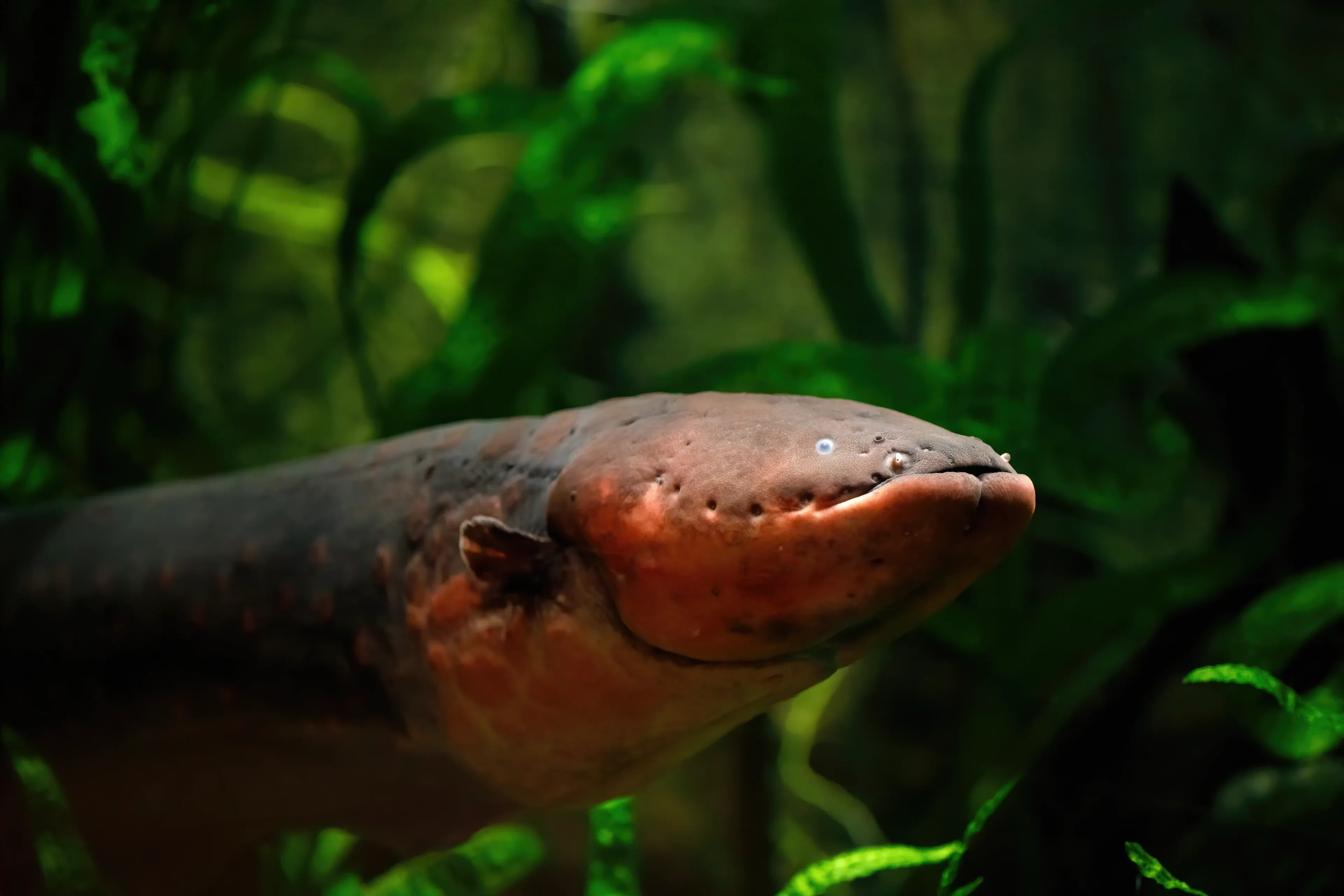 Real photograph
  Real photograph
  Real photograph
  Real photograph
 Why we love them
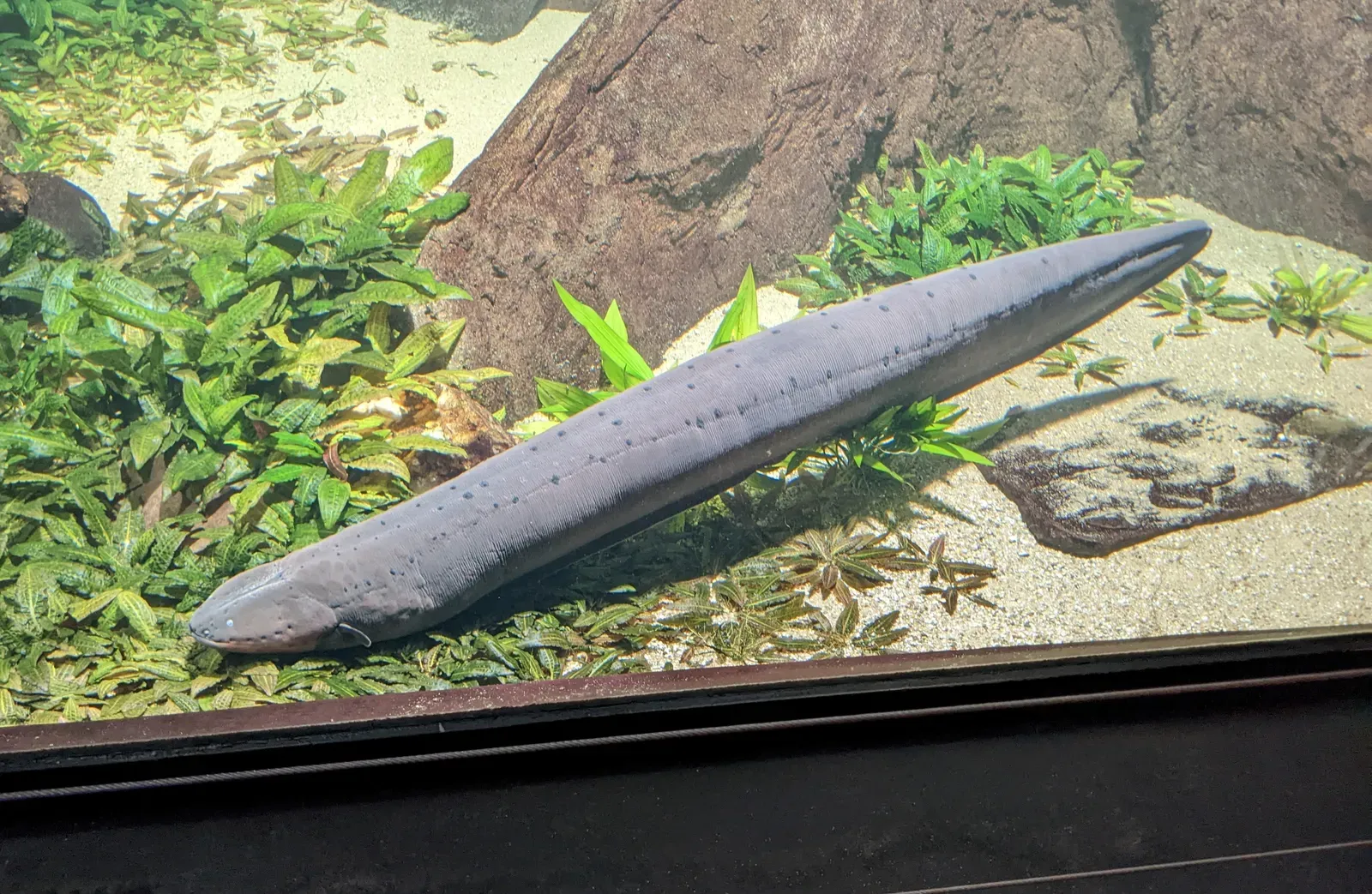
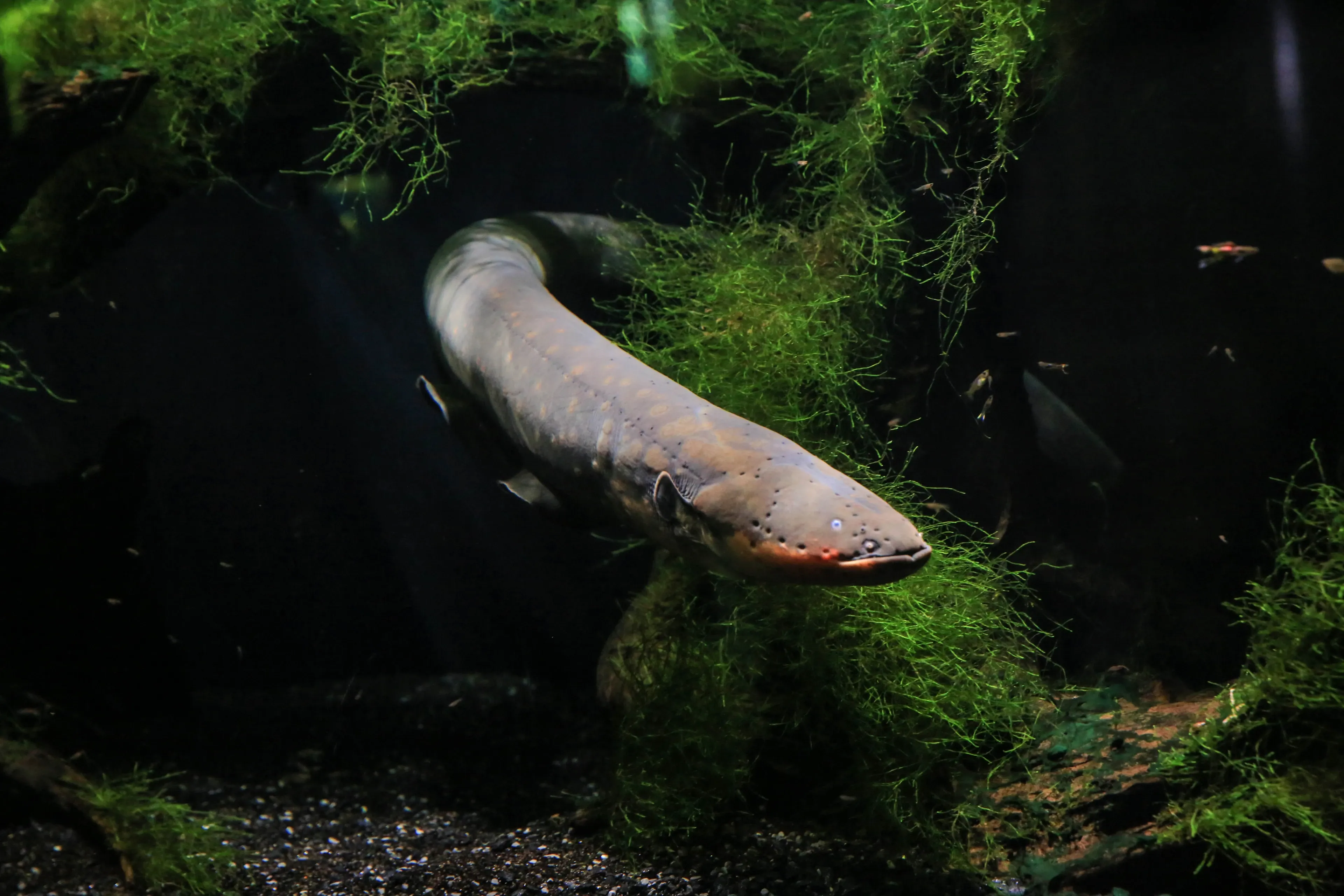
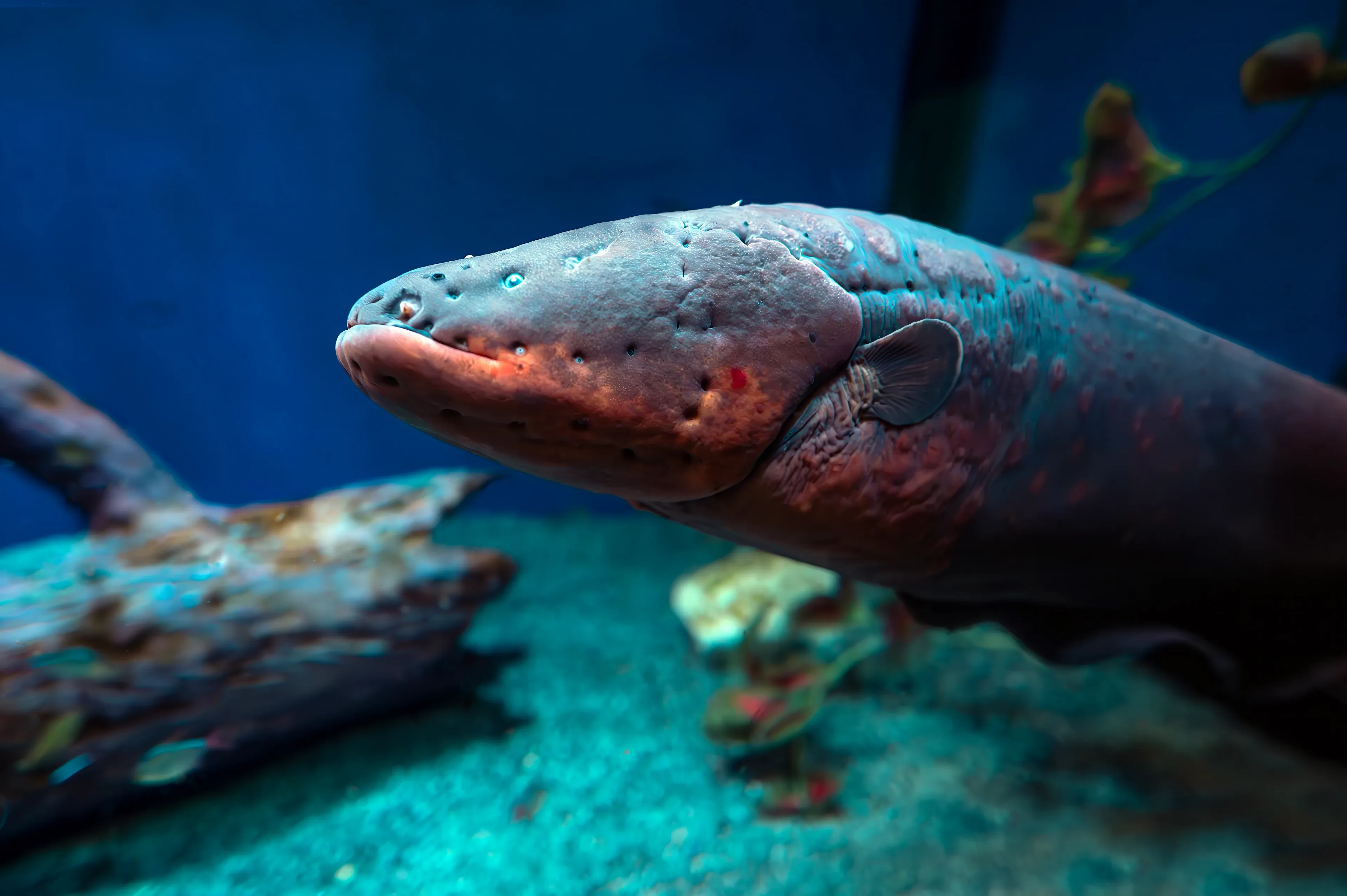
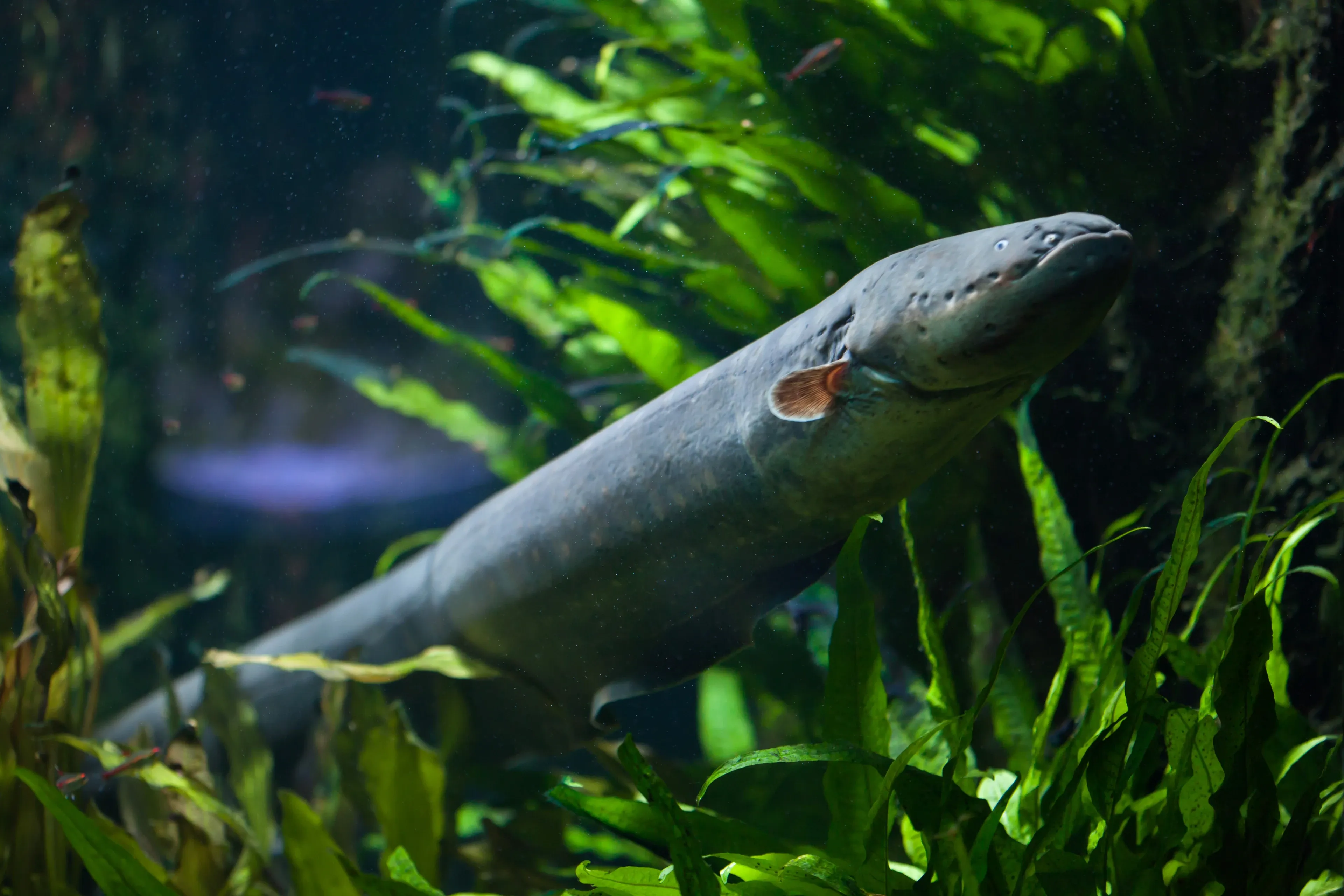
The electric eel is a long, round fish that lives in the warm rivers and swamps of South America. It looks a lot like a snake or an eel, but it is really a kind of fish called a knifefish. A big one can grow as long as a grown-up is tall.
Its most amazing trick is hidden inside its body. Most of the electric eel is packed with special parts that work like tiny batteries. When they all switch on together, the eel makes a strong pulse of electricity — enough to give a hungry fish a big surprise and stun it.
The eel uses its electricity in two ways. A gentle buzz helps it feel its way around and find food in muddy water, because its eyes are not very good. A much stronger jolt is saved for catching a meal or scaring off an animal that comes too close.
Even though it lives underwater, the electric eel must come up to the surface to gulp air, just like we breathe. It hunts mostly at night, sniffing and buzzing through the dark water in search of smaller fish to eat.
There are plenty of electric eels in the wild today, so they are not in danger. They are strange, clever fish — a real living surprise hiding in the rivers of the rainforest.
My home
Freshwater rivers, streams, swamps
Where I live
South America
What I eat
Fish, small fish, invertebrates
How long I am
1–2 m
How heavy I am
20 kg
How long I live
15–20 years
An electric eel can make a jolt of electricity strong enough to stun a fish.
It is not really an eel at all — it is a kind of fish called a knifefish.
Electric eels have to swim up to the top and gulp air, because they breathe air like we do.
Every electric eel can feel happy, scared and loved — just like you.
Looking after my friends
How many are there?
Field observations found about 1,200 electric-eel embryos hatching from one nest; egg counts can reach 17,000.
This is reproduction at one nest, not the number of electric eels in a river or worldwide.
Estimate source: Electrophorus electricus — Electric eel
How are they doing?
Lower extinction riskThis species has a lower global extinction risk right now. Local populations can still grow or shrink.
You can help by learning their names, keeping wild places clean, and telling someone why this animal matters.
Where this came from
- Electrophorus electricus (Electric Eel) — Red List Assessment — IUCN Red List of Threatened Species
- Electric Eel — National Geographic — National Geographic
- Electric eel — Wikipedia — Wikipedia
- Electrophorus electricus — Electric eel — Animal Diversity Web, University of Michigan Museum of Zoology