Today's animal friend · 19 September 2026
The Wombat Who Leaves Little Cubes
Follow a sturdy Australian marsupial from its cool burrow to its evening grass buffet—and discover why a backward pouch and square poo make perfect sense.
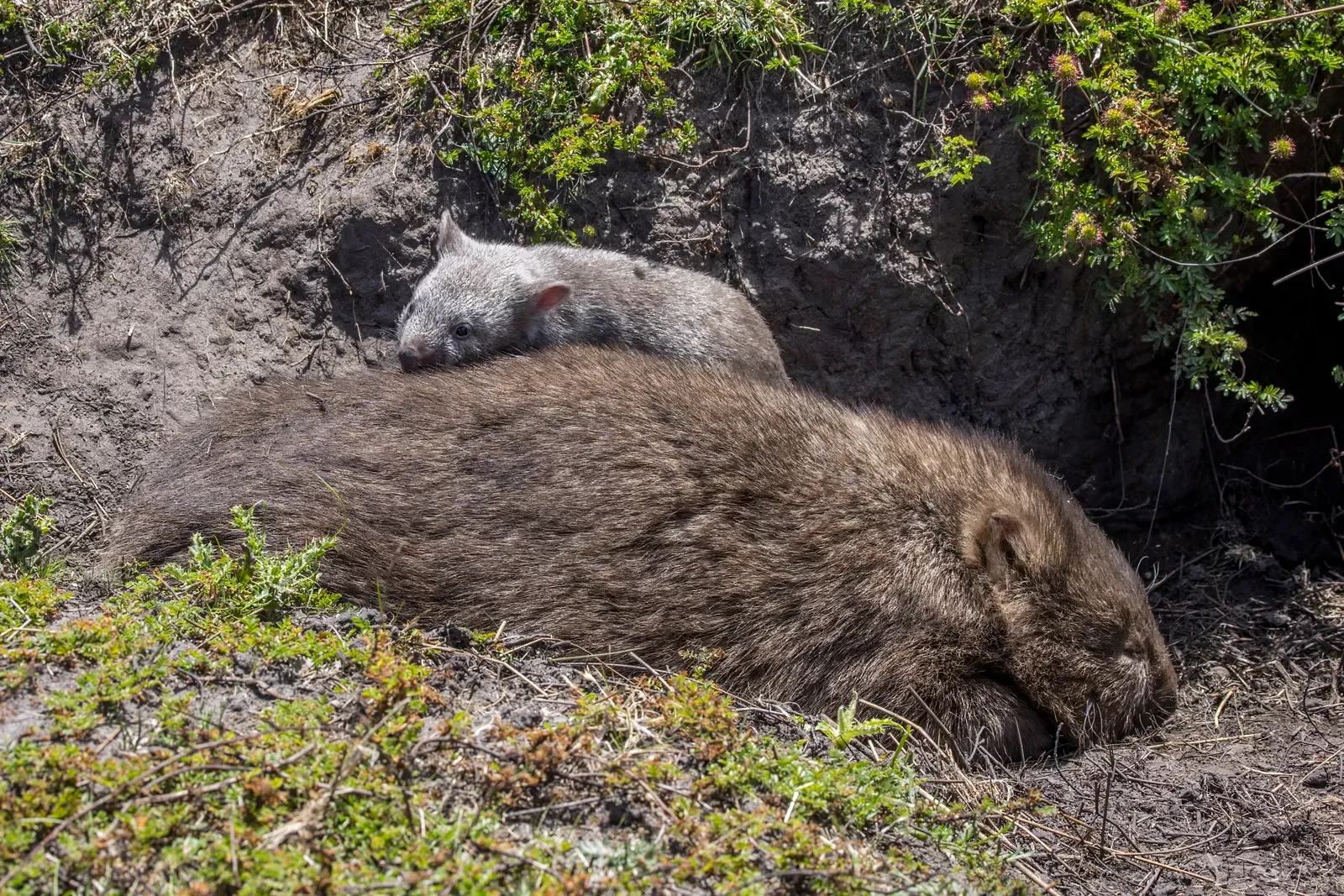
Follow a sturdy Australian marsupial from its cool burrow to its evening grass buffet—and discover why a backward pouch and square poo make perfect sense.
A square surprise on a rock
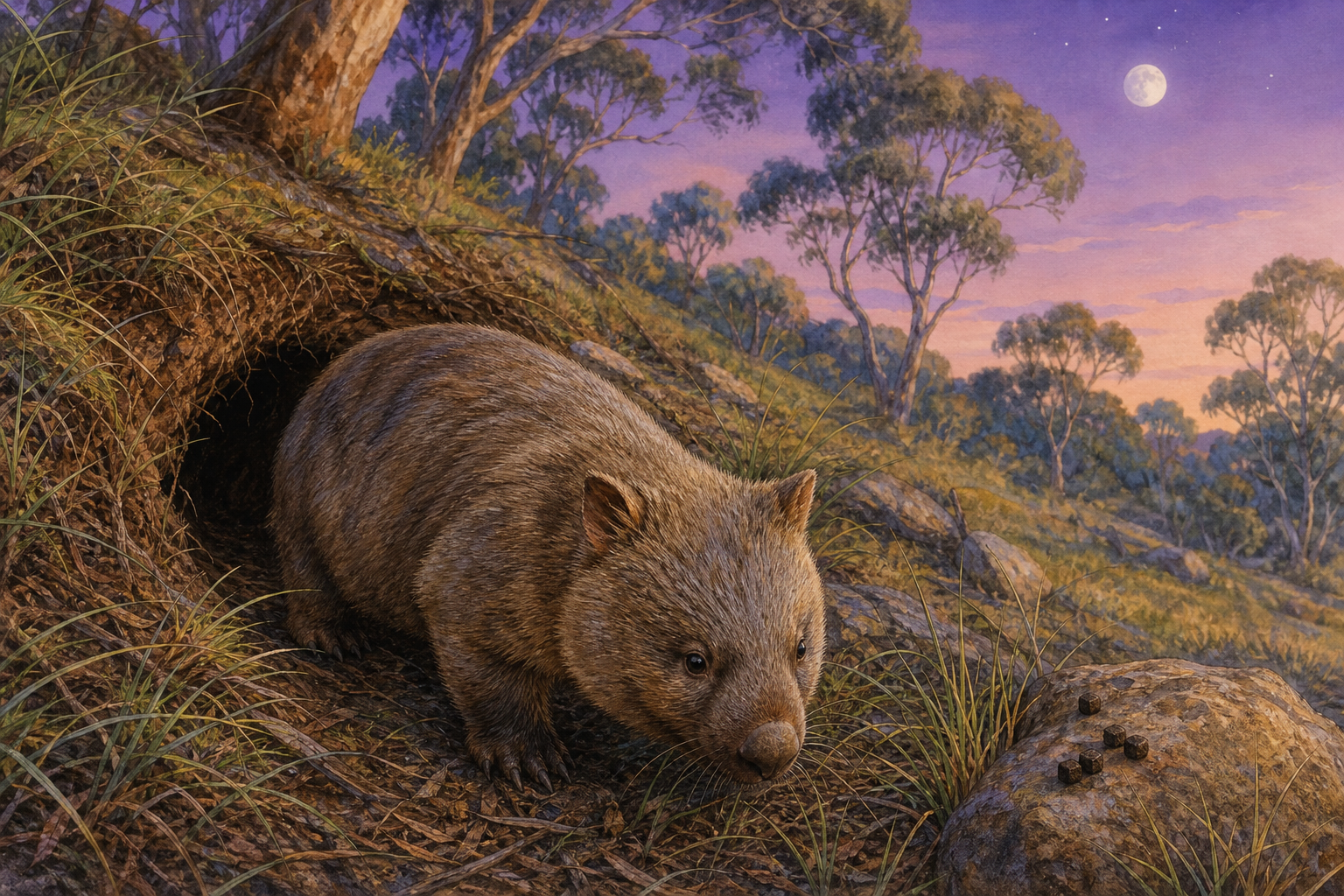
Imagine walking through a grassy Australian woodland at dusk. The air is cooling, the shadows are stretching, and there on a rock is a tiny pile of poo shaped like little blocks. Not blobs. Not pellets. Cubes! It sounds like a joke from a very silly nature quiz, but common wombats really do make cube-shaped droppings.
This sturdy animal is the common wombat, also called the bare-nosed or coarse-haired wombat. Its scientific name is Vombatus ursinus. It is a marsupial, meaning it belongs to the same big family group as kangaroos and koalas. But instead of bouncing or climbing, this animal’s special talent is digging like a determined gardener who has misplaced the spade.
The cubes are a clue that a wombat has been nearby. A wombat may leave them on logs or rocks as messages for other wombats. Even its leftovers seem to say, “Hello! Somebody interesting passed this way.”
Evidence: IUCN Red List of Threatened Species: Vombatus ursinus (Bare-nosed / Common Wombat) — Red List Assessment; Animal Diversity Web, University of Michigan Museum of Zoology: Vombatus ursinus (coarse-haired wombat); Wikipedia: Common wombat
Built like a living bulldozer
A common wombat is barrel-shaped, low to the ground, and much more solid than it may first appear. Adults are generally about 0.7 to 1.2 metres long and weigh around 20 to 35 kilograms. That is roughly the length of a child-sized sofa, with the weight of a large suitcase—or several very full backpacks.
Its short, strong legs and claws are made for a life underground. Wombats dig long tunnels called burrows, pushing loosened soil behind them. A burrow can include resting chambers, and wombats may line nest spaces with grass and leaves. During much of the day, the underground space is a cool place to rest.
Think of a burrow as a wombat’s hidden clubhouse: no doorbell, no windows, and absolutely no muddy shoes required. Several wombats may use the same burrow system at different times, although common wombats are mostly solitary. Sharing a tunnel does not necessarily mean sharing a snack table.
Evidence: Animal Diversity Web, University of Michigan Museum of Zoology: Vombatus ursinus (coarse-haired wombat); Wikipedia: Common wombat; IUCN Red List of Threatened Species: Vombatus ursinus (Bare-nosed / Common Wombat) — Red List Assessment
When the twilight snack bar opens
As daylight fades, a wombat may emerge from its burrow. Common wombats are mainly active at twilight and at night. That timing helps them spend hot parts of the day underground, then search for food when the air is cooler.
What is on the menu? Plants. Common wombats are herbivores that eat native grasses and sedges, and may also take roots, bark, and moss. Their incisors keep growing throughout life, which is useful when your meals involve chewing tough plants again and again. A wombat’s dinner may not look fancy to us, but it is perfectly suited to a patient nighttime grazer.
They live in southeastern Australia, including Tasmania and some Bass Strait islands. Within that home range, they use forests, woodlands, grasslands, and heathland where there is suitable soil for burrowing and plant food to eat. So if you picture a wombat only in one kind of place, widen the picture: this digger can make a home among several temperate landscapes.
Evidence: Animal Diversity Web, University of Michigan Museum of Zoology: Vombatus ursinus (coarse-haired wombat); Wikipedia: Common wombat; IUCN Red List of Threatened Species: Vombatus ursinus (Bare-nosed / Common Wombat) — Red List Assessment
The pouch with a clever back door
Here is another wombat wonder. A baby wombat is called a joey, and its mother carries it in a pouch. But unlike the pouch you might imagine on the front of an apron, a wombat’s pouch faces backwards, toward her back legs.
Why? Because wombat mothers dig. A forward-facing pouch could fill with falling soil while Mum is busy making a tunnel. The backward-facing opening helps keep the joey from getting a dirt shower during excavation time. It is a brilliant bit of body design: like putting the opening of a backpack away from a flying spray of mud.
A single joey grows in the pouch for about five months before beginning to explore. That small traveller gets a close-up introduction to the world of burrows, grasses, and nighttime adventures. There is something lovely about this: while a mother works hard beneath the ground, she carries her youngster along in a snug, protected space.
Evidence: Animal Diversity Web, University of Michigan Museum of Zoology: Vombatus ursinus (coarse-haired wombat); Wikipedia: Common wombat; IUCN Red List of Threatened Species: Vombatus ursinus (Bare-nosed / Common Wombat) — Red List Assessment
Why all that digging matters
A wombat does not merely disappear underground for its own comfort. By creating and maintaining burrows, this large digging herbivore helps shape the soil and vegetation around it. Its grazing can also contribute to close-cropped patches sometimes called “marsupial lawns.” Nature is full of quiet workers, and the wombat is one of them—busy beneath our feet, no hard hat needed.
That is one reason each wombat is worth noticing as an individual neighbour in its habitat, not just as an animal fact on a page. It has places to rest, plants to nibble, tracks to follow, and its own important part in a living landscape.
Common wombats can live around 12 to 15 years in the wild. That gives one animal many evenings to travel between burrow and feeding ground. A safe path, a healthy habitat, and room to dig can make a very big difference over a lifetime.
Evidence: Animal Diversity Web, University of Michigan Museum of Zoology: Vombatus ursinus (coarse-haired wombat); Wikipedia: Common wombat; IUCN Red List of Threatened Species: Vombatus ursinus (Bare-nosed / Common Wombat) — Red List Assessment
Good news, with work still to do
The IUCN currently lists the common wombat as Least Concern, with a stable overall population trend. It is widespread within its range and has broad habitat tolerance. That is encouraging news—but “Least Concern” does not mean that every wombat is free from trouble.
In some places, wombats face habitat reduction, road accidents, and sarcoptic mange disease. These are local pressures, and local action matters. Protecting habitat, helping drivers stay alert around wildlife, and the work of wildlife carers treating mange can support wombat communities.
The hopeful part is that caring can be practical. People can learn about wildlife crossings and road awareness, respect wombat homes, and support trusted conservation and wildlife-care groups. A wombat cannot put up a “slow down” sign or save a patch of woodland. Humans can help make room for the world’s most charming underground architect.
Evidence: IUCN Red List of Threatened Species: Vombatus ursinus (Bare-nosed / Common Wombat) — Red List Assessment; Animal Diversity Web, University of Michigan Museum of Zoology: Vombatus ursinus (coarse-haired wombat); Wikipedia: Common wombat
A kinder picnic, inspired by a grass-eater
A wombat’s own meals are plant meals: grasses, sedges, roots, bark, and moss. We do not need to copy a wombat’s menu—moss sandwiches would be a difficult sell—but its peaceful grazing can prompt a kind question: how can our food choices show care for animals and their homes?
The World Health Organization describes healthy diets as including a variety of foods such as whole grains, vegetables, fruit, pulses, nuts, and seeds. The IPCC reports that shifts toward sustainable, healthy, more plant-based diets can reduce food-system emissions and pressure on land and biodiversity. A colourful bean wrap, fruit snack, vegetable soup, or plant-based meal shared with family can be one small, cheerful way to practise that care.
No one needs to be perfect. Try being curious with a trusted adult: What plant foods do we already enjoy? Which new one could we taste? Every thoughtful choice can be a friendly nod to wombats, wild places, and the many animals who call those places home.
Evidence: World Health Organization: Healthy diet; Intergovernmental Panel on Climate Change: Climate Change 2022: Mitigation of Climate Change — Chapter 7; Animal Diversity Web, University of Michigan Museum of Zoology: Vombatus ursinus (coarse-haired wombat)
Small choices, wide kindness
The common wombat spends its nights peacefully finding plant food and its days resting in a burrow it built itself. Seeing that quiet life can remind us that animals are neighbours with needs, not things made for us.
Choosing more plant-based foods can be a gentle way to care for animals and the places they live. WHO guidance includes varied foods such as vegetables, fruits, whole grains, pulses, nuts, and seeds as parts of healthy diets, while the IPCC identifies more plant-based, sustainable diets as one route to lower pressure on land, biodiversity, and food-system emissions. Explore new foods with your family and a trusted health professional when needed—kindness is best served without a lecture.
Evidence: World Health Organization: Healthy diet; Intergovernmental Panel on Climate Change: Climate Change 2022: Mitigation of Climate Change — Chapter 7; Animal Diversity Web, University of Michigan Museum of Zoology: Vombatus ursinus (coarse-haired wombat)
Questions people ask
Why is wombat poo shaped like cubes?
Common wombats produce cube-shaped droppings, an unusual trait among animals. They can leave these cubes on features such as rocks and logs as signals to other wombats.
Evidence: Animal Diversity Web, University of Michigan Museum of Zoology: Vombatus ursinus (coarse-haired wombat); Wikipedia: Common wombat
Are common wombats little bears?
No. Their round, sturdy shape may look bear-like, but common wombats are marsupials in the wombat family, Vombatidae.
Evidence: Animal Diversity Web, University of Michigan Museum of Zoology: Vombatus ursinus (coarse-haired wombat); Wikipedia: Common wombat; IUCN Red List of Threatened Species: Vombatus ursinus (Bare-nosed / Common Wombat) — Red List Assessment
Where do common wombats sleep?
They spend much of the day resting in underground burrows. These tunnels and nest chambers help provide a cooler place to rest.
Evidence: Animal Diversity Web, University of Michigan Museum of Zoology: Vombatus ursinus (coarse-haired wombat); Wikipedia: Common wombat
What can people do for wombats?
Respect wildlife habitat, be alert for animals near roads, and support reliable local wildlife-care or conservation groups. These actions can help with local pressures even though the species is globally listed as Least Concern.
Evidence: IUCN Red List of Threatened Species: Vombatus ursinus (Bare-nosed / Common Wombat) — Red List Assessment; Animal Diversity Web, University of Michigan Museum of Zoology: Vombatus ursinus (coarse-haired wombat); Wikipedia: Common wombat
Read the evidence
Sources behind this story
- Vombatus ursinus (Bare-nosed / Common Wombat) — Red List Assessment — IUCN Red List of Threatened Species
- Vombatus ursinus (coarse-haired wombat) — Animal Diversity Web, University of Michigan Museum of Zoology
- Common wombat — Wikipedia
- Healthy diet — World Health Organization
- Climate Change 2022: Mitigation of Climate Change — Chapter 7 — Intergovernmental Panel on Climate Change
Health information is general education, not personal medical advice. Young readers should make food choices with a trusted adult and qualified health professional.