 ← All animals
 mammal · Vombatus ursinus
Common Wombat
Gallery
8 photos Real photograph 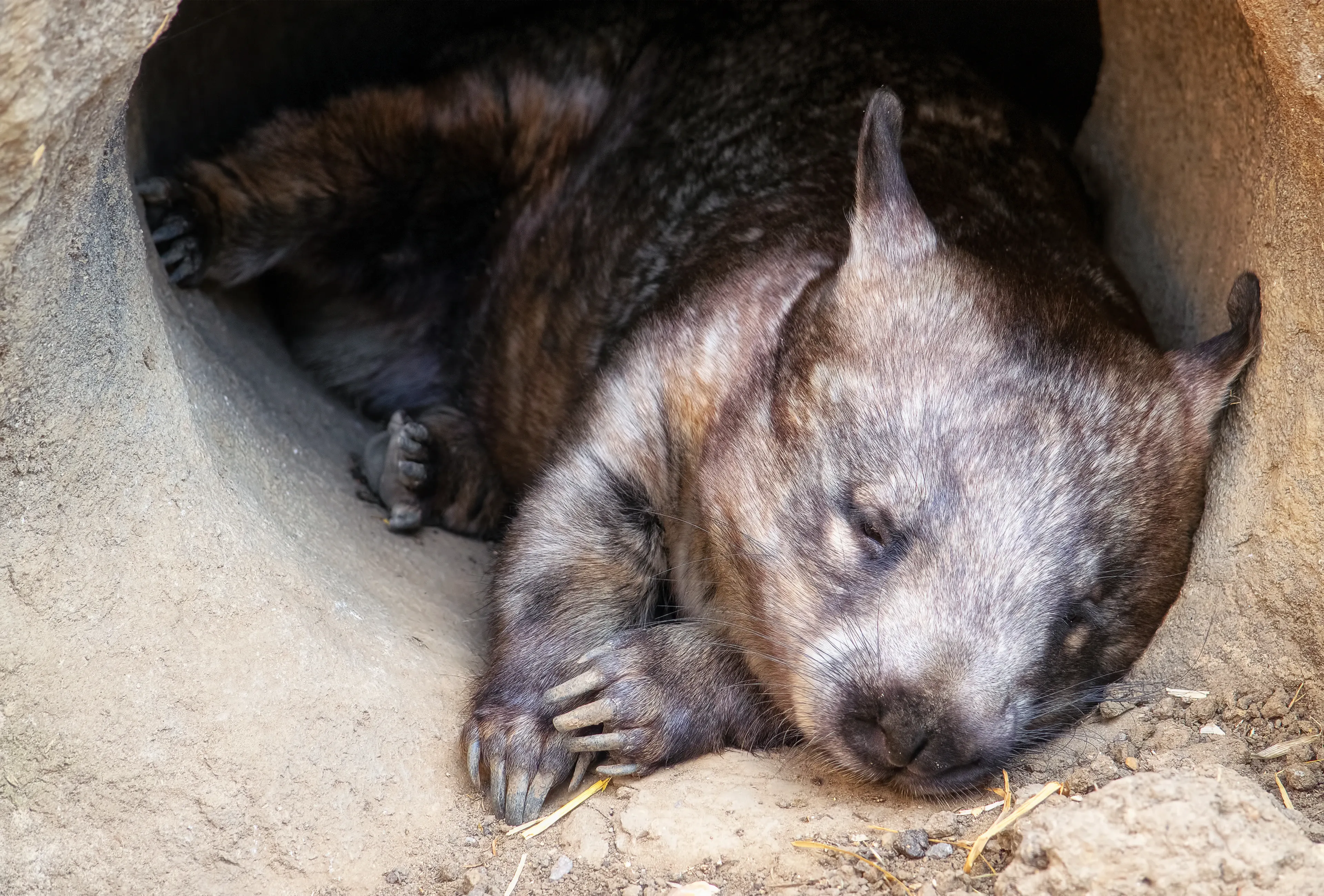 Real photograph
 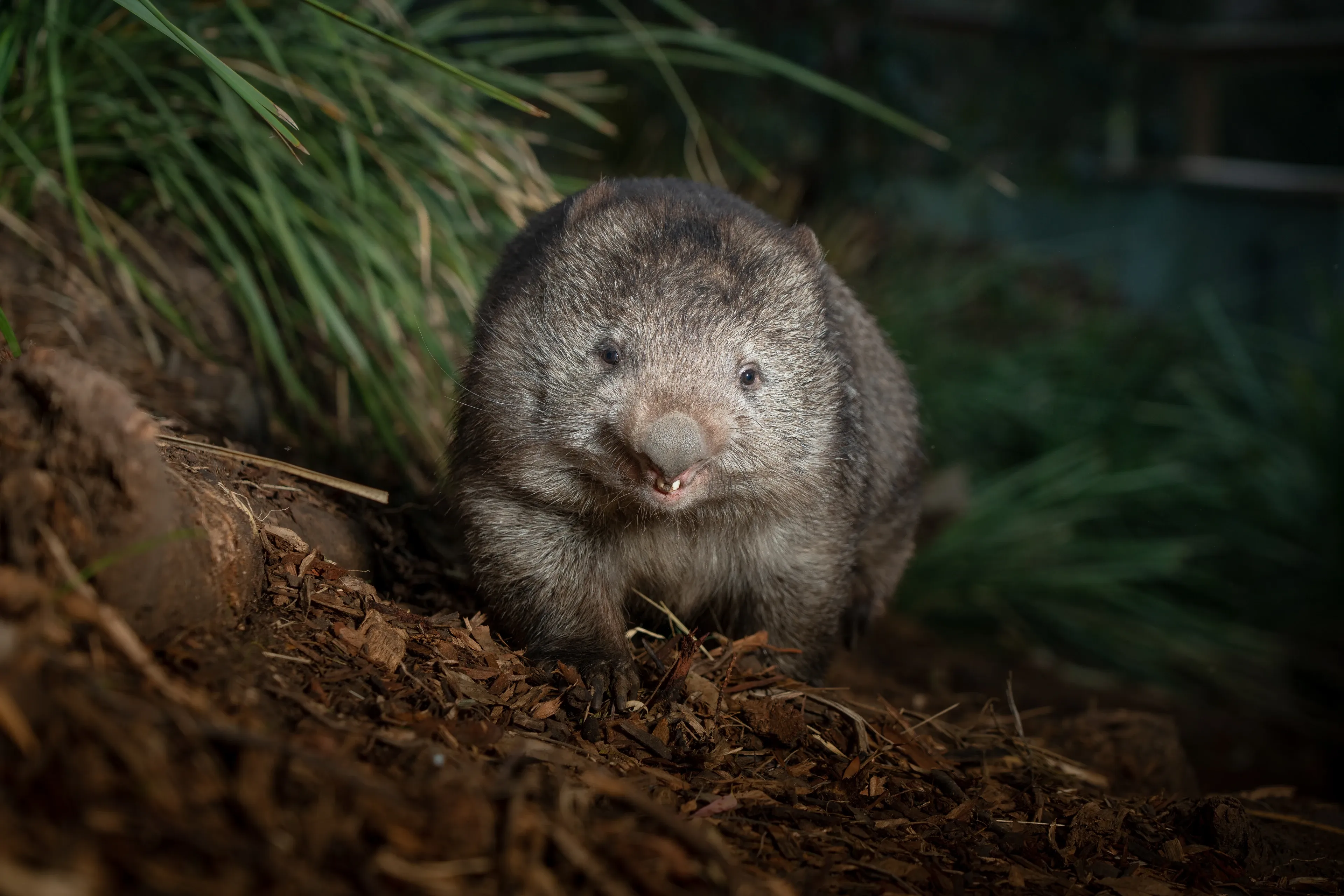 Real photograph
 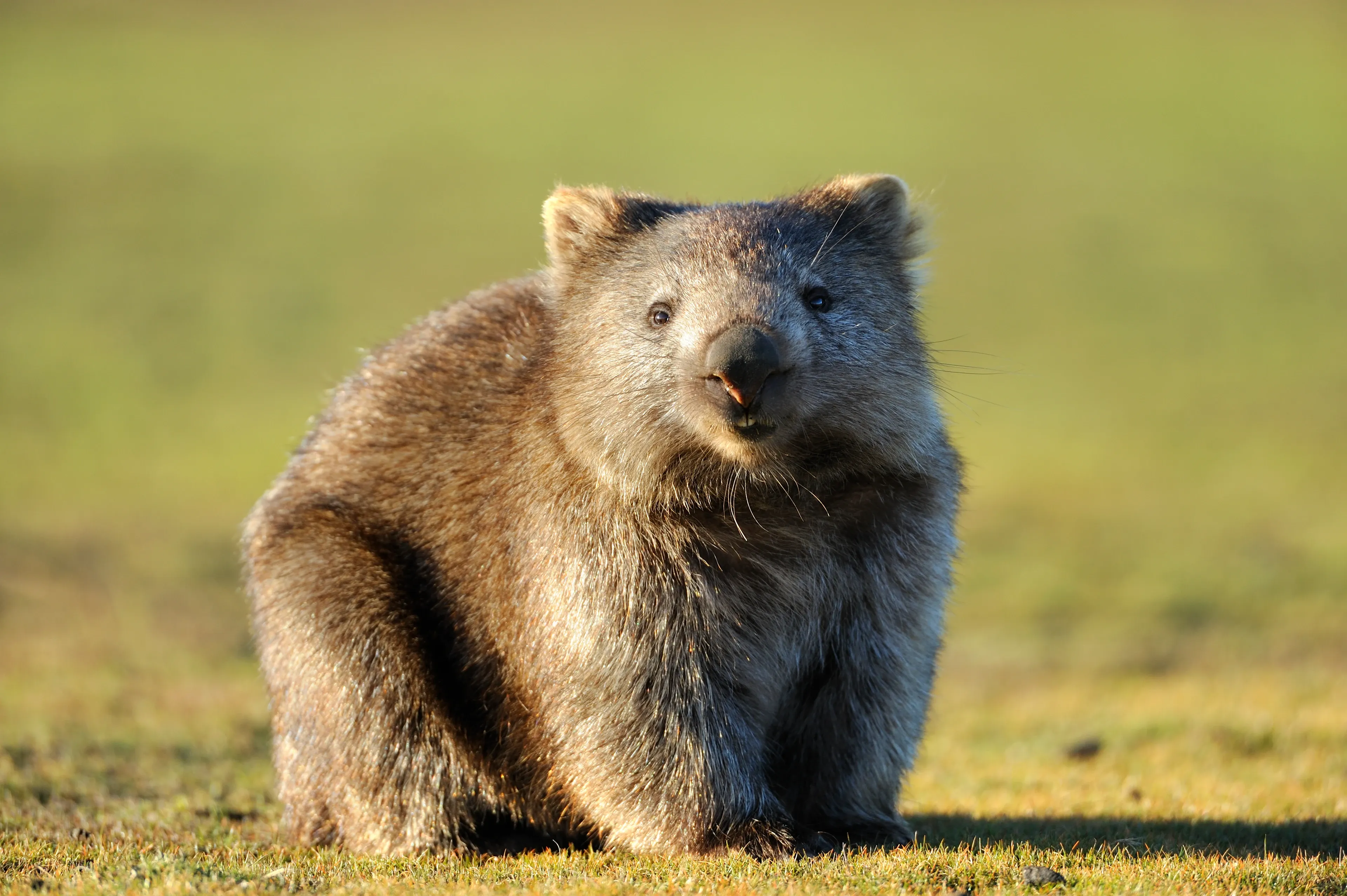 Real photograph
 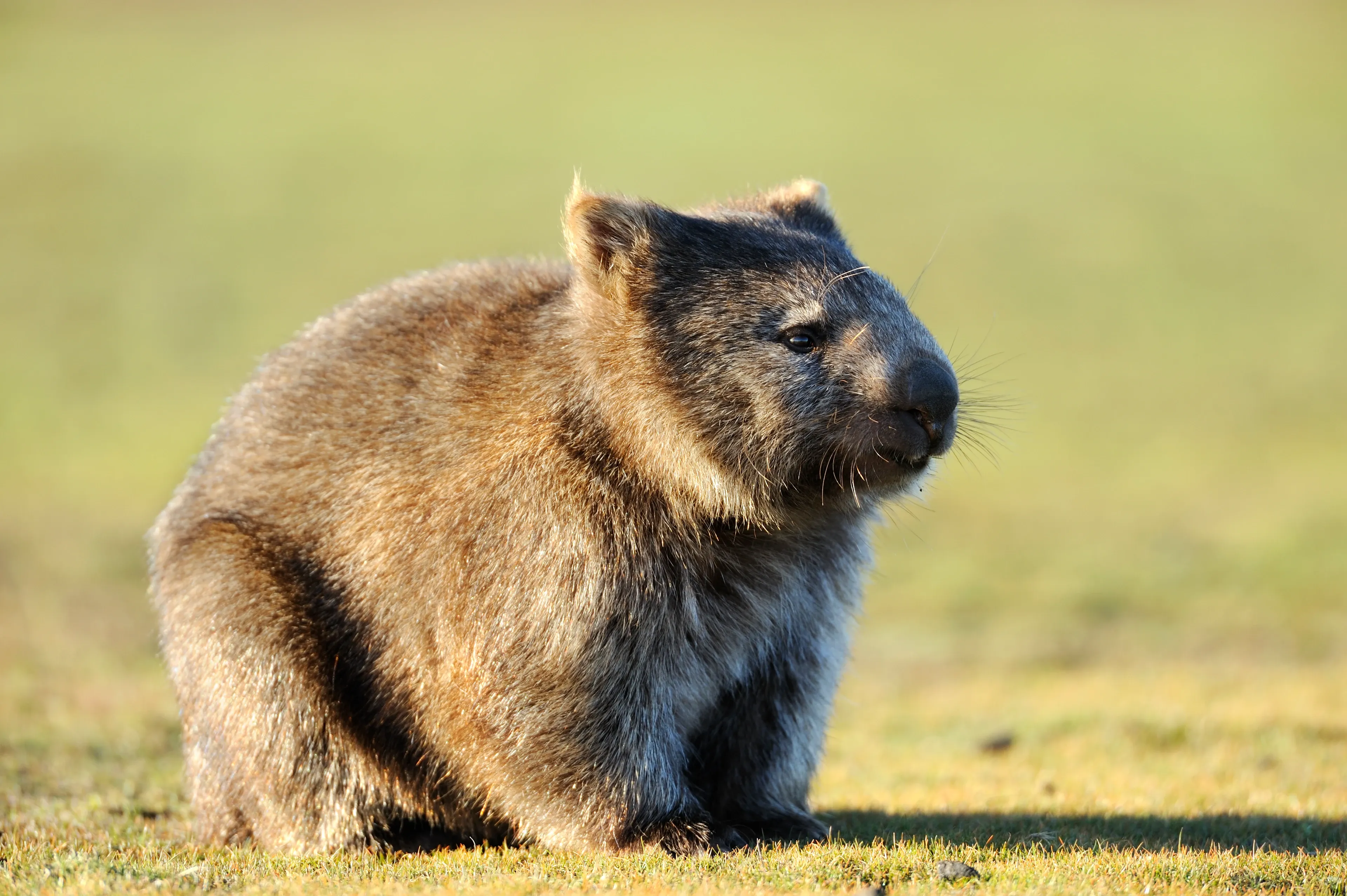 Real photograph
 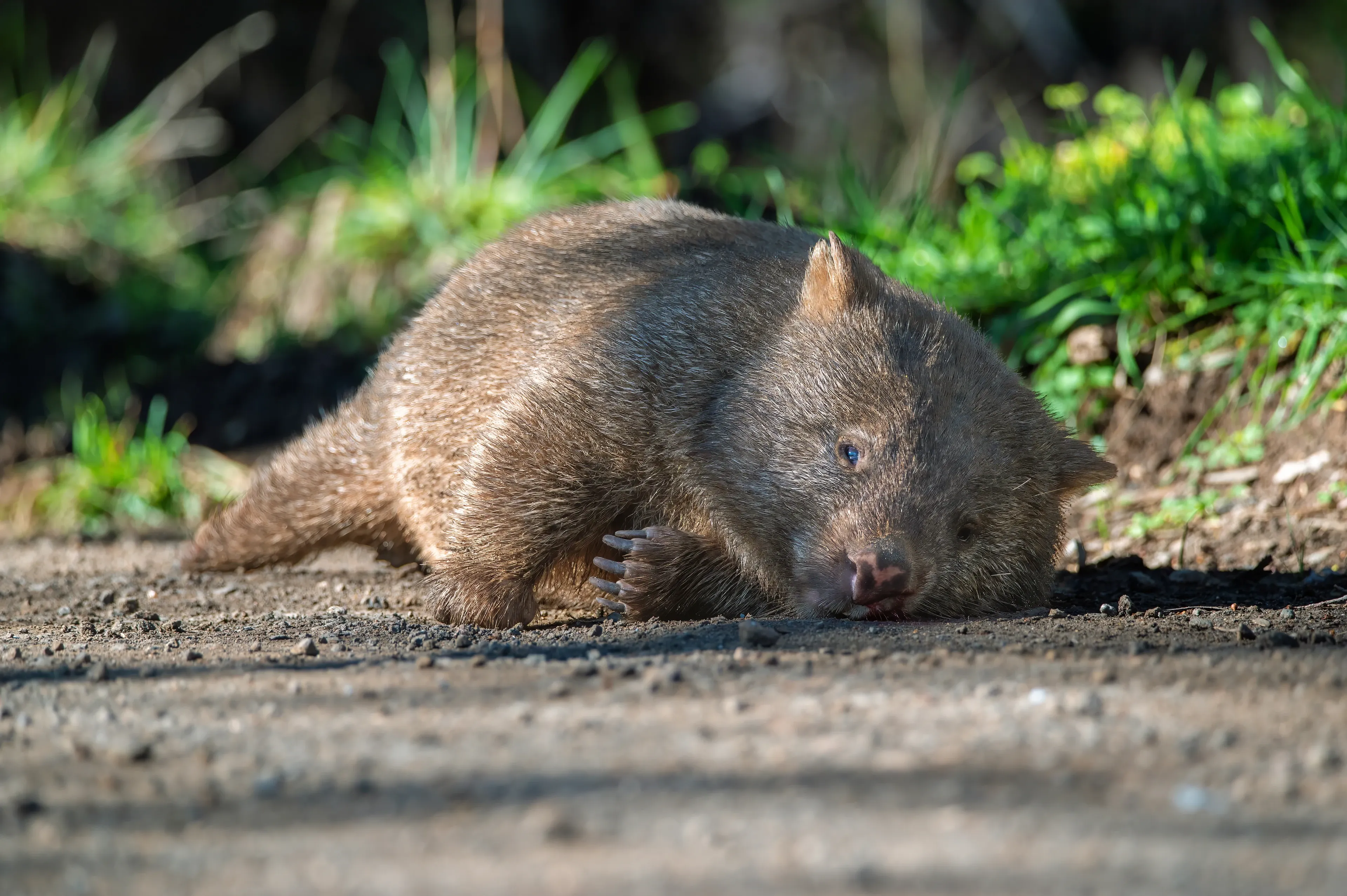 Real photograph
 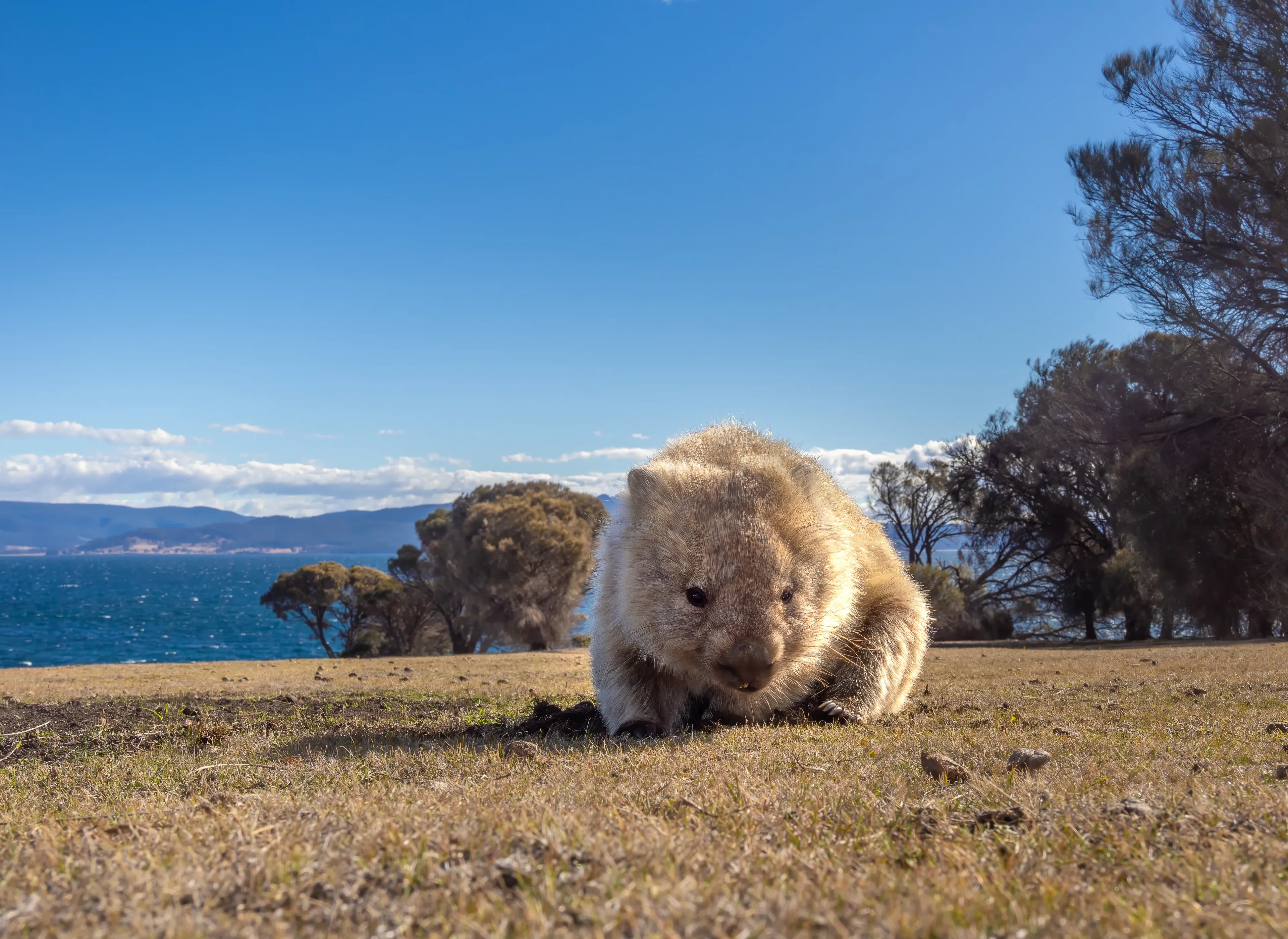 Real photograph
 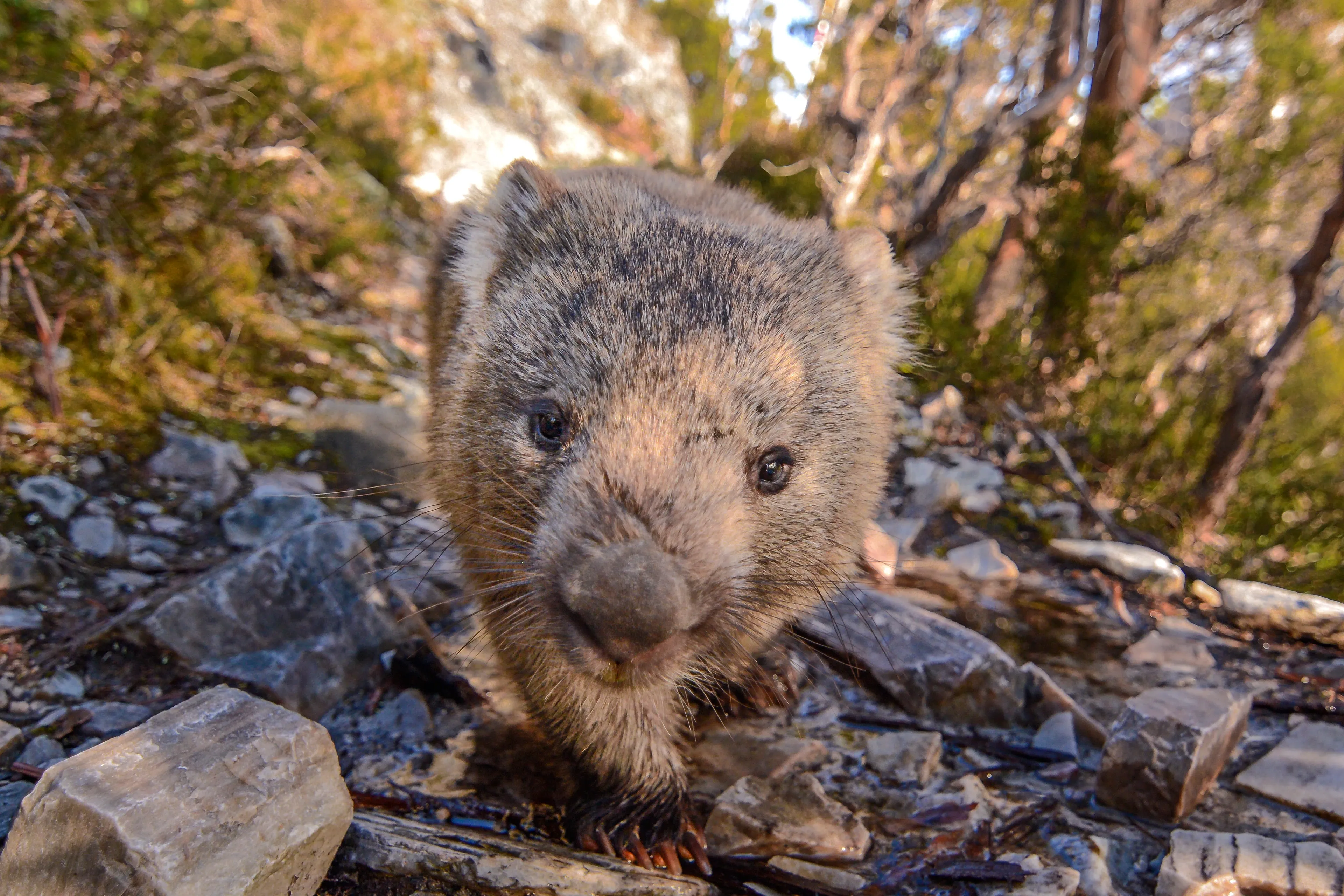 Real photograph
 Why we love them
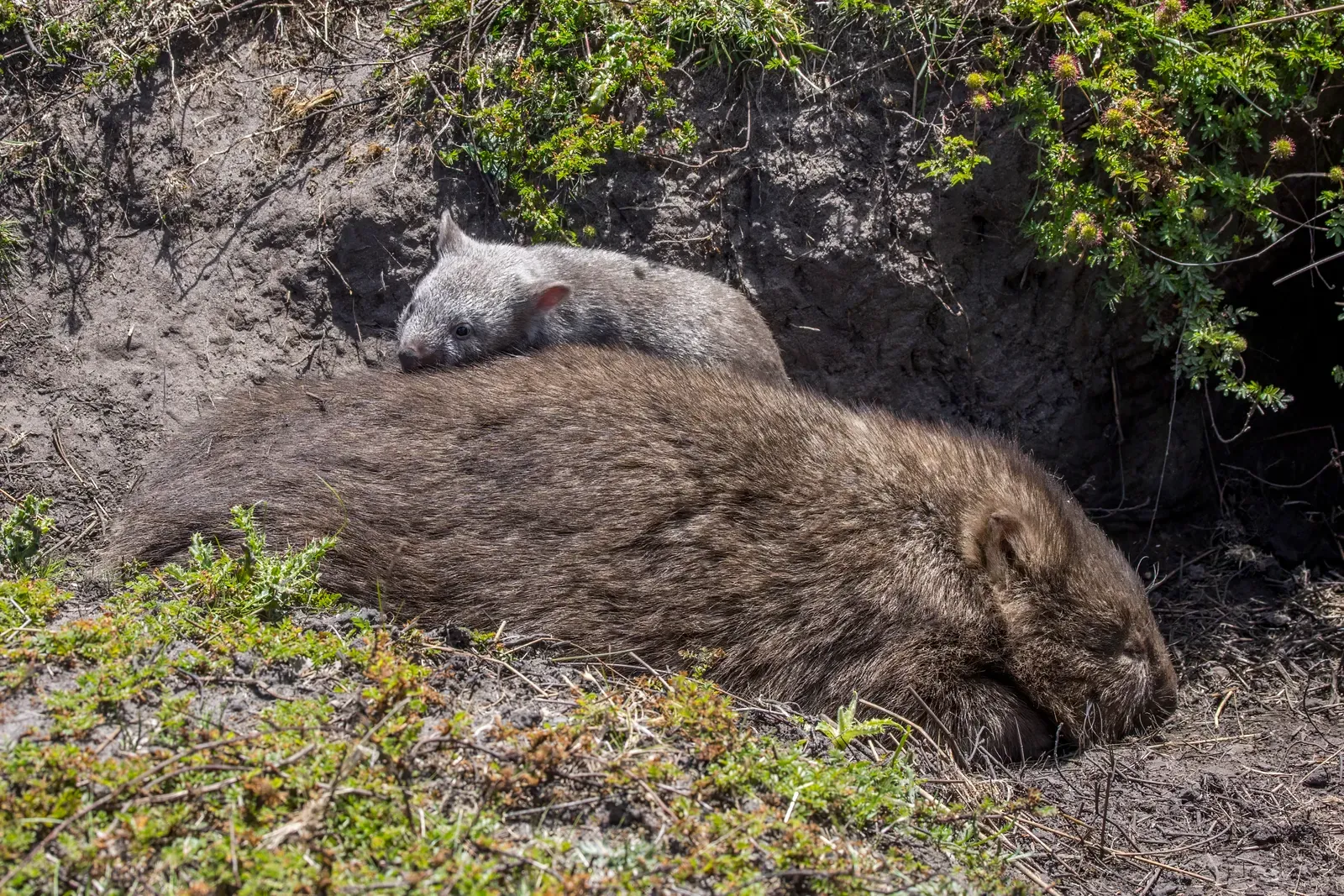
The common wombat is a sturdy, barrel-shaped animal that lives in the forests and grassy hills of southeastern Australia and the island of Tasmania. It has thick brown or grey fur, short strong legs, small ears, and a big bare nose. Even though it looks a little like a small bear, the wombat is a marsupial, which means it is part of the same family group as kangaroos and koalas.
Wombats are amazing diggers. With their strong legs and long claws, they dig deep tunnels called burrows, pushing the loose dirt backwards with their bottoms. A wombat may have several rooms in its burrow, lined with soft grass and leaves, and it can spend many hours a day resting inside where it is cool and safe.
A baby wombat is called a joey. Like other marsupials, it is tiny when it is born and climbs straight into its mother's pouch to keep growing. A wombat's pouch is special because it faces backwards, towards her back legs. That clever design stops soil from tumbling in on the joey while the mother is busy digging. The joey stays snug in the pouch for about five months before it starts to explore.
Wombats come out mostly at night and in the cool evening to munch on native grasses, sedges, roots, and bark. They have strong teeth that never stop growing, which is handy for chewing tough plants all their lives.
One of the strangest and most famous wombat facts is about their droppings. Wombats produce poo in the shape of little cubes, and they are just about the only animal on Earth that does this. They leave these tidy square droppings on logs and rocks to send messages to other wombats. Common wombats are still widespread across their home range, and people in Australia work to protect them from dangers like busy roads so these gentle diggers can keep tunnelling for a long time to come.
My home
Forest, woodland, grassland, heathland
Where I live
Oceania
What I eat
Native grasses, sedges, roots, bark, moss
How long I am
0.7–1.2 m
How heavy I am
20–35 kg
How long I live
12–15 years
A mother wombat carries her baby, called a joey, in a pouch that faces backwards, so it doesn't fill up with soil while she is busy digging.
Wombats are powerful diggers and build long underground tunnels called burrows, where they rest for much of the day to stay cool.
Wombats make cube-shaped droppings, which is very unusual, because almost no other animal in the world does poo in neat little squares.
Every common wombat can feel happy, scared and loved — just like you.
Looking after my friends
How many are there?
Australia's common-wombat population was estimated at about 840,000 in 2023.
This is a national modelled estimate rather than a direct census.
Estimate source: Common wombat
How are they doing?
Lower extinction riskThis species has a lower global extinction risk right now. Local populations can still grow or shrink.
You can help by learning their names, keeping wild places clean, and telling someone why this animal matters.
Where this came from
- Vombatus ursinus (Bare-nosed / Common Wombat) — Red List Assessment — IUCN Red List of Threatened Species
- Vombatus ursinus (coarse-haired wombat) — Animal Diversity Web, University of Michigan Museum of Zoology
- Common wombat — Wikipedia