Today's animal friend · 22 August 2026
The Little Pond Hopper with a Colour-Changing Coat
Follow a soft plop through damp grass to meet a European frog that can fade lighter or darker, begin life as an algae-nibbling tadpole, and sometimes wait out an astonishingly icy winter.
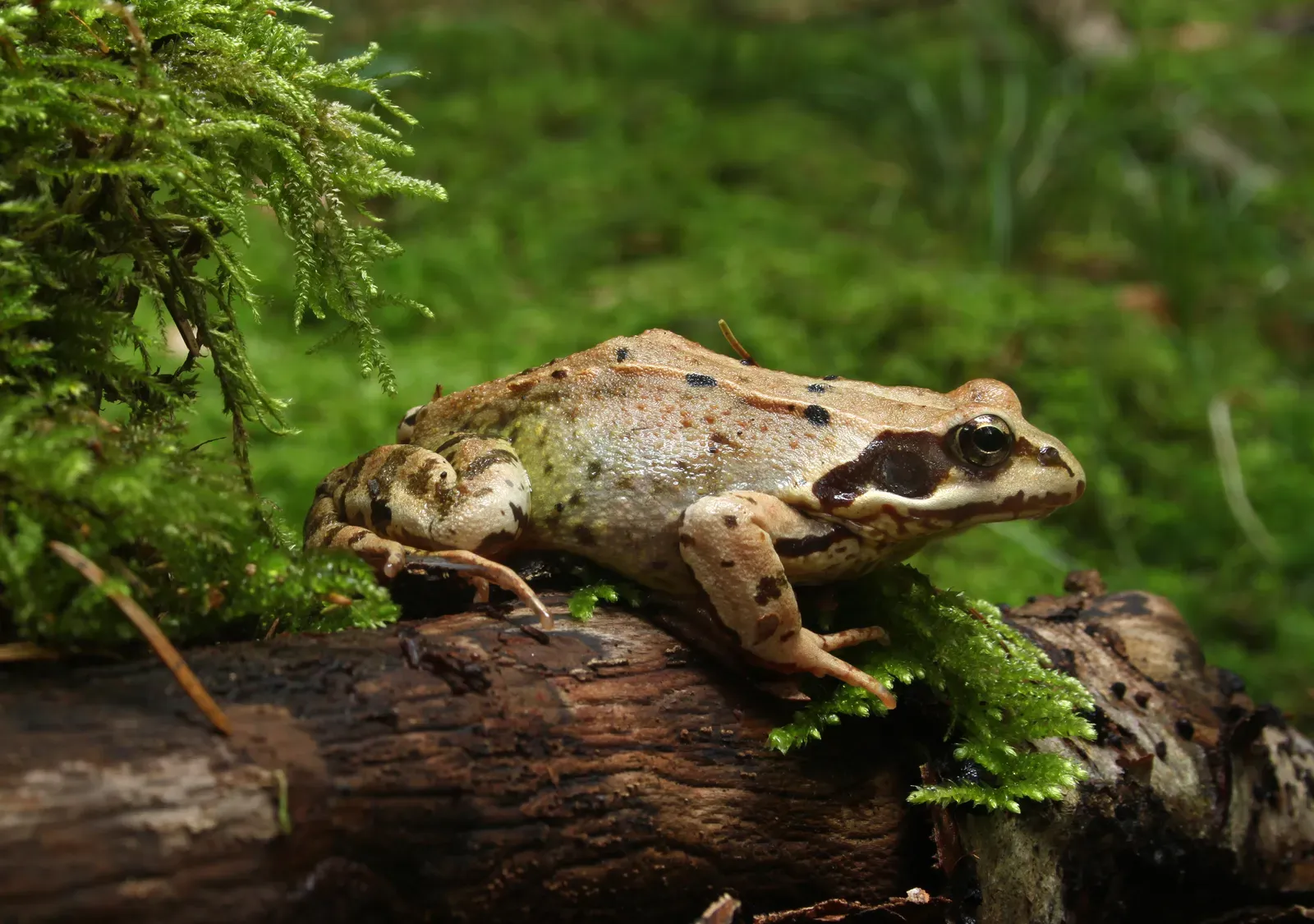
Follow a soft plop through damp grass to meet a European frog that can fade lighter or darker, begin life as an algae-nibbling tadpole, and sometimes wait out an astonishingly icy winter.
Plop! Who moved in the wet grass?
Imagine you are walking past a pond after rain. The grass is shiny, the mud smells earthy, and then—plop!—something the size of a small biscuit vanishes between the plants. You have just met a common frog, also called the European common frog or grass frog. Its scientific name is Rana temporaria.
Common frogs live across much of Europe. They use ponds, marshes, damp grassland, woodland, and gardens: places where a little moisture hangs around like a welcome puddle after bath time. They are amphibians, a group of animals closely linked with both water and land.
A grown common frog is small enough to sit comfortably in an open hand, usually about 6 to 9 centimetres long. But do not let the modest size fool you. This frog has a whole world of clever tricks packed into its smooth-skinned body.
Evidence: IUCN Red List of Threatened Species: Rana temporaria (Common Frog) — Red List Assessment; Animal Diversity Web, University of Michigan Museum of Zoology: Rana temporaria; Wikipedia: Common frog
Is that a leaf—or a frog in disguise?
One of the common frog’s niftiest talents is changing how light or dark its skin appears. A frog among dark mud, brown leaves, or green pond plants can adjust its look to blend in better. It is not putting on a new costume with stripes and sparkles—sadly, no tiny frog cape—but it can become paler or darker.
Why does that matter? A hidden frog is harder for an animal looking for a meal to spot. Camouflage gives the frog a chance to stay still, stay safe, and wait for the right moment to hop away.
Next time you look near a pond edge, try a slow, quiet scan instead of a quick glance. A common frog may be there, tucked into the scene so neatly that your eyes slide right past it. Finding one can feel like spotting a dropped coin in a leafy garden.
Evidence: IUCN Red List of Threatened Species: Rana temporaria (Common Frog) — Red List Assessment; Animal Diversity Web, University of Michigan Museum of Zoology: Rana temporaria; Wikipedia: Common frog
How can a frog face an ice-cold winter?
Here is a surprising fact: in the very cold north, some common frogs can spend up to nine months beneath ice. They can remain alive at temperatures close to freezing. That is a very different sort of winter from ours, with no woolly hat, warm cocoa, or three blankets in a tangle.
When the chilliest weather arrives, common frogs rest through the cold period. In northern places, their ability to cope with icy conditions helps them survive where winter can seem to last forever. It is a reminder that toughness does not always look loud or muscular. Sometimes it looks like a quiet frog waiting patiently in the cold.
This does not mean every frog can shrug off every danger. Very hard freezes are among the pressures that can hurt local populations. A frog’s cold-weather skill is amazing, but clean, safe habitats still matter.
Evidence: Animal Diversity Web, University of Michigan Museum of Zoology: Rana temporaria; Wikipedia: Common frog; IUCN Red List of Threatened Species: Rana temporaria (Common Frog) — Red List Assessment
From algae nibbler to wriggly-food hunter
Every common frog begins as a tadpole in water. Early on, tadpoles mostly feed on algae and plant material. Picture a tiny swimmer grazing on the greenish growth in its watery neighbourhood.
Then the big transformation gets underway. As back legs grow, the young frog shifts toward being a carnivore. Adult common frogs eat small animals such as insects, spiders, slugs, snails, and worms. They may wait quietly, then snap up a passing snack with impressive speed.
That changing menu is part of the frog’s journey from pond baby to land-and-water explorer. It also shows why a pond is more than a puddle. It is a nursery, a dining room, and a shelter all at once. Around a healthy pond, many small lives are busy doing their own important jobs.
Evidence: Animal Diversity Web, University of Michigan Museum of Zoology: Rana temporaria; Wikipedia: Common frog; IUCN Red List of Threatened Species: Rana temporaria (Common Frog) — Red List Assessment
Why does the pond suddenly sound so busy?
Common frogs are especially active at night, when gardens and wet places can become a different kind of busy. While people are indoors, frogs may be out in the damp, hunting and travelling through their neighbourhoods.
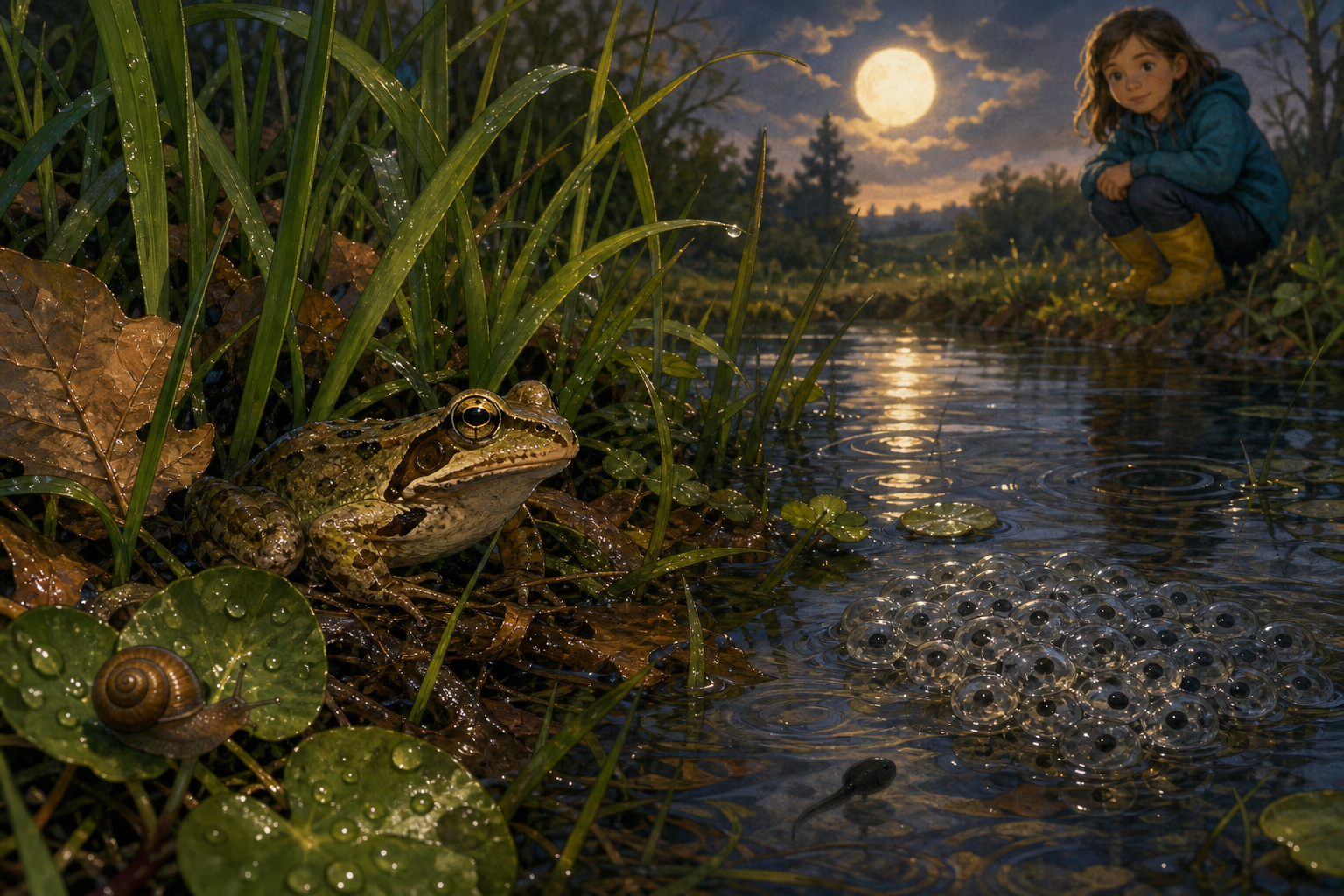
Breeding happens in water. In the breeding season, frogs gather temporarily at ponds, and males make croaking sounds. Females lay eggs in jelly-like masses. A pond can suddenly feel like a lively meeting place, with splashes, calls, and wobbling clusters of future tadpoles.
These gatherings do not make common frogs a permanently social animal. Think of it more like everyone turning up at the same playground for a special event, then heading off again. The pond is a crucial meeting spot, which is one reason disturbing breeding ponds can cause real trouble locally.
Evidence: Animal Diversity Web, University of Michigan Museum of Zoology: Rana temporaria; Wikipedia: Common frog; IUCN Red List of Threatened Species: Rana temporaria (Common Frog) — Red List Assessment
A small neighbour with a big place in the web of life
Common frogs are predators of invertebrates—animals without backbones—such as insects and spiders. They are also food for larger animals. That means a frog is both a hunter and part of someone else’s food web, like one knot in a giant, living net.
Amphibians can also tell us something about the places where they live. Because frogs depend on damp land and water, changes in ponds and wetlands can matter greatly to them. A lively frog habitat is worth noticing, not because it must be perfect, but because it is shared by so many creatures.
Globally, the common frog is listed by the IUCN as Least Concern, meaning it is widespread overall. Still, local populations can be unstable. Breeding-pond disturbance, herbicide pollution, and unusually hard freezes have been linked with local losses. “Common” should never mean “we do not have to care.”
Evidence: IUCN Red List of Threatened Species: Rana temporaria (Common Frog) — Red List Assessment; Animal Diversity Web, University of Michigan Museum of Zoology: Rana temporaria; Wikipedia: Common frog
How can we be good pond-side neighbours?
The kindest frog-helping actions are often quiet ones. Keep a respectful distance if you spot a frog. Watch with your eyes, not your hands: frogs have delicate skin, and a wild animal deserves the choice to carry on with its day—or night—without being chased or picked up.
Clean breeding ponds and damp patches of garden or meadow habitat can support local frogs. Reducing herbicide contamination near wetlands also matches the known pressures on local populations. If you are planning anything near a pond, invite a grown-up to help think carefully about what animals already call it home.
And remember the rain-night rule: where a frog may be crossing, slow down and look closely. A little patience can turn an ordinary walk into a wildlife treasure hunt. The prize is not taking the frog home. The prize is knowing it is still out there, hopping through its own watery adventure.
Evidence: Animal Diversity Web, University of Michigan Museum of Zoology: Rana temporaria; IUCN Red List of Threatened Species: Rana temporaria (Common Frog) — Red List Assessment; Wikipedia: Common frog
Kind choices can ripple farther than a pond
Caring about a frog can start with noticing that its life matters to it: a safe place to rest, clean water for its young, and room to hop without being bothered. That same caring idea can reach our plates, too. Animals are friends in a shared world, not objects to use up.
Meals built around vegetables, fruit, whole grains, pulses, nuts, and seeds can be colourful, filling, and full of interesting tastes. The World Health Organization includes these foods in guidance on healthy diets. Every family is different, so children should talk with a trusted adult and a qualified health professional about their own food needs.
Choosing more plant-based meals, when your family can, is also a gentle way to care for habitats. The IPCC reports that shifts toward sustainable, healthy, more plant-based diets can reduce food-system emissions and pressure on land and biodiversity. Perhaps a bean stew, lentil pasta, or veggie wrap can be one small, cheerful ripple of kindness.
Evidence: World Health Organization: Healthy diet; Intergovernmental Panel on Climate Change: Climate Change 2022: Mitigation of Climate Change — Chapter 7
Questions people ask
Are common frogs really able to live under ice?
In the far north, a common frog can spend up to nine months trapped under ice and remain alive at temperatures close to freezing. It rests through the cold season rather than behaving like an active summer frog.
Evidence: Animal Diversity Web, University of Michigan Museum of Zoology: Rana temporaria; Wikipedia: Common frog; IUCN Red List of Threatened Species: Rana temporaria (Common Frog) — Red List Assessment
What should I do if I see one in my garden?
Enjoy the sight quietly and give it space. Looking without touching is a friendly choice. Clean ponds, damp sheltering places, and less herbicide contamination around wetlands can help support local frog habitat.
Evidence: Animal Diversity Web, University of Michigan Museum of Zoology: Rana temporaria; IUCN Red List of Threatened Species: Rana temporaria (Common Frog) — Red List Assessment; Wikipedia: Common frog
Do common frogs eat plants?
Young tadpoles mostly eat algae and plant material. After they develop, common frogs become carnivores, catching small creatures including insects, spiders, slugs, snails, and worms.
Evidence: Animal Diversity Web, University of Michigan Museum of Zoology: Rana temporaria; Wikipedia: Common frog; IUCN Red List of Threatened Species: Rana temporaria (Common Frog) — Red List Assessment
Read the evidence
Sources behind this story
- Rana temporaria (Common Frog) — Red List Assessment — IUCN Red List of Threatened Species
- Rana temporaria — Animal Diversity Web, University of Michigan Museum of Zoology
- Common frog — Wikipedia
- Healthy diet — World Health Organization
- Climate Change 2022: Mitigation of Climate Change — Chapter 7 — Intergovernmental Panel on Climate Change
Health information is general education, not personal medical advice. Young readers should make food choices with a trusted adult and qualified health professional.