Today's animal friend · 16 November 2026
The Night-Shift Gardener with Tiny Tail Tongs
If you spot one under a flowerpot, pause before you squeal. This small, shiny insect may be heading home after a busy night of scavenging, hunting, and—if she is a mother—some remarkable nursery work.
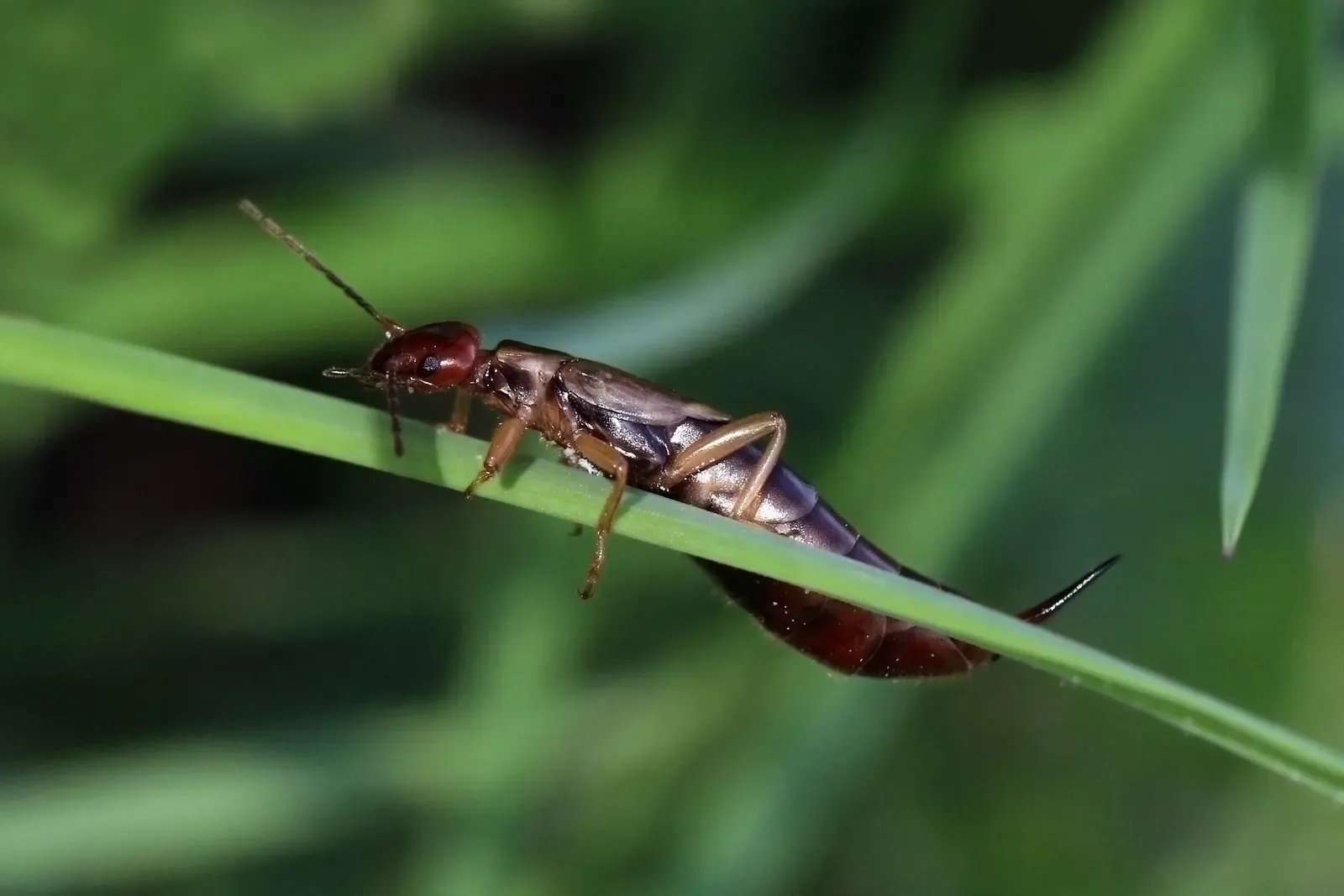
If you spot one under a flowerpot, pause before you squeal. This small, shiny insect may be heading home after a busy night of scavenging, hunting, and—if she is a mother—some remarkable nursery work.
Under the flowerpot: a little midnight surprise
Lift a flowerpot carefully on a damp morning and something reddish-brown may hurry for the shadows. It is slim, shiny, and only about as long as a small paperclip. At its tail are two little tongs. “Eek—pincers!” is an understandable first thought. But meet the common earwig, also called the European earwig: a garden neighbour with much more interesting plans than bothering people.
Those tail tongs are called forceps. They can look like a tiny pair of barbecue tongs, but they are harmless to us. Earwigs use them mostly in displays to other earwigs and for gentle defence. Males usually have heavier, curved forceps, while females’ are straighter and more slender. The forceps can even help with folding their delicate wings. So the next time you see one, think “small insect toolkit,” not “monster movie.”
The common earwig’s scientific name is Forficula auricularia. It is an insect in the order Dermaptera, a name shared by earwigs around the world. This one lives in temperate places across Europe, Asia, and North America, including gardens, woodland, and other spots with good hiding places. A crack beneath bark or a pile of leaf litter can be an earwig-sized apartment block.
Evidence: IUCN Red List of Threatened Species: Forficula auricularia — IUCN Red List status check; Animal Diversity Web, University of Michigan Museum of Zoology: Forficula auricularia (European earwig); Wikipedia: Forficula auricularia
Why does it vanish in daylight?
Because the common earwig works the night shift. By day, it rests in dark, moist shelters: under rocks, wood, bark, pots, and curled leaves. These cool hideaways help it avoid the bright, drying daytime world. Then, when evening softens the garden, out it crawls.
Imagine the garden after dark. A damp path glints. Leaves shuffle in the breeze. Somewhere near the soil, an earwig explores with its antennae, squeezing through spaces that would be much too small for your little finger. It is a weak flier and mostly gets about by crawling. It may also travel farther by hitchhiking with human transport—an accidental passenger rather than a globe-trotting pilot.
This is why looking after a garden can feel like reading a secret book. The daytime page may look quiet. But beneath a pot or under a loose patch of bark, another story is waiting. If you peek, do it gently and put the shelter back where it was. A hiding place can be an important little refuge.
Evidence: Animal Diversity Web, University of Michigan Museum of Zoology: Forficula auricularia (European earwig); Wikipedia: Forficula auricularia
What is on an earwig’s dinner menu? Nearly everything small
Common earwigs are omnivores, which means their menu includes both plant material and animals. They may eat aphids and mites, along with leaves, fruit, flowers, lichens, and other plant bits. They also scavenge. In other words, an earwig is not a fussy restaurant critic. It is more like a tiny night-time cleaner, sampler, and hunter rolled into one.
Aphids are small sap-sucking insects that gather on plants. By eating aphids and other small creatures, earwigs can sometimes help gardeners. In orchards, their appetite for aphids may be useful. Yet a mixed menu means they can also nibble plants or fruit, so they are not perfectly tidy garden superheroes with capes. Nature is usually more complicated—and more interesting—than that.
Earwigs are part of a busy food web, too. They can be eaten by beetles, tachinid flies, amphibians, reptiles, and birds. That means one earwig’s midnight snack may help connect many lives in a garden or woodland. Even the creatures people overlook have jobs, meals, enemies, and places in the great outdoor jumble.
Evidence: Animal Diversity Web, University of Michigan Museum of Zoology: Forficula auricularia (European earwig); Wikipedia: Forficula auricularia
The surprising nursery beneath the soil
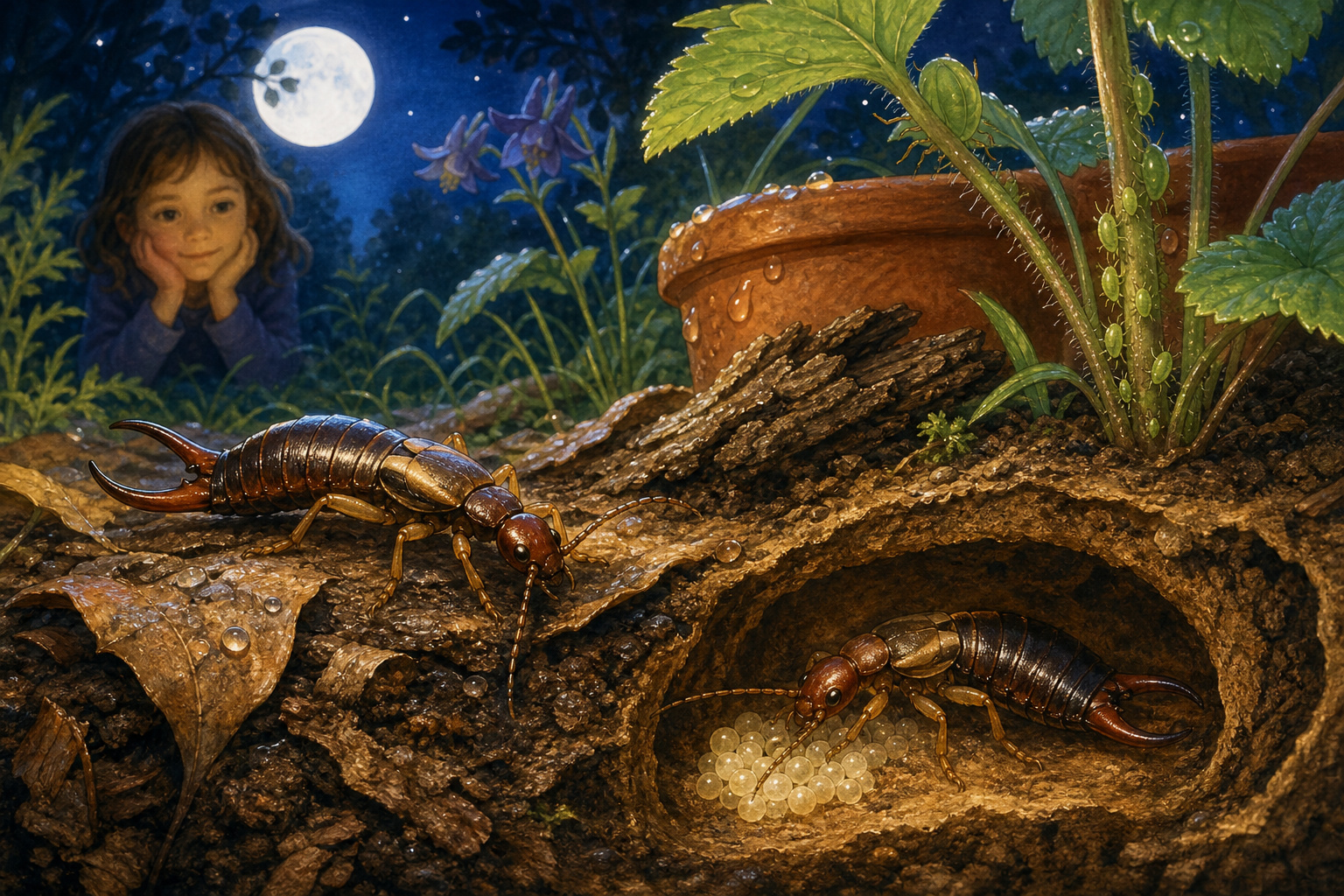
Here is the common earwig’s biggest surprise: mothers are wonderfully attentive. A female makes a nest in soil and lays a clutch of about fifty eggs. Instead of simply leaving them, she stays to guard them. For an insect, that kind of parent care is unusual—and rather lovely.
The eggs need careful cleaning. The mother uses her mouth and forceps to clean each one and help keep mould away. Picture a parent polishing a collection of tiny pearls, except the pearls are eggs tucked safely underground. She guards the eggs until they hatch and cares for the young nymphs at first. Nymphs are young earwigs that are not yet adults.
This hidden nursery gives us a reason to look with extra kindness at the dark corners of a garden. A patch of rich soil is not “nothing.” It might be a home, a tunnel, a snack cupboard, or a nursery. We do not have to pick up every small creature to appreciate it. Sometimes the kindest way to be curious is to watch quietly, then let it continue its important business.
Evidence: Animal Diversity Web, University of Michigan Museum of Zoology: Forficula auricularia (European earwig); Wikipedia: Forficula auricularia
A creature with a scary story attached
Earwigs have carried a very silly rumour for a long time: that they crawl into people’s ears. There is no need to believe it. The common earwig’s forceps are harmless to people, and this animal is far more likely to be looking for a dark, damp shelter than for a human ear. Honestly, a flowerpot is a much better earwig hotel.
Why do unusual animals get blamed? Sometimes a shape makes us jump before we know the story. A spider has legs. A bat flies at dusk. An earwig has forceps. But a closer look often swaps “scary” for “fascinating.” The forceps help earwigs communicate and defend themselves; they do not make them villains.
Try a scientist’s trick when you meet a creature that surprises you: pause, make space, and ask a question. Where is it going? What might it eat? Where could it be hiding from the heat? Curiosity turns a garden scare into an outdoor adventure—and it helps us notice animals as neighbours, not nuisances.
Evidence: Animal Diversity Web, University of Michigan Museum of Zoology: Forficula auricularia (European earwig); Wikipedia: Forficula auricularia
How can a garden make room for small neighbours?
The common earwig is listed as Not Evaluated on the IUCN Red List in the supplied records. That does not mean it has no value; it means we should not pretend a global assessment says more than it does. The sources do not identify a species-wide extinction threat or a known global population trend. Still, local earwigs can be affected when their shelter is disturbed or when broad insect-killers are used.
A welcoming garden does not need to be wild and tangled everywhere. It can simply include some gentle, damp cover: leaf litter, bark, a log, or a pot that is lifted and replaced carefully. If a gardener needs to deal with plant pests, it is worth asking a knowledgeable adult about approaches that avoid unnecessary broad-spectrum insecticides, which can affect many insects rather than just one target.
Small choices are a vote for noticing. Leave a tiny patch of leaves. Watch before sweeping. Carry an earwig outside in a cup rather than squashing it indoors, if a grown-up says it is safe to do so. You may never know whether that particular earwig is a night-shift aphid hunter or a mother returning to a hidden nest—but either way, it deserves a little room in the world.
Evidence: IUCN Red List of Threatened Species: Forficula auricularia — IUCN Red List status check; Animal Diversity Web, University of Michigan Museum of Zoology: Forficula auricularia (European earwig)
One gentle choice, stretching from dinner to the garden
Caring about earwigs can begin with a simple thought: small lives are still lives. A common earwig is not a vegetable-munching machine or a pest-shaped problem. It is a night traveller, a possible prey animal, and sometimes a parent tending eggs one by one. When we choose patience instead of an automatic squish, we practise kindness toward the living world close to home.
Our food choices can be another gentle way to care for that world. The World Health Organization describes healthy eating patterns that include plenty of vegetables, fruit, whole grains, pulses, nuts, and seeds. The IPCC reports that shifts toward sustainable, healthy, more plant-based diets can reduce food-system emissions and pressure on land and biodiversity. That is a hopeful invitation, not a rulebook: perhaps try a bean dish, crunchy seeds, or a favourite fruit with your family, and celebrate plants as part of a kinder plate.
You do not have to save everything all at once. Notice the earwig under the pot. Respect its shelter. Enjoy plant-powered foods when you can. Many small, thoughtful choices can add up like leaves in a compost heap—quietly making something good.
Evidence: World Health Organization: Healthy diet; Intergovernmental Panel on Climate Change: Climate Change 2022: Mitigation of Climate Change — Chapter 7; Animal Diversity Web, University of Michigan Museum of Zoology: Forficula auricularia (European earwig)
Questions people ask
Can a common earwig hurt me with its forceps?
No. The forceps are harmless to people. They are mainly used in displays with other earwigs and for gentle defence.
Evidence: Animal Diversity Web, University of Michigan Museum of Zoology: Forficula auricularia (European earwig); Wikipedia: Forficula auricularia
Are earwigs good or bad for gardens?
They can be both helpful and occasionally troublesome. They eat aphids and other small animals, but they also eat plant material such as leaves, fruit, and flowers. They are best understood as part of a complicated garden community.
Where should I look for one?
Look carefully in dark, damp daytime shelters such as under a pot, loose bark, wood, rocks, or leaf litter. Replace anything you lift so the hiding place stays useful.
Evidence: Animal Diversity Web, University of Michigan Museum of Zoology: Forficula auricularia (European earwig); Wikipedia: Forficula auricularia
Why is an earwig mother special?
She stays with her eggs in a soil nest, guards them, and cleans them to help keep mould away. She also provides care for her young nymphs at first.
Evidence: Animal Diversity Web, University of Michigan Museum of Zoology: Forficula auricularia (European earwig); Wikipedia: Forficula auricularia
Read the evidence
Sources behind this story
- Forficula auricularia — IUCN Red List status check — IUCN Red List of Threatened Species
- Forficula auricularia (European earwig) — Animal Diversity Web, University of Michigan Museum of Zoology
- Forficula auricularia — Wikipedia
- Healthy diet — World Health Organization
- Climate Change 2022: Mitigation of Climate Change — Chapter 7 — Intergovernmental Panel on Climate Change
Health information is general education, not personal medical advice. Young readers should make food choices with a trusted adult and qualified health professional.