Today's animal friend · 14 July 2026
Clownfish: The Tiny Reef Neighbour With a Stinging-Flower Home
Orange, striped, and only about as long as a pencil, the clown anemonefish makes its home where many other fish would never dare to swim: among the waving, stinging tentacles of a sea anemone.
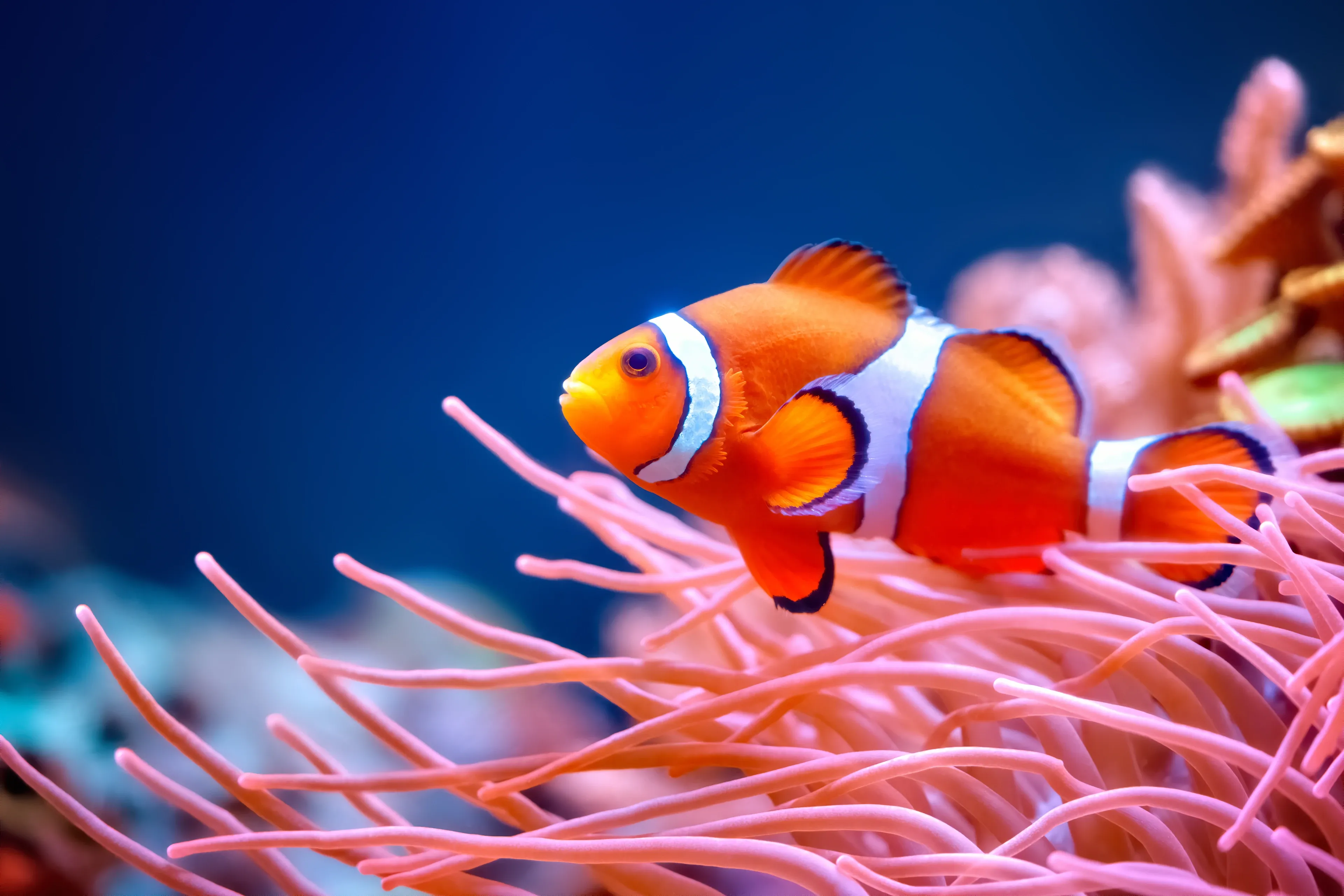
Orange, striped, and only about as long as a pencil, the clown anemonefish makes its home where many other fish would never dare to swim: among the waving, stinging tentacles of a sea anemone.
A clownfish’s answer to danger is to swim closer to it
On a warm coral reef or in a lagoon of the Indian and Pacific oceans, a small orange fish flashes between pale, waving tentacles. Its bold white stripes, edged in black, make it easy for us to notice. For a larger fish looking for a snack, though, those tentacles are a serious warning. They belong to a sea anemone, an animal whose touch can sting.
The clownfish, also called the clown anemonefish or false clownfish, does something wonderfully unexpected: it slips right in. A special slippery protective coat allows it to live among the anemone’s stinging tentacles without being harmed. The anemone becomes a sheltering, swaying home where the fish can hide from bigger fish.
That does not mean the clownfish is simply borrowing a safe address. Clownfish and anemones help one another. The anemone offers protection, while the clownfish helps keep its companion tidy and can chase away little pests. It is a partnership between two very different animals, each doing better alongside the other. On a reef full of separate-looking lives, this pair reminds us that neighbours can matter enormously.
Evidence: IUCN Red List of Threatened Species: Amphiprion ocellaris (Clown Anemonefish) — Red List Assessment; Australian Museum: Clown Anemonefish (Amphiprion ocellaris); Monterey Bay Aquarium: Clownfish — Animal Guide
This famous fish is small, busy, and at home on the reef
The species in this story is Amphiprion ocellaris. It belongs to the fish family Pomacentridae and is an omnivore: its meals include algae, plankton, and small crustaceans. Rather than roaming far from its familiar anemone home, it can feed on the tiny foods available around the reef.
A clownfish is only about 8–11 centimetres long. That is a modest size in the wide ocean, but small does not mean unimportant. Reefs are lively communities of animals, plants, and other living things, and a little fish’s daily movements are part of the larger pattern. Clownfish are active by day, when sunlight brings colour to the reef and drifting food can be found.
In the wild, a clownfish may live around 6–10 years. Its bright pattern is often the first thing people remember, but its most impressive feature may be its steady attachment to a particular anemone. Imagine having a home whose doorway is a forest of tentacles—and knowing exactly how to move safely through it.
Evidence: Australian Museum: Clown Anemonefish (Amphiprion ocellaris); Monterey Bay Aquarium: Clownfish — Animal Guide; IUCN Red List of Threatened Species: Amphiprion ocellaris (Clown Anemonefish) — Red List Assessment
A clownfish family can change as it grows
Clownfish family life has a twist that can sound like a piece of reef magic. Every clownfish hatches male. In a group, the largest fish can become the female, and she is the largest member of the group. This is a real part of the species’ biology, not a costume change or a trick.
It is a useful reminder that animal lives do not have to follow the patterns that humans expect. The reef is full of different ways of growing, finding food, sharing space, and raising a next generation. When we learn about those differences with curiosity, we make room for the amazing variety of life around us.
For the clownfish, home and family are closely linked. The anemone is not just a hiding place in a risky ocean; it is the centre of the group’s daily life. Watching one would mean looking carefully: a quick orange movement, a pause among the tentacles, then another small journey out into the daylight.
Evidence: Monterey Bay Aquarium: Clownfish — Animal Guide; Australian Museum: Clown Anemonefish (Amphiprion ocellaris); IUCN Red List of Threatened Species: Amphiprion ocellaris (Clown Anemonefish) — Red List Assessment
Healthy reefs give clownfish a place to belong
The clown anemonefish is listed as Least Concern on the IUCN Red List assessment published in 2021, with a stable population trend recorded there. That is encouraging news, but it is not a reason to stop caring. This fish depends on coral-reef habitats, and damage to coral reefs is a concern for its future. Collection for the aquarium trade is also a watch-point.
The hopeful part is that caring can be practical. We can learn to see a reef not as a colourful backdrop, but as a neighbourhood of individuals and relationships: an anemone holding out its tentacles, a clownfish returning home, and many other lives sharing the same water. Protecting the places animals need is one way of respecting the animals themselves.
If you see a clownfish in a public aquarium, let its story lead to good questions. Where did this animal come from? How is its welfare supported? What does a healthy reef need? Curiosity is not only about collecting cool facts. It can grow into attention, kindness, and a wish to leave wild homes safe for the animals who live there.
Evidence: IUCN Red List of Threatened Species: Amphiprion ocellaris (Clown Anemonefish) — Red List Assessment; Australian Museum: Clown Anemonefish (Amphiprion ocellaris); Monterey Bay Aquarium: Clownfish — Animal Guide
Try the ‘reef-neighbour’ way of looking
Next time you spot an animal—even a tiny one—try asking three questions: Where is its home? Who are its neighbours? What does it need to flourish? For a clownfish, the answers lead straight to a coral reef, a sea anemone, a small group of fellow clownfish, and food drifting through the water.
This way of looking changes an animal from a decoration into a somebody with a life of its own. The clownfish is not brave because it has no fear; we cannot know what it feels. But we can see that it has a clever, close-fitting way to meet the challenges of reef life. Its striped body disappears and reappears among the tentacles, in a partnership shaped by countless ordinary days in the sea.
The next time an orange-and-white clownfish comes to mind, picture more than a familiar face. Picture a small reef resident, returning to a living home and sharing its world with an anemone. That is a much richer adventure than any story of a fish travelling alone.
Evidence: Australian Museum: Clown Anemonefish (Amphiprion ocellaris); Monterey Bay Aquarium: Clownfish — Animal Guide; IUCN Red List of Threatened Species: Amphiprion ocellaris (Clown Anemonefish) — Red List Assessment
A kind choice can begin at the dinner table
Loving a clownfish can mean noticing that its safety is tied to a living reef—and that animals everywhere have homes, needs, and lives that matter. We do not have to be perfect to practise kindness. We can start with curiosity and choose, when we can, meals that make room for compassion.
The World Health Organization describes healthy dietary patterns as varied and built around foods such as whole grains, vegetables, fruit, pulses, nuts, and seeds. With a trusted adult and, when needed, a qualified health professional, young people can explore colourful plant-forward or vegan foods that suit their family and their own needs; this is general information, not a one-size-fits-all rule.
Choosing more plant-based foods can be a gentle way to care about fellow animals and the shared planet. The IPCC reports that shifts toward sustainable, healthy, more plant-based diets can reduce food-system emissions and pressure on land and biodiversity. A bean taco, lentil soup, vegetable stir-fry, or fruit-and-oat breakfast can be a small, cheerful vote for a world where more wild neighbours have room to thrive.
Evidence: World Health Organization: Healthy diet; Intergovernmental Panel on Climate Change: Climate Change 2022: Mitigation of Climate Change — Chapter 7
Questions people ask
Why doesn’t a sea anemone sting a clownfish?
A clownfish has a special slippery protective coat that allows it to live among the anemone’s stinging tentacles without being harmed.
Evidence: Australian Museum: Clown Anemonefish (Amphiprion ocellaris); Monterey Bay Aquarium: Clownfish — Animal Guide
What do clownfish eat?
They are omnivores that eat algae, plankton, and small crustaceans.
Evidence: Australian Museum: Clown Anemonefish (Amphiprion ocellaris); Monterey Bay Aquarium: Clownfish — Animal Guide
How big is a clownfish?
Amphiprion ocellaris is about 8–11 centimetres long.
Evidence: Australian Museum: Clown Anemonefish (Amphiprion ocellaris)
Do clownfish really change sex?
Yes. All clownfish hatch male, and the dominant, largest fish in a group can become female.
Evidence: Monterey Bay Aquarium: Clownfish — Animal Guide
Are clownfish endangered?
The IUCN assessment lists Amphiprion ocellaris as Least Concern. Even so, reef damage and collection for the aquarium trade are important concerns to watch.
Evidence: IUCN Red List of Threatened Species: Amphiprion ocellaris (Clown Anemonefish) — Red List Assessment
Read the evidence
Sources behind this story
- Amphiprion ocellaris (Clown Anemonefish) — Red List Assessment — IUCN Red List of Threatened Species
- Western Clown Anemonefish, Amphiprion ocellaris Cuvier, 1830 — Australian Museum
- Clownfish — Animal Guide — Monterey Bay Aquarium
- Healthy diet — World Health Organization
- Climate Change 2022: Mitigation of Climate Change — Chapter 7 — Intergovernmental Panel on Climate Change
Health information is general education, not personal medical advice. Young readers should make food choices with a trusted adult and qualified health professional.