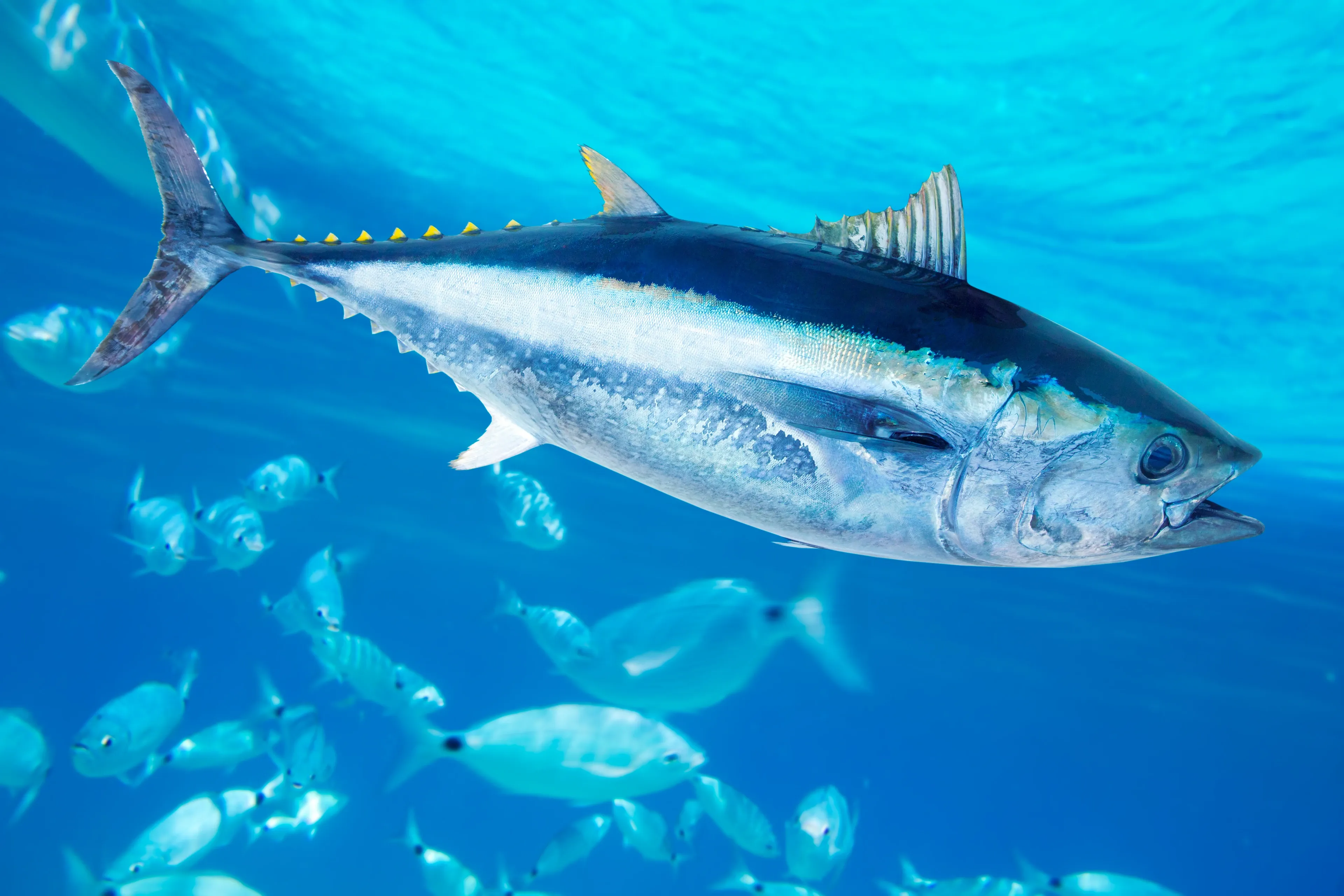
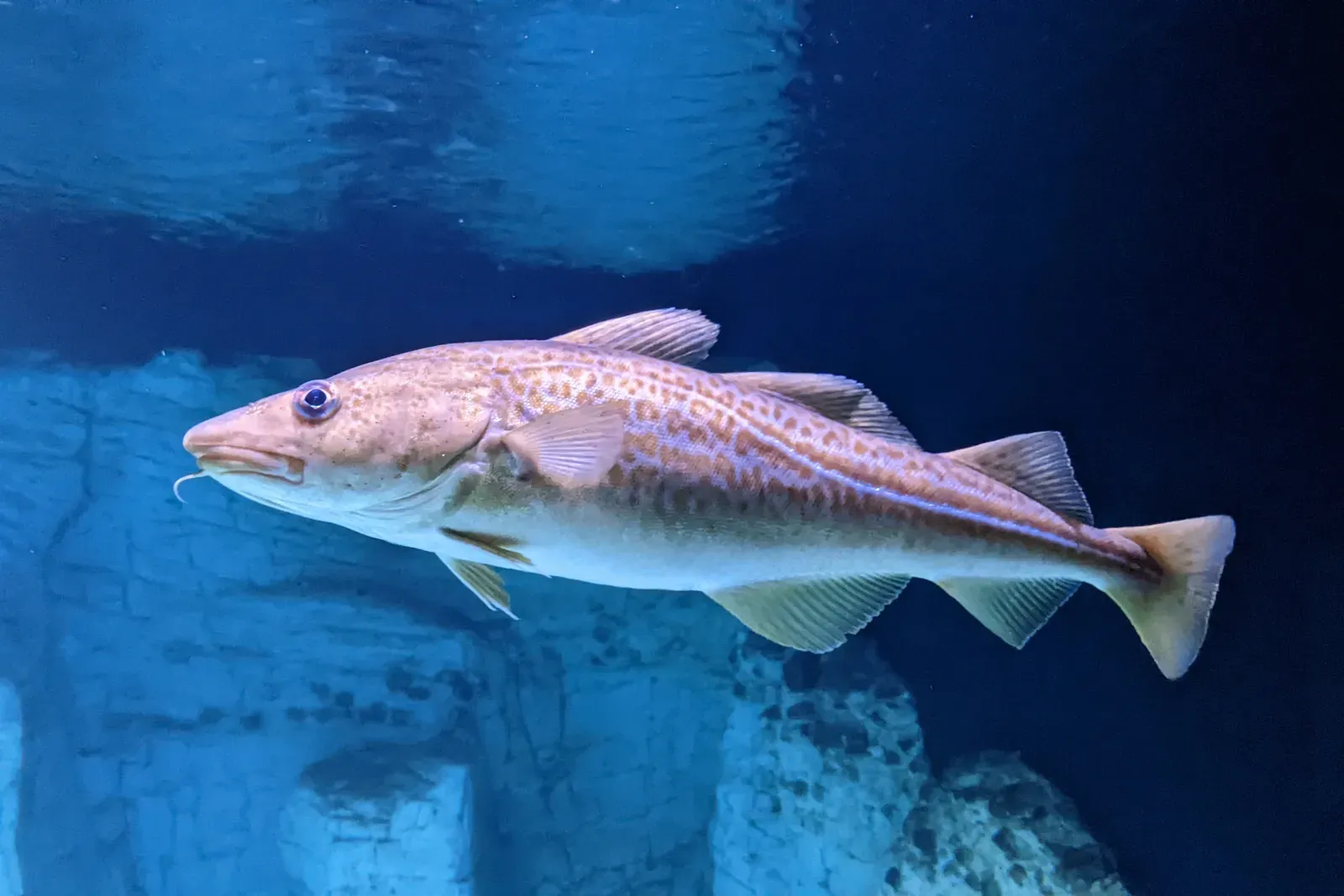
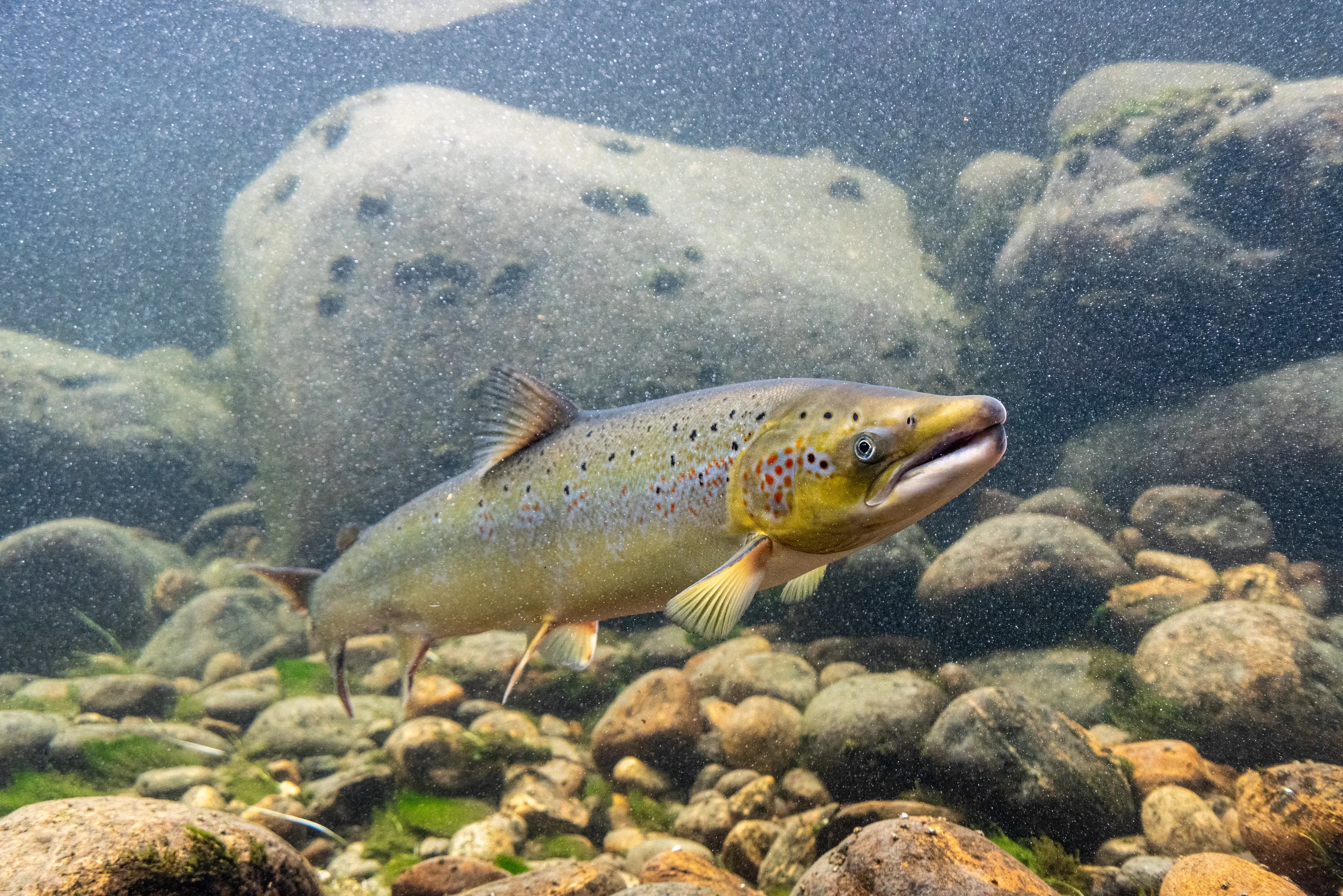
 ← All animals
 fish · Amphiprion ocellaris
Clownfish
Gallery
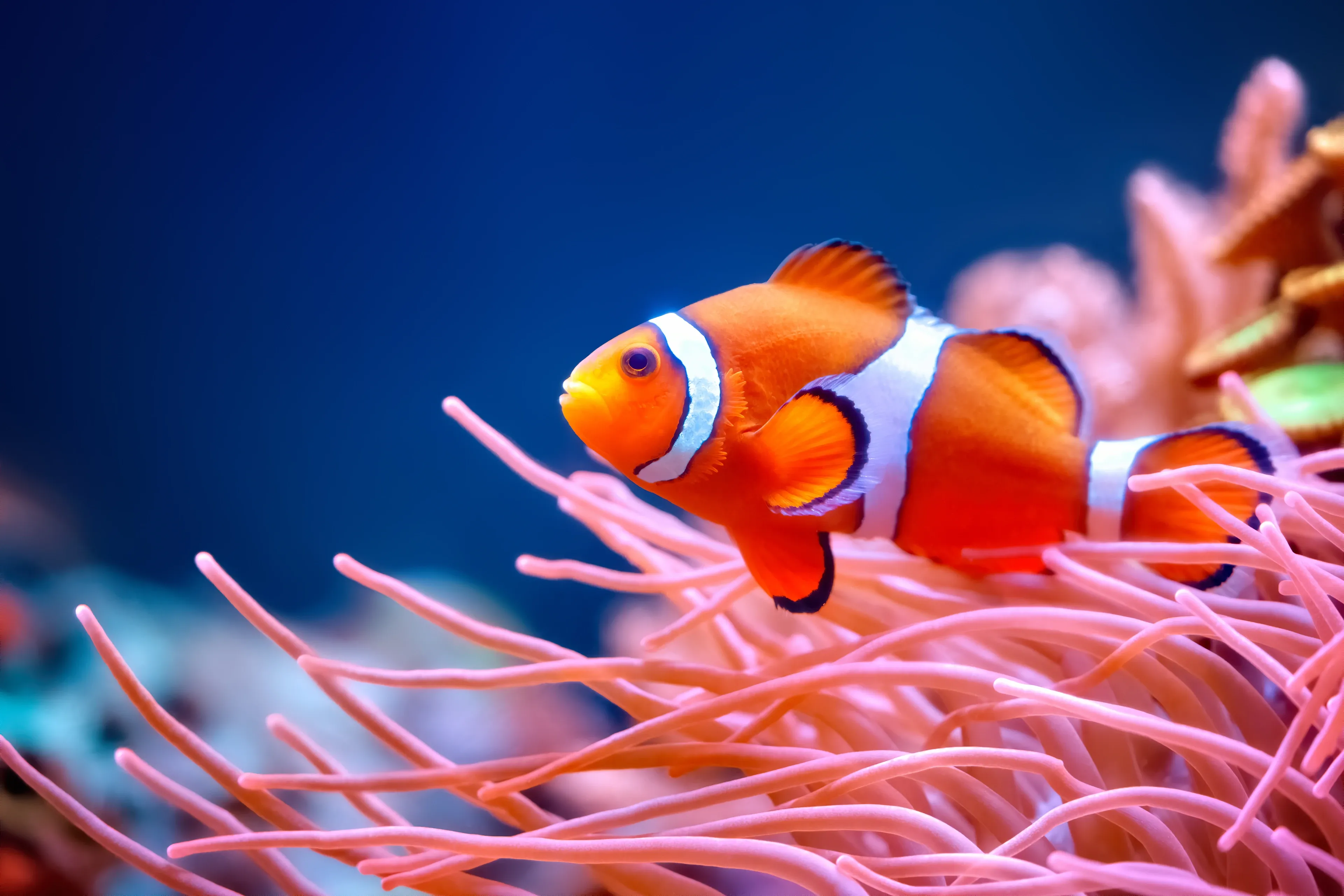
4 photos Real photograph 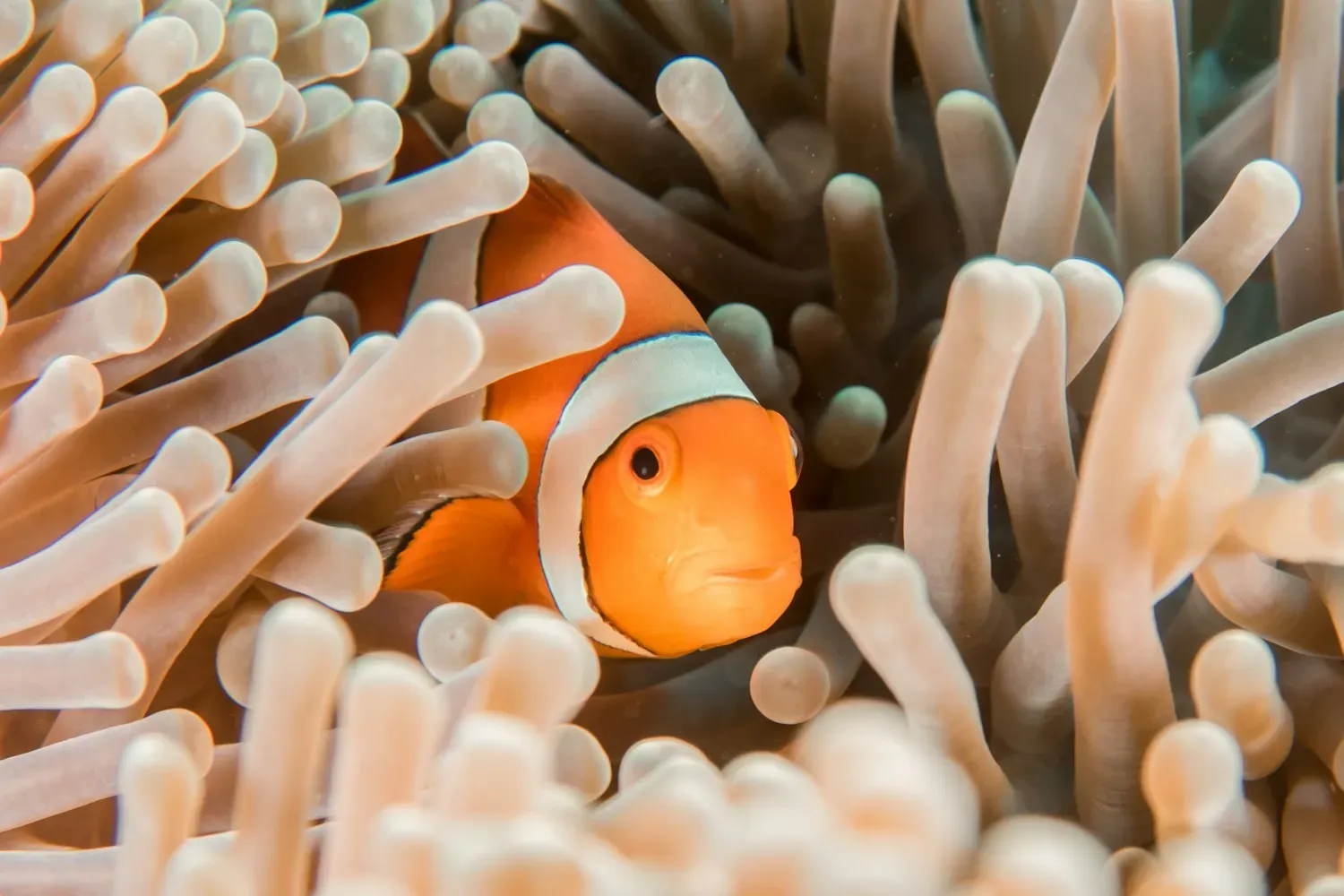 Real photograph Real photograph
  Real photograph
 Why we love them
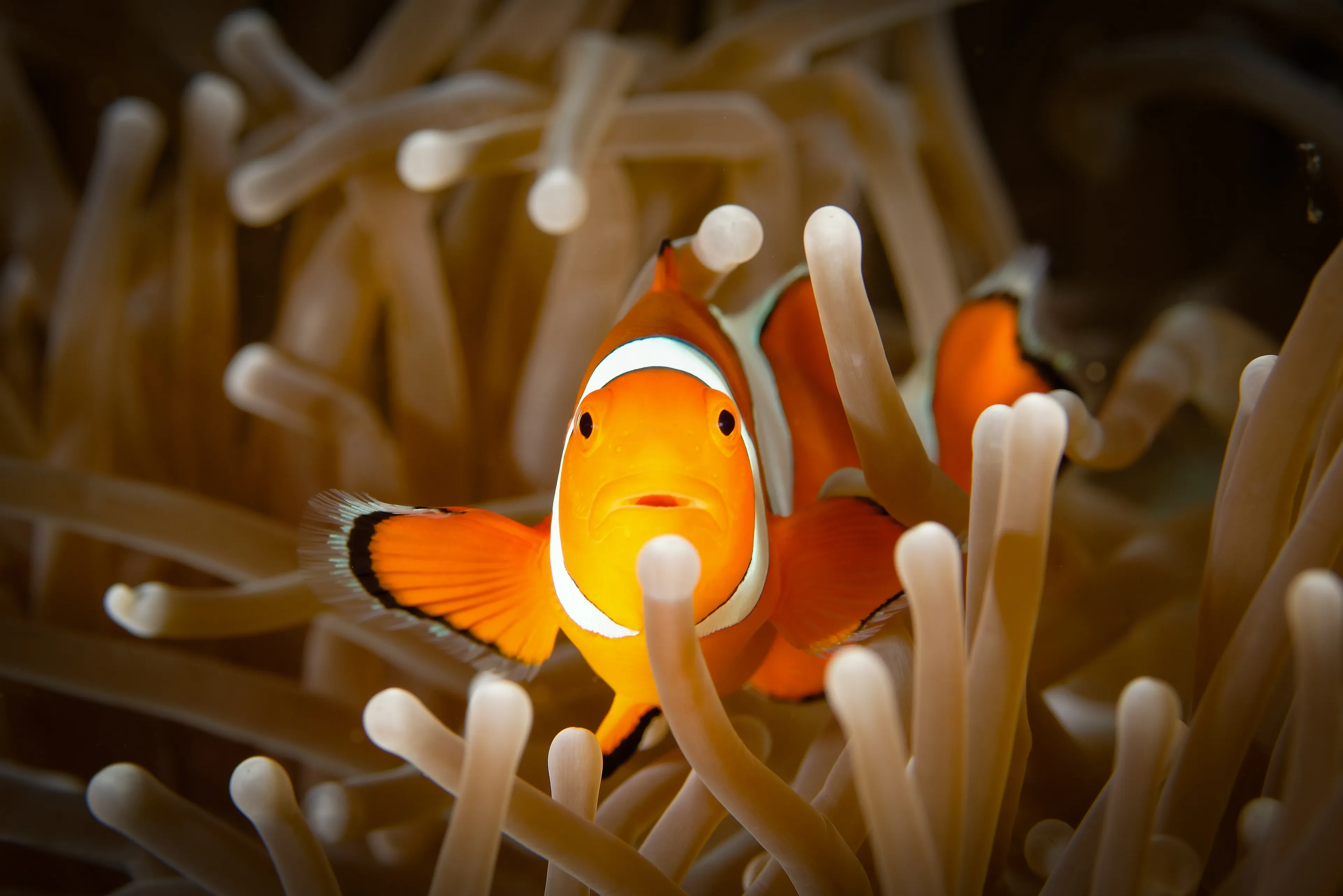
The clownfish is a small, bright orange fish with bold white stripes edged in black. It lives on warm coral reefs, and it almost always stays close to one special home: a sea anemone.
A sea anemone looks like a soft, waving flower, but its tentacles can sting. Most fish keep away, yet the clownfish snuggles right in. A slippery coat over its body keeps it from being stung, so the anemone becomes a safe hiding spot from bigger fish.
The two animals are a team. The anemone gives the clownfish shelter, and the clownfish keeps the anemone tidy and chases away little pests that might nibble it. Helping each other like this is called living together, and both are better off for it.
Clownfish have a surprising social system. Young fish are immature, and each group develops a size-based order. The largest fish is the breeding female and the next largest is the breeding male. If the female disappears, that male can change sex and become the group's new female.
Clownfish eat tiny bits of food that drift by, like plankton, small shrimp, and bits of algae. There are plenty of them across the warm oceans today, but they need healthy coral reefs to thrive, so looking after reefs helps keep clownfish happy and safe.
My home
Coral reef, ocean, lagoon
Where I live
Pacific Ocean, Indian Ocean
What I eat
Algae, plankton, small crustaceans
How long I am
0.08–0.08 m
A clownfish lives among a sea anemone's stinging tentacles without getting hurt, thanks to a special slippery coat.
Clownfish live in a size-based group, and the breeding male can change into the female if she disappears.
The clownfish and its anemone help each other, so they make a great team.
Every clownfish can feel happy, scared and loved — just like you.
Looking after my friends
How many are there?
At a Papua New Guinea study site, one anemone typically housed a group of 3–5 orange clownfish.
This typical group size is for orange clownfish at one Papua New Guinea study site, not all clownfish worldwide.
Estimate source: First genealogy for a wild marine fish population reveals multigenerational philopatry
How are they doing?
Lower extinction riskThis species has a lower global extinction risk right now. Local populations can still grow or shrink.
You can help by learning their names, keeping wild places clean, and telling someone why this animal matters.
Where this came from
- Amphiprion ocellaris (Clown Anemonefish) — Red List Assessment — IUCN Red List of Threatened Species
- Western Clown Anemonefish, Amphiprion ocellaris Cuvier, 1830 — Australian Museum
- Clownfish — Animal Guide — Monterey Bay Aquarium
- Amphiprion ocellaris (Clown anemonefish) — Animal Diversity Web — University of Michigan Museum of Zoology
- First genealogy for a wild marine fish population reveals multigenerational philopatry — Proceedings of the National Academy of Sciences