Today's animal friend · 10 October 2026
Brown Pelican: The Seaside Bird That Turns Into an Arrow
Follow a Brown Pelican from a glide over glittering waves to its spectacular plunge for fish, then discover why clean coasts and caring choices matter.
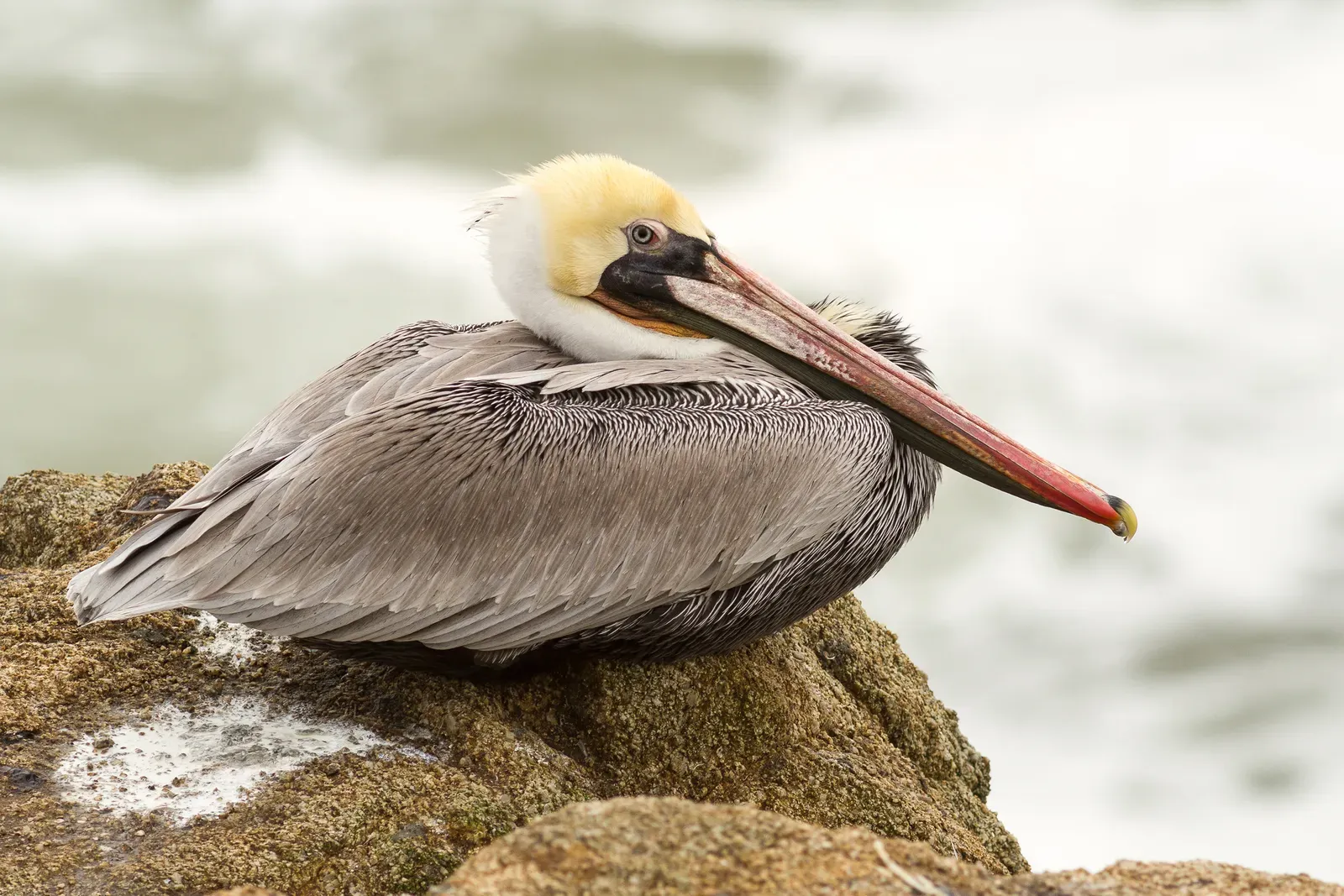
Follow a Brown Pelican from a glide over glittering waves to its spectacular plunge for fish, then discover why clean coasts and caring choices matter.
Splash! Did that bird just fall out of the sky?
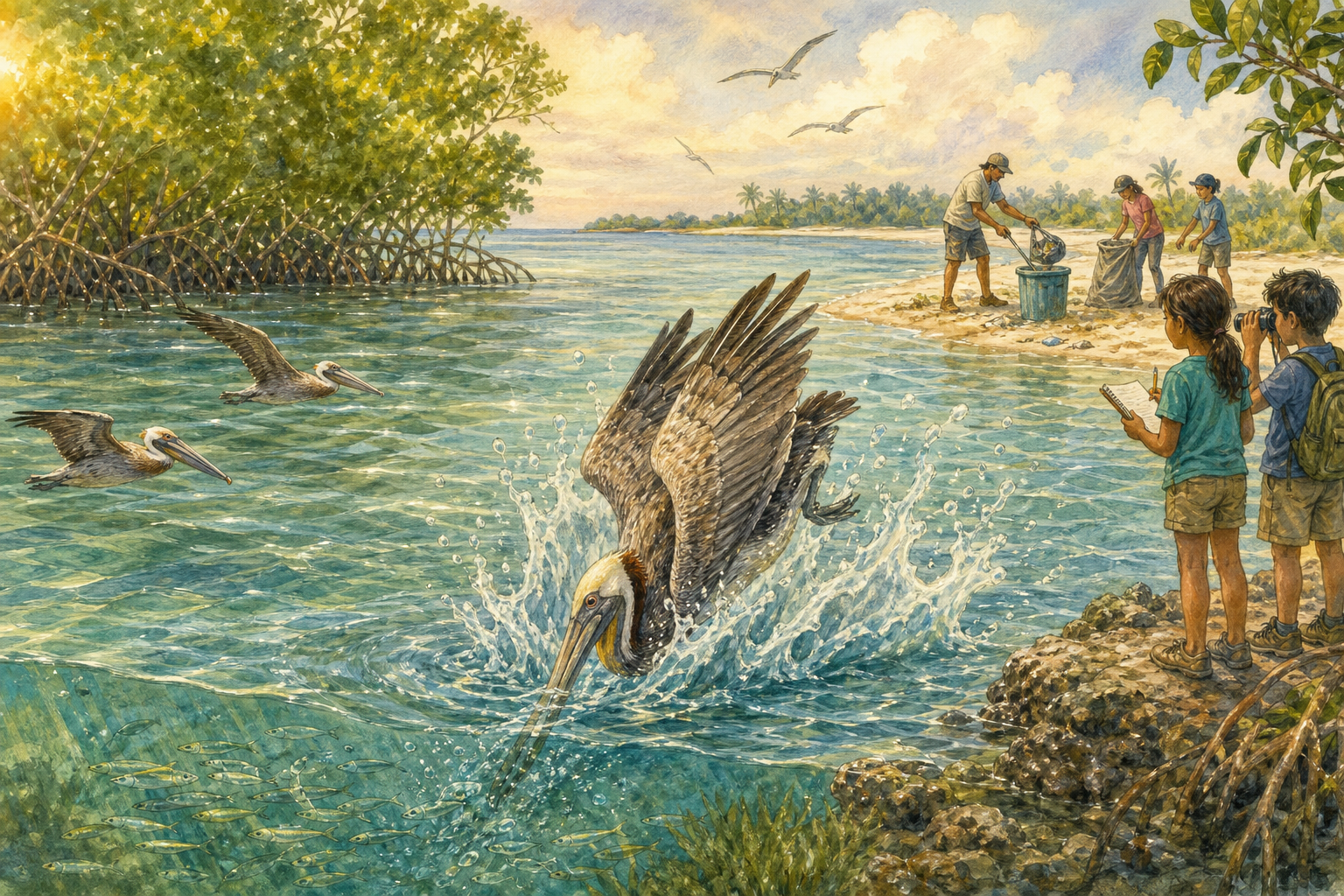
The bay looks calm enough to nap beside. Waves shush against the shore. Then a large bird wheels above the water, suddenly tucks back its broad wings, and drops—whoosh—straight into the sea. Splash! Meet the Brown Pelican, Pelecanus occidentalis, a coastal bird with one of the boldest moves in the bird world.
It did not make a mistake. The Brown Pelican is the only pelican that plunge-dives from the air to catch fish. It watches the water below, spots its target, and turns itself into a feathered arrow. A moment later, it bobs back up, looking wonderfully unbothered, as if diving into the ocean were as ordinary as hopping off a curb.
Brown Pelicans belong along warm coasts of the Americas. Look for them around coastal ocean waters, estuaries, bays, sandbars, and mangroves. They are daytime explorers, so a sunny walk beside the water is a fine time to notice one gliding low over the waves.
A Brown Pelican can be about as long as a child is tall—or longer. Its heavy-looking body, broad wings, and especially its long bill give it a silhouette that is hard to mistake. It may look a little lumbering on a perch, but in the air it can seem like a quiet expert sailor, surfing the wind.
Evidence: IUCN Red List of Threatened Species / BirdLife International (Red List Authority for birds): Pelecanus occidentalis (Brown Pelican) — Red List Assessment; Animal Diversity Web, University of Michigan Museum of Zoology: Pelecanus occidentalis (brown pelican); Cornell Lab of Ornithology — All About Birds: Brown Pelican Life History; Wikipedia: Brown pelican
What is that giant stretchy chin pouch for?
That pouch beneath the bill is not a lunchbox for carrying snacks home. It is a scoop net! When the pelican hits the water, fish and seawater rush into the stretchy pouch together.
Then comes the clever part. The bird lifts its head and lets the water drain away from the sides of its bill before swallowing the catch. The pouch can hold about three times as much water as the pelican’s stomach can. Imagine trying to drink from a bucket that is three times bigger than your tummy—best leave that trick to pelicans.
Brown Pelicans mainly eat fish. They may hunt alone, even though you can also see them gathered near one another along a coast. Their dramatic dive is not just a circus stunt for us to admire. It is how a nearshore predator finds food in a busy coastal food web.
A pelican’s plunge is a serious splashdown, yet its body has air sacs that help with buoyancy. After the dive, it rises back to the surface rather than sinking like a stone. Nature has given this bird a remarkable combination: a flying body, a fishing scoop, and a floaty return ticket.
Evidence: Animal Diversity Web, University of Michigan Museum of Zoology: Pelecanus occidentalis (brown pelican); Cornell Lab of Ornithology — All About Birds: Brown Pelican Life History; Wikipedia: Brown pelican
Where does a pelican rest when the fishing is done?
After all that action, a Brown Pelican needs a calm place to loaf. It may rest on sandbars, rocks, mangroves, or pilings near the coast. A line of pelicans perched together can look like a meeting of rather serious-looking umbrellas.
For nesting, these birds use colonies: groups of nests on islands or other safer sites. A colony can be noisy, busy, and full of neighbours—more like an apartment building during a birthday party than a silent secret hideout. Nesting islands matter because disturbance and habitat changes can make it harder for birds to raise young.
Brown Pelicans are mostly coastal, not birds of deep forests or snowy mountaintops. Estuaries and bays are especially lively places where fresh water and sea water meet. If you visit one, you might notice mud, salty air, tiny ripples, and birds scanning for a meal. It is a whole neighbourhood made of water.
Seeing a pelican there can remind us that a coast is not simply scenery. It is a home: for fish below, birds above, and many other living things in between.
Evidence: Animal Diversity Web, University of Michigan Museum of Zoology: Pelecanus occidentalis (brown pelican); Cornell Lab of Ornithology — All About Birds: Brown Pelican Life History
A comeback story with a warning tucked inside
Brown Pelicans have a hopeful story to tell. Long ago, a chemical called DDT caused terrible trouble. It made eggshells too thin, so eggs often broke before chicks could hatch. In many places, pelicans became very rare.
When people stopped using DDT, Brown Pelicans were able to recover. Their return shows that protecting nature can work. The species is listed as Least Concern in the IUCN assessment summary, with an increasing population trend. That is excellent news—and a reason to keep paying attention, not a reason to stop caring.
They still face problems including oil spills, fishing hooks and lines, disturbance at colonies, and loss or change of nesting islands. A hook or line that seems small to a person can be a dangerous tangle to a bird with a large bill and wings.
The pelican’s comeback is like repairing a favourite playground after it has been damaged: fixing one problem helps, but everyone must keep looking after the place. Cleaner coastal waters and protected nesting areas give these spectacular divers room to keep soaring.
Evidence: IUCN Red List of Threatened Species / BirdLife International (Red List Authority for birds): Pelecanus occidentalis (Brown Pelican) — Red List Assessment; Animal Diversity Web, University of Michigan Museum of Zoology: Pelecanus occidentalis (brown pelican); Cornell Lab of Ornithology — All About Birds: Brown Pelican Life History; Wikipedia: Brown pelican
How can a young shore detective help?
You do not have to leap into the sea—or even own binoculars—to care for pelicans. If you visit a beach or bay, give resting and nesting birds plenty of space. Watching quietly from a distance is kinder than trying to get close for a photograph. A pelican needs energy for flying, fishing, and caring for chicks.
Keep litter from wandering into waterways. Put rubbish in a bin, help with a safe, adult-led clean-up if one is available, and tell an adult if you spot fishing line or a hooked animal. Never try to free a tangled wild bird yourself; trained wildlife helpers know how to do that safely.
You can also become a careful observer. Notice: Is the pelican gliding, perched, or scanning the waves? Does the shoreline have mangroves, a sandbar, or boats? A nature notebook turns an ordinary outing into an expedition, even if the only sound is gulls arguing about absolutely nothing.
Most of all, remember the splash. Every Brown Pelican is an individual wild neighbour making a living in its watery home. Protecting that home means more chances for the next child on the shore to gasp, point, and say, ‘Did you see that dive?’
Evidence: Animal Diversity Web, University of Michigan Museum of Zoology: Pelecanus occidentalis (brown pelican); Cornell Lab of Ornithology — All About Birds: Brown Pelican Life History
One kind choice can ripple outward
Pelicans eat fish, and they deserve seas where fish, nesting places, and clean water can thrive. We can care about them without treating any animal as a product. At meals, it can be a thoughtful adventure to explore colourful plant foods—beans, lentils, whole grains, vegetables, fruit, nuts, and seeds—with a parent or carer.
The World Health Organization describes healthy diets in general as varied and rich in foods such as vegetables, fruit, pulses, whole grains, nuts, and seeds. The IPCC reports that shifts toward sustainable, healthy, more plant-based diets can reduce pressure on land and biodiversity and lower food-system emissions. That is a hopeful ripple: a tasty plant-forward meal can be one gentle way to care for animal neighbours and the shared planet.
There is no need to be perfect or to lecture anyone at the table. Perhaps try a new bean filling, help choose a veggie topping, or ask a trusted adult to make a plant-based favourite. Curious, kind choices can grow—rather like a small wave joining a bigger tide.
Evidence: World Health Organization: Healthy diet; Intergovernmental Panel on Climate Change: Climate Change 2022: Mitigation of Climate Change — Chapter 7
A shore-friendly plate, chosen with kindness
When we care about a pelican’s sparkling, fish-filled world, it makes sense to care about other animals and habitats too. Trying delicious plant-based foods can be a gentle, positive choice for animal friends. WHO’s general healthy-diet guidance includes a variety of vegetables, fruit, pulses, whole grains, nuts, and seeds; food choices are best explored with trusted adults, especially when a child has individual health needs.
The IPCC finds that sustainable, healthy, more plant-based dietary shifts can help reduce food-system emissions and pressure on land and biodiversity. A family might start with one cheerful plant-based meal, such as lentil tacos or a bean-and-vegetable pasta sauce. It is not about blame. It is about making room at the table for kindness, curiosity, and a future with lively coasts.
Evidence: World Health Organization: Healthy diet; Intergovernmental Panel on Climate Change: Climate Change 2022: Mitigation of Climate Change — Chapter 7
Questions people ask
Why does a Brown Pelican dive instead of just swimming after fish?
It spots fish from above and plunge-dives to scoop them efficiently with its expandable pouch. It may also take prey at the surface, but the aerial dive is its famous fishing move.
Evidence: Animal Diversity Web, University of Michigan Museum of Zoology: Pelecanus occidentalis (brown pelican); Cornell Lab of Ornithology — All About Birds: Brown Pelican Life History; Wikipedia: Brown pelican
Will every pelican I see dive?
Not necessarily. Brown Pelicans are special among pelicans because they are the ones known for plunge-diving from the air. You may also see one resting, gliding, or scanning the water.
Evidence: Animal Diversity Web, University of Michigan Museum of Zoology: Pelecanus occidentalis (brown pelican); Cornell Lab of Ornithology — All About Birds: Brown Pelican Life History; Wikipedia: Brown pelican
Are Brown Pelicans endangered?
The registered IUCN assessment summary lists them as Least Concern, and their population trend is increasing. But oil spills, fishing gear, disturbance, and nesting-habitat changes can still harm them.
Evidence: IUCN Red List of Threatened Species / BirdLife International (Red List Authority for birds): Pelecanus occidentalis (Brown Pelican) — Red List Assessment; Animal Diversity Web, University of Michigan Museum of Zoology: Pelecanus occidentalis (brown pelican); Cornell Lab of Ornithology — All About Birds: Brown Pelican Life History
What should I do if I find a tangled pelican?
Keep a safe distance and tell a trusted adult, who can contact local wildlife rescue professionals or the appropriate authorities. Do not try to handle the bird yourself.
Evidence: Animal Diversity Web, University of Michigan Museum of Zoology: Pelecanus occidentalis (brown pelican); Cornell Lab of Ornithology — All About Birds: Brown Pelican Life History
Read the evidence
Sources behind this story
- Pelecanus occidentalis (Brown Pelican) — Red List Assessment — IUCN Red List of Threatened Species / BirdLife International (Red List Authority for birds)
- Pelecanus occidentalis (brown pelican) — Animal Diversity Web, University of Michigan Museum of Zoology
- Brown Pelican Life History — Cornell Lab of Ornithology — All About Birds
- Brown pelican — Wikipedia
- Healthy diet — World Health Organization
- Climate Change 2022: Mitigation of Climate Change — Chapter 7 — Intergovernmental Panel on Climate Change
Health information is general education, not personal medical advice. Young readers should make food choices with a trusted adult and qualified health professional.