 ← All animals
 bird · Pelecanus occidentalis
Brown Pelican
Gallery
5 photos Real photograph 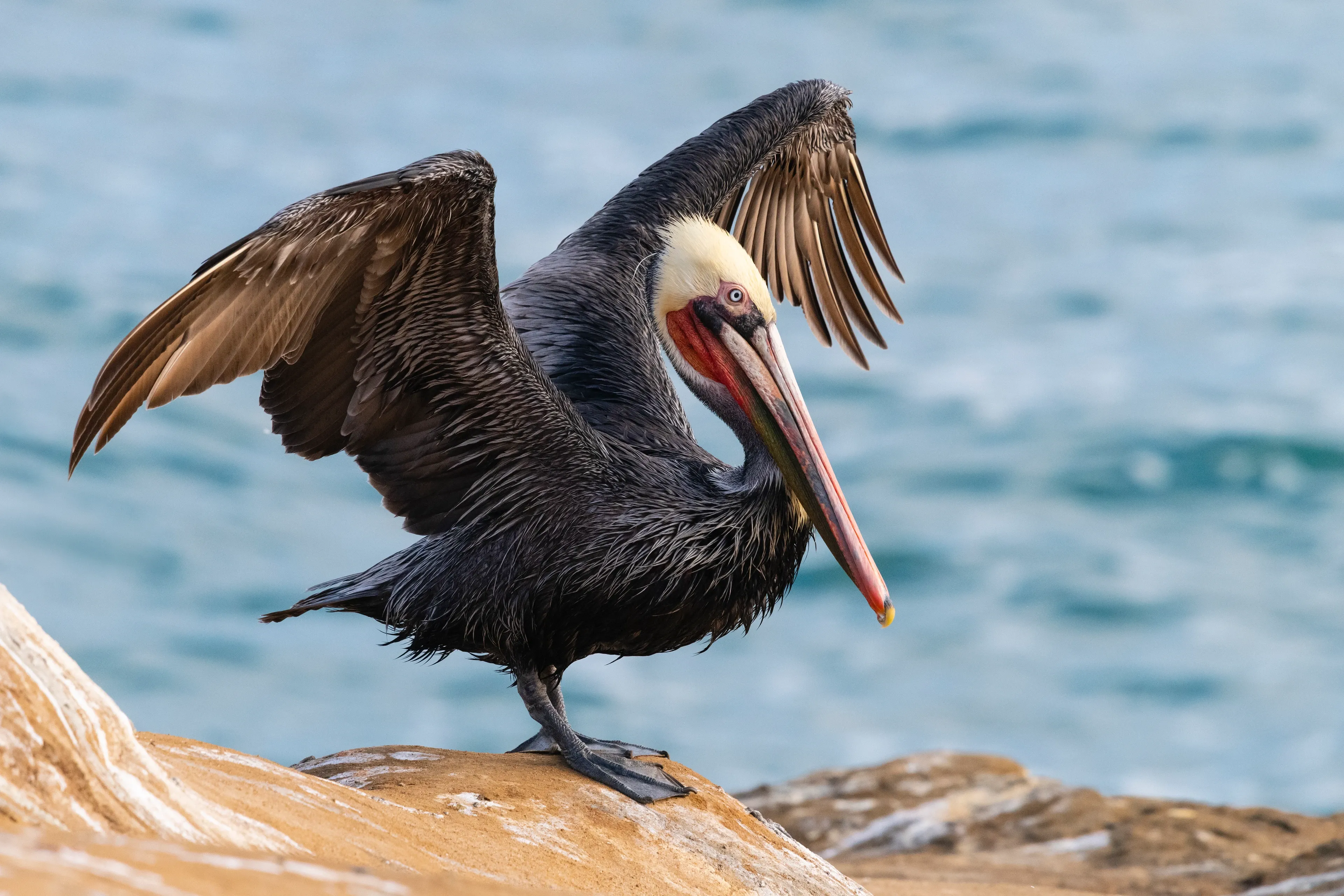 Real photograph
 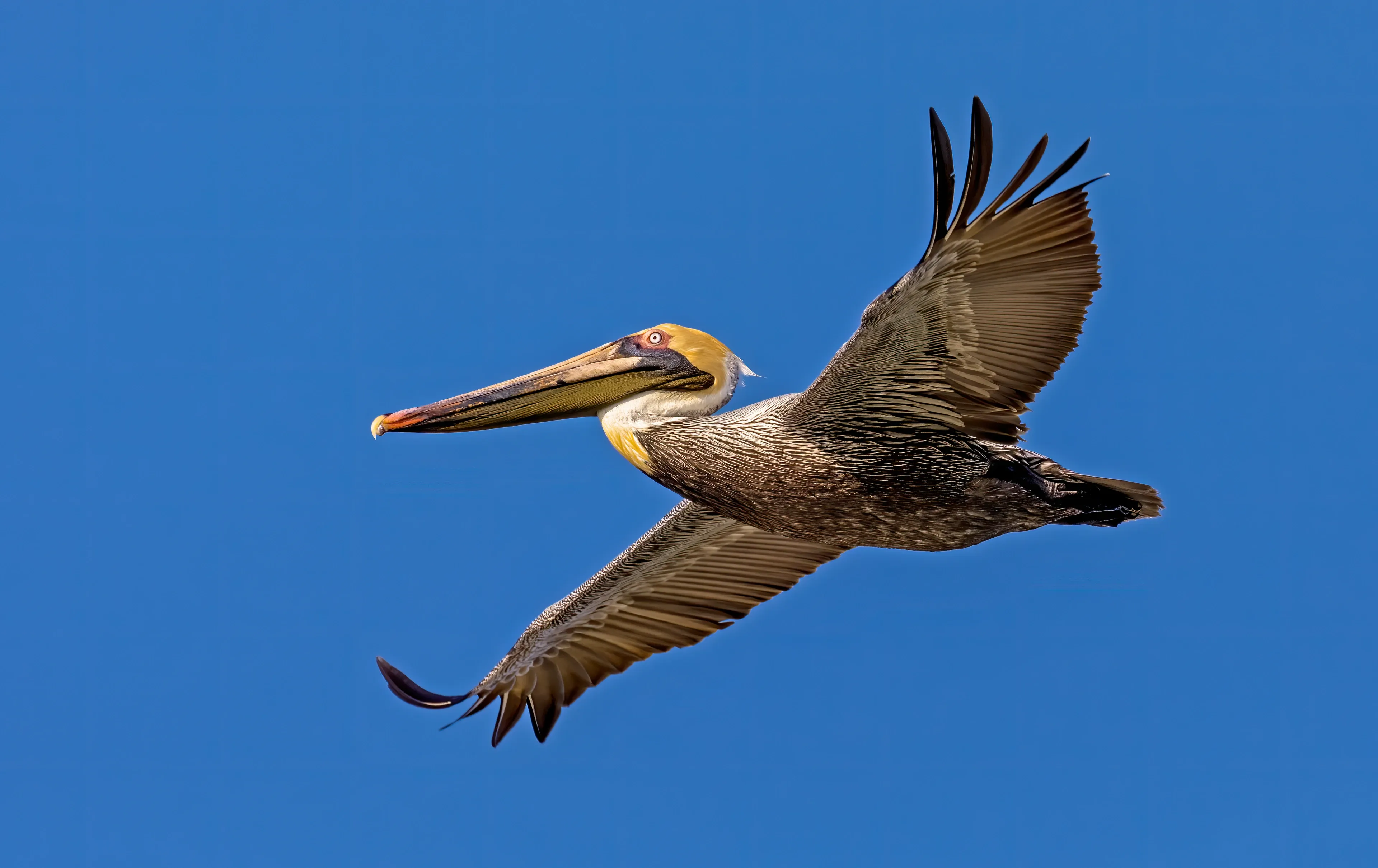 Real photograph
 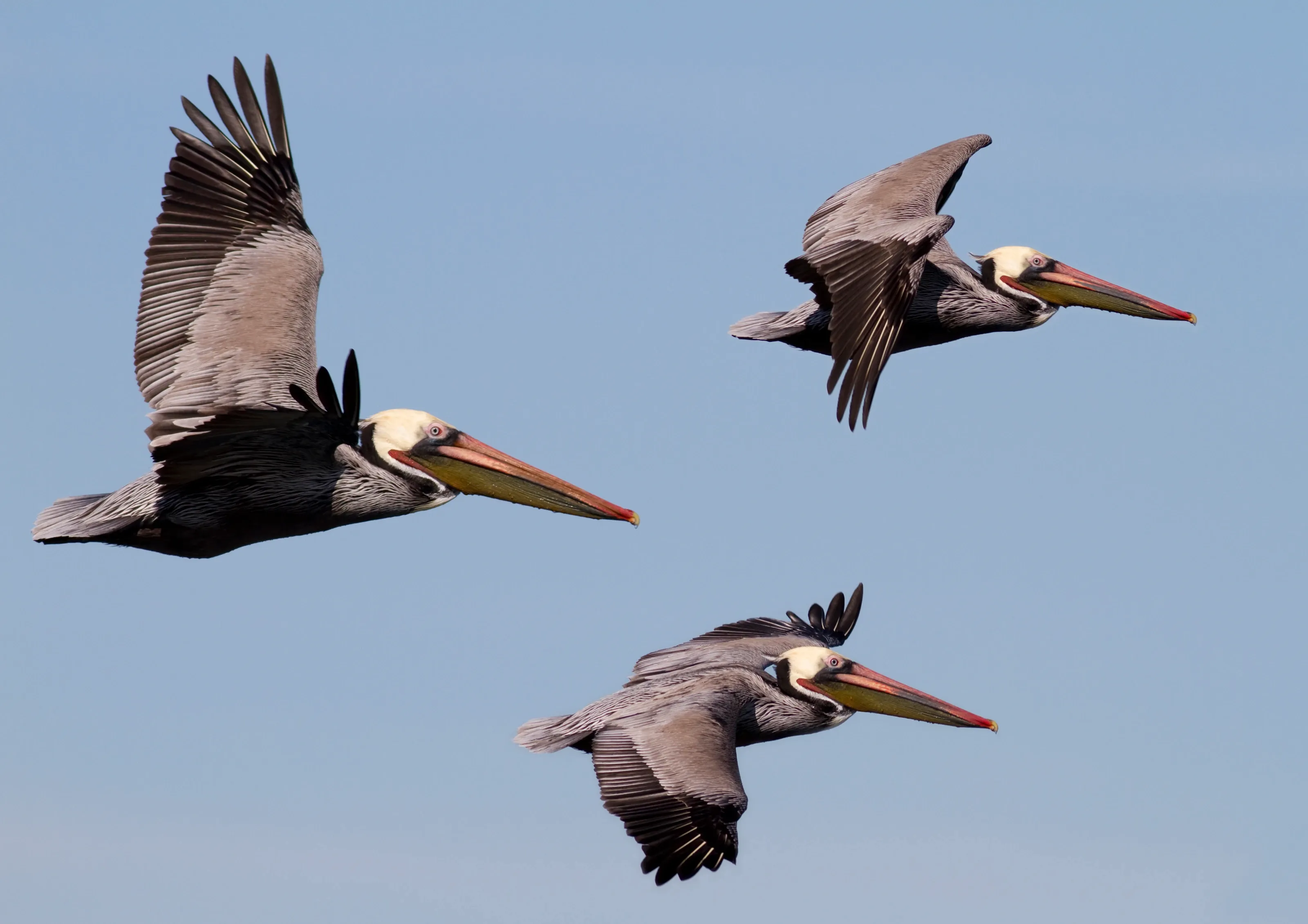 Real photograph
 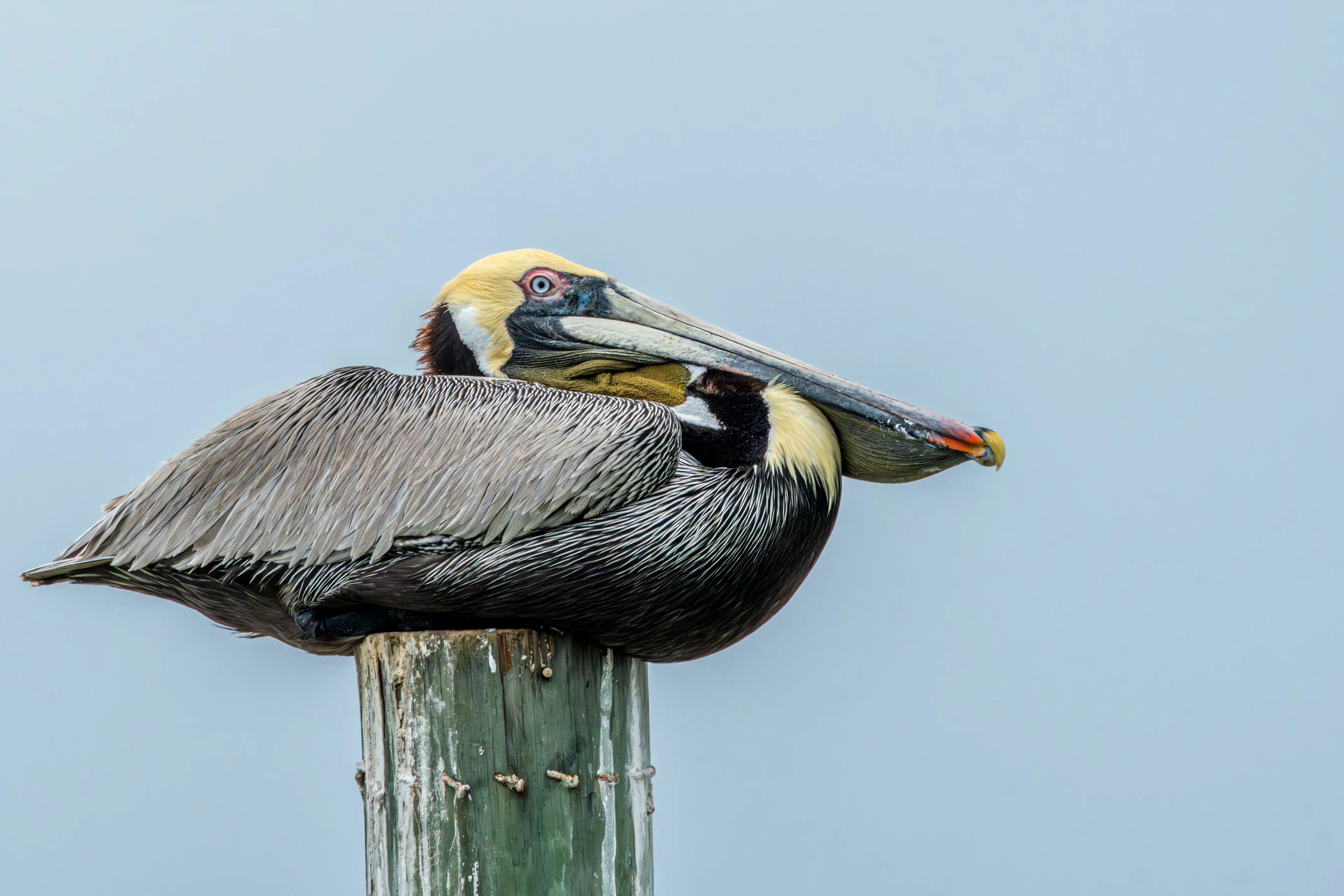 Real photograph
 Why we love them
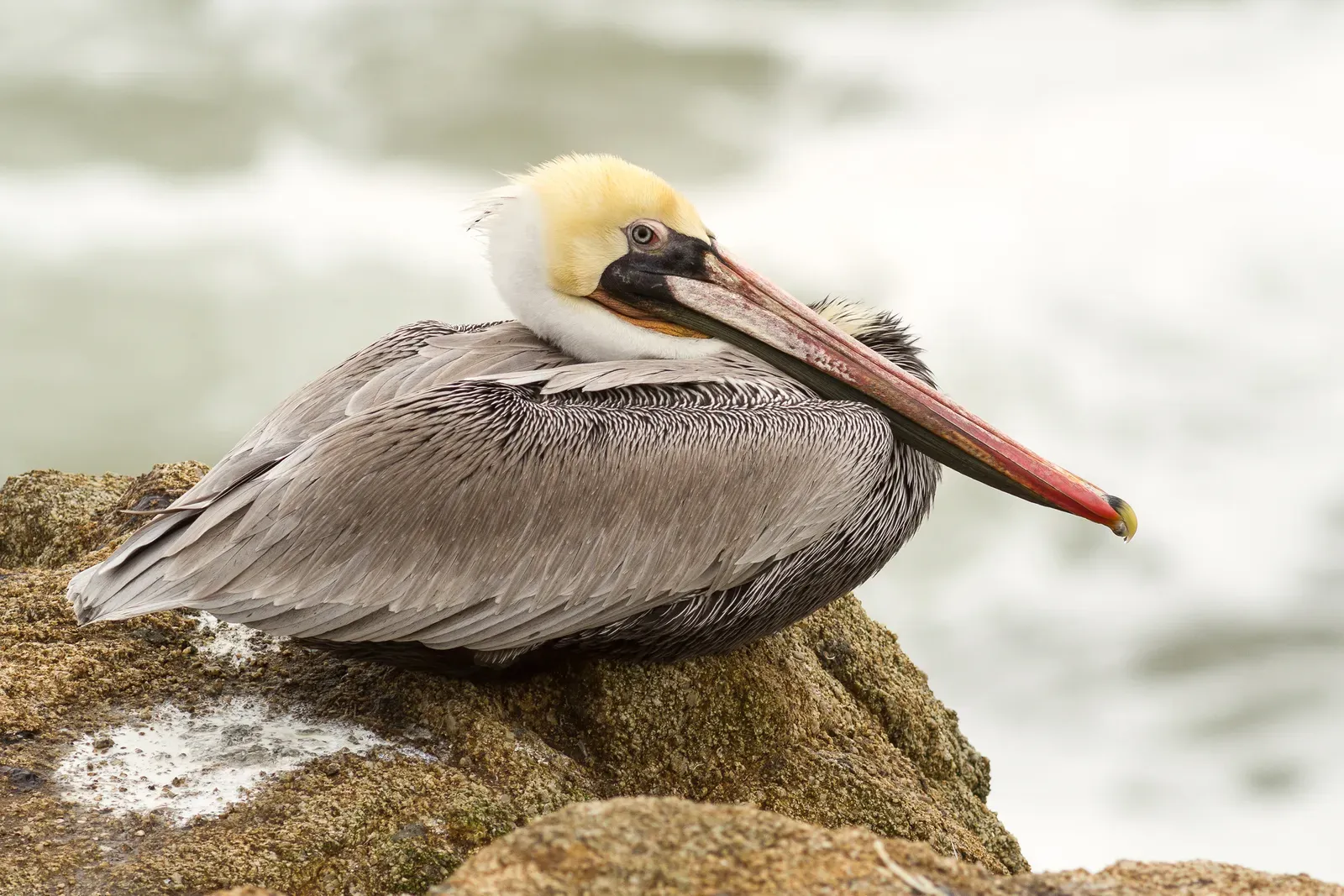
The brown pelican is a large seabird with a very long beak and a big stretchy pouch of skin underneath it. It has a heavy body, broad wings, and a calm, easy-going way of gliding just above the waves. Brown pelicans live along warm coasts all around the Americas, from sunny beaches to quiet bays and mangroves.
Of all the pelicans in the world, the brown pelican is the only one that dives from the air to fish. It flies up high, spots a fish below, then folds its wings and drops straight into the sea with a big splash. A special layer of air sacs under its skin cushions the landing, like built-in bubble wrap.
That famous pouch is the pelican's fishing net. When the bird plunges in, the pouch opens wide and scoops up fish along with lots of seawater. Then the pelican lifts its head, lets the water pour out of the sides of its beak, and swallows the fish whole. The pouch can hold about three times as much as its stomach.
Brown pelicans are sociable birds. They often fly in tidy lines close to the water, one behind another, and they rest and nest together in big, noisy groups on islands and sandbars. Fishing is easiest in daylight, so this is when they do most of their diving.
Long ago, brown pelicans were in real trouble. A chemical called DDT washed into the sea and made their eggshells so thin that the eggs broke before the chicks could hatch. Once people stopped using DDT, the pelicans slowly recovered, and today they are common again along many coasts. Keeping the ocean clean and their nesting islands safe helps make sure they stay that way.
My home
Coastal ocean, estuaries, bays, sandbars, mangroves
Where I live
North America, South America, Atlantic Ocean
What I eat
Menhaden, anchovies, mullet, herring, other small fish
How long I am
1–1.52 m
How heavy I am
2–5 kg
How long I live
43 years
The brown pelican is the only pelican that dives from the air to catch fish. It folds back its wings and plunges into the sea like a feathered arrow.
The big stretchy pouch under a pelican's beak can hold about three times more water than its stomach can. It scoops up fish and water together, then tips its head to let the water drain out.
Brown pelicans almost disappeared long ago when a chemical called DDT made their eggshells too thin. After the chemical was banned, the pelicans came back, and today there are lots of them again.
Every brown pelican can feel happy, scared and loved — just like you.
Looking after my friends
How many are there?
At least about 290,000 brown pelicans of the nominate subspecies live in the West Indies.
This is a regional subspecies estimate, not the number of brown pelicans throughout the Americas.
Estimate source: Brown pelican
How are they doing?
Lower extinction riskThis species has a lower global extinction risk right now. Local populations can still grow or shrink.
You can help by learning their names, keeping wild places clean, and telling someone why this animal matters.
Where this came from
- Pelecanus occidentalis (Brown Pelican) — Red List Assessment — IUCN Red List of Threatened Species / BirdLife International (Red List Authority for birds)
- Pelecanus occidentalis (brown pelican) — Animal Diversity Web, University of Michigan Museum of Zoology
- Brown Pelican Life History — Cornell Lab of Ornithology — All About Birds
- Brown pelican — Wikipedia