Today's animal friend · 14 July 2026
Axolotl: The Underwater Salamander With Feathery Gills
With a crown of feathery gills, a paddle-like tail, and a talent for regrowing lost body parts, the axolotl is one unforgettable amphibian. Its wild home is fragile—but learning its story is a hopeful first step toward caring for wetlands,
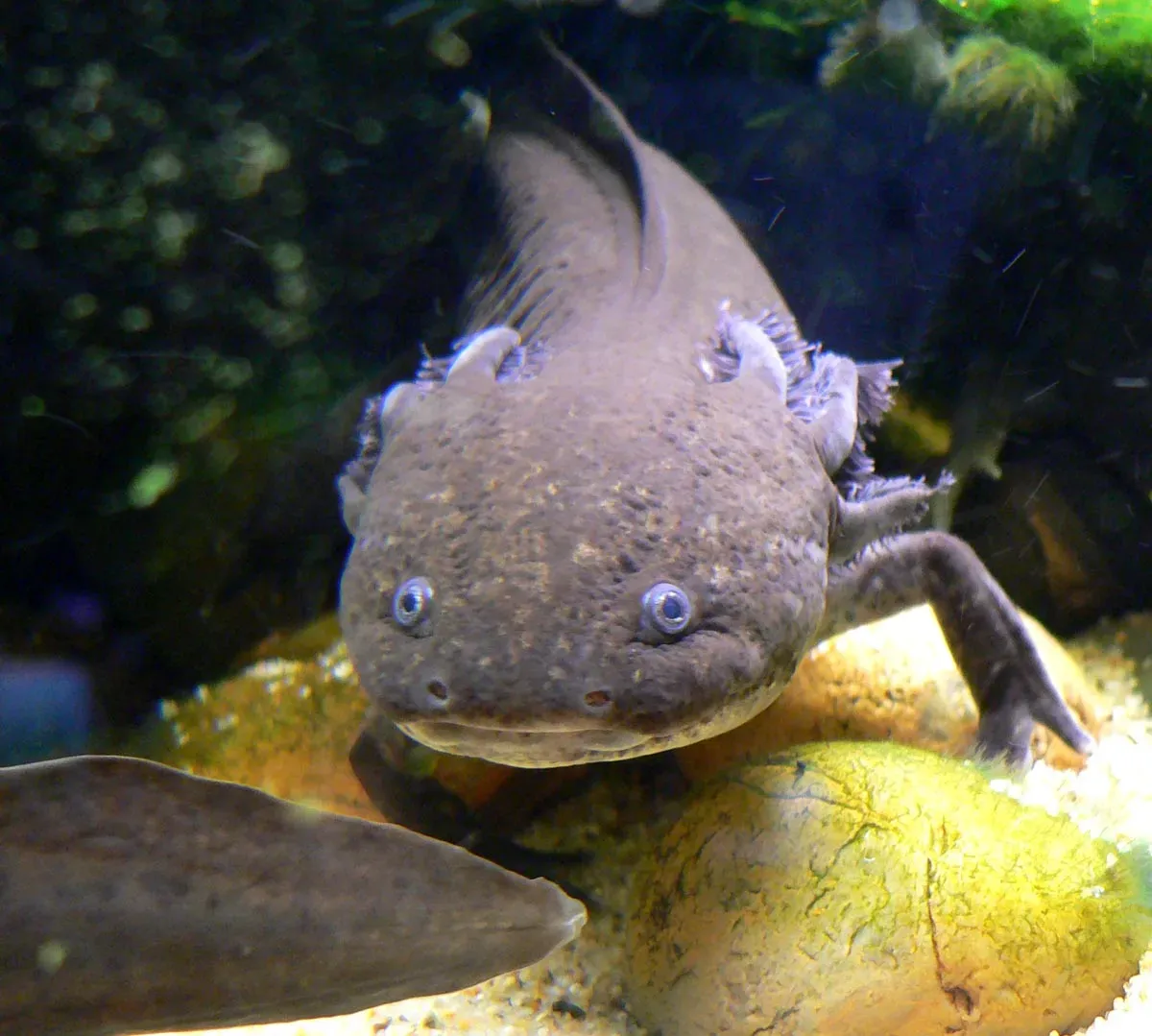
With a crown of feathery gills, a paddle-like tail, and a talent for regrowing lost body parts, the axolotl is one unforgettable amphibian. Its wild home is fragile—but learning its story is a hopeful first step toward caring for wetlands,
An axolotl is a salamander that never leaves the water
An axolotl may look as if it is wearing a soft, frilly crown. The branches on either side of its head are external gills: delicate-looking structures that help it breathe underwater. Add a broad mouth, small eyes, and a tail made for swimming, and it is easy to see why this amphibian has become such a well-loved animal friend.
Its scientific name is Ambystoma mexicanum, and it belongs to the salamander family. Although it is sometimes called a “Mexican walking fish,” it is not a fish at all. It is an amphibian. The nickname is a cheerful reminder that names can be misleading; the axolotl’s real story is much more interesting.
Most salamanders go through a change as they grow, eventually becoming land-living adults. Axolotls are different. They usually remain in their water-living form throughout life, keeping their feathery gills and continuing to swim rather than moving onto land. Scientists call this neoteny: staying in a youthful, aquatic form as an adult.
That does not make an axolotl unfinished. It is perfectly suited to its own watery way of life. Its gills, tail, and underwater habits are not temporary features waiting to disappear; they are part of what makes an adult axolotl an axolotl.
Evidence: IUCN Red List of Threatened Species: Ambystoma mexicanum (Axolotl) — Red List Assessment; AmphibiaWeb, University of California, Berkeley: Ambystoma mexicanum — Species Account; Natural History Museum, London: Axolotl: the fascinating salamander that can regrow lost body parts
Its true wild home is in Mexico City’s canals and wetlands
In the wild, axolotls are found only in the freshwater canal and wetland system of Xochimilco, near Mexico City. Imagine a place where water threads through a busy, enormous city: canals can be pathways, habitats, and homes all at once. For an axolotl, the quality of that water and the condition of the surrounding wetland matter enormously.
This is a very particular home, not a broad continent-wide range. A creature with one small wild home has little room to retreat when conditions become difficult. Healthy wetland spaces give animals places to find food, shelter, and the conditions their lives depend upon.
Axolotls are most active around twilight and at night. When the water grows dim, they search for food. Their menu includes worms, insect larvae, small crustaceans, and small fish. They are carnivores, and they can take prey with a quick gulp. An axolotl may be only about 15 to 30 centimetres long, but in its own canal world it is an alert hunter.
A wild axolotl’s life is closely tied to the small creatures in the water and to the wetland itself. That is one reason canals deserve our attention. They are not merely strips of water on a map; they are neighbourhoods full of interwoven lives.
Evidence: IUCN Red List of Threatened Species: Ambystoma mexicanum (Axolotl) — Red List Assessment; AmphibiaWeb, University of California, Berkeley: Ambystoma mexicanum — Species Account; Natural History Museum, London: Axolotl: the fascinating salamander that can regrow lost body parts
Regrowing body parts is one of the axolotl’s most astonishing abilities
If an axolotl loses a leg or part of its tail, it can regrow it. It can also regenerate parts of some organs. This ability sounds like a comic-book superpower, yet it is a real part of axolotl biology. Regrowth takes time—it is not an instant magic trick—but the result is extraordinary.
People who study healing are interested in axolotls because their bodies offer clues about how regeneration works. The axolotl does not need to be turned into a mascot for science to be fascinating, though. First and foremost, it is an animal with its own life: swimming, feeding, resting, sensing its surroundings, and responding to its changing habitat.
Its unusual body also invites us to notice a useful lesson about nature. Animals do not have to resemble us, or solve problems in ways we understand immediately, to deserve wonder and care. The axolotl’s gills and regenerative abilities are reminders that wetlands hold forms of life with their own surprising talents.
Axolotls may live around 10 to 15 years. That is plenty of time for an individual animal to experience a changing world, which makes protecting safe, clean habitat more than an abstract idea. It is about making room for living beings to carry on with the lives they are built to live.
Evidence: AmphibiaWeb, University of California, Berkeley: Ambystoma mexicanum — Species Account; Natural History Museum, London: Axolotl: the fascinating salamander that can regrow lost body parts
Wild axolotls need cleaner, safer waterways
The axolotl is listed as Critically Endangered on the IUCN Red List, with a decreasing population trend in the wild. Water pollution, habitat loss, and introduced fish are among the pressures it faces. These threats can sound large and distant, but they point to a simple truth: water animals need water that supports life.
Introduced fish can change the balance of a habitat that evolved without them. Pollution can make a canal less suitable for the animals, plants, and tiny organisms within it. Habitat loss can remove the sheltered, connected wetland spaces an axolotl needs. None of these problems has a single quick fix, but each one shows why careful habitat protection matters.
There is hope in paying close attention. Conservation is not just about admiring a rare animal from afar; it is about supporting the places where that animal belongs. When people care for waterways, reduce pollution, and protect wetland habitat, they help build a future in which wild axolotls have a better chance.
The axolotl also gives us a reason to look at city nature with fresh eyes. Even near a huge city, a canal can be a home. A wetland can be a refuge. Protecting such places is a way of saying that the lives hidden beneath the water’s surface count, even when they are quiet and easy to miss.
Evidence: IUCN Red List of Threatened Species: Ambystoma mexicanum (Axolotl) — Red List Assessment; Natural History Museum, London: Axolotl: the fascinating salamander that can regrow lost body parts; AmphibiaWeb, University of California, Berkeley: Ambystoma mexicanum — Species Account
You can be an observant, kind friend to amphibians
The first skill of an animal friend is noticing. If you visit a pond, stream, canal, or wetland with an adult, pause to look rather than rush past. Listen for birds, watch for insects, and consider what might be living below the surface. Never take wild animals home or disturb them. A respectful observer leaves a habitat as undisturbed as possible.
You can also learn how water reaches your local area and what helps keep it clean. Everyday choices—such as using bins properly and caring about litter—can be part of a wider culture of respect for waterways. Community projects that restore habitats or look after local green and blue spaces are another positive way to turn curiosity into care.
The axolotl’s story is not a request for sadness. It is an invitation to notice connections. A small salamander in a Mexican wetland depends on clean water, native habitat, and a healthy food web. Humans depend on healthy ecosystems too. Caring for one kind of life can help us practise caring more widely.
And wonder is useful. When an animal’s feathery gills or regrown tail makes someone ask, “How is that possible?”, that question can lead to learning, empathy, and a stronger wish to protect the living world.
Evidence: IUCN Red List of Threatened Species: Ambystoma mexicanum (Axolotl) — Red List Assessment; AmphibiaWeb, University of California, Berkeley: Ambystoma mexicanum — Species Account; Natural History Museum, London: Axolotl: the fascinating salamander that can regrow lost body parts
A kind choice can begin at the dinner table
The axolotl eats other animals because that is its natural biology. We humans, however, can reflect on the choices available to us. One gentle way to practise care for animals is to enjoy more plant-based meals: colourful vegetables and fruit, whole grains, pulses such as beans and lentils, nuts, and seeds. The World Health Organization describes these foods as parts of healthy diets, while recognising that food needs and circumstances differ from person to person.
Choosing plant-forward foods can also be a practical expression of care for the wider living world. The IPCC reports that shifts toward sustainable, healthy, more plant-based diets can reduce food-system emissions and pressure on land and biodiversity. No one meal has to carry the whole world on its plate. Trying a bean taco, lentil soup, vegetable pasta, or chickpea curry with family can be a cheerful step. If you are considering bigger changes to what you eat, talk with a trusted adult and a qualified health professional so your needs are properly supported.
Kindness is not about being perfect or judging another family’s table. It is about noticing that our choices touch animals, habitats, and other people, then choosing compassion whenever we can. An axolotl’s fragile canal home is a small, vivid reminder that every living being deserves a world with room to flourish.
Evidence: World Health Organization: Healthy diet; Intergovernmental Panel on Climate Change: Climate Change 2022: Mitigation of Climate Change — Chapter 7; IUCN Red List of Threatened Species: Ambystoma mexicanum (Axolotl) — Red List Assessment
Questions people ask
Why does an axolotl look as though it has a crown?
The frilly branches around its head are external gills. They help the axolotl breathe underwater and are one of its most distinctive features.
Evidence: AmphibiaWeb, University of California, Berkeley: Ambystoma mexicanum — Species Account; Natural History Museum, London: Axolotl: the fascinating salamander that can regrow lost body parts
Is an axolotl a fish?
No. It is an amphibian—a kind of salamander. “Mexican walking fish” is only a nickname.
Evidence: IUCN Red List of Threatened Species: Ambystoma mexicanum (Axolotl) — Red List Assessment; AmphibiaWeb, University of California, Berkeley: Ambystoma mexicanum — Species Account; Natural History Museum, London: Axolotl: the fascinating salamander that can regrow lost body parts
Where do axolotls live in the wild?
Their wild home is the freshwater canals and wetlands of Xochimilco near Mexico City, Mexico. They are naturally found nowhere else in the wild.
Evidence: IUCN Red List of Threatened Species: Ambystoma mexicanum (Axolotl) — Red List Assessment; Natural History Museum, London: Axolotl: the fascinating salamander that can regrow lost body parts
Can axolotls really grow back a leg?
Yes. Axolotls can regenerate lost legs and tails, as well as parts of some organs. This remarkable ability is one reason researchers study them.
Evidence: Natural History Museum, London: Axolotl: the fascinating salamander that can regrow lost body parts
Why are wild axolotls in trouble?
The IUCN lists the species as Critically Endangered, with a decreasing wild population. Water pollution, habitat loss, and introduced fish are key threats.
Evidence: IUCN Red List of Threatened Species: Ambystoma mexicanum (Axolotl) — Red List Assessment
Read the evidence
Sources behind this story
- Ambystoma mexicanum (Axolotl) — Red List Assessment — IUCN Red List of Threatened Species
- Ambystoma mexicanum — Species Account — AmphibiaWeb, University of California, Berkeley
- Axolotls: Meet the amphibians that never grow up — Natural History Museum, London
- Healthy diet — World Health Organization
- Climate Change 2022: Mitigation of Climate Change — Chapter 7 — Intergovernmental Panel on Climate Change
Health information is general education, not personal medical advice. Young readers should make food choices with a trusted adult and qualified health professional.