 ← All animals
 amphibian · Ambystoma mexicanum
Axolotl
Gallery
2 photos Real photograph 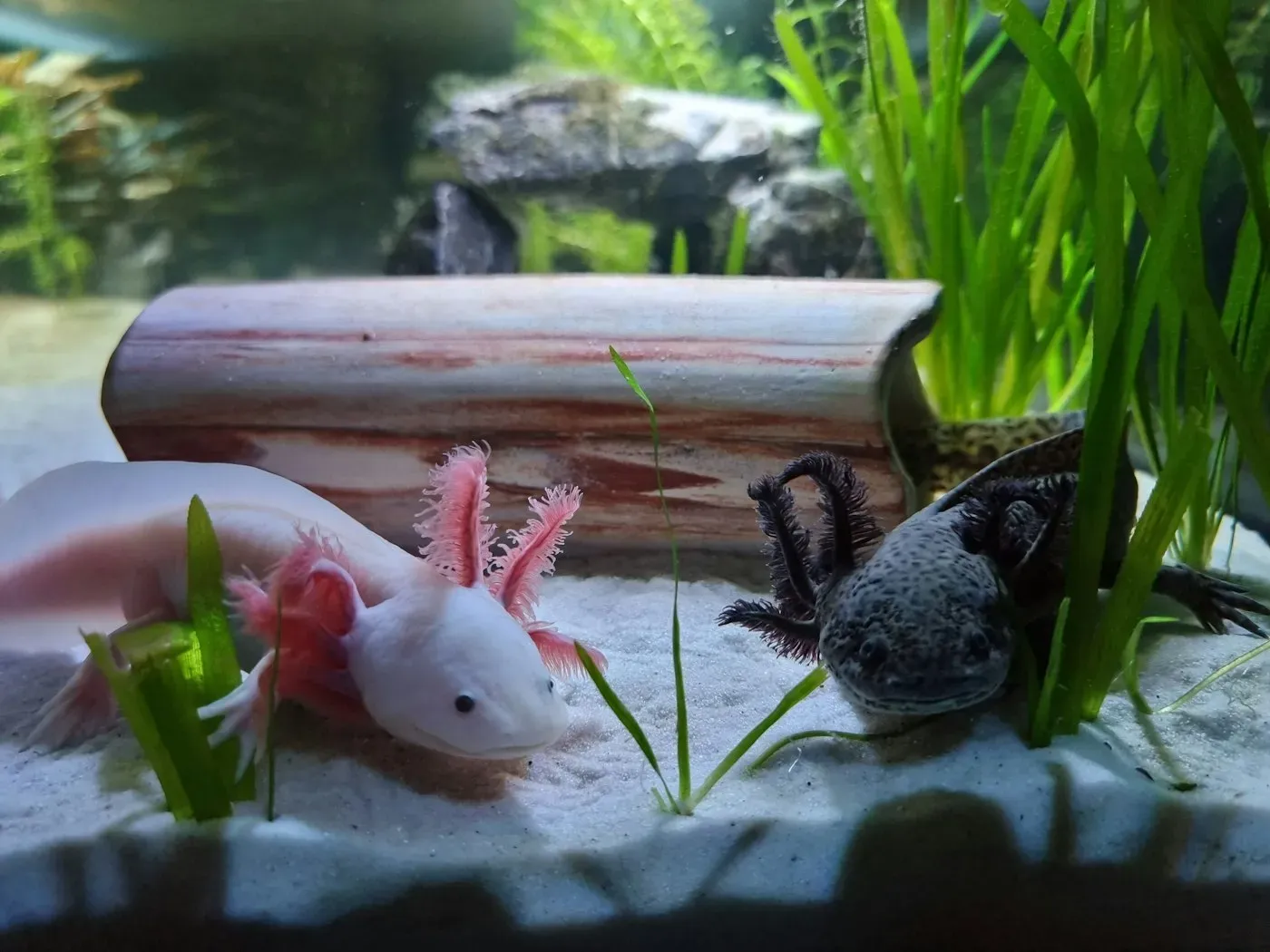 Real photograph
 Why we love them
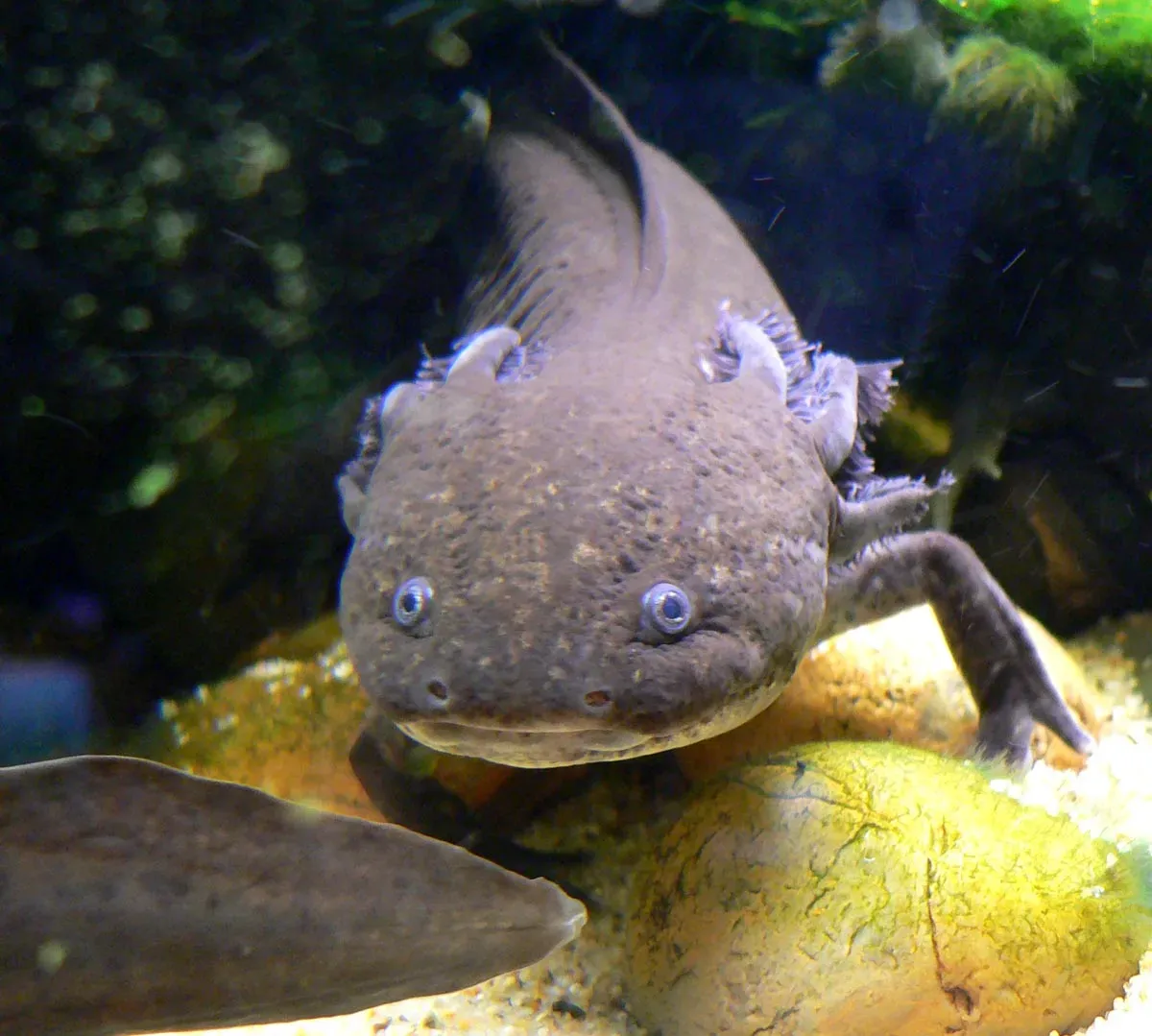
The axolotl is a smiley little salamander that lives underwater. It has a wide mouth that looks like a friendly grin and a crown of feathery pink branches on its head. Those branches are its gills, and they help it breathe without ever coming up for air.
Most salamanders grow up, lose their gills, and crawl out onto land. The axolotl is different. It stays a water baby for its whole life, keeping its gills and its paddle-like tail. Scientists call this staying young "neoteny."
The axolotl has an amazing superpower: it can grow back parts of its body. If it loses a leg or the tip of its tail, a brand-new one slowly grows in its place. Doctors and scientists study the axolotl to learn how healing works.
In the wild, axolotls live in just one special place on Earth: the cool canals and wetlands of Xochimilco, near Mexico City. They hunt at night, gulping up worms, tiny shrimp, and little fish with a quick suck.
Wild axolotls are critically endangered, which means very few are left in their canals. Dirty water and hungry newcomer fish have made life hard for them. But there is hope: conservation teams are restoring wetland habitat, teaching people about Xochimilco, and testing carefully chosen places where wild axolotls may be able to breed and recover.
My home
Freshwater lake, canals, wetland
Where I live
North America
What I eat
Worms, insect larvae, small crustaceans, small fish
How long I am
0.15–0.3 m
How long I live
10–15 years
An axolotl can grow back a whole leg, its tail, and even parts of some organs.
Most salamanders grow up to live on land, but the axolotl stays in the water its whole life and keeps its feathery gills.
The frilly pink branches on its head are gills that help it breathe underwater.
Every axolotl can feel happy, scared and loved — just like you.
Looking after my friends
How many are there?
About 36 wild axolotls per square kilometre were estimated in the Xochimilco wetlands in 2014.
This is a density estimate for Xochimilco, not a total number of axolotls. UNAM says results from a newer census are still being processed.
How are they doing?
Critically endangeredThis species has an extremely high risk of extinction in the wild, and urgent conservation work is important.
You can help by learning their names, keeping wild places clean, and telling someone why this animal matters.
Where this came from
- Ambystoma mexicanum (Axolotl) — Red List Assessment — IUCN Red List of Threatened Species
- Ambystoma mexicanum — Species Account — AmphibiaWeb, University of California, Berkeley
- Axolotls: Meet the amphibians that never grow up — Natural History Museum, London
- Wild axolotl census in Xochimilco — National Autonomous University of Mexico (UNAM)