Today's animal friend · 2 August 2026
Atlantic Bluefin Tuna: The Ocean’s Warm-Engine Traveller
In cold Atlantic water, where a human would want a woolly hat, an Atlantic bluefin tuna powers onward with muscles warmer than the sea around it. Meet the sleek traveller with a built-in warm engine.
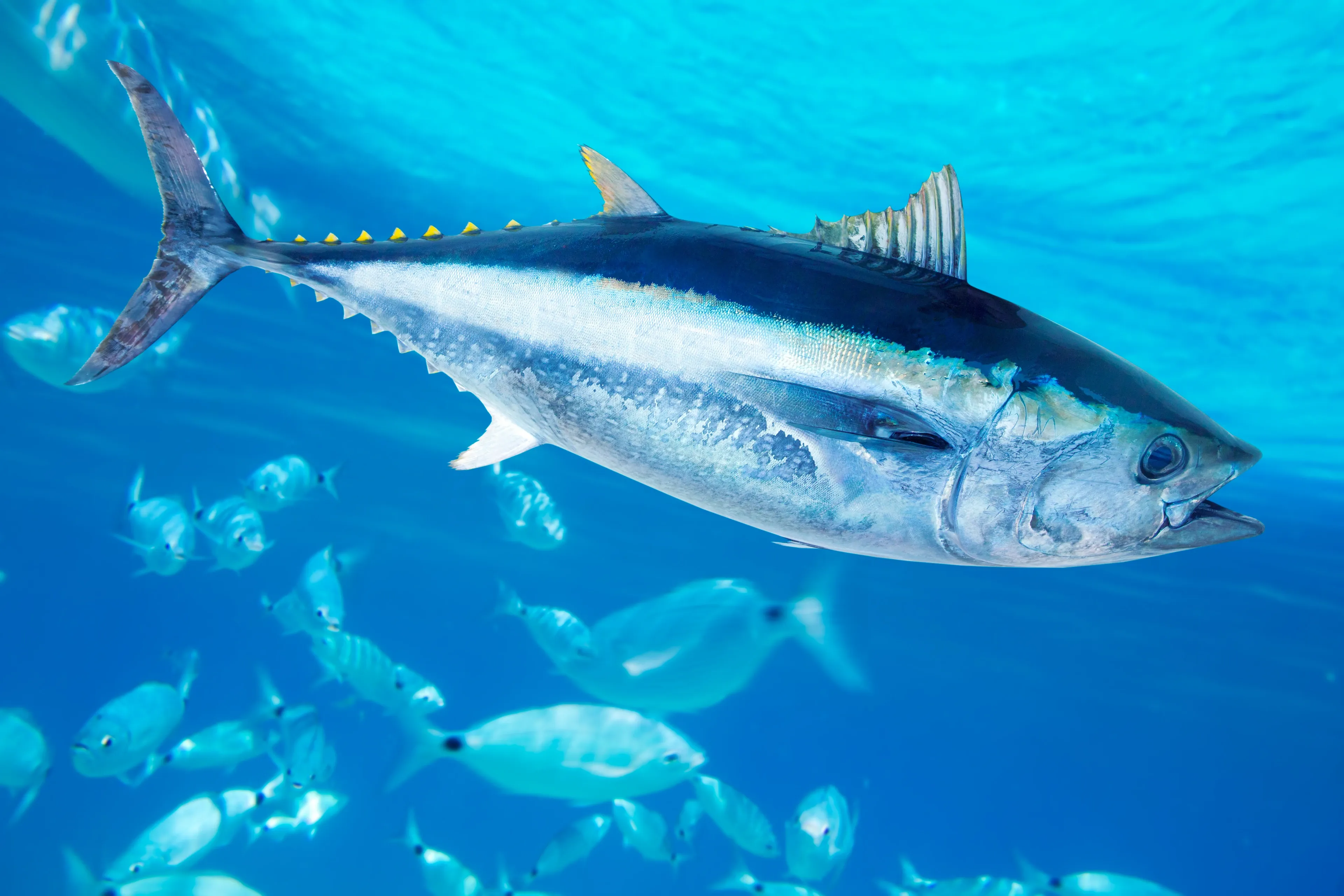
In cold Atlantic water, where a human would want a woolly hat, an Atlantic bluefin tuna powers onward with muscles warmer than the sea around it. Meet the sleek traveller with a built-in warm engine.
A silver flash in the chilly blue
Imagine floating beside a rocky coast in the North Atlantic. The water is cold enough to make your toes curl, even through a wetsuit. Then—whoosh!—a thick, silvery-blue shape slices past. It is not a torpedo, although it certainly has the zoom. It is an Atlantic bluefin tuna, Thunnus thynnus, one of the ocean’s largest bony fish.
A big adult is commonly about 2 to 2.5 metres long: longer than many beds. It can weigh about as much as a large horse. One exceptional bluefin recorded was around 680 kilograms, heavier than a piano. This is a fish that makes even a very large bathtub seem like a silly place for a swim.
Atlantic bluefin tuna live in the Atlantic Ocean and Mediterranean Sea. They use both open ocean and productive coastal waters, travelling between places where they feed and places where they spawn. Their world is not divided into neat little neighbourhoods. For a bluefin, an ocean basin can be part of the route.
Evidence: IUCN Red List of Threatened Species: Thunnus thynnus (Atlantic Bluefin Tuna) — Red List Assessment; Animal Diversity Web, University of Michigan Museum of Zoology: Thunnus thynnus (horse mackerel); Wikipedia: Atlantic bluefin tuna; NOAA Fisheries: Western Atlantic Bluefin Tuna
How can a fish keep moving through cold water?
Here is the bluefin’s startling superpower: it can keep its swimming muscles warmer than the water around it. It does this with a clever heat-sharing system in its body, called counter-current heat exchange. Warm blood heading away from the muscles passes close to colder blood returning from the gills, helping save heat rather than simply losing it to the sea.
That does not mean the tuna is exactly like a human, with one steady temperature everywhere in its body. But its warmer working muscles give it a powerful advantage in chilly northern waters. Think of those muscles as an engine with an excellent coat wrapped around the important bits.
With this special warmth and a streamlined body, a bluefin can swim fast and far. It is a highly migratory traveller, crossing broad stretches of the North Atlantic and Mediterranean. Scientists and managers recognise different western and eastern Atlantic/Mediterranean stocks, but the sea itself has no fences, and fish from different origins can mix.
Evidence: Animal Diversity Web, University of Michigan Museum of Zoology: Thunnus thynnus (horse mackerel); Wikipedia: Atlantic bluefin tuna; NOAA Fisheries: Western Atlantic Bluefin Tuna
Lunch is a speedy chase, not a picnic
What does a giant tuna eat? Atlantic bluefin tuna are carnivores. Their menu includes schooling fish such as herring and mackerel, plus squid and crustaceans. The exact prey can change with the tuna’s size, the season, and where it is feeding. Ocean dinner plans are flexible.
Bluefin often travel and feed in schools, especially where baitfish gather. Picture a busy playground at break time—except everyone is glinting underwater, and the snack is trying to swim away. These groups are not known to be permanent families or pairs; they are more like changing travel-and-feeding crews.
By hunting smaller fish and squid, bluefin are high-level predators in open-ocean food webs. They help move energy through the Atlantic ecosystem: tiny drifting life supports smaller animals, smaller animals support fish and squid, and bluefin are among the larger hunters along the way. A tuna is not just a magnificent swimmer; it is part of a bustling ocean neighbourhood.
Evidence: Animal Diversity Web, University of Michigan Museum of Zoology: Thunnus thynnus (horse mackerel); Wikipedia: Atlantic bluefin tuna; NOAA Fisheries: Western Atlantic Bluefin Tuna
Forty million tiny chances
A mother Atlantic bluefin tuna can release an enormous number of tiny eggs into the sea at one time—sometimes up to about 40 million. That number sounds as if someone spilled a galaxy into the water. Yet life in the open ocean is difficult, and many eggs and young fish will not survive to become adults.
Bluefin move between feeding and spawning areas, so different seasons can bring them to different places. They may feed in coastal areas or the open ocean and can travel deep below the surface too. A journey that looks like a blue line on a map is, for a tuna, a changing world of currents, temperatures, prey, and other animals.
We do not need to imagine a tuna thinking human thoughts to appreciate its life. It has its own fish-sized needs: space to travel, prey to chase, and safe chances to reproduce. Seeing an animal as a fellow traveller with a life of its own is a good beginning for caring about the ocean.
Evidence: Animal Diversity Web, University of Michigan Museum of Zoology: Thunnus thynnus (horse mackerel); Wikipedia: Atlantic bluefin tuna; NOAA Fisheries: Western Atlantic Bluefin Tuna
A comeback story that still needs care
For a long time, fishing pressure pushed Atlantic bluefin tuna into serious trouble. Large groups of fish can be easier to find and catch, especially in important feeding or spawning areas. Incidental catch—when animals are caught while fishing for something else—also needs careful controls.
There is hopeful news. The global IUCN assessment listed Atlantic bluefin tuna as Least Concern in 2021, after an earlier Endangered assessment. Science-based catch limits, permits, minimum sizes, monitoring, selective gear rules, and protections for certain times and places have helped reduce fishing mortality and support recovery.
But “Least Concern” is not a magic force field. It does not mean every risk has vanished, or that every managed stock faces exactly the same situation. Continued international cooperation and following protective rules matter. Recovery is a reason to keep trying, not a reason to stop paying attention.
Evidence: IUCN Red List of Threatened Species: Thunnus thynnus (Atlantic Bluefin Tuna) — Red List Assessment; Wikipedia: Atlantic bluefin tuna; NOAA Fisheries: Western Atlantic Bluefin Tuna
What can an ocean friend do from dry land?
You may never meet a bluefin face-to-face—and honestly, a polite nod from a boat is probably close enough—but your choices can still show care. Learn where food comes from. Ask curious, kind questions at home about meals and the animals and ecosystems connected to them. Curiosity is not bossiness; it is how caring people become wiser.
You can also look after the watery world nearer to you. Use less throwaway plastic when you can, keep litter out of drains and beaches, and share what you learn about ocean animals. A stream can lead to a river, and a river can lead to the sea. The ocean is wonderfully far away and surprisingly connected to us.
Most of all, remember the silver flash in cold water: a bluefin built for long journeys, quick turns, and a life beyond our plates. It deserves an ocean where it can keep racing through the blue.
Evidence: IUCN Red List of Threatened Species: Thunnus thynnus (Atlantic Bluefin Tuna) — Red List Assessment; NOAA Fisheries: Western Atlantic Bluefin Tuna
A friendly choice for tuna, people, and the planet
Atlantic bluefin tuna are not just a menu item. They are powerful wild animals with long ocean routes, warm working muscles, and their own chances to feed and reproduce. Choosing meals that do not rely on tuna can be a gentle way to leave more room for these travellers in the sea.
Plant-forward meals can be colourful adventures too: beans in a burrito, chickpeas in a curry, peanut butter on toast, crunchy vegetables, fruit, grains, nuts, and seeds. The World Health Organization describes healthy diets as varied and rich in foods such as whole grains, vegetables, fruit, pulses, nuts, and seeds. Food needs differ from person to person, so children can explore new choices with a trusted adult and, when needed, a qualified health professional.
There is a planet-sized reason to be curious, too. The IPCC reports that shifts toward sustainable, healthy, more plant-based diets can help lower food-system emissions and reduce pressure on land and biodiversity. No guilt trips needed—just one thoughtful, tasty choice at a time, made with kindness for animals such as the bluefin and for the living world we share.
Evidence: World Health Organization: Healthy diet; Intergovernmental Panel on Climate Change: Climate Change 2022: Mitigation of Climate Change — Chapter 7; IUCN Red List of Threatened Species: Thunnus thynnus (Atlantic Bluefin Tuna) — Red List Assessment; NOAA Fisheries: Western Atlantic Bluefin Tuna
Questions people ask
Is an Atlantic bluefin tuna really warm-blooded?
In a special, regional way. Counter-current heat exchange helps it keep swimming muscles warmer than the surrounding sea. It is not the same as having one constant whole-body temperature like a person.
Evidence: Animal Diversity Web, University of Michigan Museum of Zoology: Thunnus thynnus (horse mackerel); Wikipedia: Atlantic bluefin tuna; NOAA Fisheries: Western Atlantic Bluefin Tuna
How big can one get?
Large adults are commonly about 2 to 2.5 metres long and about 225 to 250 kilograms. An exceptional recorded fish was around 680 kilograms, but that is not the usual size.
Evidence: Animal Diversity Web, University of Michigan Museum of Zoology: Thunnus thynnus (horse mackerel); Wikipedia: Atlantic bluefin tuna
Are bluefin tuna safe now that they are listed as Least Concern?
Their global IUCN status improved to Least Concern in 2021, following earlier Endangered status and recovery efforts. Fishing pressure still needs strong management, and western and eastern stocks are managed separately.
Evidence: IUCN Red List of Threatened Species: Thunnus thynnus (Atlantic Bluefin Tuna) — Red List Assessment; Wikipedia: Atlantic bluefin tuna; NOAA Fisheries: Western Atlantic Bluefin Tuna
What do bluefin tuna eat?
They hunt smaller fish such as herring and mackerel, along with squid and crustaceans. Their prey changes with season, location, and the tuna’s size.
Evidence: Animal Diversity Web, University of Michigan Museum of Zoology: Thunnus thynnus (horse mackerel); NOAA Fisheries: Western Atlantic Bluefin Tuna
Read the evidence
Sources behind this story
- Thunnus thynnus (Atlantic Bluefin Tuna) — Red List Assessment — IUCN Red List of Threatened Species
- Thunnus thynnus (horse mackerel) — Animal Diversity Web, University of Michigan Museum of Zoology
- Atlantic bluefin tuna — Wikipedia
- Western Atlantic Bluefin Tuna — NOAA Fisheries
- Healthy diet — World Health Organization
- Climate Change 2022: Mitigation of Climate Change — Chapter 7 — Intergovernmental Panel on Climate Change
Health information is general education, not personal medical advice. Young readers should make food choices with a trusted adult and qualified health professional.