 ← All animals
 fish · Thunnus thynnus
Atlantic bluefin tuna
Gallery
3 photos Real photograph 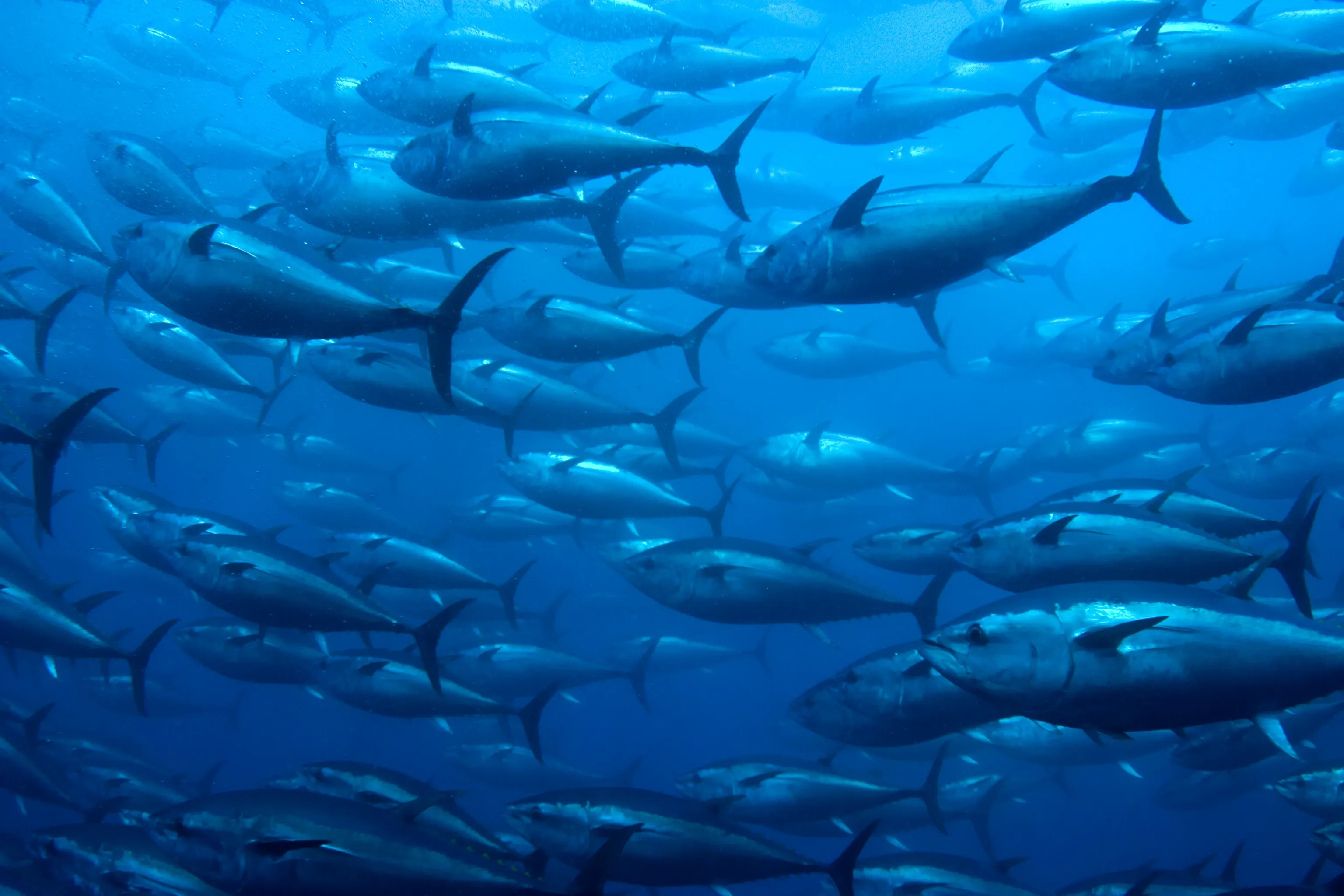 Real photograph Real photograph
 Why we love them
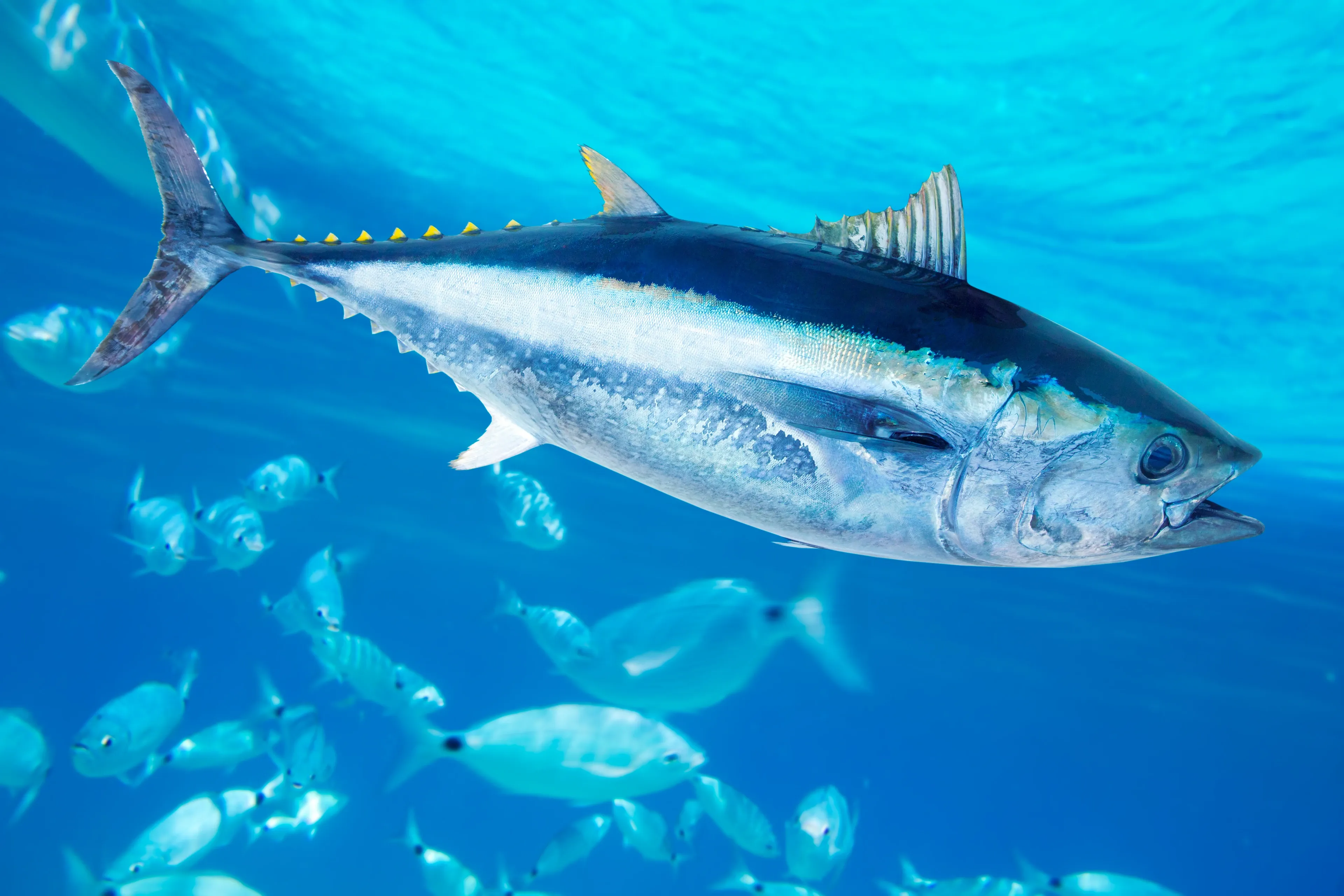
The Atlantic bluefin tuna is a huge, sleek, silvery-blue fish built for speed. It lives in the Atlantic Ocean and the warm Mediterranean Sea, swimming from the coasts of Europe and North Africa all the way across to North America. Bluefin tuna are travellers, and they can cross whole oceans on their long journeys.
These are some of the biggest bony fish in the sea. A grown bluefin is usually about two to two and a half metres long — longer than a bed — and can weigh as much as a large horse. The very heaviest one ever recorded weighed around 680 kilograms, which is heavier than a piano.
Bluefin tuna have an amazing trick: they are warm-blooded in a special way. They keep the muscles inside their bodies warmer than the cold water around them. This warm engine lets them swim fast and far, chasing food even in the chilly waters of the North Atlantic where many other fish would slow down.
Tuna are carnivores and clever hunters. They race after smaller fish like herring and mackerel, and also eat squid and other small sea creatures, often hunting together in groups. A mother bluefin can lay a giant number of tiny eggs — up to about 40 million at a time — floating out into the open sea.
Long ago, so many bluefin tuna were caught that people worried about them, but fishing limits have helped their numbers climb back up. Today they are listed as least concern, which is happy news. Looking after the ocean and keeping fishing fair will help these fast, powerful swimmers thrive for years to come.
My home
Open ocean, coastal waters
Where I live
Europe, North America, Atlantic Ocean
What I eat
Small fish, herring, mackerel, squid, crustaceans
How long I am
2–2.5 m
How heavy I am
225–250 kg
The Atlantic bluefin tuna is one of the largest bony fish in the ocean — big adults are usually about 2 to 2.5 metres long and weigh as much as a large horse, and the heaviest ever recorded was around 680 kilograms.
Bluefin tuna are warm-blooded in a special way, keeping their muscles warmer than the water around them so they can swim fast and far even in cold northern seas.
A mother bluefin tuna can release an enormous number of tiny eggs into the sea at once — sometimes up to about 40 million.
Every atlantic bluefin tuna can feel happy, scared and loved — just like you.
Looking after my friends
How many are there?
A Canadian assessment estimated about 66,000 mature Atlantic bluefin tuna in the western Atlantic population.
This modelled estimate covers the western Atlantic population only and is older; the much larger eastern stock is assessed separately.
Estimate source: Atlantic bluefin tuna: COSEWIC assessment and status report 2011
How are they doing?
Lower extinction riskThis species has a lower global extinction risk right now. Local populations can still grow or shrink.
You can help by learning their names, keeping wild places clean, and telling someone why this animal matters.
Where this came from
- Thunnus thynnus (Atlantic Bluefin Tuna) — Red List Assessment — IUCN Red List of Threatened Species
- Thunnus thynnus (horse mackerel) — Animal Diversity Web, University of Michigan Museum of Zoology
- Atlantic bluefin tuna — Wikipedia
- Atlantic bluefin tuna: COSEWIC assessment and status report 2011 — Government of Canada
- Western Atlantic Bluefin Tuna — NOAA Fisheries